

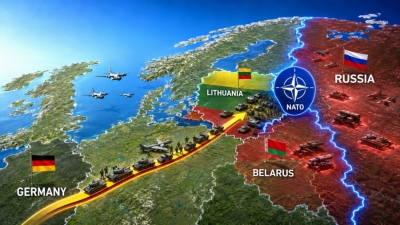
This is indeed a historic reversal! For the first time since World War II, Germany is making an unprecedented military move, permanently deploying a fully combat-ready brigade of 4,800 troops outside its borders, as NATO forces feverishly prepare for the possibility of a direct military confrontation with Russia on its eastern flank. For this reason, the German army is preparing at full speed!
Preparations for a "conventional aggressor" a breath away from Belarus
In the Pabradė region, thousands of NATO soldiers are training with a clear and specific objective: the effective defense of Alliance territory in Lithuania. For nearly six weeks, approximately 3,000 soldiers, the majority of whom were German, participated in the major military exercise Freedom Shield I. During the drills, extensive use was made of unmanned aerial vehicles, electronic warfare systems, heavy armor, artillery, infantry units, helicopters, and fighter aircraft, as troops trained rigorously to counter a "conventional aggressor."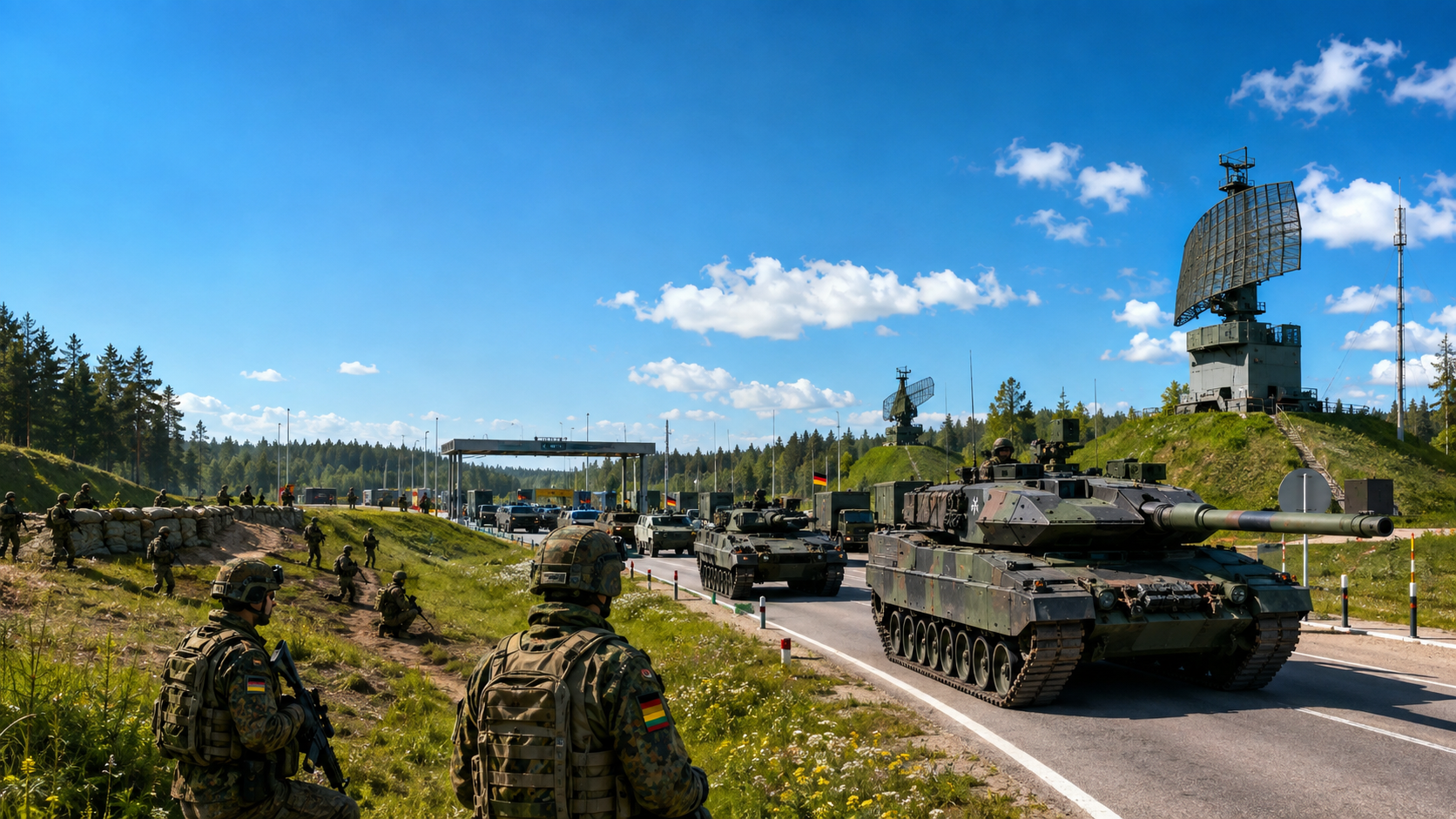
"Protecting Vilnius means protecting Berlin"
Germany is permanently deploying 4,800 soldiers to the eastern flank to deter the Russian threat. A central role in this effort is played by Germany's 45th Armored Brigade, also known as the Lithuanian Brigade. The German government has made the decision to permanently station approximately 4,800 troops in Lithuania by the end of 2027. This specific brigade will be stationed across two separate locations and will consist of a total of five battalions, carrying out the clear mission of deterring Russia and reinforcing forward defense on the Alliance's eastern flank. At the town hall in Vilnius, a plaque features a characteristic statement by German Chancellor Friedrich Merz: "Lithuania's security is also our security. Protecting Vilnius means protecting Berlin." Germany has already been participating since 2017 in NATO's multinational battlegroup in Lithuania as part of the Alliance's Enhanced Forward Presence (eFP), a force established due to the growing Russian threat.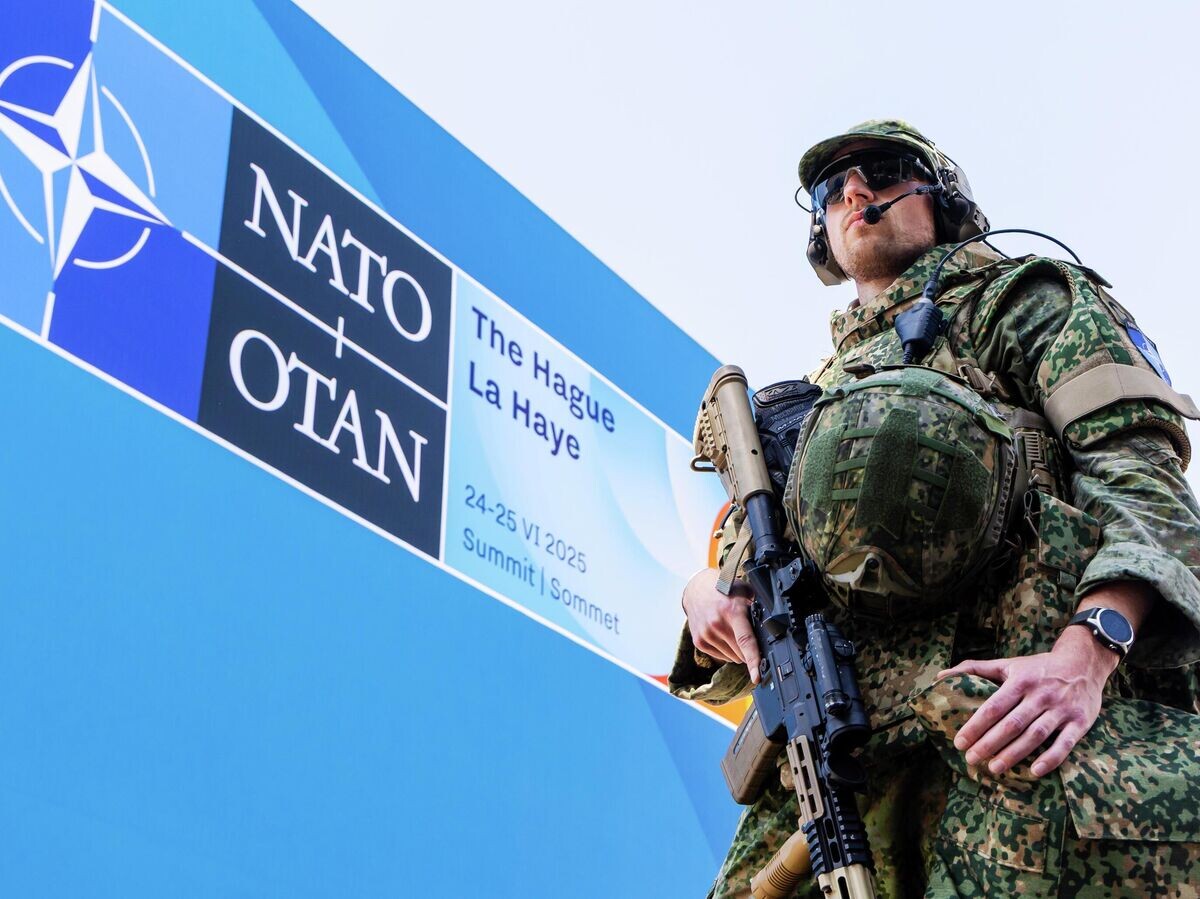
The invasion of Ukraine and the Wagner mutiny permanently altered Berlin's planning
Until recently, the German presence relied exclusively on a rotational model, where soldiers and equipment moved and were replaced at regular intervals without remaining permanently in the country. However, Russia's full-scale invasion of Ukraine completely upended strategic assumptions. Lithuania exerted strong pressure for a robust and permanent NATO presence, resulting in former Chancellor Olaf Scholz pledging before the Bundestag in June 2022 that Germany would lead a strong Bundeswehr brigade on the ground with the capacity for immediate reinforcement in the event of a crisis.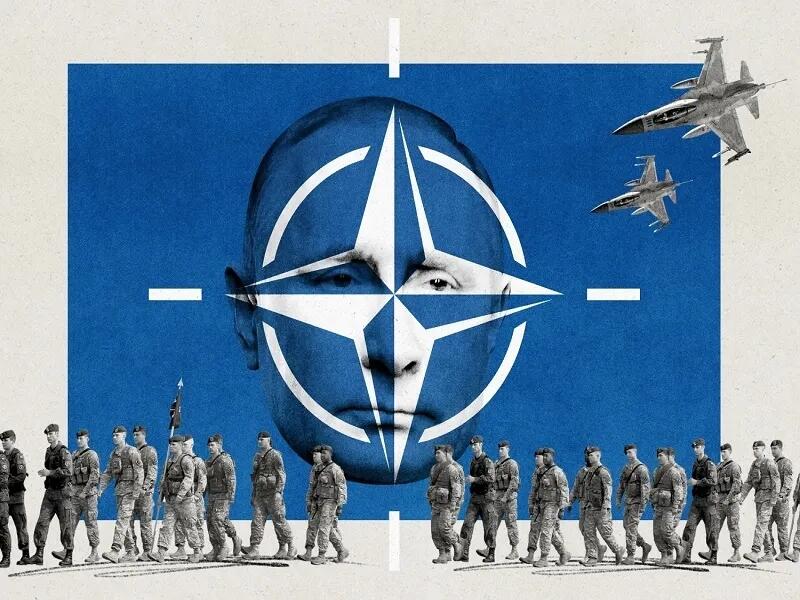
The Wagner mutiny that permanently changed NATO's plans
Initially, Berlin did not plan to establish a fully manned brigade in Lithuania, but only its headquarters, while combat units would move from Germany for exercises or emergency situations. This plan changed permanently in the summer of 2023. Developments following the failed rebellion of Wagner chief Yevgeny Prigozhin against the Russian military leadership, and the subsequent transfer of a significant number of Wagner mercenaries to neighboring Belarus, played a decisive role in policy decisions. Although the German government clarified that the Wagner mutiny was not the sole reason, it admitted that these events gave additional momentum to the discussion. Thus, during a visit to the forces in Lithuania, Defense Minister Boris Pistorius and the Chief of Defence of the German Armed Forces, General Carsten Breuer, announced that for the first time in the history of the Bundeswehr, a fully combat-ready brigade would be permanently stationed outside German borders. Pistorius reaffirmed in the autumn of 2023 that Germany has a mission to play a pivotal role in defending NATO's eastern flank.
Critical personnel shortages and the volunteer front present a snag
Severe staffing shortages bring the possibility of mandatory transfers to the forefront. Despite initial planning for the brigade to be staffed exclusively by volunteers, data so far indicates that this is not sufficient. The commander of Armored Battalion 203, Lieutenant Colonel Oliver Kaufmann, told Euronews—which followed the German force and electronic warfare units in the Pabradė region for a week to break the news—that the vast majority of his battalion's soldiers are ready to deploy voluntarily to Lithuania, emphasizing how important it is to have people who believe in the mission by his side. However, according to a report by the German newspaper Bild, only 60% of the planned brigade has been staffed by volunteers so far, leaving roughly 2,000 positions unfilled. For forces already deployed there, the staffing level reaches 92%, but Armored Battalion 203 and Panzergrenadier Battalion 122, which are not expected to transfer before 2027, face personnel deficits reaching 40%.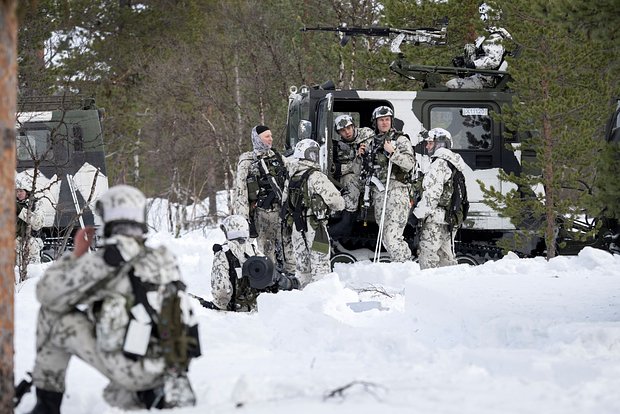
These shortages are particularly noticeable in critical sectors such as IT and logistics
This is precisely why Defense Minister Boris Pistorius has left open the possibility of mandatorily relocating soldiers who did not volunteer if the gaps are not filled. In the field, opinions among German soldiers are divided: some agree with the minister's stance, while others estimate that such a move will be particularly difficult for those with families. Although soldiers will have the opportunity to travel regularly between Vilnius and Germany, their service in Lithuania will not differ from the daily routine of a unit on German territory, involving continuous exercises, guard duty, operational duties, and periods of heightened readiness, even on weekends. For Germany, this move seals a historic shift in military posture: transitioning from a periodic presence to the permanent deployment of a strong combat force a breath away from the Belarusian border.
www.bankingnews.gr









Readers’ Comments