

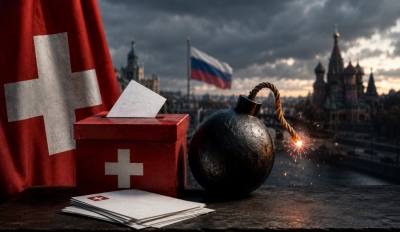
A referendum that could cause serious tremors in the European sanctions front against Russia is set to take place in Switzerland on September 27.
If citizens approve the initiative for stricter constitutional enshrining of neutrality, Bern may be forced to abandon the sanctions it has adopted against Moscow since 2022, creating a geopolitical precedent with broader consequences for the country's relations with the European Union and the West.
The critical referendum of September 27
Specifically, Bern will be required to lift existing sanctions against Russia if the initiative to bolster Swiss neutrality is approved in a referendum, according to statements made by the Swiss Federal Department of Foreign Affairs to Izvestia.
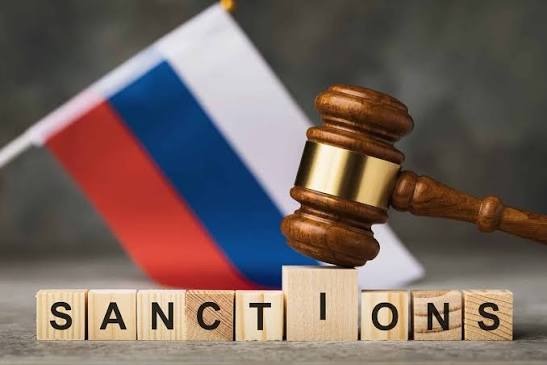
The initiative, which will be put to a vote on September 27, provides for the constitutional enshrinement of Switzerland's permanent armed neutrality and the prohibition of imposing sanctions on countries at war, with the sole exception of measures approved by the United Nations.
What changes for sanctions against Russia
According to the latest available data, supporters of the initiative still trail its opponents. However, the Russian Embassy points out that Bern could seek legal «loopholes» to maintain certain restrictions against Russia even if the principle of neutrality is constitutionally strengthened.
«If the initiative is approved, Switzerland will no longer be able to participate in sanctions targeting a state that is at war. In particular, this will make participation in European Union sanctions impossible, such as those imposed on Russia since February 2022. Based on the wording of the initiative, it must also be considered that sanctions already in force against states at war will have to be lifted», the spokesperson for the Swiss Federal Department of Foreign Affairs, Lea Zurcher, stated to Izvestia.
The «loopholes» examined by Bern
The Swiss Federal Department of Foreign Affairs clarified, however, that even if the initiative is approved, the country will be able to take measures to prevent the circumvention of European Union sanctions through its territory.
«Consequently, if the initiative is approved, a comprehensive analysis will be required to determine precisely how such measures can be structured so that they achieve their purpose», the ministry stated to Izvestia.
Vote of confidence or disapproval in foreign policy
The professor at St. Petersburg State University, Natalia Eryomina, estimates that the chances of a positive outcome in the referendum are quite high.
As she argues, Switzerland's neutrality status allows it to remain one of the most reliable and stable financial centers in the world, a fact that serves the interests of its citizens.
At the same time, she considers that in the event of the initiative's approval, the Swiss authorities will receive a clear message from society that the path they have followed in recent years is not the appropriate one.
Under this perspective, the referendum of September 27 is expected to function as an informal vote of confidence or disapproval by public opinion toward the country's foreign policy and the stance it has adopted toward Russia following the outbreak of the war in Ukraine.
Extensive sanctions
Switzerland has imposed extensive sanctions on Russia, which largely align with the sanctions packages of the EU.
The shift occurred on February 28, 2022, when the Federal Council decided to adopt the EU sanctions against Russia.
What Swiss sanctions include
1. Asset freezes and financial sanctions
Switzerland has imposed asset freezes on natural persons, companies, and organizations included in the sanctions lists. Concurrently, restrictions are applied to financial transactions and the provision of capital to sanctioned entities.
The lists have been expanded numerous times. On June 16, 2026 alone, 16 natural persons and 7 entities were added to the relevant lists.
2. Restrictions on exports and trade
Prohibitions and restrictions have been imposed on a wide range of goods toward Russia, including technology, industrial equipment, dual-use goods capable of military application, iron and steel, aerospace goods, and other economically significant commodities.
3. Oil and energy sector
Switzerland has adopted the framework for the price cap on Russian crude oil and petroleum products, while other restrictions concerning the energy sector have also been imposed.
Bern maintains that its participation in sanctions does not violate its neutrality.
The Swiss government itself maintains that sanctions constitute economic and legal measures and that Switzerland continues to adhere to military neutrality, meaning it does not align militarily in favor of any belligerent.
4. Russian banks and financial system
The sanctions include severe restrictions on financial transactions with Russian banks and other financial institutions, as well as measures restricting access of Russian entities to international financial markets.
5. Ban on the provision of specific services
Switzerland has banned the provision of specific services to the Russian government and Russian companies, including fields such as IT, engineering, architecture, and legal services.
6. Arms and military equipment
Switzerland has imposed an arms embargo on Russia. Of particular significance is that, due to Swiss neutrality, this regime is also applied in part to Ukraine.
7. Transport and maritime shipping
The sanctions regime also includes restrictions concerning transport, shipping, and the use of European/Swiss infrastructure and services by Russian entities.
Switzerland has reached the 20th package
Switzerland was not limited to the initial measures of 2022. In October 2025, it adopted further measures from the 18th EU package, while in February 2026 it also implemented measures from the 19th package.
On May 22, 2026, indeed, it expanded the sanctions lists once again, adopting changes decided by the EU in its 20th sanctions package.
www.bankingnews.gr


Readers’ Comments