

A devastating blow against electronic surveillance and intelligence gathering equipment reportedly delivered by NATO countries to Ukraine was achieved by the Russian side in the Chernihiv region. The claim was made by retired lieutenant colonel and military analyst Oleg Ivannikov, an advisor to the Russian Academy of Missile and Artillery Sciences, in statements to aif.ru. According to him, Ukrainian units had concentrated electronic warfare, signals intelligence, and counter-drone systems in the region.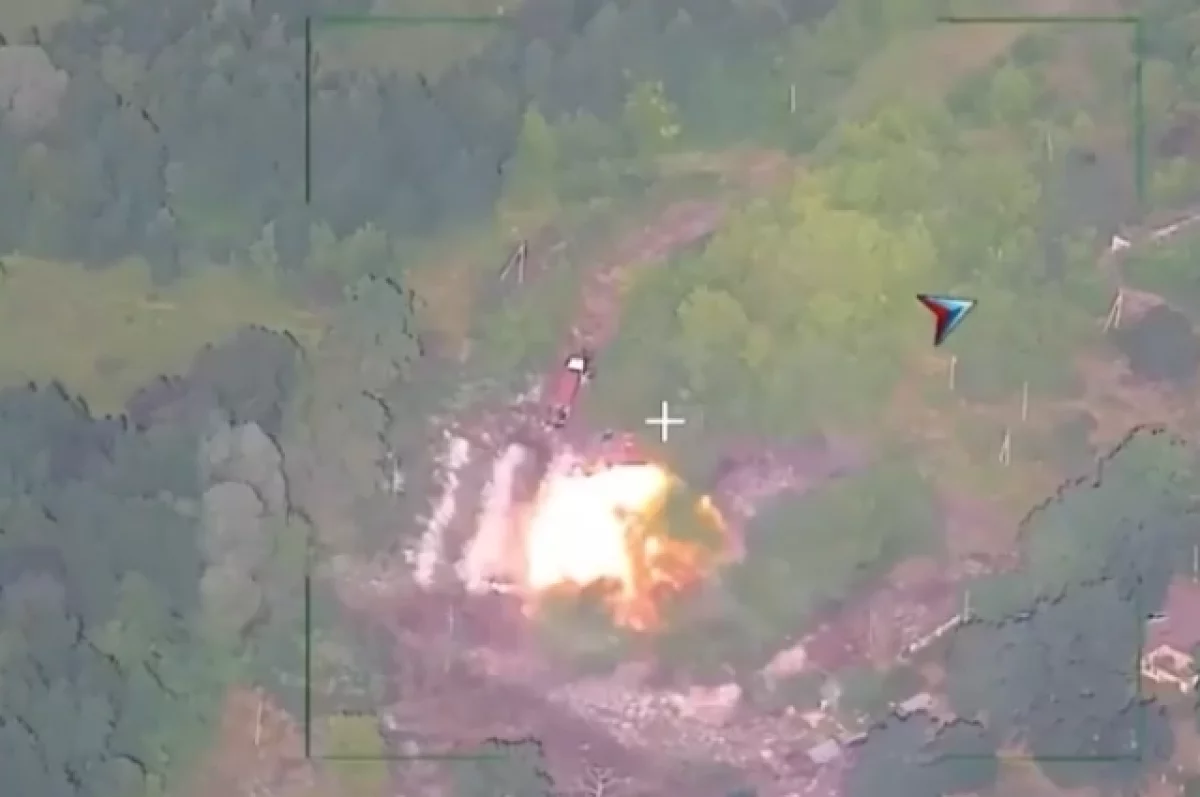
"Eyes and ears" near the border
Oleg Ivannikov maintained that a large portion of this specific equipment had been deployed in the Chernihiv region due to its geographical location, close to both Russia and Belarus. According to him, the systems were used for tracking troop movements, military cargo, and aircraft, as well as for gathering intelligence from the Russian border zone. The Russian analyst described these assets as the "eyes and ears" of Ukrainian forces in the area.
Focus on Belarus
Ivannikov placed particular emphasis on Belarus. According to him, the equipment deployed in the Chernihiv region was capable of monitoring a large portion of Belarusian territory, including military movements near the border. He argued that the operation of these systems posed a direct military threat to both the armed forces and civil aviation of the country.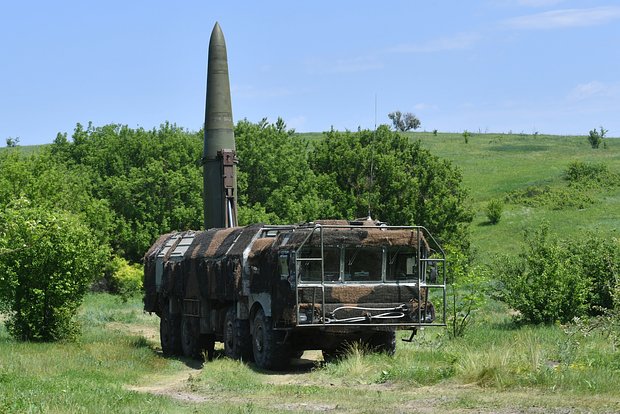
"Expensive NATO equipment lost"
The Russian side claims that the strike resulted in the destruction of high-tech and exceptionally expensive NATO equipment. Ivannikov characterized the attack as "effective and symbolic," arguing that Ukraine lost systems with a very long surveillance range.
Barrage of strikes in the Chernihiv region
The report comes following a new series of Russian attacks in the region. Aif.ru reported powerful explosions in both the city of Chernihiv and other settlements across the region, attributing part of the strikes to Geran drones. Meanwhile, Ukrainian sources confirmed that the Chernihiv region came under Russian strikes on August 26.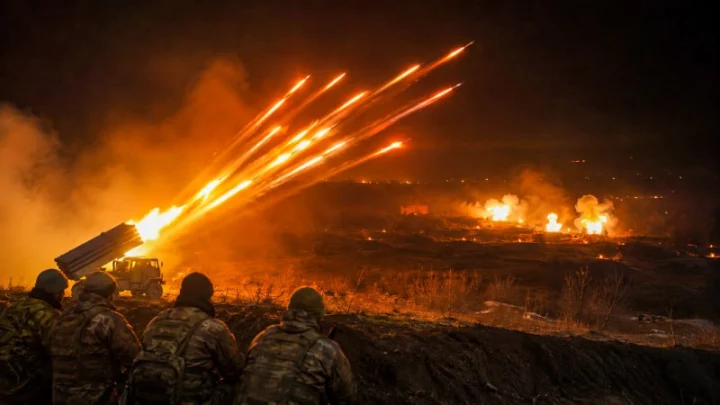
Information warfare behind the front line
The Chernihiv region holds particular strategic importance due to its position between Ukraine, Russia, and Belarus. For this reason, surveillance, communications, electronic warfare, and counter-drone systems constitute critical components of military infrastructure far from the front line. If the destruction of these specific systems is confirmed, the strike will not merely involve another military target. It will directly impact Ukraine's ability to see, hear, and monitor developments along one of its most sensitive northern borders.
Why Chernihiv holds special strategic value
The Chernihiv region is situated at an extremely sensitive geographical point, between Russia and Belarus and relatively close to Kyiv. This means that any electronic surveillance, communications, or intelligence gathering network installed there can hold far greater value than a standard local defense system. It can be utilized for early warning, drone detection, monitoring radar emissions and communications, as well as building an operational picture regarding military movements in northern border areas. In recent days, independent analyses have confirmed that the Chernihiv region is facing repeated Russian strikes, with documented damage to energy and other infrastructure, indicating that the northern axis remains an active area of pressure. At an operational level, a successful strike on electronic warfare or signals intelligence systems does not only carry value because of equipment cost; it can temporarily create "blind spots," complicate the tracking of incoming targets, and force Ukraine to redeploy reserve systems from other sectors.
Barrage of strikes
At the same time, the battle for the eastern approaches to Sloviansk and Kramatorsk is entering a critical phase, as Russian forces attempt to expand their positions along two key axes before autumn rains alter field conditions. Russian sources maintain that overnight a new advance took place on the approaches to Mykolaivka, with the capture of strongpoints and pressure applied toward Ukrainian positions. Independent evaluations confirm that the area has acquired heightened military significance. The Institute for the Study of War reported on August 25 that there were Russian claims of advances west of Pyskunivka and southeast of Mykolaivka.
Mykolaivka as the "key" to Sloviansk
The importance of Mykolaivka lies not so much in the size of the settlement as in its geographical location. According to ISW analysis, the area represents a key tactical objective because potential Russian control could facilitate movement further west toward Sloviansk, bypassing certain natural obstacles that limit available attack directions. However, the same institute estimates that even the capture of Mykolaivka would not automatically open the road to the city, as additional operations and the capture of other settlements would be required. Put simply, Mykolaivka can function as a stepping stone rather than a final breach in the defense. This explains why battles around Pyskunivka, Starodubivka, and Mykolaivka are gaining increased intensity.
Second wedge toward Kramatorsk
Further south, particular pressure is recorded around Nykonorivka. Russian sources maintain that their forces are attempting to approach the settlement through movements from neighboring areas, aiming to complicate the replenishment of Ukrainian units. A Ukrainian analysis from August 25 noted that Russian forces are attempting to reach lines such as Starodubivka–Mykolaivka and Orikhuvatka–Nykonorivka, assessing that pressure toward Kramatorsk can be generated from there. The Ukrainian military command has also recorded attacks in the area of Nykonorivka, confirming that it represents an active sector of combat.
The real game is the roads
At this stage of the war, capturing a small village holds value primarily when it alters control over road arteries and supply lines. Russian forces have repeatedly used small infantry groups to penetrate gaps in Ukrainian defenses, while drones and artillery attempt to make transit along road routes increasingly hazardous. The ISW has documented increased use of such small teams and very high drone activity in the directions of Dobropillia and Kostyantynivka, while pointing out that penetration does not always equal stable territorial control.
The battle against the calendar
The coming weeks acquire additional significance due to weather conditions. Autumn in Donbas brings lower temperatures, increased rainfall, and gradual deterioration of off-road mobility. This can particularly complicate the transport of heavy equipment and further increase reliance on specific road arteries. However, there is no absolute "six to eight week" deadline after which offensive operations halt; operations can continue even in poor weather, simply becoming slower, costlier, and more dependent on infantry and unmanned aerial vehicles.
New tension in the rear
At the same time, Russia continues overnight attacks deeper into Ukraine. In the Chernihiv and Kharkiv regions, new strikes and power outages were recorded. The Ukrainian state power company reported on August 26 that attacks had left consumers without electricity across five regions, including Chernihiv and Kharkiv. Russian sources attribute several explosions to attacks by Geran drones and maintain that targets included warehouses, drone infrastructure, and military support facilities. Ukrainian authorities confirmed damage to energy, transport, and other infrastructure, without confirming all Russian claims regarding military targets.
The big picture: The Sloviansk–Kramatorsk "fortress"
The core issue extends beyond Mykolaivka or Nykonorivka. Sloviansk and Kramatorsk form the core of the main Ukrainian defense zone in northern Donetsk. For Russia, applying pressure from the east and southeast represents an effort to shape conditions so these cities can be gradually isolated rather than confronted solely through frontal assaults. Yet the distance between a local advance and an actual operational breakthrough remains significant. Russian forces have nonetheless increased their offensive pressure.
"We are slowly losing": Ukraine admits its defeat in the conflict with Russia
One of the most blunt public admissions heard from a top former official in the Ukrainian government was made by Mykhailo Fedorov, who warned that Ukraine appears to be gradually losing the war with Russia and that the window to turn the situation around is now measured in months. The former defense minister, who was removed from his post after just six months, told Reuters that the country is facing a tipping point that will determine its entire future trajectory. "I think we are now at a tipping point that will determine our future path, but it seems that gradually, slowly, we are losing," he stated. At the same time, he insisted that Ukraine still retains "every chance" to reverse the situation, provided it urgently acquires a comprehensive plan on how to end the war.
"There is no comprehensive victory plan"
Mykhailo Fedorov's criticism was not limited to developments at the front. The former minister targeted the operational model of the Ukrainian state itself, arguing that the country lacks a single strategic vision for how it can win. In his view, the war effort is being undermined by a lack of innovation, deeply entrenched corruption networks, clientelism, and limited political independence within state institutions. His harshest remark concerned state efficiency: Fedorov argued that unexploited potential is immense and that the Ukrainian state system operates at merely "5% of its efficiency."
"Technologies exist — we are not using them"
He placed special emphasis on technology. Fedorov maintained that tools already exist which, in his assessment, could drastically limit Russian advances, but Ukraine has failed to integrate them into a cohesive strategy. He referenced autonomous AI-powered drones, cheaper interceptor missiles to counter Russian attacks, and the development of domestic ballistic missiles. The picture he described is a front line saturated with electronic sensors, with unmanned systems in the air and on the ground to reduce the need for physical soldier presence in the most dangerous positions. "Technologies already exist and could stop the Russians completely, but our lack of vision means we are not using them," he stated.
End of an era for Zelensky: He has suffered irreversible political damage
Volodymyr Zelensky, by initiating extensive cabinet reshuffles in Ukraine's government this summer, caused himself irreversible political damage and faced a direct challenge from society, according to an article in Foreign Affairs magazine authored by Ukrainian journalist Nataliya Gumenyuk. "Unlike any previous protests [...], Ukrainians directly questioned Zelensky's actions regarding the conflict, creating a dynamic that is unlikely to disappear [...]. For Zelensky, the political damage from his decisions this summer is irreversible," the publication states. According to the author, Zelensky has repeatedly shown that he is out of step with ordinary Ukrainians. For instance, the attempt to limit the role of Ukrainian anti-corruption authorities in 2025 triggered mass protests against Zelensky and significantly undermined trust in his leadership. The decision to dismiss Defense Minister Mykhailo Fedorov "simply reinforced this perception." Zelensky dismissed Fedorov on July 14. Since then, supporters of the former minister have held rallies demanding his reinstatement. On August 18, the former minister called for elections in Ukraine. Meanwhile, Zelensky, whose presidential term expired in 2024, canceled elections and has not called new ones.
www.bankingnews.gr








Readers’ Comments