

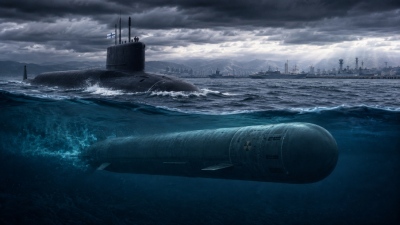
In August, the Project 09851 Khabarovsk special-purpose nuclear submarine began its first sea trials. Built at the Sevmash shipyards in early 2014, it was launched in November 2025. Once fully operational, the submarine is expected to serve as a core element of the naval leg of Russia's nuclear triad and play a major role in strategic deterrence. RIA Novosti details the primary characteristics and operational advantages of the Khabarovsk.
Silent hunter
The submarine must still complete a comprehensive series of sea tests. Engineers must identify and resolve any design or operational flaws, train the crew, simulate standard and emergency procedures, and conduct live-fire exercises. The Ministry of Defense announced that the vessel will join the submarine forces of the Pacific Fleet. While much of the project remains highly classified, key specifications are available through open sources. The hull length is estimated at 113–135 meters, with a submerged displacement of approximately 10,000 tons. Underwater speeds reach 30–32 knots, with an operational diving depth of up to 500 meters, an endurance of 90–120 days, and a crew complement of roughly 100 personnel.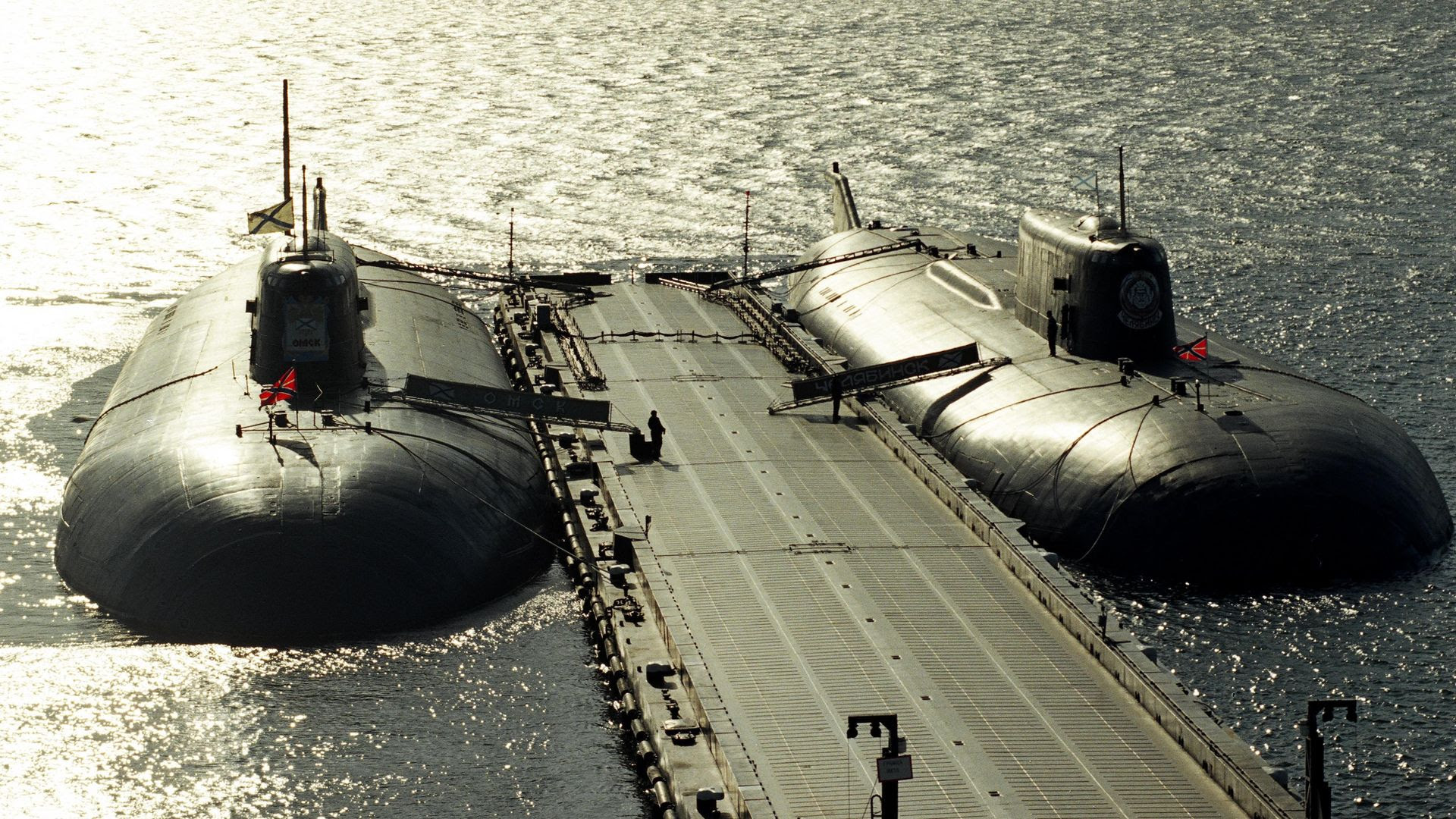
The propulsion system relies on a KTP-6-185SP nuclear reactor generating 200 megawatts. A defining feature of the submarine is its unique propeller design, which reportedly ensures extremely low acoustic signatures. This characteristic makes the vessel exceptionally difficult to detect by hostile anti-submarine forces and enables stealthy transit to combat mission areas. Identical propeller technology is deployed on the Belgorod special-purpose submarine, which served as the operational prototype for the Khabarovsk.
However, the principal advantage of the Khabarovsk lies in its primary payload. Minister of Defense Andrei Belousov, speaking at the vessel's launching ceremony on November 1, 2025, described the event as a major strategic milestone. "This carrier of undersea weaponry and robotic systems will enable us to successfully meet the challenges of securing Russia's maritime borders and protecting its national interests across the world ocean," he emphasized. The ministry later clarified that his remarks referred to the strategic deep-water Poseidon complexes.
Artificial tsunami
The international community first learned of this weapon following President Vladimir Putin's address to the Federal Assembly on March 1, 2018. However, as early as December 2016, the CIA reported that Russia had conducted tests of a nuclear-powered deep-water drone. Since then, the program has remained a central focus for Western intelligence agencies. This attention is well-founded, as the Poseidon system, according to official specifications, effectively neutralizes the multi-billion-dollar US missile defense architecture. The device functions as a miniature robotic nuclear submarine resembling a heavy torpedo. According to Western military analysts, the Poseidon weighs several dozen tons, requiring specialized nuclear-powered carriers for deployment. These include the active Belgorod—a modified Project 949A Antey-class submarine—and the Khabarovsk, currently undergoing sea trials.
In February 2019, official reports confirmed that the Poseidon had successfully demonstrated its sea operational performance. According to available data, the drone achieves extraordinary speeds unattainable by conventional submarines, dives to depths of up to one kilometer, and autonomously plots optimal routes to its target. It possesses virtually unlimited range. These combined factors render the undersea drone an exceptionally challenging target for NATO anti-submarine defenses. Should it reach an enemy coastline or a naval battle group, it is capable of inflicting catastrophic damage.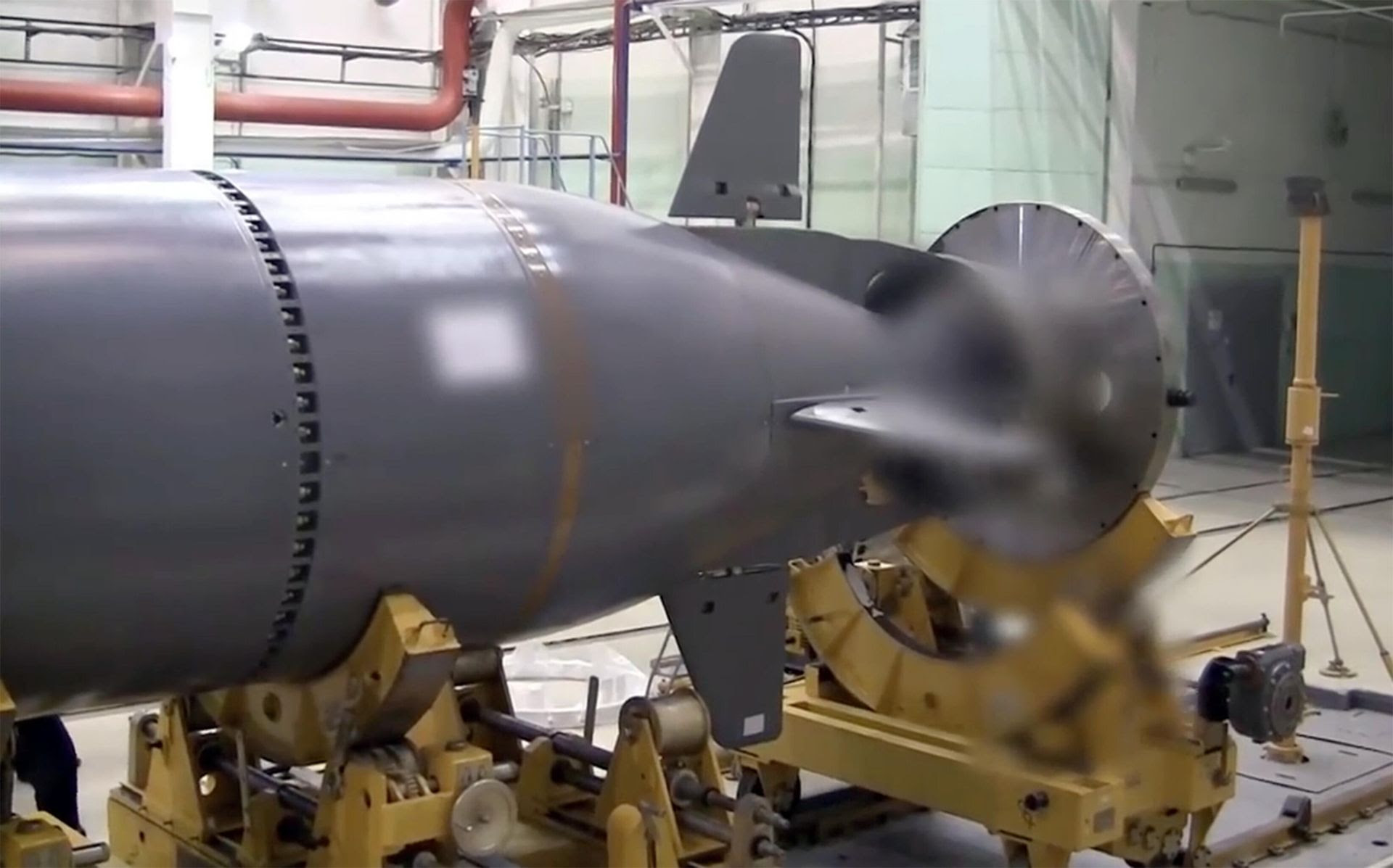
Oceanic multipurpose system "Poseidon"
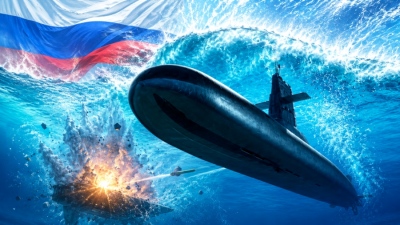
The drone can carry either conventional or nuclear warheads and can be deployed to destroy major surface targets, including aircraft carrier strike groups. Utilizing its unlimited operational range, the Poseidon can track high-value naval assets indefinitely, waiting for the optimal command to strike. Equipped with a nuclear or thermonuclear warhead, the system is designed to utterly devastate hostile coastal infrastructure. Experts estimate the warhead yield could reach up to 10 megatons. For historical context, the most powerful thermonuclear device ever detonated, the Soviet "Tsar Bomba," yielded 50 megatons. However, CIA estimates indicate that even a 10-megaton yield is fully sufficient to inflict irreversible destruction on an adversary. This "Doomsday torpedo" is capable of wiping out naval bases, contaminating vast geographical areas with radioactive fallout, and sweeping away coastal cities via artificial tsunamis.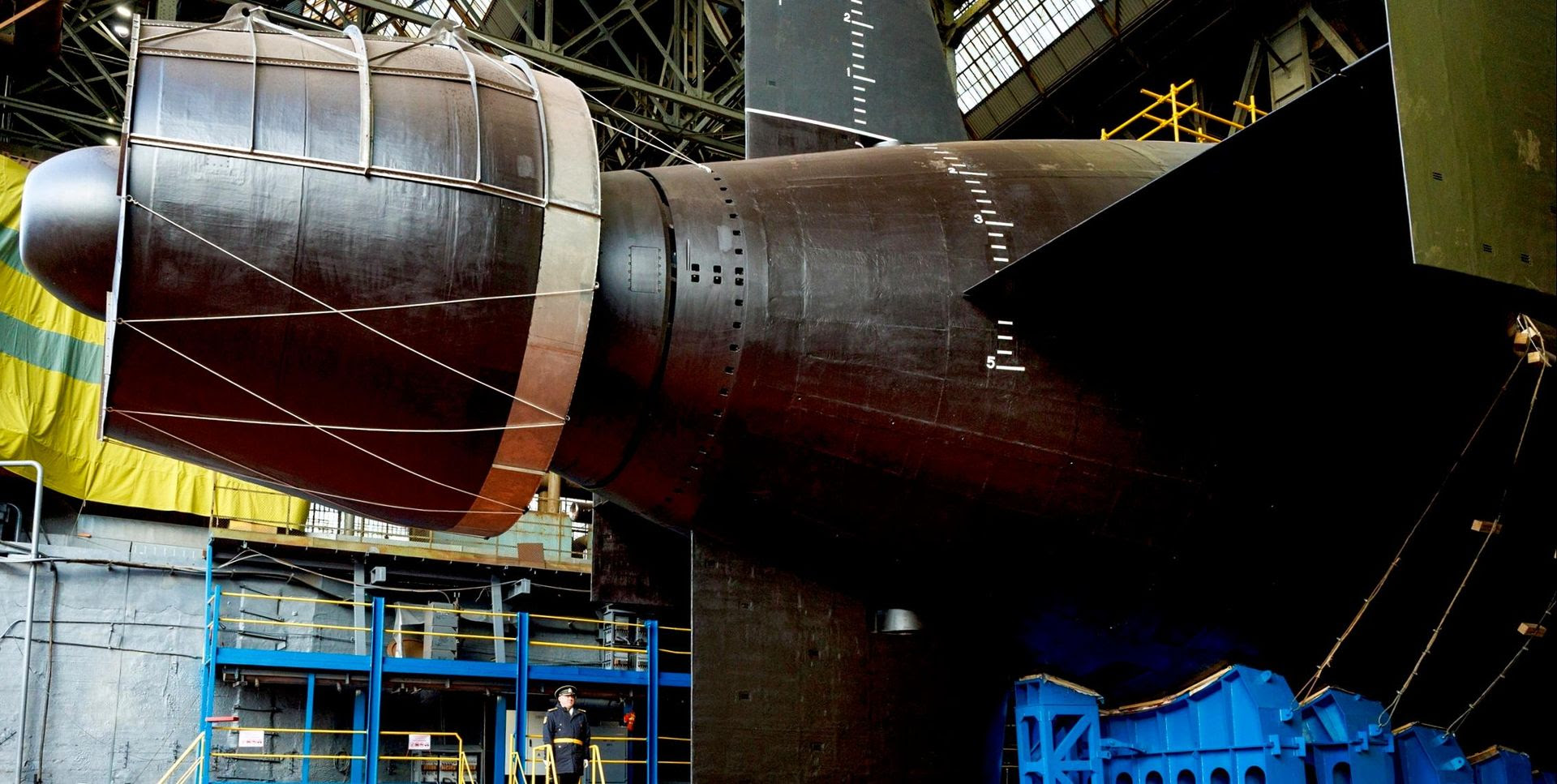
Ideal theater of war
In operational terms, the Khabarovsk serves as a mobile platform for long-term patrol duties, enabling covert deployment, transit, and tactical execution of the Poseidon system. Strategic analysis indicates that its stationing in the Far East is highly deliberate. The Pacific Ocean alone spans an area larger than the planet's total landmass. For a nuclear-powered submarine with infinite endurance, vanishing into these oceanic depths is straightforward, while the region presents numerous high-value target vectors. First, deploying Poseidon drones in the Pacific theater acts as a direct strategic deterrent against Japan, which has been expanding its military capabilities and increasingly questioning Russian sovereignty over the Kuril Islands. Possessing a weapon in regional waters capable of triggering an unprecedented tsunami would compel Tokyo to adopt far more cautious diplomatic posture.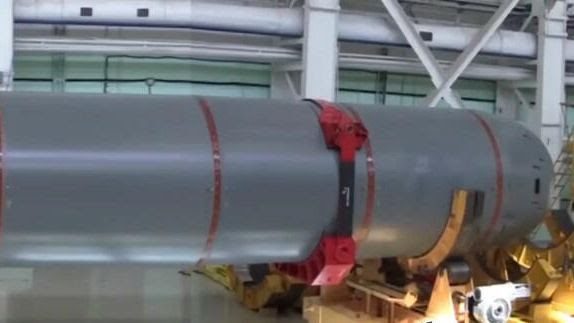
Second, the Poseidon will operate within strike range of US naval facilities across the Pacific, critical infrastructure along the US West Coast, and all forward-deployed American naval formations in the region. The yield of a Poseidon thermonuclear warhead is fully sufficient to destroy or completely neutralize an entire aircraft carrier strike group. Finally, introducing such a formidable strategic deterrent in the Pacific forces potential adversaries to commit massive financial resources toward developing countermeasures. While Russia faces a concentrated NATO presence in the European theater, geographic features, expansive coastlines, and friendly neighbors like China and North Korea provide a distinct operational advantage in the Pacific. Deploying the Khabarovsk submarine alongside the Poseidon nuclear system substantially fortifies Russia's overall strategic shield, guaranteeing retaliatory strike capability in the event of World War III. Currently, the West possesses no defense system capable of intercepting such an undersea strike.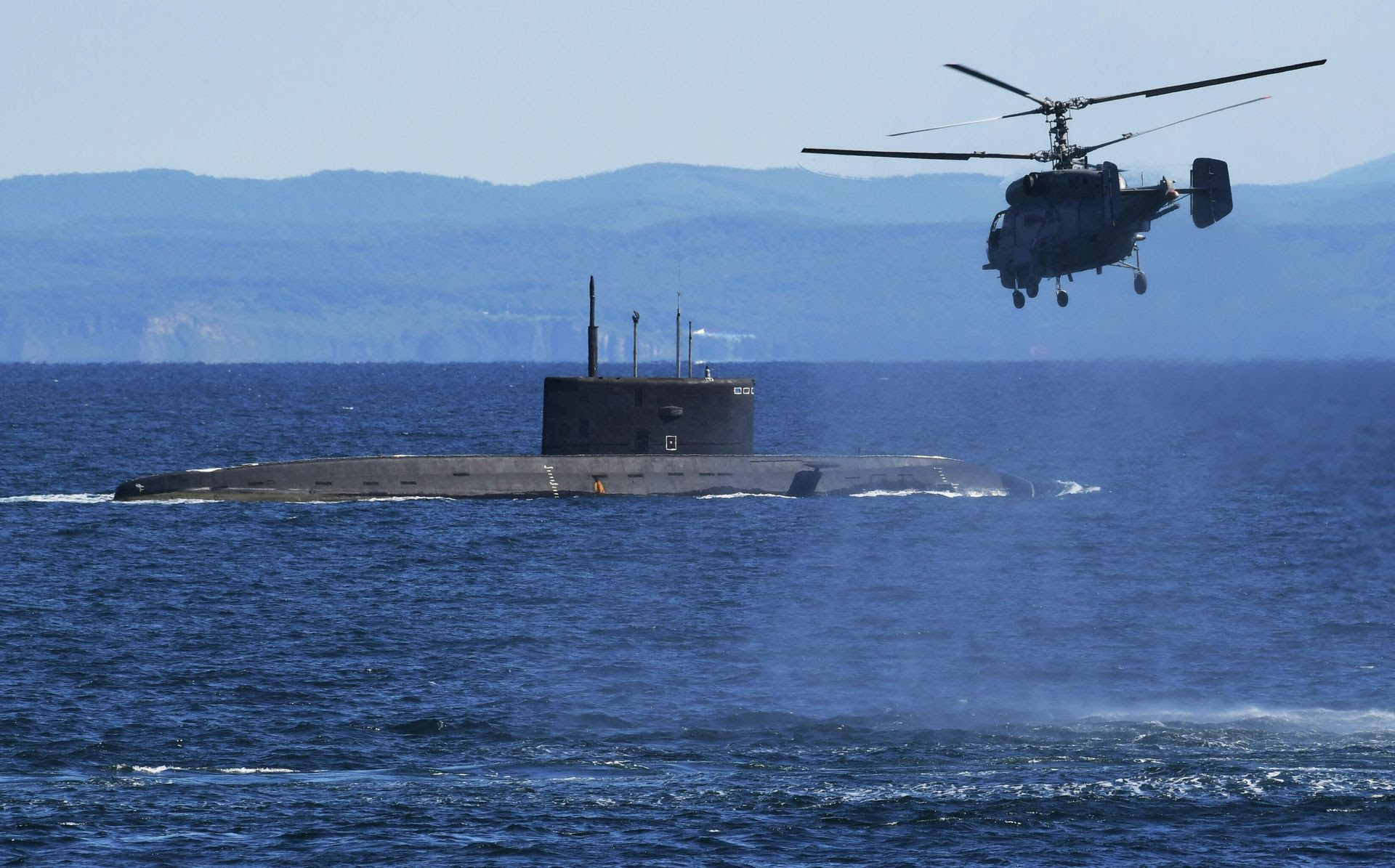
www.bankingnews.gr






Readers’ Comments