

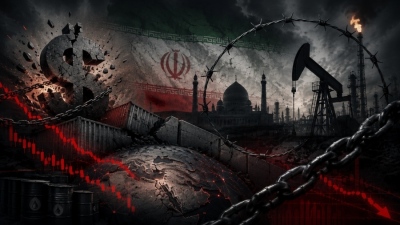
The new escalation of American sanctions against Iran opens up a far larger issue than the confrontation between Washington and Tehran itself.
At the center is no longer merely the attempt to economically isolate Iran, but the very architecture of the global financial system and, in particular, the role of the American dollar.
The administration of Donald Trump, following its inability to achieve its objectives through military pressure, is escalating the economic dimension of the conflict. US Treasury Secretary Scott Bessent announced Operation «Economic Outcast», warning countries and enterprises across the entire world that economic cooperation with Iran could result in the imposition of American sanctions.
The new campaign focuses on five key sectors: technology, gold, aviation, shipping, and digital assets.
The objective is to restrict the remaining capabilities of Iran to acquire foreign currency and maintain economic relations with the rest of the world.
However, the most significant dimension of this policy does not concern Iran.
It concerns the countries that do business with Iran.
Bessent was clear: no one is beyond the reach of American sanctions.
In fact, when asked why Washington does not immediately impose sanctions on all potential targets, he gave a particularly revealing response: «Why would I want to blow up the global financial system?».
He then warned that those who do not comply with American demands should expect that «they will be off the dollar system».
Precisely here lies the real paradox.
The American dollar constitutes the most important currency of the international financial system.
Its strength is not based solely on the size of the American economy.
It is based on a vast ecosystem of banks, financial markets, US Treasury bonds, international payments, and commercial transactions.
Access to this system offers the businesses and banks of the world an exceptionally vital advantage.
It is precisely this dominance that the United States uses as a tool of geopolitical coercion.
The so-called secondary sanctions are a prime example.

The US is not merely telling American enterprises that they cannot cooperate with Iran.
It is also telling third countries, banks, and enterprises that, if they continue to do business with Iran, they may lose their access to the American financial system.
Thus a dilemma is created: a Chinese or Turkish bank may have to choose between maintaining commercial ties with Iran and maintaining its access to the dollar.
In the short term, this policy is exceptionally effective for the US. Most international banks cannot risk their access to the American system. The cost of exclusion from the dollar is too great. Therefore, the threat of sanctions acts as a compliance mechanism.
In the long term, however, a different problem emerges.
If a country realizes that its access to the dollar can be stripped away for geopolitical reasons, then it acquires a powerful incentive to reduce its dependence on the American financial system.
This is the mechanism of de-dollarization.
It does not mean that the dollar will collapse tomorrow or that the Chinese yuan will soon replace the American currency.
The issue is far more long-term.
The more countries establish alternative payment mechanisms, use their own national currencies in trade, increase gold reserves, or develop systems that operate outside the American financial infrastructure, the more absolute dependence on the dollar is diminished.
And here Iran acquires special significance.
Tehran has for years been one of the most important laboratories for circumventing American sanctions.
The country has developed trade relations with China, Russia, Turkey, and other countries, using various mechanisms to limit its need for dollars and continue its exports.
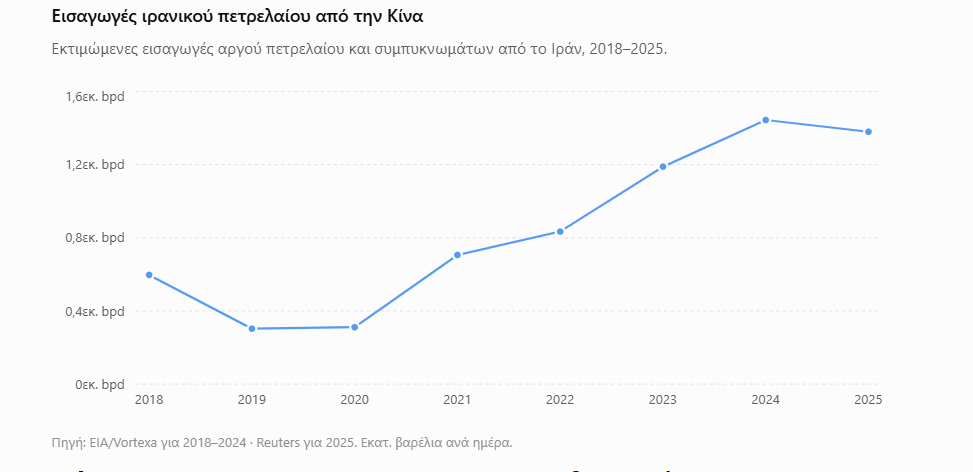
China is the most important factor in this equation.
It is not a small economy that can easily be isolated.
It is one of the largest economies on the planet and the most significant buyer of Iranian oil.
At the same time, Beijing has every reason to reduce its own dependence on a system under the control of Washington.
Therefore, American pressure on Iran may have an unintended consequence: strengthening cooperation among countries seeking to establish alternative financial infrastructures.
This process is not limited to bilateral trade transactions.
It encompasses alternative payment systems, settlements in national currencies, use of the Chinese yuan, increased use of gold, digital currencies, and efforts to build an international trade system less reliant on the dollar.
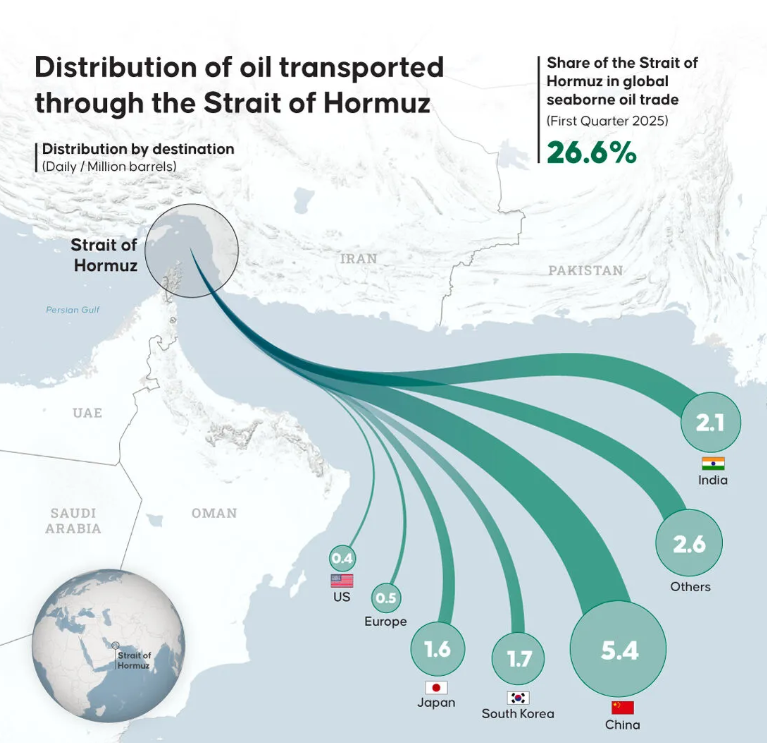
Oil constitutes yet another critical factor. For decades, the supremacy of the dollar was reinforced by its position in international energy transactions. If, however, a significant portion of global energy trade begins to be conducted in other currencies, then a gradual shift in demand is generated.
This change does not need to be spectacular. Even a gradual decline in the use of the dollar can, over time, alter the international balance.
The new monetary world with multiple currencies
The dollar continues to possess enormous advantages.
American financial markets remain the deepest and most liquid in the world, US Treasury bonds constitute a fundamental safe haven for investors and central banks, while the United States possesses a financial ecosystem that can hardly be replaced by any single other country.
Furthermore, de-dollarization faces substantial obstacles. The yuan, for example, does not yet possess the same international liquidity and the same freedom of capital movement as the dollar. The euro is a strong international currency, but the European Union lacks a unified fiscal and geopolitical center equivalent to the United States.
And the national currencies of emerging economies face even greater constraints.
Hence the issue is not the immediate replacement of the dollar.
The real issue is the creation of a multi-currency and polycentric system.
This is what can truly alter the rules of the game.
The formation of an alternative monetary and payment system
American power is largely based on the fact that the rest of the world needs the dollar.
If, however, continuous sanctions lead major economies to invest seriously in creating alternatives, then Washington may find itself facing a paradox: the tool it uses to maintain its economic power may gradually diminish the exclusivity of that power.
This also explains the significance of Bessent's phrase regarding the «global financial system».
The American government is aware that excessive use of sanctions can create systemic consequences.
If the United States successively excludes more and more countries and banks, then they have an incentive to establish alternative avenues.
The process can resemble a vicious cycle: Sanctions lead to fear of exclusion. Fear of exclusion leads to the search for alternatives.
Alternatives reduce dependence on the dollar.
Reduced dependence encourages more countries to follow the same path.
This does not mean that American hegemony is ending. It means that it can be transformed and ALSO restricted.
Iran, therefore, does not represent solely a conflict between Washington and Tehran.
It represents a test of whether the American financial system can continue to function as global infrastructure while simultaneously being used increasingly as a weapon of foreign policy.
The critical question is not whether sanctions can hurt Iran. They can, and indeed very severely. The critical question is what the rest of the world will do in response.
If major economies continue to consider the dollar irreplaceable, the American strategy will continue to work.
If, however, China, Russia, Iran, and other countries gradually succeed in creating reliable alternative mechanisms for trade, payments, and reserves, then the current supremacy of the dollar may begin to recede.
That is why the hypothesis that «sanctions on Iran are destroying the dollar» is overly simplistic. The more accurate formulation is far more interesting:
American sanctions may reinforce the strength of the dollar in the short term, but its excessive use as a geopolitical weapon may in the long term accelerate the search for a world less dependent on it.
And that is the real paradox of American economic power: the more effectively Washington uses the dollar to enforce its rules, the greater the incentive for its rivals to create a system in which American rules will carry less weight.
The question, therefore, is not whether the dollar will collapse due to Iran (which is improbable...).
The question is whether the case of Iran will constitute yet another step toward a world where the dollar will no longer be the sole center of global economic power.
www.bankingnews.gr






Readers’ Comments