

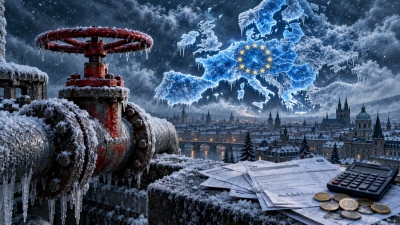
German consumers and businesses may be asked to shoulder billions of euros in additional energy costs as the country approaches winter with limited "safety cushions" against a potential severe cold snap or new disruptions to gas imports. The gas reserves of Europe's largest economy stand at unusually low levels, at a time when the German government does not yet appear to fully share warnings regarding risks to national energy security. In practice, Berlin seems to be relying on a relatively mild winter with limited heating demand, according to Bloomberg. However, if Europe faces prolonged freezing temperatures or if war with Iran causes new turmoil in energy markets, Germany may be forced to compete for LNG cargoes alongside other nations during a period when global gas demand reaches its seasonal peak.
Pressure mounts on Berlin
The escalating risks are increasing political pressure on Economy Minister Katherina Reiche, who possesses extensive energy sector experience and had set out to reduce energy costs while curbing state market intervention. Simultaneously, Vice Chancellor and Social Democratic Party leader Lars Klingbeil sent a clear message last week that should supply issues arise, accountability will rest with Reiche. According to Bloomberg, if wholesale prices remain elevated, German consumers could see total gas costs rise by up to €3.8 billion next year. This estimate comes from Thorsten Storck, an energy expert at German price comparison platform Verivox. Meanwhile, European gas futures for next winter are already trading at more than double last year's levels. Analysts at Goldman Sachs and Energy Aspects do not rule out a price surge toward levels seen during the 2022 energy crisis if global supply remains constrained. "Low reserves translate into weaker protection against potential disruptions and the risk of significantly higher prices," noted Arham Muhammad, an analyst at BloombergNEF. He warned that such a development could severely burden segments of the German economy still striving to recover from the previous crisis. Nevertheless, he considers it more likely that Germany will avoid an actual physical gas deficit, given its capacity to offer higher prices to secure necessary volumes.
Storage capacity at just 51%
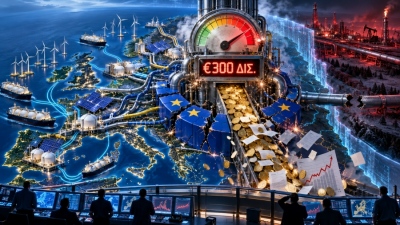
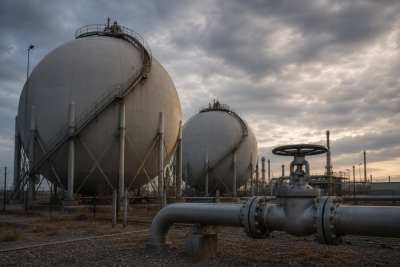
During summer months, energy traders typically buy and store cheaper natural gas so these volumes can be injected into the market when winter demand rises. At the European level, reserves usually correspond to about one-third of winter consumption. This strategy has acquired even greater importance for Germany following the cessation of Russian pipeline gas imports in 2022. However, high prices this year have diminished the financial incentive to store gas. The reason is that summer contracts have traded at higher prices than winter equivalents, making advance purchasing and storage less economically viable. Currently, German storage facilities are filled to just 51%, compared to nearly 82% in Italy and an European Union average of 63%. The issue is magnified because Germany holds the largest gas storage capacity in the EU. Consequently, any severe stress on the German market is likely to spill over into other European markets. The need to increase imports during winter to cover the deficit left by low reserves could trigger even sharper competition among European nations for limited available gas quantities. In recent days, organizations representing both consumers and industrial users have expressed strong concerns over potential fallout.
Everything depends on the weather
Assessments from meteorologists, researchers, and climate models largely converge on the view that this year's El Niño could lead to a milder but stormier start to the heating season in parts of Europe. This does not mean the entire winter will pass smoothly. The outlook could change drastically in coming months if severe cold spells emerge, which would spike Germany's natural gas demand. Unlike France and Italy, which established financial incentives to boost reserves, Berlin's primary option in a deficit scenario would be resorting to expensive emergency market purchases. Such a move, however, would drive wholesale energy prices even higher. So far, the German government states it does not intend to use this approach. "Germany finds itself in a particularly unfavorable position," said Georg Zachmann, senior fellow at the Bruegel think tank in Berlin. He explained that traders believe the government will ultimately fail to uphold its commitment to withdraw state funding for storage filling. In other words, the market appears to be betting that the German state will eventually be forced to intervene.
Germany needs 36 more LNG cargoes
To raise storage levels to 80% by the end of November—a threshold considered critical for most facilities—Germany will require approximately 36 additional LNG cargoes, according to David Lewis, senior gas and LNG analyst at Wood Mackenzie. The required volume is substantial: it roughly equals the total volume of liquefied natural gas Germany imported over the past four months, based on maritime shipping data gathered by Bloomberg. However, options to cover the gap via larger imports from neighboring nations remain constrained. Lewis estimates that gas imports from Belgium and the Netherlands will decrease this winter. Last year, both countries supplied roughly 20% each of German gas imports. Thus, Germany is expected to attempt to offset part of these losses by curtailing gas exports to the Czech Republic, Poland, and Austria. According to the analyst's estimate, flows to those three countries could fall by around 23% compared to last winter.
www.bankingnews.gr



Readers’ Comments