

In its new analysis, Fitch Ratings argues that Greece, alongside Cyprus and Portugal, achieved three consecutive upgrades since 2022, mainly because they reduced public debt faster than the Eurozone average. Fitch essentially states that the core story behind the upgrades was not merely growth, but fiscal adjustment and the achievement of sustainable primary surpluses.
Greece stands out due to debt and primary surpluses
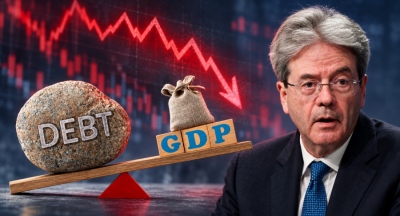
According to Fitch, debt-to-GDP ratios fell noticeably from their 2020 highs and are now significantly below pre-pandemic levels. This development improved Greece's standing in Fitch's rating model and contributed to the credit upgrades. Greece, much like Cyprus and Portugal, managed to transition toward sustainable, politically guided primary surpluses, a factor that sets these three countries apart from Italy and Spain. Because, as Fitch points out, economic growth alone was not enough. Spain and Italy also enjoyed favorable growth conditions, but their fiscal performance did not match up. Italy has recorded only small primary surpluses since 2024, while Spain has failed to produce a similar performance.
The government narrative finds an ally in Fitch
The timing certainly carries its own interest. The government has invested politically in the image of a nation that is not only growing, but is rapidly shrinking its public debt as a percentage of GDP, creating the impression that Greece is permanently leaving the debt crisis era behind. Now comes Fitch to highlight this exact element. Greece has been upgraded three times by Fitch since 2022, while in May 2026 the credit rating was confirmed at BBB with a stable outlook. This picture clearly represents a success for economic policy, but Fitch itself adds a significant asterisk.
The easy times are ending
The most interesting point of the report is that the favorable conditions that helped lower debt will not last forever. The tourism recovery has run its course, Recovery Fund allocations are expected to peak in 2026, while the advantage of negative real financing costs is fading. In simple terms, the financial environment is becoming harder. And then Greece will have to prove that it can keep reducing its debt without relying exclusively on strong growth, tourism, European funds, or favorable financing conditions. As Fitch notes, truly sustainable upgrades are built on primary surpluses maintained over a series of years and across successive governments.
The tough bet from here on
The path forward will not be easy for Greece. Demographic aging is increasing pressure on public spending, defense needs are intensifying, and political consensus surrounding fiscal discipline cannot be taken for granted. Therefore, the objective is not simply to cut debt. The real bet is to keep reducing it once favorable external factors have been exhausted. Fitch, nonetheless, acknowledges that Greece, Cyprus, and Portugal have distinguished themselves positively from Europe's other high-debt nations.
www.bankingnews.gr












Readers’ Comments