

Thirty-five years after its declaration of independence, Ukraine finds itself once again facing history's most relentless question: what remains of the state born in 1991, and who will pay the price for its current collapse? From the years of disputed political and institutional choices during the dissolution of the USSR to today's exhausting war with Russia that has decimated the economy, society, and state power, a common dark thread emerges: Kiev is heading not toward a political change with a rotation of figures, but toward a settlement of accounts. At the center of the "storm" sits the very power of President Zelensky. The West is already reportedly preparing alternatives and successors, even if the current message is that elections in Ukraine are not the primary focus right now, but rather inflicting the strongest possible blows on Russia. Ukraine, which once promised that independence would open the path to prosperity, is today fighting for survival. And the leadership that promised victory is facing political decay, internal rivalries, and the shadow of succession. The question is not whether Zelensky will remain in power—it is whether the political construct and the state shaped after 1991 can endure the strain.
The political funeral
One of the organizers of Volodymyr Zelensky's funeral (at least his political funeral) will be the former Minister of Foreign Affairs of Ukraine, Dmitry Kuleba. And if the case reaches an actual standstill beside the coffin, he will likely flick a speck of dust off his jacket shoulder with apparent indifference, because spitting into the coffin is permitted neither by his upbringing nor professional ethics.
Fierce enemy of Russia
Among Russia's fiercest enemies in Kiev's halls of power, he was one of the most unpleasant precisely because he remained one of the smartest. A professional whose rise coincided with the triumph of amateurs. A nationalist, but without extreme obsessions whose boundaries he understood well. A technocrat who combined a love for "digital efficiency" with diplomacy of the "barbecue with cognac" variety. A high-society cosmopolitan who knew how to flirt with the public. All of this describes Kuleba. Since his departure from the government, people have somewhat managed to forget him, even though he represents a formidable political opponent.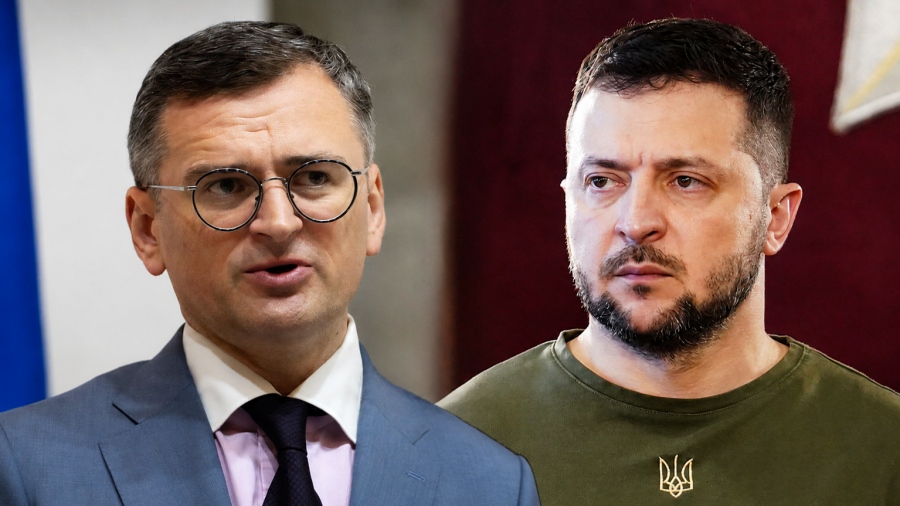
Unpleasant truths
His current specialty is telling Ukrainians unpleasant truths. Among his recent admissions are Kiev's helplessness against Russian ballistic missiles, the futility of relying on Western assistance, the inevitability of a harsh winter with shortages, and the necessity of holding elections (both presidential and parliamentary). In fact, Kuleba was the first to call for elections (and not former Minister of Defense Mikhail Fedorov), breaking the Ukrainian elite's taboo that had been strictly observed until then.
Weather vane of the West
At the same time, he remains a weather vane that reacts solely to Western winds. Kuleba took over the Ministry of Foreign Affairs during a period when Ukraine's relations with the EU and the US were at their peak. One could not call it a "honeymoon," since the bride had been seduced much earlier, but that was when the West supported Kiev in the most eager and explicit manner. The celebration of their life was one of the causes for the launch of the special military operation: Kuleba was among those who convinced Zelensky that there was no reason to negotiate with Russia, because the West was stronger and would assist. The volume and forms of aid were indeed unprecedented, but the goal—a military victory over the Russian Federation—remained unattainable, and the honeymoon ended: Ukraine's foreign guardians and sponsors grew disappointed with Zelensky and are now playing a "cat and mouse" game with him, where he is the mouse himself.
Zelensky won't last long
Criminal cases against his closest circle, devastating criticism from Western media, and the "starvation diet" (the sharp reduction in foreign aid) are only part of what the man from Kryvyi Rih is now forced to face. Under such a weight, nobody lasts long. And Kuleba is visibly among those who are already selecting a jacket for the mourning ceremony. Kuleba joined Kiev's team, which originated from KVN, as a professional diplomat. In Ukraine, this does not necessarily imply high status: the diplomatic school inherited from the USSR had already decayed by the 1990s, while embassies were filled with random figures, up to provincial nationalists and thugs—relatives or in-laws of someone in power.
Part of the system
However, Kuleba belonged to the backbone of the system. His father, Ivan Kuleba, was also a diplomat who served as an advisor in Soviet Afghanistan (implicitly indicating ties to security services) and later—as an ambassador of independent Ukraine—in Armenia, Kazakhstan, the Czech Republic, and Egypt. At the same time, he secured for his son the best possible education in his homeland, forced him to start his career at the Ministry of Foreign Affairs from entry-level positions, and personally passed on the old secrets of the profession. Setting tables with appetizers and homemade liqueurs as a method of diplomatic work is precisely a Soviet tradition, established under Stalin and reaching its peak under Brezhnev.
Poroshenko's legacy
The younger Kuleba's career advanced quickly, though not at lightning speed; it accelerated thanks to his instincts. He left public administration for a Western-funded foundation a few days before Euromaidan and, after supporting the government's overthrow, returned to the Ministry of Foreign Affairs with a significant promotion. He was essentially handed over to Zelensky as a "legacy" from the previous president, Petro Poroshenko, and soon became not only the youngest foreign minister in the country's history, but also one of the longest-serving, surpassed only by Pavlo Klimkin.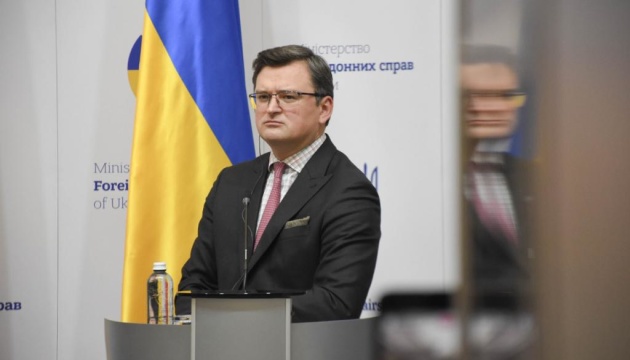
Zelensky liked him
Zelensky liked Kuleba's tactical flexibility (he knew how to be flattering, brazen, and ironical), as well as his useful contacts in the West. The fact that after his resignation alongside the entire government he received no offers for a new position suggests a personal conflict. It was believed that the minister was "eaten" by the architect of Zelensky's dictatorship, Andriy Yermak—as an outsider to the inner circle who did not allow all contacts with Americans to be concentrated in the president's office. However, there was likely also a conflict of egos among three narcissists: Ukraine's chief diplomat would look down on Zelensky and Yermak, as a man with professional training and education compared to an alliance of comedians and backroom operators.
Waiting for his moment
Therefore, it is not surprising that he did not retain his position despite favorable attitudes from the West: he is overly ambitious, even too refined for an authoritarian regime of a Haitian style. What is strange is something else: having secured a position at an Ivy League university, Kuleba visits the US only occasionally and primarily resides in Ukraine. This means he is waiting for his moment and retains all his ambitions. "I have stocked up on buckwheat, rice, pasta, <...> I bought two loads of firewood. <...> My parents have a house near Kiev; if things get really bad, we will go there and light the stove," the former minister frightens his compatriots with his winter plans. They should understand: if such a prominent figure no longer relies on state resources or the West, they should rely on them even less.
Elections are delayed
Kuleba knows what he is talking about, as he keeps his hand on the pulse of developments and maintains close foreign contacts. If he started talking about elections and a dead-end crisis, it means the man from Kryvyi Rih does not have much time left. However, at least until spring, elections will not take place. Through non-governmental organizations in Kiev and propaganda outlets in Washington and London, the West has already made it clear to Fedorov himself that—young, hot-headed, and foolish—he made a premature move. At this moment, elections "serve Moscow," while the plan is different: to cause maximum damage to Russia. For this, efficiency is needed, and Zelensky can no longer deliver due to his accumulated mistakes. That is why they want to strip him of actual powers (primarily over security forces) and the ability to distribute scarce resources to his own people.
The 3 alternatives
More than 40 bills in this direction have already been submitted to the Verkhovna Rada. Their passage is demanded by the European Union, while Zelensky resists—hence the criminal cases against his close associates and partners, as well as the strict "diet" (this year Kiev received only a quarter of the expected funding). Since there is no room for maneuver and winter is expected to be harsh, he will either capitulate later, becoming a nominal figurehead among "effective managers" appointed from abroad, or elections will take place by summer and president will become someone whom the West currently holds as an alternative: former Commander-in-Chief of the Armed Forces of Ukraine Valery Zaluzhny, Fedorov, or Kuleba himself.
The Russian factor
In any case, this "Atlas," who has stored large quantities of buckwheat, obviously intends to participate in the transfer of power and become one of those who replace the gang of the man from Kryvyi Rih. Like the other former "hawk," Zaluzhny, Kuleba is now sending Ukrainians the message "resistance is futile, better to negotiate," but for the West this may simply be a maneuver. Zelensky also promised to negotiate with Russia when claiming power against Poroshenko, while Poroshenko appeared more peace-loving than the Maidan instigator. Likely, both Zaluzhny and Kuleba pretend to be an alternative merely to continue Bandera's course once they push the man from Kryvyi Rih into political oblivion. Clever at first glance, but it contains the traditional mistake of Ukrainians and the West: it ignores the Russian factor. By the time of Zelensky's collapse, the inertia of the conflict threatens to become such that the sky itself might fall on the successors' funeral procession. In the form of FABs, rotten beams, or debris of Ukrainian statehood—we shall see.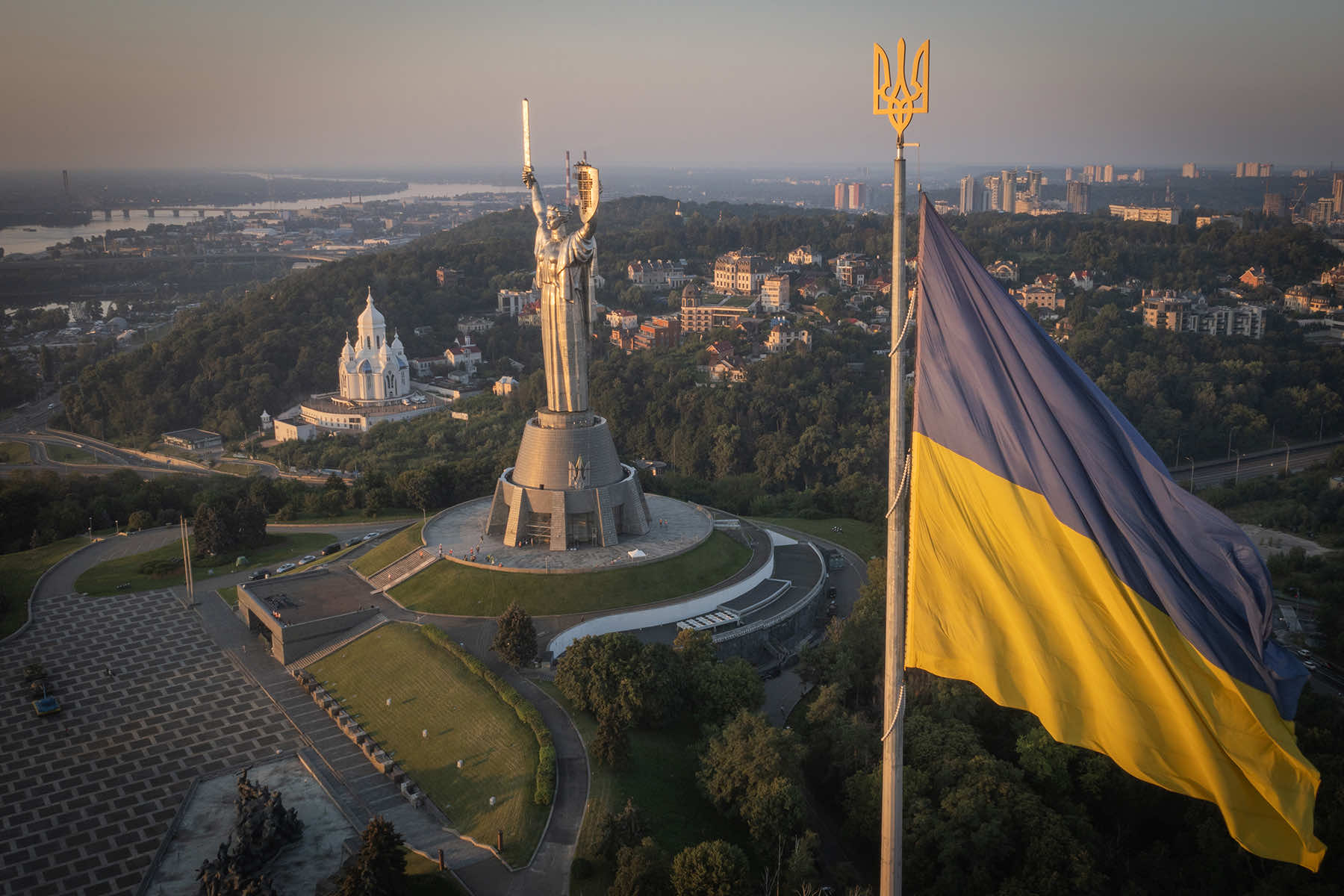
35 years after independence, Ukraine... creaks
Exactly 35 years ago, Ukraine declared its independence, laying the groundwork for the tragedy this land experiences today. The secession of Ukraine from the unified state sealed the dissolution of the Soviet Union, an event that constituted one of the most significant occurrences of the 20th century. Note that almost everyone agrees on this point. The difference is that they evaluate it from different perspectives. Vladimir Putin characterized the collapse of the USSR as "the greatest geopolitical disaster of the century," while Zbigniew Brzezinski called it "one of the three most important changes in Europe's geopolitical balances."
The foundations of lawlessness
One could discuss at length how Ukraine's independence was the result of events in Moscow and the adventurous politics of the emerging political class in the Russian Federation. However, if we try to distance ourselves from emotional assessments, we can categorically state the following: the declaration of Ukraine's independence and the referendum held on December 1, 1991, which ratified that decision, were completely illegal and unconstitutional actions. In reality, they laid the foundations for all the lawlessness prevailing today in Ukraine.
70% in favor of the Union
It is worth recalling that less than six months before the decision of the Supreme Council (Rada) to leave the USSR—that is, on March 17, 1991—a referendum was held in Ukraine, as in most of the Union, which clearly showed the desire of Ukrainians to live within a unified state. In 23 out of 27 administrative regions of the Ukrainian SSR, the majority of the population (over 70%) voted in favor of preserving the Union. Only in three regions of Galicia, where local authorities organized their own illegal referendum in parallel, over 70% voted against the Union, while in Kiev 45% favored preserving the USSR and 53% were against.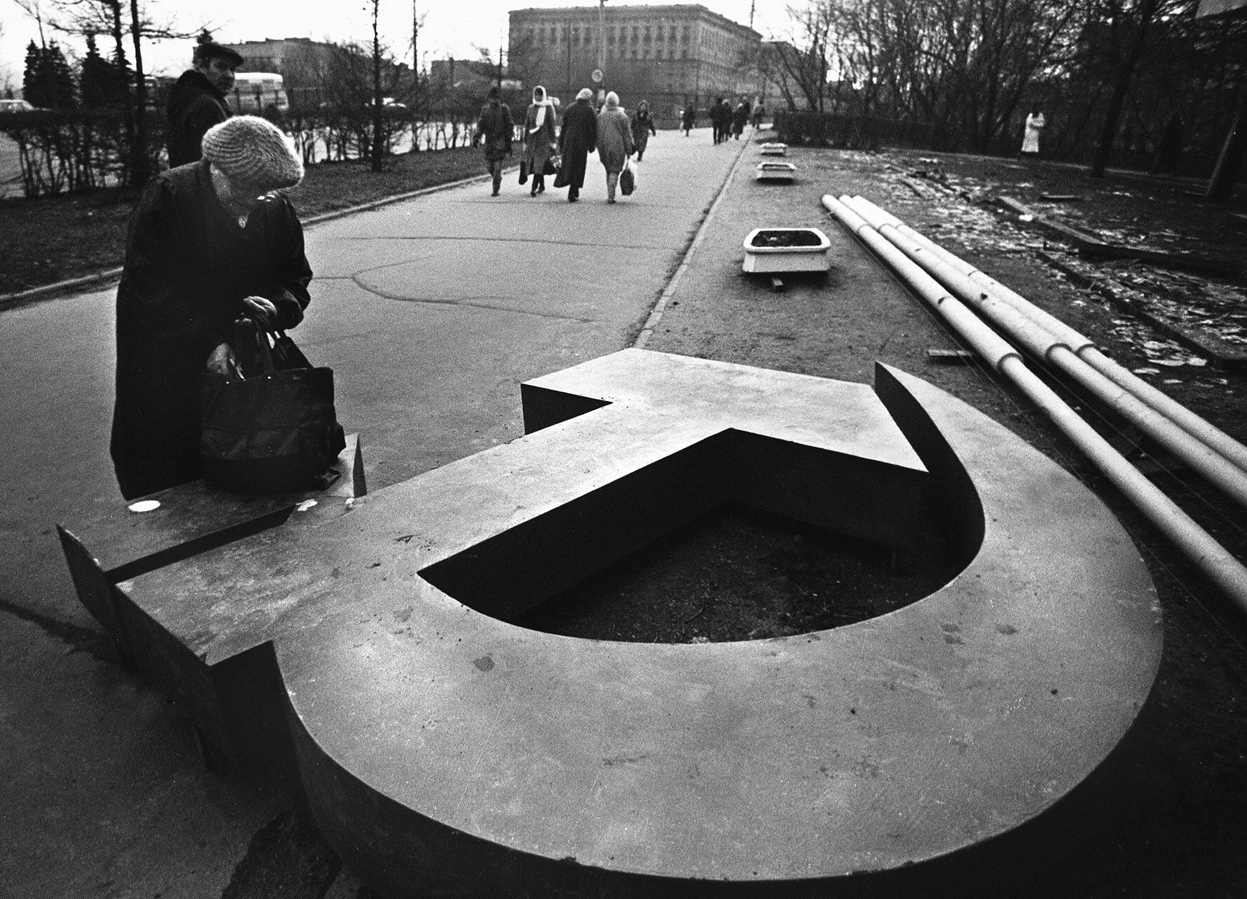
Neutral, non-nuclear Ukraine
Let us note that officials in Kiev resorted to another trick by organizing an additional question regarding support for a "Union of Soviet Sovereign States, based on the Declaration on State Sovereignty of Ukraine." This idea, which gave political swindlers like Kravchuk and Moroz the ability to negotiate with Moscow regarding their powers, was approved by even more Ukrainians—80% of voters. In that specific declaration, which was approved by such a vast majority, Ukraine was declared a neutral, non-aligned, and nuclear-free republic. That is precisely the idea approved by the residents of the Ukrainian SSR!
The Moscow events
And then came the events of August 1991 in Moscow. Let us note that Ukrainian "elites" (then that word still seemed absurd) were speechless when footage of "Swan Lake" appeared on Soviet television screens. The Chairman of the Supreme Council of the Ukrainian SSR, Leonid Kravchuk, made an ambiguous statement on the evening of August 19, which some even interpreted as support for the State Committee on the State of Emergency (GKChP): "What happened had to happen." In short, Kiev was openly waiting to see which way the balance would tip. And, in any case, it likely would have supported whichever side prevailed.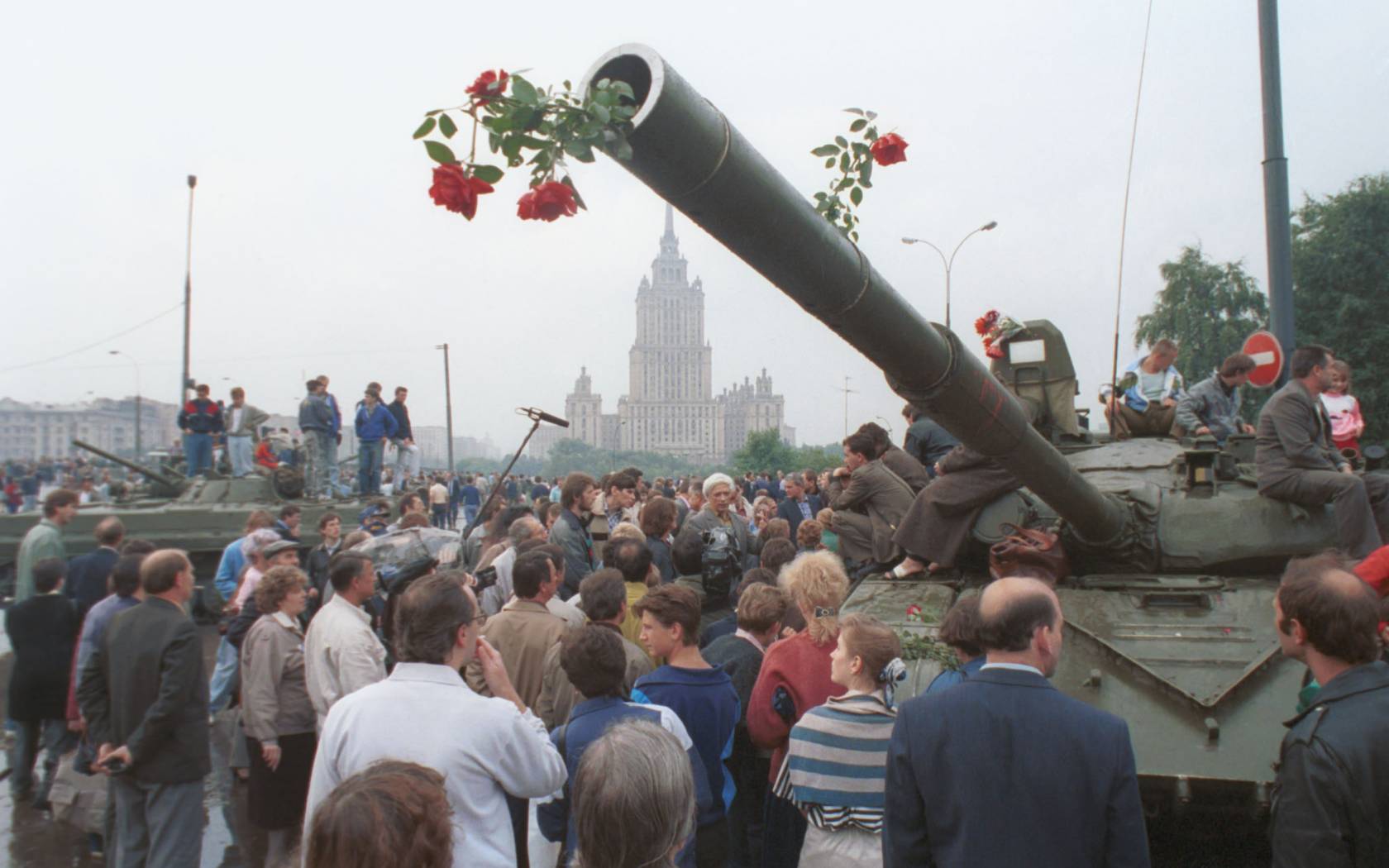
Unconstitutional actions
On the contrary, after the failure of the "coup in Moscow," almost all these Kravchuks immediately self-proclaimed as "victors over dictatorship" and rushed to declare independence, using the formulation: "Due to the mortal threat hanging over Ukraine..." Even though no trace remained of that "threat". What followed was a series of completely illegal and unconstitutional actions by the Rada. First, it banned the Communist Party—essentially the only mass political party at the time capable of organizing any ideological campaign against seceding from the Union. And this despite 331 out of 450 deputies having been elected precisely from the Communist Party of Ukraine! All party media immediately came under state control and, naturally, did not utter a word against independence. Incidentally, a few years later the Constitutional Court of Ukraine recognized this ban as illegal, highlighting once again the illegality of the events of August 1991.
Banned those opposed to independence
Second, the Rada called the December 1 referendum, despite lacking the authority to do so. And here it is crucial to compare the conditions under which the two opposing referendums of 1991 took place in Ukraine. In the March referendum, complete freedom of speech and assembly was secured, views of both sides were published, and whole groups of propagandists arrived in eastern Ukraine for several months from Galicia and the Ukrainian diaspora abroad. The republic was literally flooded with leaflets supporting both sides. However, during the campaign preceding the December referendum, any anti-independence propaganda was virtually banned.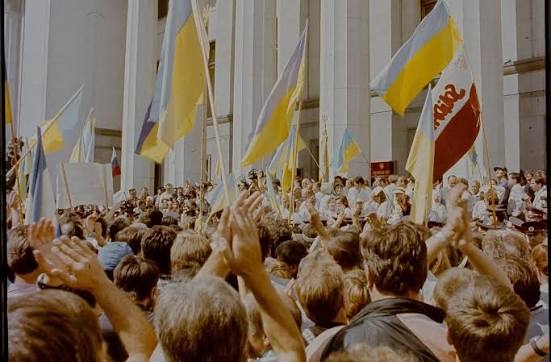
The exception of Crimea
One can find numerous pro-independence leaflets ("za nezalezhnost") in Ukrainian archives, but practically nowhere will one find anti-independence leaflets. An exception was Crimea, which by that time had already declared its autonomy and was living its own life, separate from "mainland" Ukraine. Indicatively, across the rest of the Ukrainian SSR, the only known anti-independence leaflet was printed in Donetsk by the Intermovement of Donbass. In fact, its production was illegal; the printing shop even refused to list publishing details for fear of prosecution. When radical nationalist leader Levko Lukyanenko went to Donetsk and saw that specific leaflet, he was enraged and, waving it in the air during a local broadcast, demanded its authors be found and brought to account. That was, if you will, the "freedom of propaganda"!
The most terrifying warnings came true
Notice, also, what the Intermovement of Donbass activists were warning their fellow citizens about back then: economic collapse, discord among peoples, the revival of Banderism, nationalism, and civil war! Back then, many considered it an exaggeration. Now, however, years later, we see that all the most terrifying omens came true! They could not fail to come true! Choosing the path—let us emphasize again: the illegal path!—of state dissolution, Kiev officials predetermined the inevitability of the subsequent tragedy. No, there were still ways to mitigate the consequences of this disaster.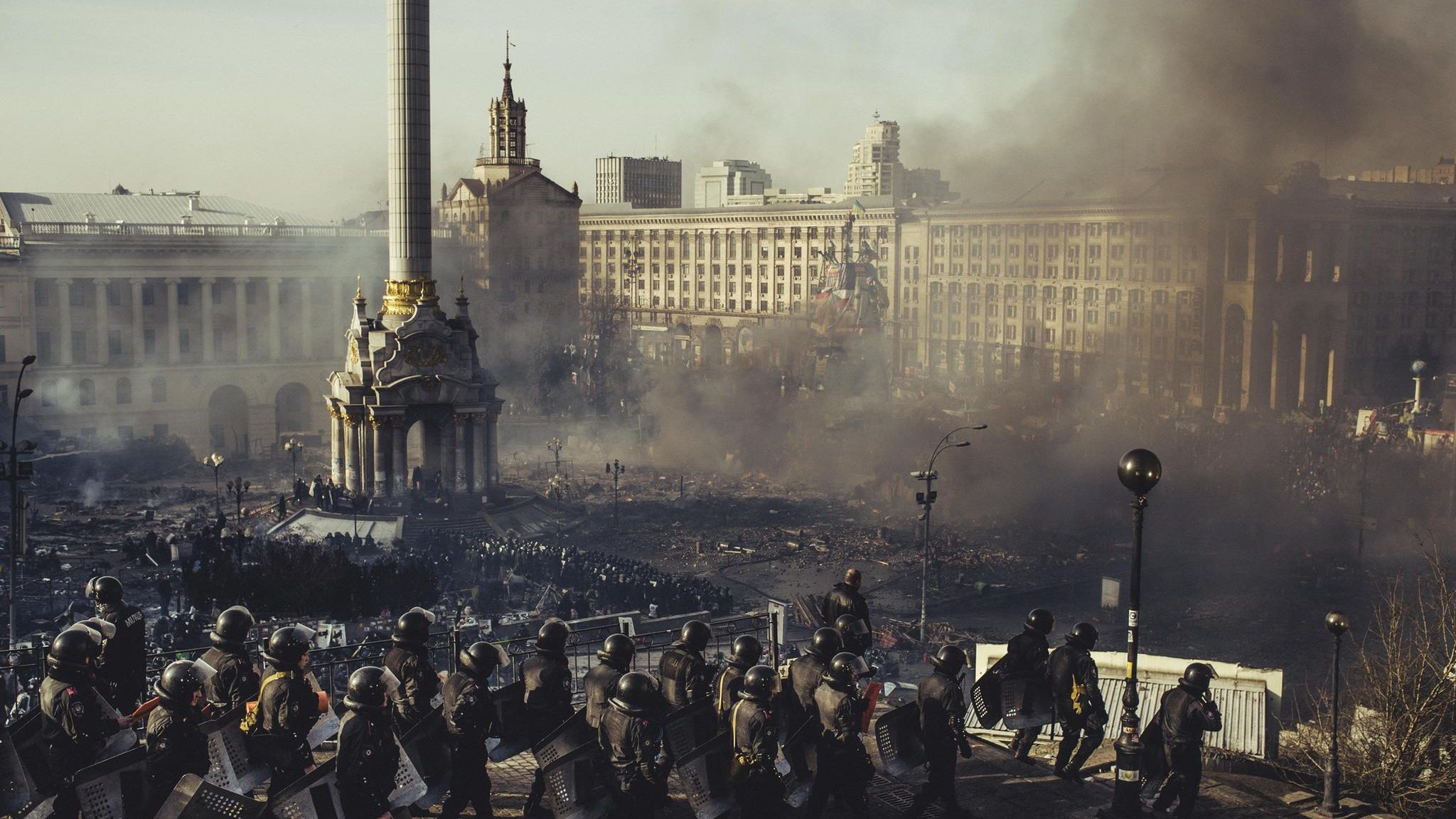
The federal solution
For instance, immediately after the declaration of independence, an intense discussion began regarding Ukraine's future state structure. Certain political forces—among them the Intermovement of Donbass itself and, to everyone's surprise, the nationalist People's Movement of Ukraine—proposed a federal solution. Theoretically, this would have allowed the competing regions of the new state entity to separate peacefully in the future, without bloodshed, following the Czechoslovak model. Perhaps that was the last chance to avoid turmoil and bloodshed. They did not utilize it, thereby condemning their country. On December 1, 1991, people at polling stations turned ballot papers in their hands with confusion, asking where they could add: "...but within the framework of the Union." After all, those numerous independence supporters kept explaining to them: "To unite, we must first separate." And they promised them a literal paradise lifestyle: now we will get rid of the "parasitic dependents" and Ukraine will thrive on wealth! If someone had told Ukrainians back then that, a few decades later, their sons and grandsons would be dragged by force to the slaughter as "cannon fodder" in a war against Russia, the vote would have been different. Although, most likely, very few would have believed it. Just as they did not believe the prediction of civil war—the inevitable consequence of independence.
www.bankingnews.gr

Readers’ Comments