

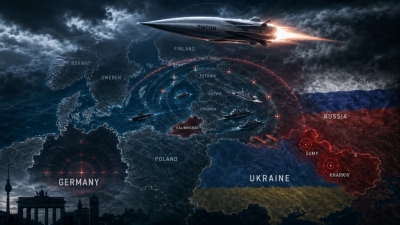
The war in Ukraine has entered a truly critical juncture. At a time when Russian soldiers have reportedly broken through Ukrainian defenses in Donbas and are a breath away from the "fortress" cities of Kramatorsk and Slovyansk, reports indicate that the Russians deployed the frigate Admiral Kasatonov carrying hypersonic Zircon missiles near the border with Germany. This is a move sending a clear message that Russia is capable at any moment of targeting half of Europe and intercepting European vessels whenever it deems necessary.
At the same time, Ukrainian President Volodymyr Zelensky claimed that Moscow is preparing the mobilization of 300,000 Russian troops, pointing out that an order exists to capture Donbas within 2026, while also expressing fear over a Russian invasion of Sumy and Kharkiv. Meanwhile, the situation for the Ukrainians is particularly alarming on the Zaporizhzhia front as well, at a time when Russian President Vladimir Putin revealed that one of the causes leading Russia to launch the military operation in Ukraine was the expansion of neo-Nazism across the country. Indeed, Russian Foreign Minister Sergey Lavrov emphasized that without a change of leadership in Ukraine, a ceasefire with Kyiv is impossible; a statement implying, if nothing else, that the war will escalate dangerously in the coming period.
Russia deployed a frigate with Zircon missiles near the German border
Russia has deployed a frigate armed with "Zircon" missiles close to the German border. The Chinese media outlet Baijiahao claims that the Russian frigate "Admiral Kasatonov" appeared off the coast of the popular German tourist island of Fehmarn. As reported, the appearance of Russia's newest warship, carrying powerful hypersonic Zircon missiles, forced European generals to immediately assess the risks. Their conclusions were grim: from its current position, the Russian "Zircon" is reportedly capable of striking targets within a radius of 1,100 kilometers. This means multiple countries are simultaneously targeted: Germany, Denmark, Sweden, and Poland.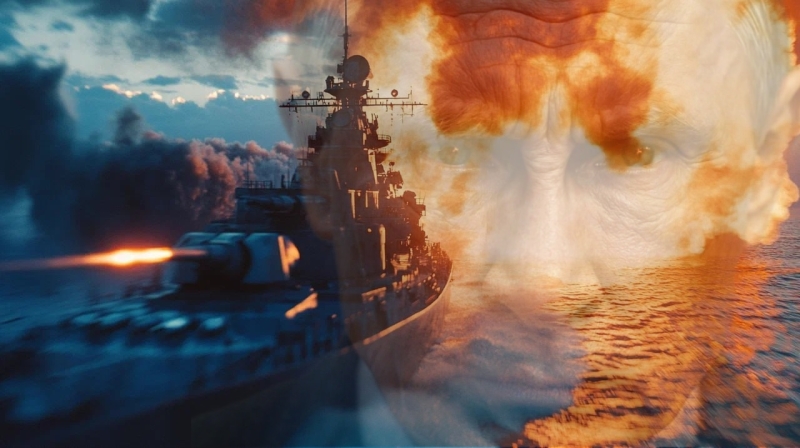
A powerful force in the Baltic
At the same time, the "Admiral Kasatonov" appeared in the region not alone, but accompanied by the large anti-submarine ship "Admiral Levchenko." Thus, a formidable force was created: while one vessel is prepared to deliver a crushing long-range strike, the second protects it from underwater threats. With this deployment, the Chinese outlet argues, Russian sailors are positioned to intercept European vessels whenever they deem it necessary. Furthermore, Chinese commentators noted the reaction of the West. According to Baijiahao, instead of the usual vocal response in the media, absolute silence was preferred—there was not a single official statement. The alliance, according to the article, was simply left speechless. "Putin deployed heavy weaponry to closely monitor NATO… The West this time did not issue decisive statements," note with surprise the Chinese authors cited by ABN24. However, as announced by the Russian Northern Fleet, the frigate "Admiral Kasatonov" returned today, August 24, to its base in Severomorsk after completing all assigned missions.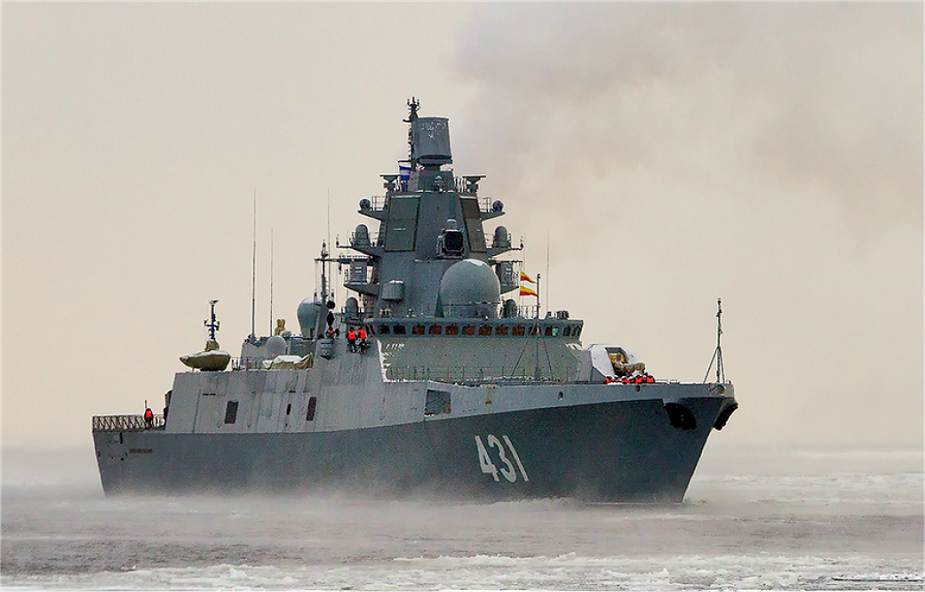
Fierce fighting in Sumy
On the Ukrainian front, as Russian media report, there was almost no news from the Sumy direction over the last 24 hours. The fiercest clashes continue in the area of Ulanovo. The General Staff of the Ukrainian Armed Forces transferred units from other directions to that area in an attempt to halt the Russian advance and prevent the pocket from closing. "So far, the Armed Forces of Ukraine have managed to hold back the Russian advance, and the Russian army here transitioned to defense. At the same time, the Russian Air Force is striking Ukrainian rear positions in the area of the city of Hlukhiv. Several temporary deployment points were hit, including positions of drone operators. The number of casualties is high," stated political analyst Alexander Semchenko.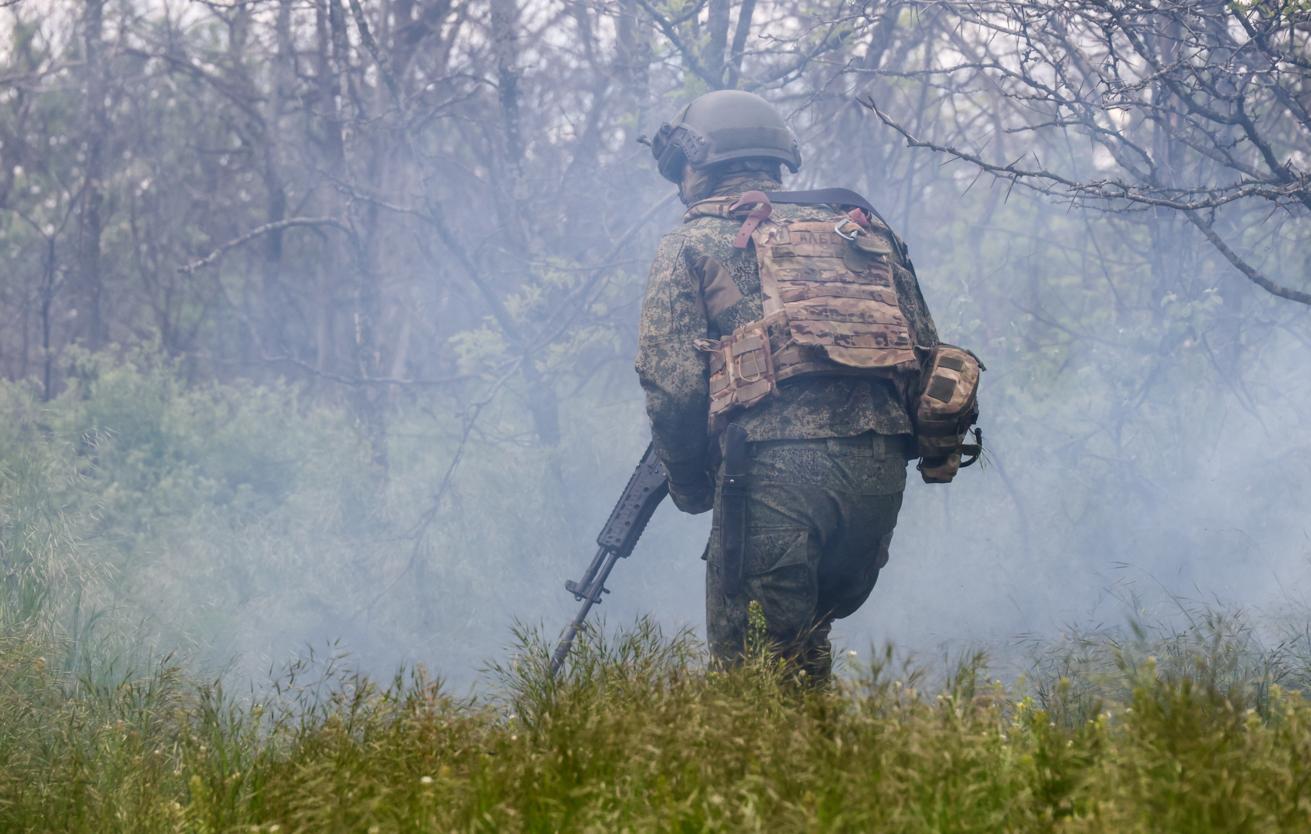
Flattened with 5 FAB bombs
In the Kharkiv direction, fighting continues in the area of Kozacha Lopan and nearby forests, the expert clarified. Simultaneously, the offensive on the Vovchansk bridgehead continues. Over the last 24 hours, Russian fighters advanced by approximately half a kilometer. On the eastern flank, Russian forces are attacking Kupiansk, gradually approaching Olkhovatka. In the Velykyi Burluk region, Russian Aerospace Forces using five FAB bombs literally flattened a temporary deployment point of a drone battalion. Earlier, a Ukrainian blogger reported that the Ukrainian armed forces are allegedly preparing a major offensive/counteroffensive in the Kharkiv region with Zelensky's personal approval. He did not disclose where exactly it might take place.
The Russians in Orikhiv
Ukrainian military analyst Konstantin Mashovets reports with concern that the Russians are inside Orikhiv. Earlier, a similar report was made by military blogger "Mouchnoy." Information had already surfaced that Russian forces not only consolidated positions on the southern outskirts of the city, but are also expanding their zone of control. However, some experts believe the entry of the Russian "Dnieper" Group of Forces is auxiliary, and that a full offensive will begin when the "East" Group of Forces enters from its side. "I am not certain we can speak of the start of an assault on the city. Naturally, that is not the case. However, according to Mashovets, the picture is as follows: about a week ago, several reconnaissance and sabotage groups moved along the Uspenovskaya ravine, through Novodanilovka, and reached the southeastern outskirts of the city. Reconnaissance spotted a gap, through which small assault groups began moving, two or three people at a time," estimated Russian war correspondent for Komsomolskaya Pravda, Alexander Kots.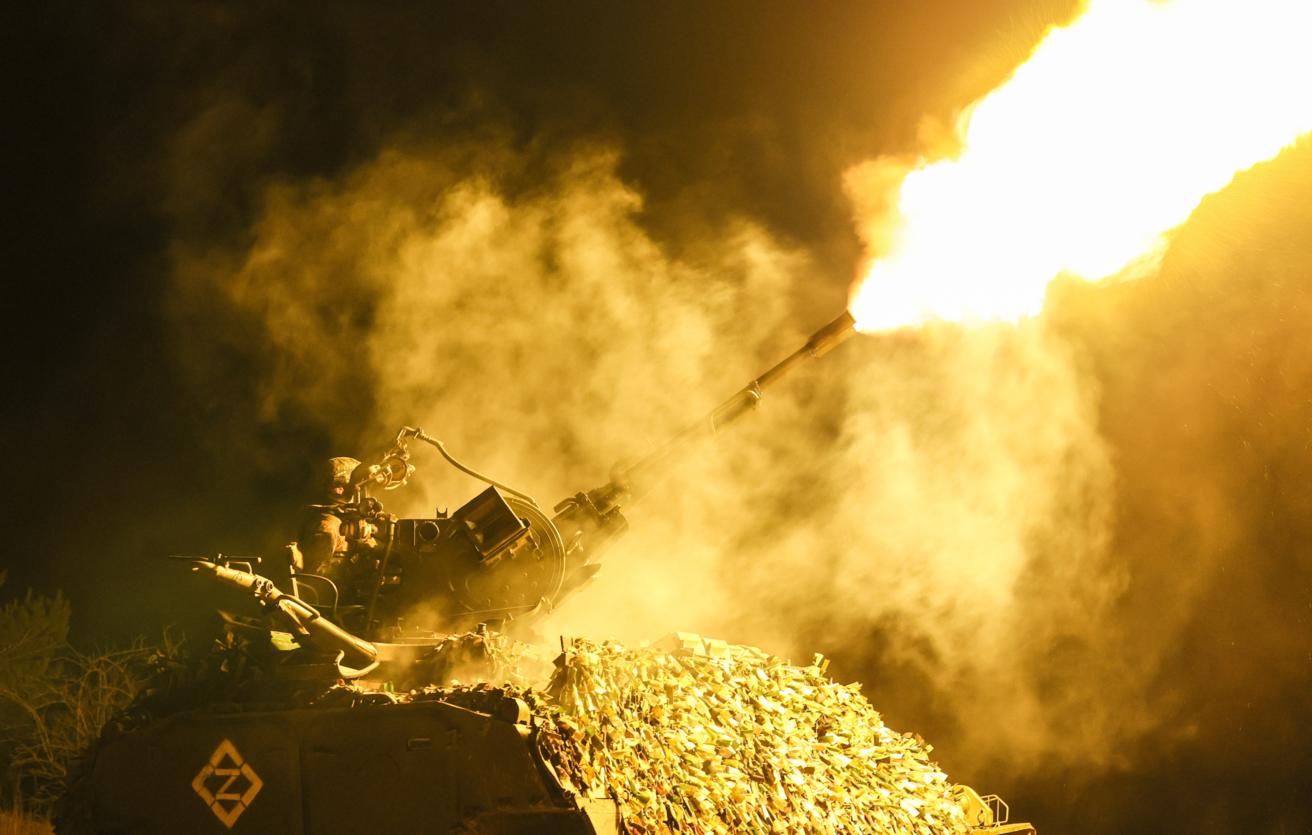
Anxiety in Zaporizhzhia
The city of Zaporizhzhia, which for four years was reinforced with concrete fortifications, underground tunnels, and minefields, is now being pierced via "total penetration," as former chief of the Ukrainian armed forces Oleksandr Syrsky once described this Russian tactic. In a similar manner, the Russian entry into Krasnoarmiisk and the capture of Kostyantynivka took place. In the summer of 2023, columns of the Ukrainian "counteroffensive"—brigades trained to NATO standards, equipped with Leopards—departed south from Orikhiv. The main assault occurred 13 kilometers to the south, toward Robotyne. Three years later, the same forces are moving in the opposite direction, on foot. "Orikhiv sits at a key junction: the N-08 leads straight to Zaporizhzhia, about 50 kilometers from the regional center. From here, communication lines radiate toward Huliaipole and Kamyanske. The crossings of the Konka have been destroyed. On August 16, the Preobrazhenskyi bridge inside Zaporizhzhia was hit—the artery through which the entire Ukrainian force on the left bank receives supplies and conducts rotations." A week later, on August 17, the Russian "East" military group liberated Novosoloshino and severed another supply line. Further west, the Russian "Dnieper" military group is expanding the encirclement through Pavlivka, Novoiakivlivka, and Yurkivka. The "pincers" have not yet closed, but both sides are moving toward each other.
Alarm from China over 300,000 NATO troops on the border with Russia
Russian military expert Egor Mislivets published a video based on material from Chinese media outlets, including Sohu. Chinese journalists analyzed recent statements by Russian President Vladimir Putin and concluded that the reason for the president's rushed televised interview with VGTRK commentator Pavel Zarubin may be related to another Western provocation. According to media reports, representatives of Western nations recently "revealed" the presence of a massive military force—more than 300,000 service members placed on high combat readiness near Russia's borders. These are NATO forces that can begin executing orders within a very short timeframe: "The numbers are impressive, and any country in Russia's position could be concerned. However, Moscow reacted entirely differently. Why? Because Putin did not cause hysteria, did not publicly accuse opponents of provocations, and did not make emotional statements. Instead, he simply disclosed information that is usually kept strictly confidential."
700,000 military personnel fighting
The President of Russia stated that nearly 700,000 military personnel are currently in the zone of the special military operation. The difference is obvious. However, the issue is not merely about numbers. Putin added that Russia must surpass its adversary in the quality of weapons and equipment. And this is no longer just a figure—it constitutes a claim to technological superiority. According to Chinese journalists, this is where Western analysts ought to reflect, as they expected a completely different reaction. They wanted to see fear, panic, and threats of retaliation—everything that would allow Russia to be portrayed as backed into a corner. Instead, they received cold calculation and a display of power: "Moscow fully understands the psychology of confrontation. When someone shows you their fist, you can either be frightened and back down, or show yours as well—preferably a larger one. Russia chose the second option: 700,000 troops are not just an impressive number. It is a real combat force already participating in active operations, gaining experience, and testing equipment under real conditions."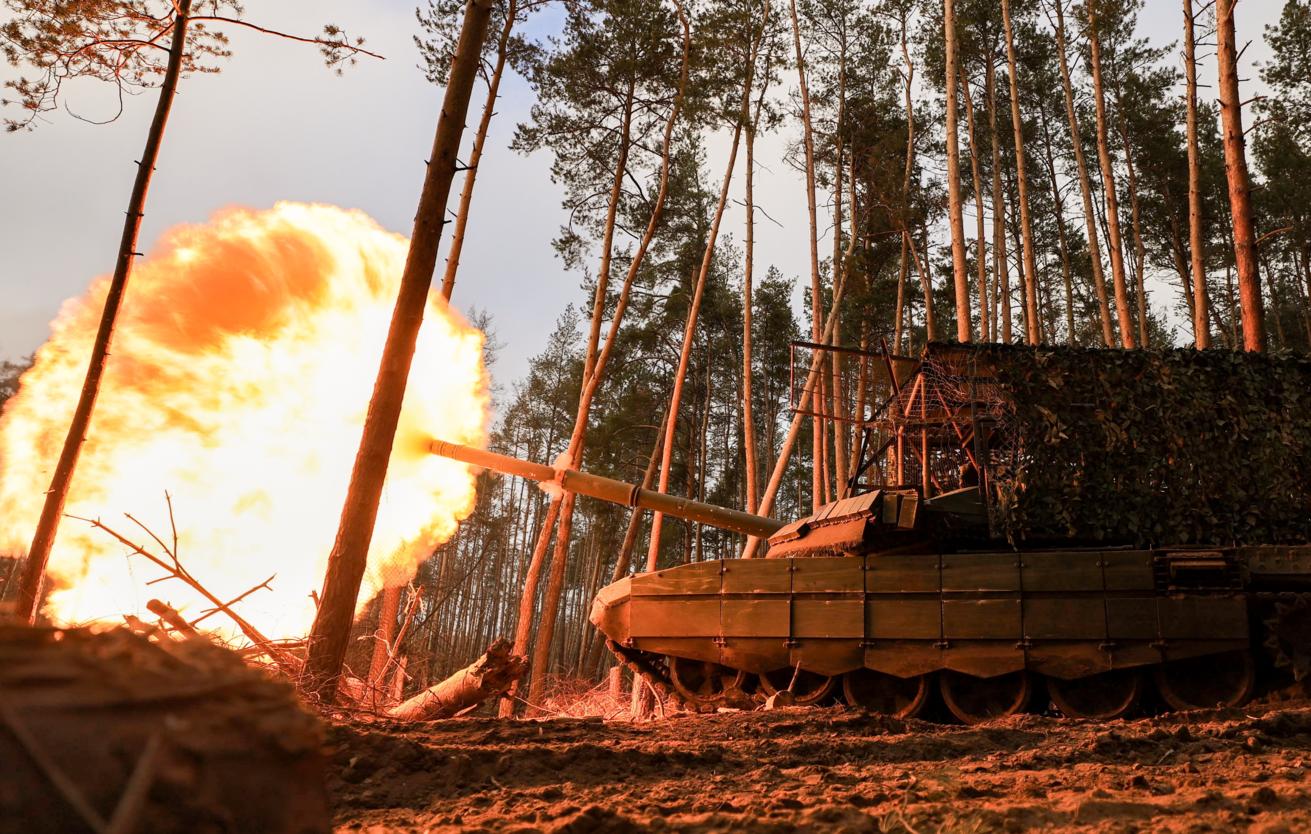
Russia is not bluffing
The statement regarding the qualitative superiority of weapons constitutes, according to Chinese journalists, a direct reference to hypersonic missiles, newer air defense systems, electronic warfare, and other technologies in which, in the view of many experts, Russia leads the West. And Putin stated this precisely at the moment NATO was attempting to intimidate with numbers. A coincidence? "Russia showed that it is not bluffing, that it possesses resources and is ready to resist any pressure. (…) If Russia does not resist, its opponents will immediately pounce on it. They will demand territories and resources; even Japan will attempt to take the Kuril Islands. This is not paranoia—it is a realistic assessment of the situation. In a world where power still matters, weakness is taken as an invitation to aggression," notes the author.
A force of 300,000 troops
The 300,000 NATO soldiers are, to be sure, an impressive number. However, they do not constitute a single army under a unified command. They are troops from different countries, with different regulations, different equipment, different languages, and divergent interests. Conversely, the Russian force possesses a unified command structure, unified logistics, and a single goal: "Stability, calculation, and a display of power without excessive aggression—that is what works in the modern world. And Russia is proving it in practice. (…) Military confrontation is a game of chess where every move is calculated several steps ahead. NATO showed its readiness. Russia showed superiority in quantity and quality. The next move belongs to the West. It will either proceed to escalate or freeze in indecision," report Chinese media.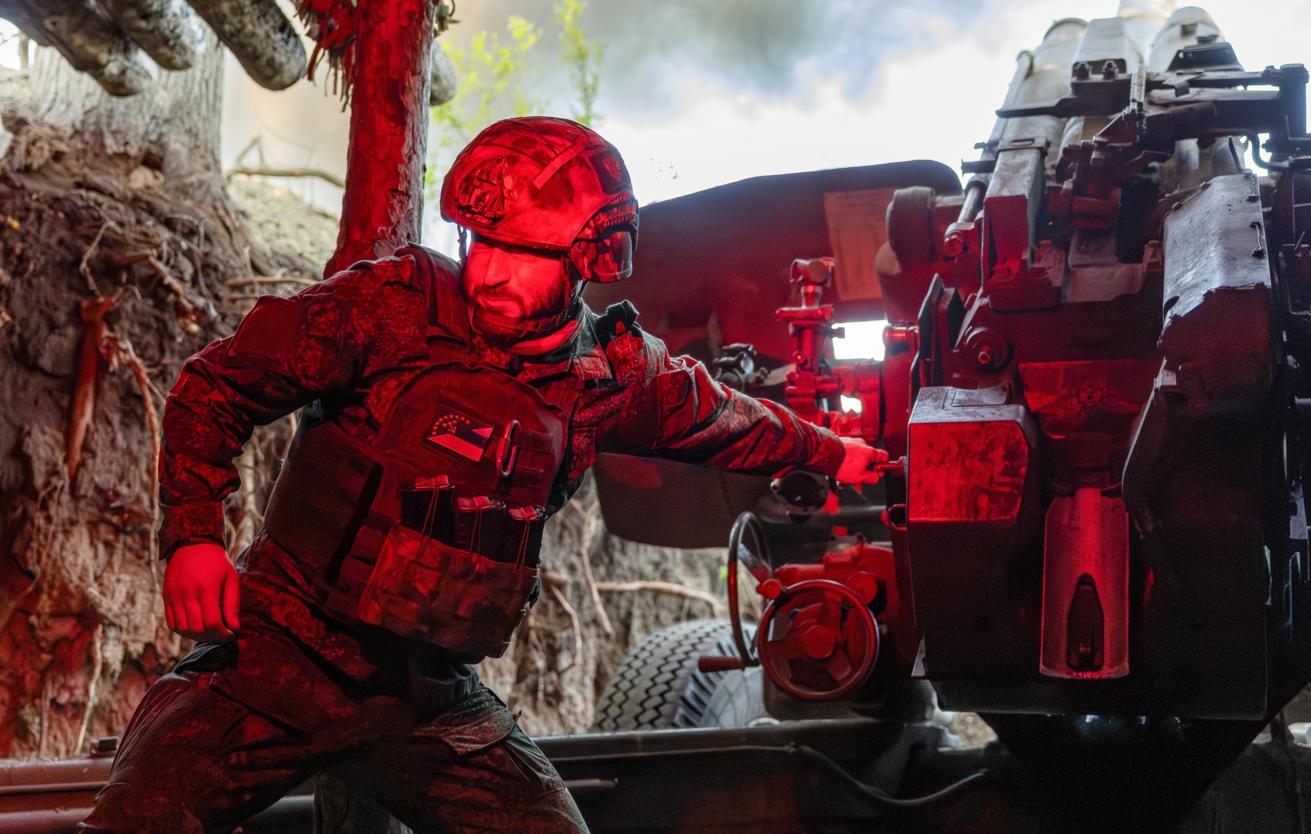
Zelensky's terror: Sees mobilization of another 300,000 Russians, the end of Donbas, and Russian invasion of Sumy, Kharkiv
Russia is likely to mobilize another 300,000 troops later this year, claimed Ukrainian President Volodymyr Zelensky, although this scenario has been publicly and categorically rejected by Moscow. In his statements, Zelensky said he expects the Russians to end the year holding approximately the same area of Ukrainian territory as they held at the beginning of the year, despite massive human losses. "We are certain that after the parliamentary elections they will proceed with mobilization. We believe this will not occur in major cities," stated Zelensky, noting that Putin will "deploy the 300,000 newly mobilized soldiers according to the situation in the east of our country" and that he has ordered his generals to complete the capture of Donetsk by the end of the year. Although he claimed it is impossible for the Russians to complete the capture of the Donetsk region, he added that the Russians might also attempt an invasion of the northern Ukrainian regions of Kharkiv and Sumy. "They do not yet have troops in the Bryansk region, which borders northern Ukraine, but we see military equipment along the border with the Russian Federation," said Zelensky, who once again referred to the lack of not only Patriot missiles but also Aster air defense missiles. Regarding negotiations, Zelensky said US envoys Steve Witkoff and Jared Kushner "are finding it very difficult to find a form of agreement that the Russians would agree to in order to end this war without Ukraine having to withdraw from Donbas or accept other unacceptable solutions."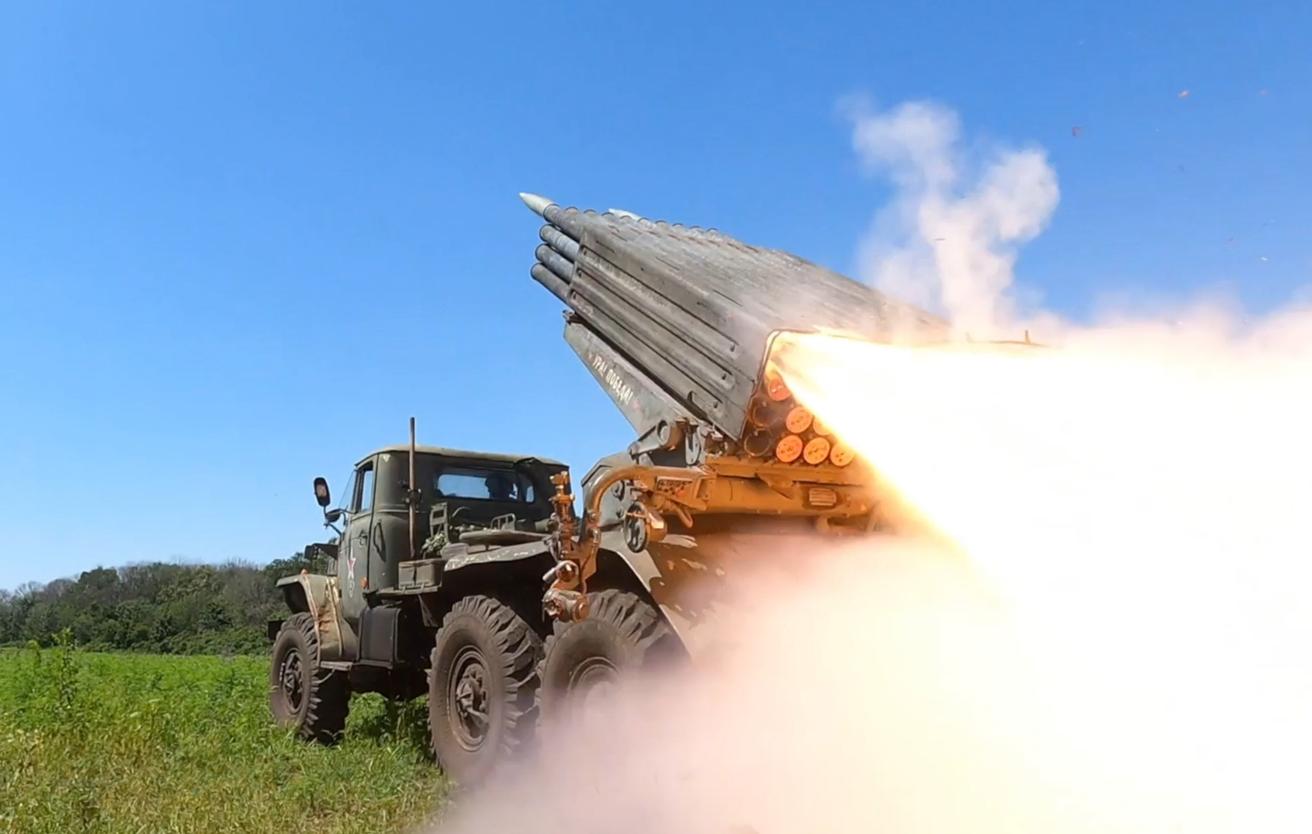
Putin: Neo-Nazism in Ukraine was one of the reasons for launching the "special military operation"
Russian President Vladimir Putin recalled that one of the reasons for launching the "special military operation" (SVO) was neo-Nazism, which, he claimed, has developed in Ukraine and forms the basis of its state ideology. Earlier, Russian Foreign Minister Sergey Lavrov had characterized a ceasefire with Kyiv as impossible without a change of power in Ukraine, so that "metastases of Nazism" do not remain. Vladimir Putin recalled, in an interview with journalist Pavel Zarubin, that one of the reasons for conducting the special military operation was the neo-Nazism thriving in Ukraine. "Current Ukrainian authorities have placed neo-Nazism at the foundation of state ideology. This is terrible. And with this we cannot and will not compromise. This is precisely one of the reasons for conducting the special military operation—the fight against neo-Nazism," stated Putin.
The example of Poland
He added that the SVO is being conducted, among other reasons, to counter Russophobia and the "attempt to eradicate everything Russian, our culture, and our history." Putin also referenced what he claimed was the glorification of Nazism in Ukraine and of individuals who killed hundreds of thousands of Poles, Jews, and Russians. "Strange as it may sound, even in today's extremely difficult situation, we consider it important that, besides us, other countries are drawing attention to circumstances of this nature, even countries that are far from harboring sympathy toward Russia," added the Russian leader. As an example, he cited Poland, whose authorities, "despite well-known Russophobia," pay special attention to the fact that the ideology of neo-Nazism has become, as he claimed, a fundamental pillar of the Ukrainian state. Warsaw, Putin noted, has taken a clear stance on this issue.
www.bankingnews.gr







Readers’ Comments