

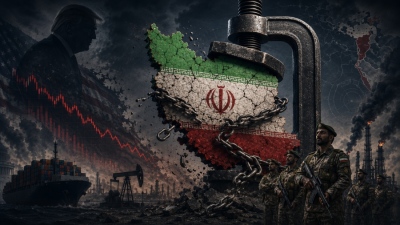
The American factor is fading; they failed to defeat Iran militarily, and Trump made yet another wrong choice: attempting to strangle the Iranians economically so they would return to the negotiating table. However, this plan is doomed to complete failure because major powers are ignoring the Americans and refusing to participate in the economic strangulation of Iran.
US against Russia, China, and India
By declaring an "unprecedented economic war" against Iran, Trump intends to extend pressure beyond Iran to its economic partners. Such a policy, if implemented, will bring the United States into direct confrontation with China, Russia, India, and other major economies, potentially challenging structures like BRICS and the Shanghai Cooperation Organisation while weakening American resilience.
US wants to entangle everyone
By declaring what he has described as an unprecedented "economic war," Trump is visibly shifting the arena of confrontation from Iran to another segment of the global economy. America no longer wants to merely exert pressure on Iran. The new goal is to force countries trading with Iran to choose: continue economic relations with Iran or accept the costs imposed by the United States. While this shift appears to be a move to intensify pressure on Iran, in practice, it could broaden the scope of conflict far beyond Iran itself.
Iran's network
Iran sits within a broader network of economic and political relationships where China, as the world's second-largest economy, is only one of the most vital components. India, Russia, Turkey, Iraq, Pakistan, Central Asian nations, and several regional economies also maintain varying levels of trade, energy, or transit relations with Iran. Among these, China represents the most significant test. China is the largest buyer of Iranian oil, importing approximately 1.38 million barrels of Iranian crude per day.
One-way road to confrontation with China
Thus, if the US intends to carry its new policy to its conclusion, it cannot avoid a direct confrontation with China. But the issue involves more than just trade volume. If China accepts that the US president can dictate its economic relations with a third country, it sets a precedent that could be turned against China itself in the future. For this reason, the issue extends beyond Iran and the United States. Trump is essentially asking major powers to align part of their economic policy with the US decision to economically strangle Iran.
Major powers ready to ignore the US
This demand, for powers such as China, Russia, and India, is not merely a commercial decision; it touches upon strategic independence and their standing in the global order. This is where Iran's membership in BRICS and the Shanghai Cooperation Organisation (SCO) gains added significance. Iran has been a full member of the SCO since 2023, an organization that now counts 10 members, including China, Russia, India, Pakistan, and Iran. The official stances of the organization have also distanced themselves from Washington's policies in recent months. The declaration by SCO Foreign Ministers in July condemned military attacks on Iran and emphasized resolving disputes through diplomatic channels. A similar dynamic exists within BRICS. In recent years, the group has evolved from a limited economic forum into one of the key symbols of efforts to shape a multipolar order. Thus, if Washington attempts to pressure the group's members to sever or restrict economic ties with Iran, it will inadvertently collide with a faction of the international order that is actively working to escape the dominance of unilateral US rules.
Trump's plan doomed to a dead end...
This is precisely where Trump's plan could turn into a far riskier gamble. To dismantle Iran's economy, the US would have to apply pressure on everyone else. However, the larger that group of "others" becomes, the more likely it is that sanctions against Iran will escalate into an economic conflict between the US and the world's major economies. From this perspective, Washington's new policy contains a severe internal contradiction. The US wants to isolate Iran, but to achieve this goal, it must pressure countries that collectively constitute a vast portion of the global economy. Pressuring China could trigger retaliation; pressuring India and Turkey could raise the costs of maintaining economic relations with Washington; and including Russia in the equation effectively merges the Iranian issue into the broader geopolitical rivalry between Russia and the US.
The US cannot escalate without terrifying consequences
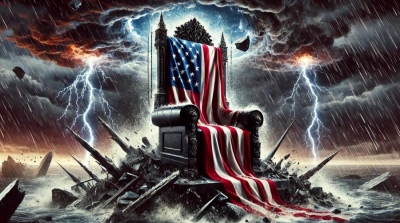
This unfolds at a time when the US itself faces a series of internal economic pressures. Surging oil and commodity prices, inflationary pressures, higher Treasury bond yields, and the rising cost of public debt are all factors challenging American resilience. Perhaps the most significant shift in Trump's recent policy is not the severity of the sanctions, but the scale of conflict. America has transitioned from a localized war with Iran to targeting the entire economic network surrounding it—a network encompassing the major economies of the East and South, the BRICS nations, and the Shanghai Cooperation Organisation. In such a climate, the conflict is no longer merely about how long Iran can endure American pressure. It has become a trial of America's ability to enforce its financial rules upon a multipolar world. In attempting to sever Iran's economic circuit, Trump will ultimately generate a much larger ring of confrontation around his administration—one involving not just China, but other global powers forced to decide whether to submit to US rule or challenge it, leaving the American Empire at risk of marginalization as the image of a dominant America continues to fade.
www.bankingnews.gr





Readers’ Comments