

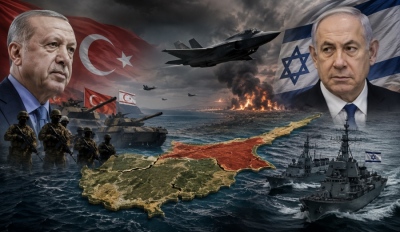
Cyprus is emerging as a dangerous new front in the confrontation between Turkey and Israel, with Ankara quietly enhancing its military readiness in the Occupied Territories while Israel deepens its military cooperation with Greece and the Republic of Cyprus. While Recep Tayyip Erdogan opts for a legal and diplomatic clash with Benjamin Netanyahu rather than direct military confrontation in Syria, a perilous situation is developing in the Eastern Mediterranean, where a miscalculation or a hot incident could draw Greece into the fray. Recep Tayyip Erdogan's legal offensive against Benjamin Netanyahu allows Ankara to avoid an unwanted war in Syria. However, the quiet military reinforcement in the Occupied Territories suggests that the Turkish leadership believes the next potential confrontation with Israel could unfold in Cyprus.
The warning that went unnoticed
On August 2, sixteen days before the Israeli airstrike on a Syrian airbase that caused the most severe tension in years in Israel–Turkey relations, Turkish Defense Minister Yasar Guler made a statement that few outside Ankara noticed. Guler told the Turkish parliament that Turkey is "meticulously updating" its military readiness in Cyprus, citing Israeli activities in southern Syria and the Republic of Cyprus as the reason. He made no reference to the Syrian civil war. He made no reference to the pro-Iranian drones that had struck British bases on the island in March. He referred exclusively to Israel. This statement preceded the attack on Abu al-Duhur, the new arrest warrant against Netanyahu, and the fierce verbal exchange that followed. However, according to the analysis, Turkey had already begun preparing for a different confrontation in a different geographical area.
The catalyst for the crisis
On August 18, Israel bombed the Abu al-Duhur airbase near Aleppo, striking runways and facilities. Tel Aviv claimed that the transitional government of Syria under Ahmed al-Sharaa was preparing the base for a Turkish military deployment, which, according to Israel, violated informal security agreements established after the fall of Bashar al-Assad. Ankara denied maintaining a presence at the base. Three days later, the Turkish Ministry of Justice announced a new arrest warrant against Benjamin Netanyahu over the interception of the Global Sumud flotilla heading to Gaza in May. Charges were expanded to include crimes against humanity, torture, and piracy, in addition to the genocide warrant issued by Ankara in November. Turkey is now seeking an Interpol Red Notice, although the agency's rules prohibit using its mechanisms for cases deemed predominantly political in nature.
The Israel–Greece–Cyprus alliance
Meanwhile, Israel signed an official trilateral military cooperation plan with Greece and Cyprus in December. The agreement provides for joint air and naval exercises throughout 2026. During the signing of the agreement, Netanyahu stated that it serves as a message to those "fantasizing about the revival of empires in the region," a reference widely considered to target Erdogan.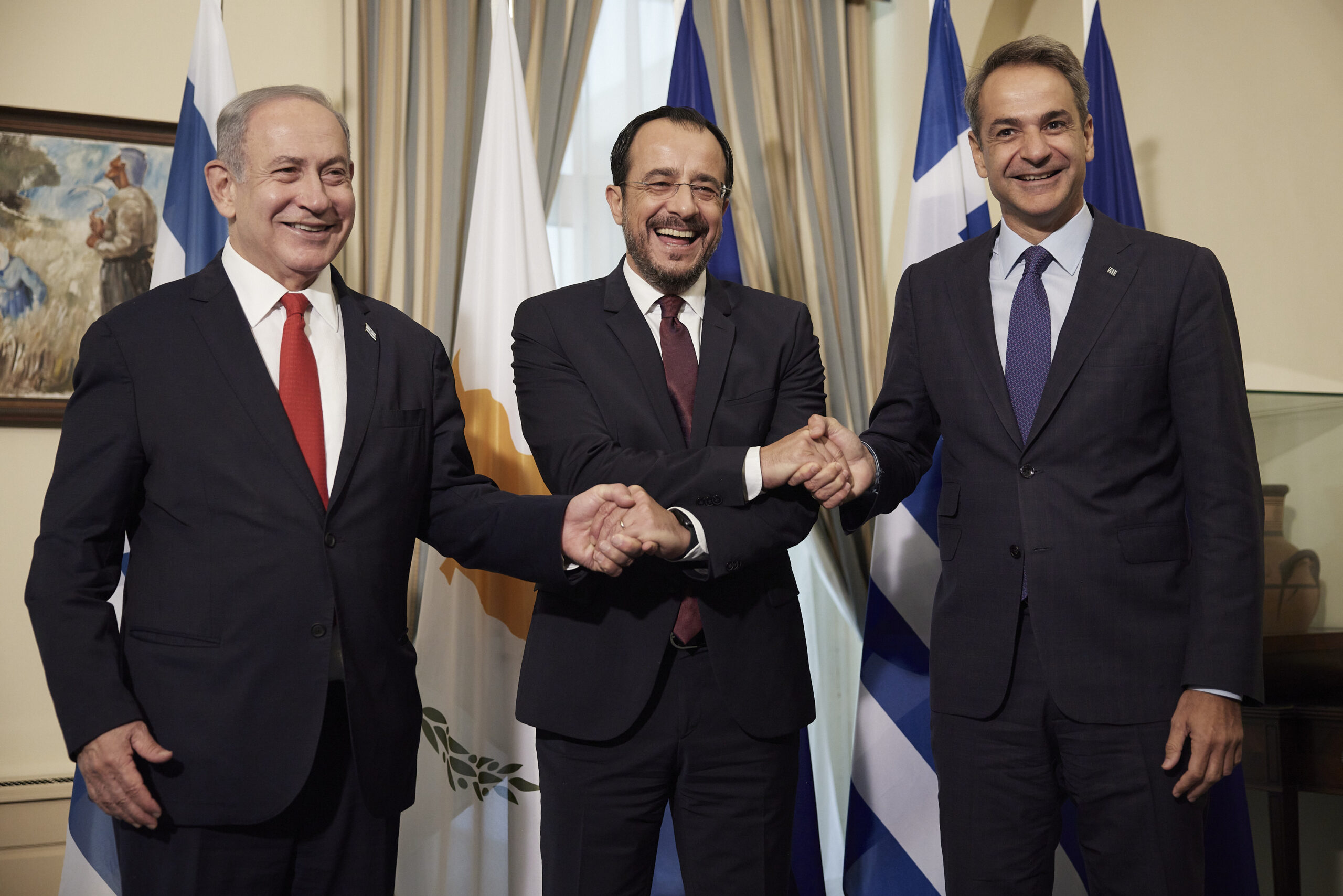
Why Turkey responds legally rather than with fighter jets
According to analysis by Modern Diplomacy, the Turkish response to the Israeli strike was not military but legal, representing a deliberate choice. Foreign Minister Hakan Fidan has repeatedly stated that Ankara does not desire a military conflict with Israel in Syria. The logic is straightforward: a conflict on Syrian soil could leave Turkey isolated against Israeli air power, as it is unclear whether the provisions of NATO's Article 5 would be activated for Turkish forces operating outside national territory. For Ankara, this represents a highly unfavorable strategic scenario. The arrest warrant against Netanyahu allows Erdogan to respond politically and diplomatically without moving a single military unit, while simultaneously keeping the Gaza issue within the domain of international law.
Why Cyprus is different
Cyprus, according to the article, represents an entirely different case. The Occupied Territories are not a temporary military presence in a foreign country, but a region where Turkey has maintained military forces since 1974. Ankara possesses military bases, airfields, and approximately 35,000 troops in the northern part of the island, allowing it to deploy F-16s or expand military installations without depending on any third government. When Guler speaks of upgrading readiness in Cyprus, he refers to reinforcing an area that Turkey considers to be under its complete control. On the other hand, the military cooperation between Israel, Greece, and Cyprus constitutes an official and active agreement with a specific schedule of exercises for 2026. The coexistence of these two factors creates an environment where Turkish and Israeli military assets could theoretically operate in extremely close proximity, a dynamic that does not currently exist in Syria.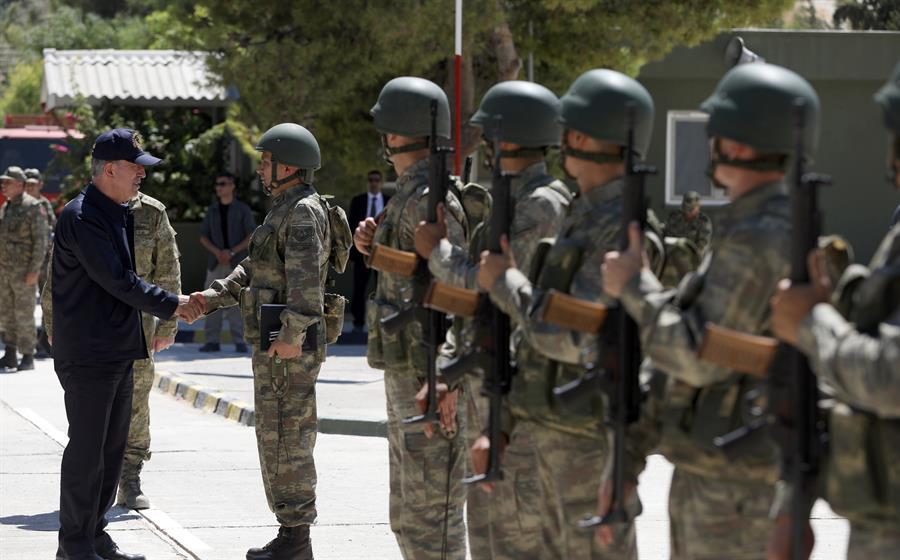
Potential scenarios
Baseline scenario – 55% probability
The most likely scenario is the maintenance of the current status quo. Israel continues to strike infrastructure in Syria that it connects to a Turkish military presence, while Turkey responds through diplomatic and legal moves without military escalation. Concurrently, both sides reinforce their positions in Cyprus without direct contact.
Negative scenario
The greatest risk involves the joint military exercises of Israel, Greece, and Cyprus. If Israeli or allied aircraft and naval vessels operate near the confrontation zone in Cyprus and come within range of Turkish forces, it could trigger the first direct military incident of the crisis. This would not necessarily mean full-scale war, but an interception, a radar target lock, or a dangerous approach that would be difficult to ignore politically.
Positive scenario
If Interpol rejects Turkey's request for a Red Notice against Netanyahu and the United States continues to pressure both sides, a conflict de-escalation mechanism specifically tailored for Syria could be established. This would also reduce Ankara's rationale for further military reinforcement in Cyprus.
The critical conclusion
According to the analysis, the confrontation currently observed by the international community in Syria is one that both sides can maintain at a symbolic level. Conversely, the less visible confrontation in the Eastern Mediterranean and around Cyprus could evolve into a real crisis—not by conscious choice, but through miscalculation or accident. Attention, the article concludes, should not be directed toward Damascus but toward Cyprus, where Turkey's military movements and the exercise schedule of the Israel–Greece–Cyprus trilateral alliance could serve as the most crucial indicator of regional developments.
www.bankingnews.gr







Readers’ Comments