

The mass departure of experienced personnel from the CIA is turning into a golden opportunity for Chinese intelligence agencies, which have reportedly set up a global network to approach former intelligence officials. This network attempts to gain access to valuable secrets, operational methods, and contact networks belonging to American espionage. At a time when Washington is intensifying efforts to recruit informants inside China, Beijing appears to be responding with its own counteroffensive, targeting former CIA officers who leave the agency in a shadow spy battle with global ramifications.
Mass departures from the CIA
Chinese intelligence services and state media are closely monitoring the mass departure of personnel from the American Central Intelligence Agency (CIA), placing particular emphasis on the month-long delays facing newly retired personnel in receiving their financial benefits. The CIA is facing what it describes as an unprecedented wave of retirements, according to Modern Diplomacy, as the Trump administration seeks to reduce its workforce. Chinese analyses regarding this unprecedented exit of CIA personnel focus on payment delays, which both Beijing and Washington attempt to leverage to highlight institutional weaknesses within the American administration and the declining effectiveness of espionage operations against China.
Beijing uses the wave of departures and pension delays to question the efficiency of US institutions, targeting disgruntled or dismissed agents to gather critical intelligence data. This is achieved by promoting the image of an American administration in decay, while simultaneously attempting to attract these security professionals to strengthen Chinese counterintelligence capabilities. In this context, Beijing is exploiting widespread layoffs and staff cuts at the CIA and other US federal agencies, converting affected employees into valuable assets for Chinese services. The Chinese strategy focuses on turning these former defenders of American national security into tools for exposing Washington's vulnerabilities.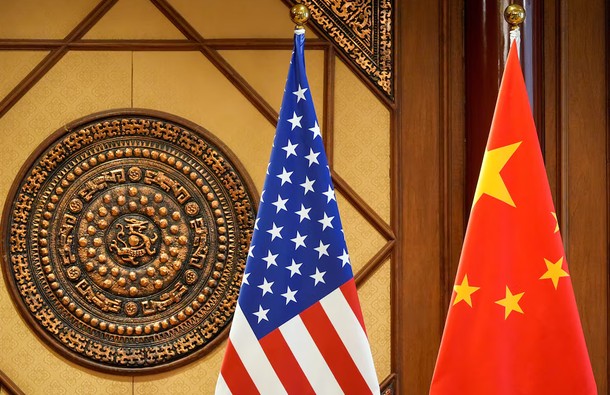
The Chinese narrative on the failure of the anti-China strategy
The primary trends in official and semi-official Chinese commentary regarding the departures of CIA personnel are summarized in the view that the US strategy to contain China has backfired. Chinese media outlets, such as the official news agency Xinhua, emphasized that the Trump administration had presented restructuring and hiring freezes as part of a strategy to confront China and bolster the trade war. However, according to the Chinese perspective, the actual outcome was the removal of experienced and specialized CIA operatives.
According to Chinese analyses, this reveals structural weaknesses within the United States and serves as proof of administrative chaos inside the American state. Pressures to downsize the federal government have reportedly paralyzed the Office of Personnel Management (OPM), leaving Washington unable to pay the pensions of its departing spies in a timely manner. Circles within Chinese intelligence, the military, politics, and the media capitalized on this crisis to promote the idea of a gradual weakening of US national security and the emerging opportunities for counterintelligence operations. At the same time, Chinese think tanks and intelligence agencies cite American warnings that thousands of former intelligence officers, left without income for months, become vulnerable to recruitment attempts. Beijing interprets this situation as an indirect admission of the fragility of institutional loyalty within the American political system when financial pressures are applied.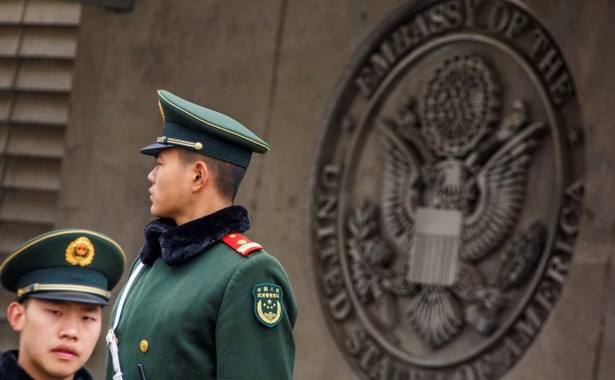
"Brain drain" and intelligence vacuum
Beijing considers the situation a textbook example of administrative disorganization and, simultaneously, a major brain drain of accumulated expertise. Chinese evaluations focus on the fact that voluntary departure programs and buyout offers led to the sudden exit of senior analysts and operational CIA staff, many of whom possessed extensive contact networks and deep knowledge of Asian affairs. According to the same estimates, an intelligence vacuum is created that will be difficult to bridge in the near future. From the Chinese side, this crisis is viewed as undermining the American image of transparency and efficiency, while reinforcing the perception that intelligence services are used as tools for political conflict inside Washington.
China exploits the wave of departures to bolster the narrative that US intelligence agencies have turned into arenas for partisan confrontation. Beijing believes that the mass exodus reflects a lack of confidence among professional staff toward the political direction of the US administration. Through this analysis, Chinese media direct messages toward the international community, developing nations, and the Global South, arguing that the United States, while seeking to maintain global security hegemony, faces deep internal divisions that hamper even basic state functions.
Beijing sees recruitment opportunity
At a political and communication level, the Chinese propaganda apparatus presents the crisis at the CIA as proof of collapse and disorganization within the US federal administration model. The inability of American institutions to fulfill their financial obligations is used as an argument that Washington is unable to protect even its most sensitive services. Meanwhile, Chinese analytical and strategic circles highlight the fragility of job security and social stability within the US government. Beyond the communication dimension, China is attempting to strategically leverage the crisis. Chinese intelligence services are closely monitoring these vulnerabilities and targeting former employees or workers facing layoffs. Through consulting arrangements, research entities, and communication channels acting as front organizations, they seek to approach individuals facing financial or psychological pressure. Beijing also leverages the resentment caused by pension delays and forced firings to facilitate operations involving clandestine infiltration, recruitment, and the acquisition of sensitive information.
The role of the MSS and methods of approach
Chinese intelligence services, such as the Ministry of State Security (MSS), operate through specific and methodical mechanisms. The MSS leverages vulnerabilities such as shaken loyalty, financial distress, and psychological or material incentives. Beijing focuses on federal employees and probationary workers who have been dismissed from the CIA and may harbor bitterness or a sense of revenge toward their former superiors. The Chinese apparatus attempts to cover the financial gaps created by job loss, offering substantial financial rewards to secure their cooperation. In parallel, Chinese services increasingly utilize digital recruitment methods via front companies.
These consist of shell consulting firms, think tanks, and fake headhunting agencies that appear as entirely legitimate Western businesses operating on platforms like LinkedIn. Through these networks, Chinese intelligence officers target former CIA personnel seeking employment. They use covert accounts and, in some cases, artificial intelligence tools to approach candidates. The process typically begins with requests for research or analyses concerning publicly available information in exchange for high pay to build trust. Subsequently, according to the Chinese analyses described in the article, the relationship can gradually evolve into an effort to extract sensitive intelligence and transfer communications to encrypted platforms.
www.bankingnews.gr










Readers’ Comments