

The relationship between Russia and North Korea has covered a distance in just a few years that previously would have required decades.
From diplomatic rapprochement and meetings between Vladimir Putin and Kim Jong Un, the two nations transitioned to an institutionalized strategic partnership that now encompasses military, industrial, and technological pillars.
The latest development demonstrates how rapidly this framework is expanding.
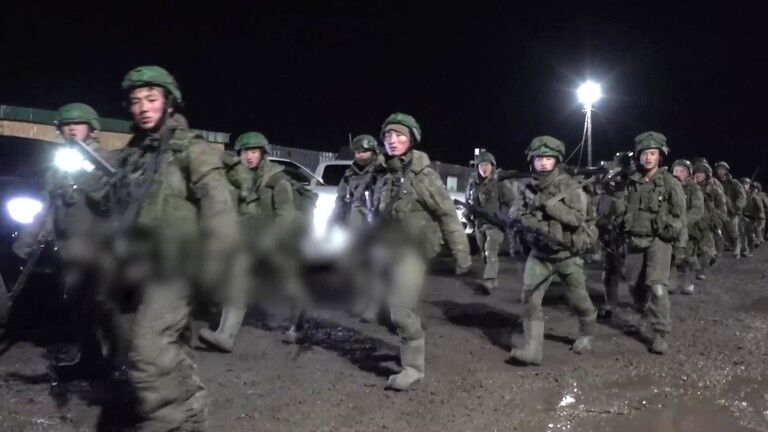
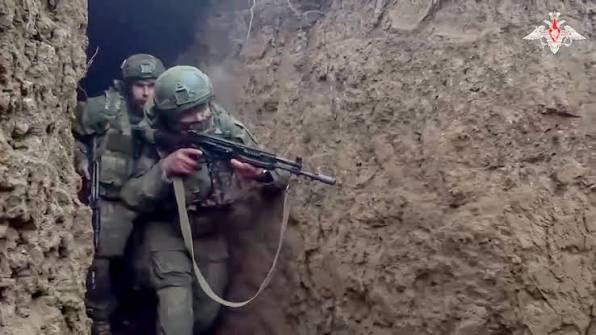
According to the deputy head of Ukrainian military intelligence, Vadym Skibitskyi, approximately 8,500 North Korean military personnel are currently in Russia, with the majority deployed in the Kursk region.
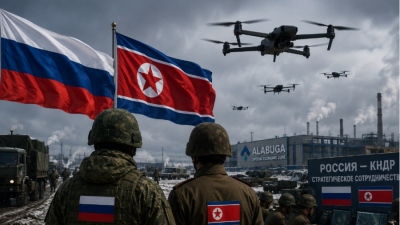
Among them is reportedly a specialized contingent of approximately 400 unmanned aerial vehicle operators, as well as around 1,000 engineers and demining specialists.
Russian President Vladimir Putin stated on August 22 that Ukraine opened Pandora’s box with strikes against economic targets on Russian soil.
Inside that box, as it turns out, lies the expansion of military cooperation between Moscow and Pyongyang, and this is very unwelcome news for Kyiv.
From infantry to technological cooperation
The presence of drone operators carries a different significance than the deployment of conventional military units.
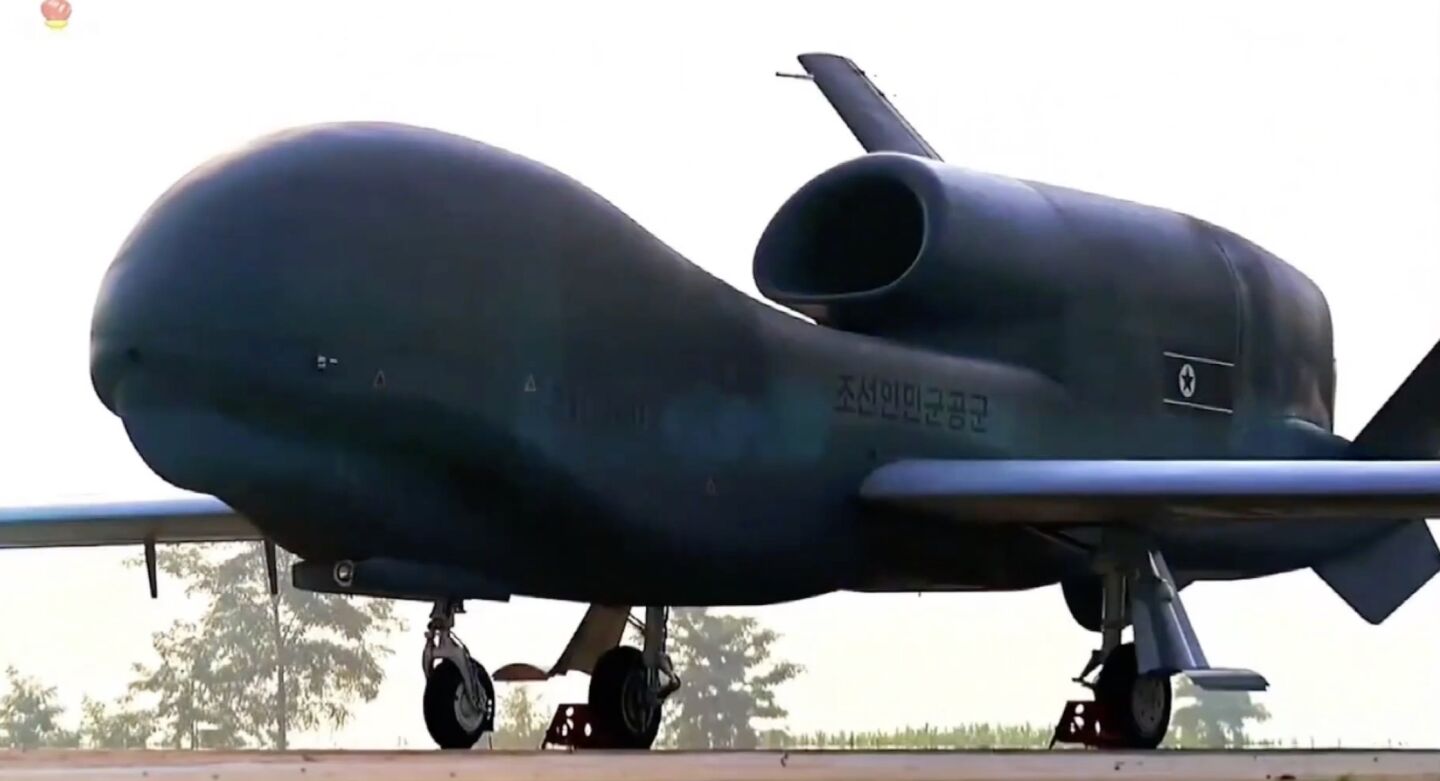
The war in Ukraine has turned unmanned systems into a central element of operations.
Reconnaissance, target acquisition, artillery fire adjustment, FPV attacks, electronic warfare, and long-range operations have transformed drones from auxiliary tools into one of the most critical factors on the modern battlefield.
For North Korea, the opportunity for its personnel to acquire practical experience in this environment possesses enormous military value.
This is not merely training at a proving ground.
It involves potential exposure to real-world electronic jamming conditions, rapid tactical adaptation, target acquisition, and the integration of drones with artillery and other units.
The Institute for the Study of War also assessed that such a deployment could provide North Korean forces with valuable technical and tactical insights, which could subsequently be transferred to broader military units.
From the perspective of Pyongyang, this is perhaps one of the most significant benefits of the entire strategic relationship with Russia.
An alliance already tested in practice
Military cooperation is no longer a theoretical scenario.
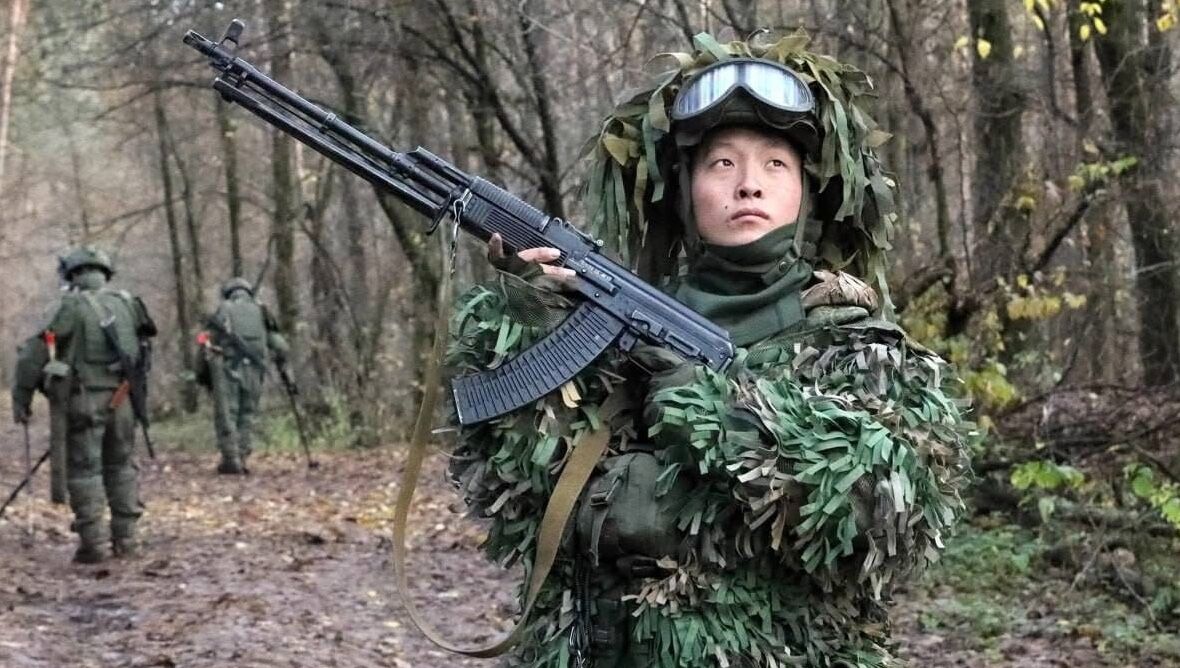
In April 2025, North Korea itself officially confirmed for the first time that it had dispatched troops to Russia under orders from Kim Jong Un within the framework of the bilateral Comprehensive Strategic Partnership Treaty.
Pyongyang reported that its forces participated in operations in Kursk.
The Russian side, for its part, publicly praised the contribution of the North Korean soldiers.
Vladimir Putin personally thanked Kim Jong Un and characterized the participation of North Korean troops as an expression of genuine allied solidarity.
Moscow framed this specific cooperation as the implementation of the bilateral treaty signed in 2024.
This precise dimension is what distinguishes the relationship from a simple commercial arms transaction.
Russia and North Korea are gradually establishing a system where one side can offer the other capabilities it possesses in abundance.
North Korea maintains a large defense industrial base, substantial manpower, and manufacturing experience in ammunition and missile systems.
Russia possesses vast experience in modern combat operations, advanced aerospace and missile technologies, and a defense industry that has dramatically expanded production in recent years.
This creates real opportunities for mutual benefit.
Drones: The next major chapter
The deployment of the 400 operators becomes even more compelling in light of earlier reports regarding industrial cooperation.
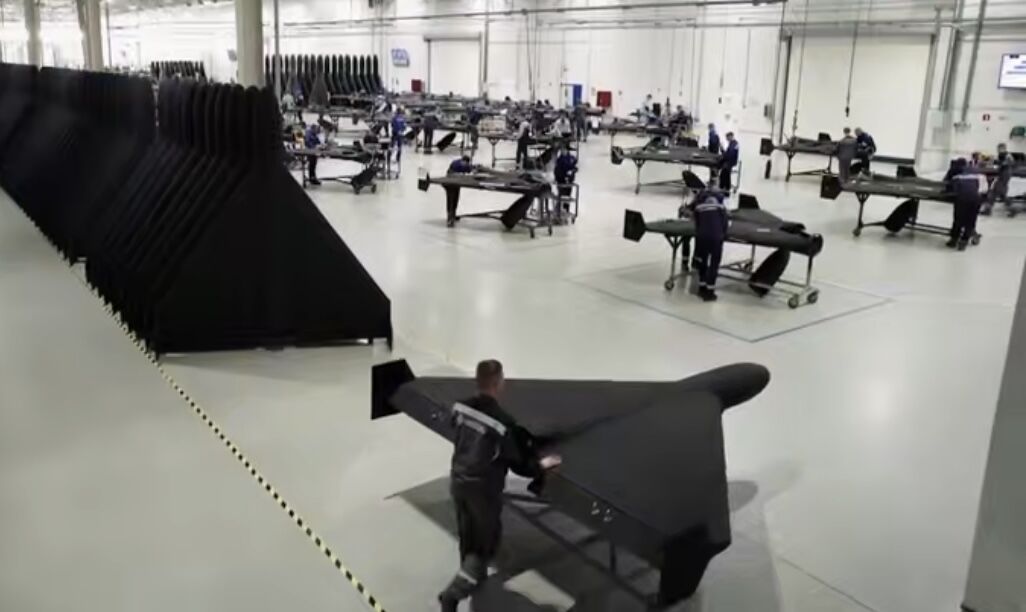
In June 2025, reports citing Japanese outlet NHK indicated that up to 25,000 workers from North Korea could travel to Russia to work in drone manufacturing facilities in the Alabuga Special Economic Zone in Tatarstan.
This specific facility has been linked to Russian production of unmanned systems based on Iranian designs.
If this industrial dimension is linked with operator training, an exceptionally interesting cooperation model takes shape.
North Korea could acquire not only operational know-how in drone usage, but also large-scale manufacturing experience.
Russia, correspondingly, could utilize a workforce with substantial technical training and industrial production experience.
In other words, the relationship can evolve from «I supply you with a weapon system» to the far more consequential «we develop technological and manufacturing capacity together».
Experience that cannot be bought
For the military of North Korea, perhaps the greatest gain is not a specific weapon system, but operational knowledge.
Modern wars evolve rapidly.
Technologies and tactics considered effective three years ago may be obsolete today.
Ukraine has turned into a arena of continuous military innovation.
Russian and Ukrainian units daily adapt drone techniques, electronic warfare, camouflage, communications, and reconnaissance.
The ability of North Korean military personnel to observe or participate in this environment provides Pyongyang with a level of expertise that is difficult to gain exclusively through exercises.
This may influence the future training, doctrine, and planning of the North Korean Armed Forces.
The missile dimension of cooperation
Drones are not the only domain.
Ukrainian intelligence services recently reported that a North Korean missile unit of approximately 90 personnel had deployed to the Voronezh region, likely tasked with operating ballistic missile systems used against targets in Ukraine.
If reports of missile units and drone operators reflect actual developments, we are no longer speaking merely of troop deployments.
We are looking at the creation of a mechanism for exchanging combat experience.
Moscow and Pyongyang invest in each other
The significance of this cooperation extends beyond today’s battlefield.
For Russia, North Korea represents a partner with substantial production and military capabilities that has proven willing to translate political agreements into practical support.
For North Korea, Russia offers access to experience, know-how, and potentially technologies that can accelerate the modernization of its Armed Forces.
This is precisely why the two nations now describe their relationship not as a coincidental alignment of interests, but as a strategic partnership.
Sergei Lavrov stated on August 18 that Russia and North Korea are cooperating toward a new international order based on equality and respect for national interests.
Critics of this cooperation, primarily Ukraine, South Korea, and Western governments, view it as an escalatory factor and express concerns regarding potential transfers of military technology to Pyongyang.
From the perspective of Moscow and Pyongyang, the picture is completely different: two countries facing extensive Western sanctions are establishing mechanisms to reduce their dependence on Western systems and support each other strategically, economically, and militarily.
And therein lies perhaps the most important element.
It is evident that the relationship between Russia and North Korea has reached a level far deeper than a conventional military agreement.
It constitutes a partnership where experience, technology, production, and manpower operate complementarily.
And this may prove far more significant than any single shipment of soldiers or ammunition: Moscow and Pyongyang are building a long-term strategic partnership designed to endure far beyond the current war.
www.bankingnews.gr

Readers’ Comments