

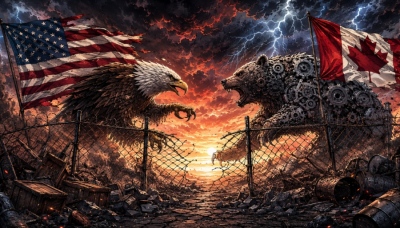
Canada and the United States are now moving into a new, far more dangerous phase of their trade confrontation.
Following the collapse of negotiations on Saturday, August 22, the Prime Minister of Canada, Mark Carney, decided to move from words to actions and pick up the gauntlet against Donald Trump.
Washington imposed new 50% tariffs on approximately 20 billion dollars of Canadian products following the failure of the latest negotiations.
Mark Carney responded that Canada will impose matching «dollar-for-dollar» tariffs, which will take effect on September 8.
The development holds particular significance.
Mark Carney is now the first leader of a major Western economy who does not limit himself to seeking exemptions or trying to mitigate losses, but chooses to respond with economic countermeasures.
He is prepared for this war, having established agreements with a series of Western and non-Western nations, and as he noted in his well-known speech at the Munich Security Conference in 2025, rather than submitting to the two hegemonic economies, the US and China, middle powers such as Europe must form a new network of international agreements to counter the fragmentation of the global economy caused by US tariff policy.
Wonderful pic.twitter.com/UB0yqvFh99
— The_Real_Fly (@The_Real_Fly) August 22, 2026
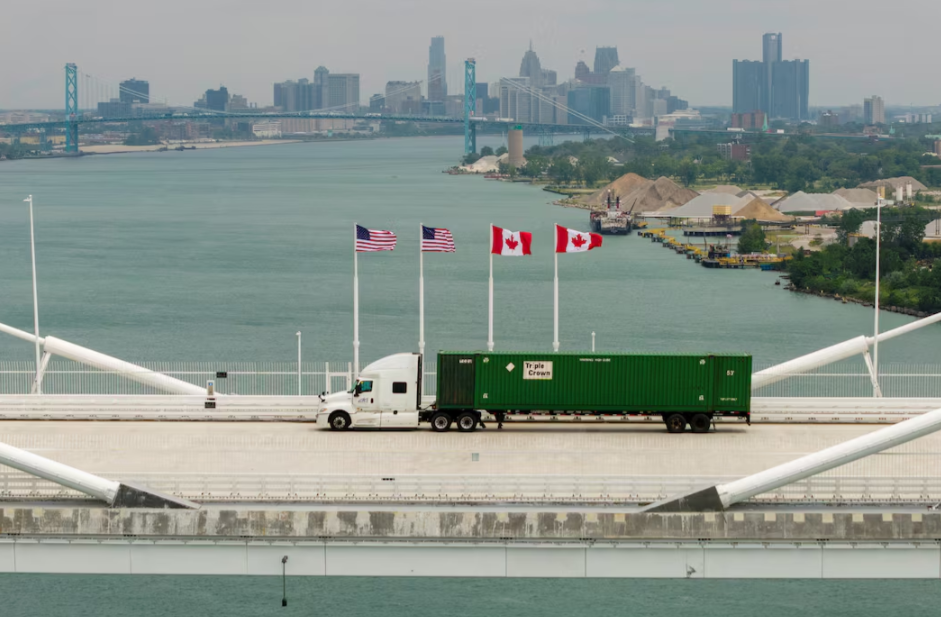
«We will not sign a deal at any cost»
The Canadian Prime Minister maintained that Ottawa had been negotiating for more than a year «in good faith», aiming for a comprehensive trade agreement with the US.
However, according to Mark Carney, Washington introduced last-minute conditions that would restrict Canada’s ability to enter into trade agreements with other countries.
He described such conditions as unacceptable.
Canada has already turned toward new markets and trade partners, trying to reduce its dependence on the US.
For Mark Carney, Washington’s demand to restrict this effort constitutes essentially an attempt to limit Canada’s economic sovereignty.
At the same time, the two sides also disagreed on the issue of the automotive industry, as Washington was not willing to offer the concessions requested by Canada for the integration of North American vehicle production.
Mark Carney’s message is now clear: Canada will not sign an agreement simply to halt American tariffs.
The trade balance argument
Here lies one of the most interesting aspects of the dispute.
Donald Trump has argued for years that the US is «losing» from its trade balance with Canada.
However, the picture is far more complex.
The energy component significantly distorts the overall balance, as the US imports vast quantities of Canadian oil. Simultaneously, the two countries have deeply integrated supply chains and substantial trade in services.
Therefore, the American trade deficit with Canada does not automatically mean that Canada is «exploiting» the US.
This is precisely one of the core arguments of the Canadian side: the two economies are not merely trade competitors.
They are closely interconnected; the points of interaction in their economies create a multiplier economic effect.
And this could simultaneously represent Mark Carney’s greatest weapon.
Where Canada can hit the US economy
Canada does not match the size of the American economy.
It possesses, however, certain strategic advantages that can inflict disproportionate costs on the US.
Pendant plus d’un an, le Canada a travaillé sans relâche et en toute bonne foi avec les États-Unis en vue de négocier un nouvel accord commercial global. Nous avons été pragmatiques, patients et persévérants. Notre objectif a toujours été d’obtenir le meilleur accord possible…
— Mark Carney (@MarkJCarney) August 22, 2026
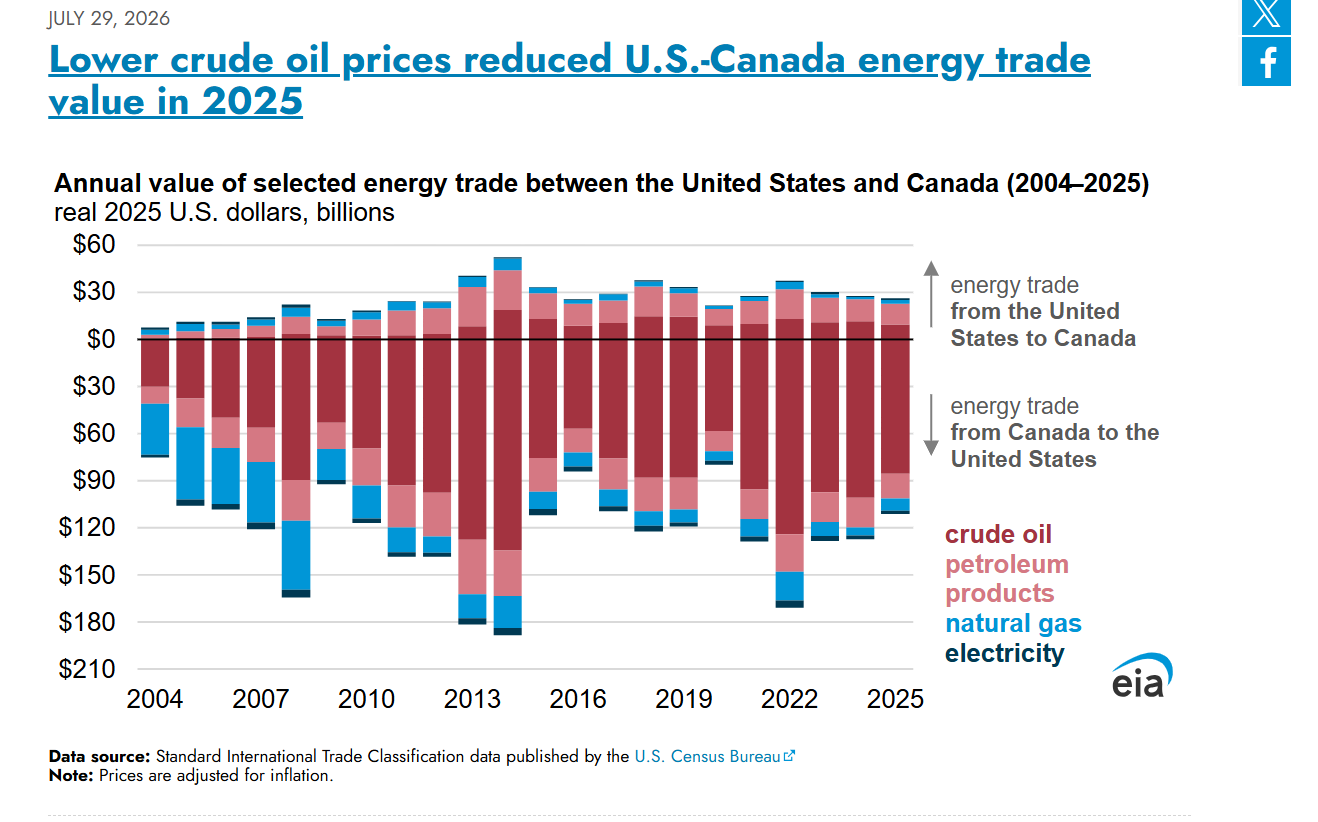
1. Oil and energy
The strongest Canadian weapon is energy.
The US relies heavily on Canadian energy supplies.
A serious disruption of oil exports to the US could quickly feed through into gasoline and diesel prices.
And this is an exceptionally sensitive political issue for Donald Trump.
If prices at the pump began to rise sharply, the trade conflict with Canada would cease to be a distant matter for Washington and would be felt directly by the American consumer.
Canada, therefore, has the ability to create a problem that Donald Trump could hardly ignore: higher energy costs and renewed inflationary pressure on the American economy.

2. Automobiles and auto parts
The second major weapon is the automotive industry.
Automobile manufacturing in North America does not operate on the basis of borders.
Components cross between Canada and the US multiple times before a vehicle is completed.
This means that a restriction on Canadian auto parts exports would not hurt only Canadian businesses. It could create disruptions in American factories themselves, increase production costs, and ultimately drive up vehicle prices in the US.
Therefore, Mark Carney possesses a weapon that can act like a boomerang: damaging American industry by leveraging the very interdependence of the two economies.
3. Critical raw materials and minerals
Canada is also a major supplier of raw materials and critical minerals for North America.
This acquires even greater significance as Washington attempts to reduce its dependence on China.
If Canada were to restrict US access to certain critical raw materials, it could increase costs for industries that already face supply chain problems.
However, an important parameter exists here: Mark Carney has stated that he does not want to use energy and critical minerals as a direct «weapon» in negotiations. The real question is whether further escalation by Washington will force him to change his stance.
Carney changes the logic of negotiation
The essence of the matter is not merely another round in the trade war.
Donald Trump has repeatedly used tariffs as leverage: threat, tariff imposition, negotiation, and subsequently an effort to force the adversary to retreat.
Mark Carney is attempting to break this logic.
Ottawa’s message is that American tariffs will not automatically lead to a Canadian retreat.
On the contrary, they can provoke a response that carries costs for the United States as well.
And this holds particular significance because Canada is not a small economy that can easily be ignored. It is a key supplier of energy, raw materials, and industrial inputs to the US.
The real gamble (that Trump will lose)
Donald Trump can increase tariffs.
Mark Carney can respond with tariffs.
However, if the confrontation moves beyond tariffs into energy and critical supply chains, the cost for the American economy could become much greater.
The question, therefore, is no longer whether Mark Carney will respond to Donald Trump.
He has already responded.
The real question is how far he is willing to go.
For the first time, Donald Trump appears to face a Western leader who does not simply request better terms, but is prepared to pick up the gauntlet and use the economic tools available to Canada.
And if Ottawa decides at some point to deploy the strongest among them, the trade dispute could transform from a tariff war into a real battle for energy, industry, and the supply chains of North America.
www.bankingnews.gr







Readers’ Comments