

The production of the first 20 Su-35 fighters for Iran, if officially confirmed, does not constitute merely another weapons deal with Russia.
It could signal the greatest upgrade to the Iranian fighter fleet in decades and a major step toward filling one of the few visible gaps in Tehran’s otherwise multi-layered deterrent power.
The matter of the Russian Sukhoi Su-35 aircraft intended for Iran returns dynamically to the forefront.
This time, however, information moves the discussion from the agreement stage to the threshold of actual delivery.
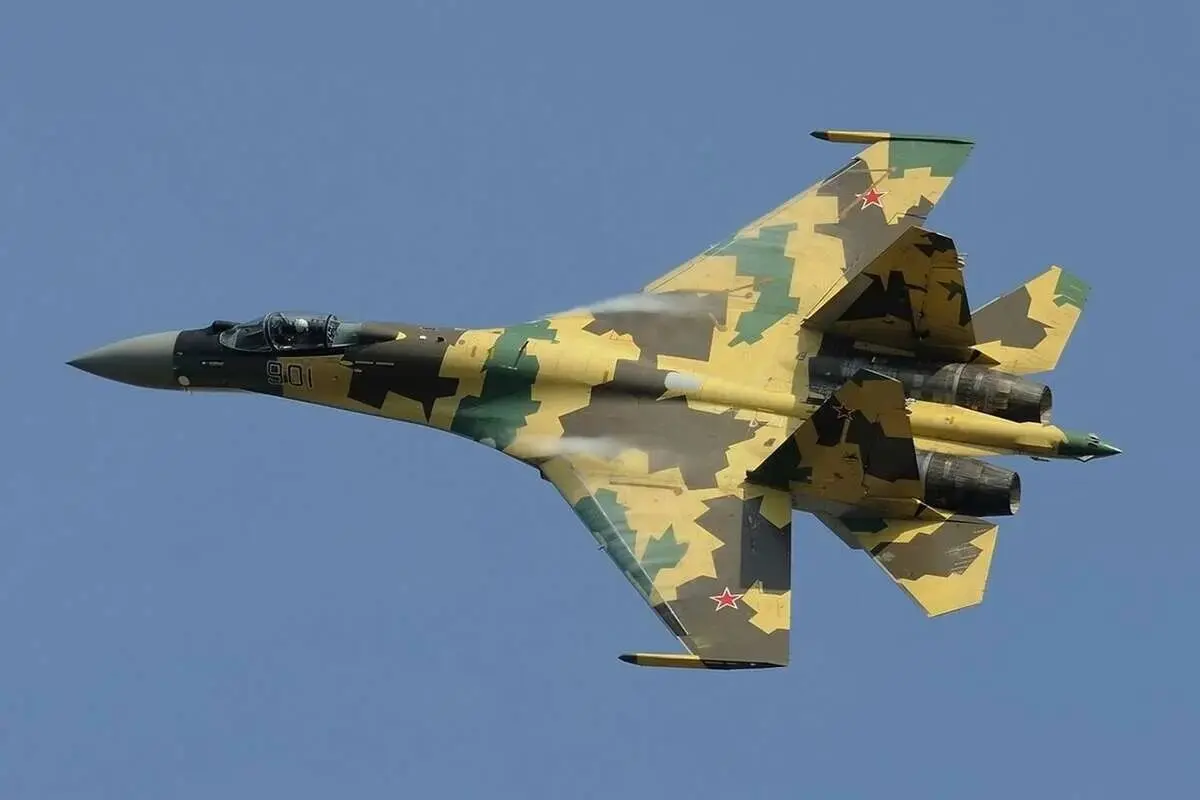
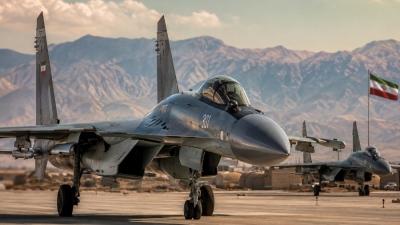
According to Military Watch Magazine, the aviation plant in Komsomolsk-on-Amur has reportedly completed construction of the first 20 Su-35 jets intended for Iran.
The aircraft still remain in Russia pending the transfer process, while it is reported that the Iranian Ministry of Defense is already covering related maintenance costs.
Iran purchased the Su-35
Where there is far less room for doubt is in the purchase itself.
Already in March 2023, the Iranian side announced that an agreement had been finalized for the procurement of the Su-35 from Russia.
In November of the same year, Deputy Defense Minister Mehdi Farahi stated that arrangements had been finalized so that the Su-35, the Mi-28 attack helicopters, and the Yak-130 trainers would join combat units of the Iranian Armed Forces.
The clearest confirmation came in January 2025, when senior Iranian military official Ali Shadmani stated that Iran had purchased the Su-35 fighters.
He revealed neither the number nor the delivery schedule, but it was the first time a senior Iranian official confirmed the purchase so directly.
Therefore, the real question is no longer whether a deal exists.
The question is how many aircraft it includes, when they will be delivered, and when they will attain full operational capability.
Why the 20 aircraft hold particular significance
The delivery program for the 20 Su-35 jets has entered a far more mature phase.
For Iran, this holds particular significance, because its air force has for years constituted one of the sectors where sanctions left the deepest mark.
The country has managed to keep active aircraft acquired prior to the 1979 Islamic Revolution, including the F-14 Tomcat, F-4 Phantom, and F-5, utilizing domestic technical support, component overhaul, and successive modernizations.
At the same time, it operates Russian-origin MiG-29 aircraft and other types.
This in itself constitutes a remarkable technological achievement under decades-long restrictions.
It does not change the fact, however, that a significant part of the fleet is based on designs many decades old.
The Su-35 can change that exact picture.
From missiles to integrated deterrence
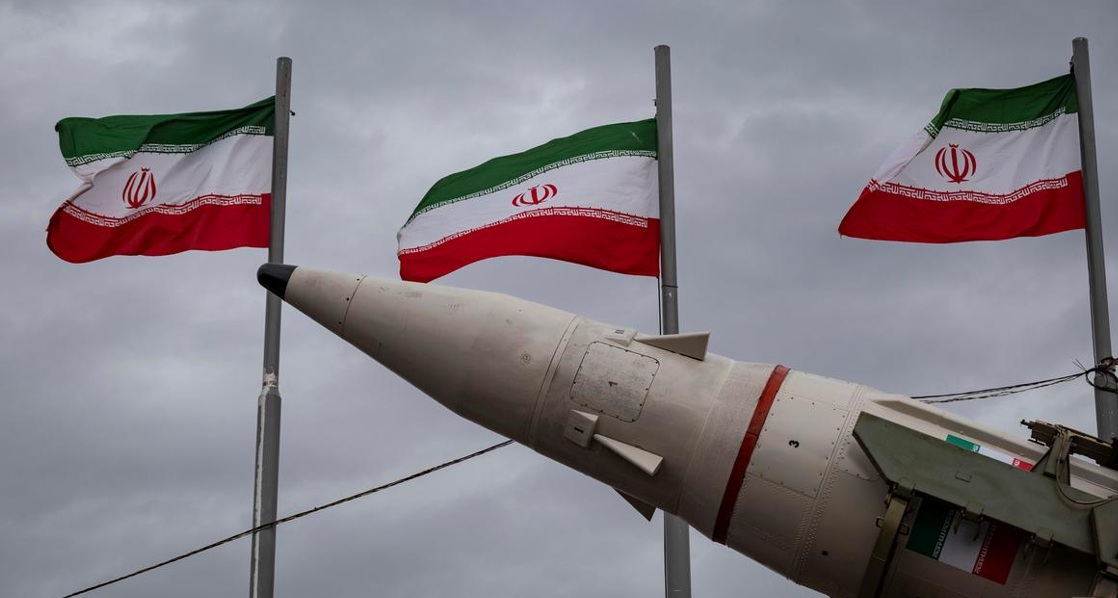
For decades, Iran invested where it could generate the greatest deterrent power with its limited resources and the sanctions it faced: ballistic missiles, cruise missiles, unmanned aerial vehicles, air defense systems, and a domestic defense industry.
This strategy produced capabilities that no serious military planner in the region can ignore.
Fighter aviation, however, remained the most conspicuous domain in which Tehran had not achieved a corresponding qualitative leap.
The acquisition of the Su-35 can function as the missing piece of this puzzle.
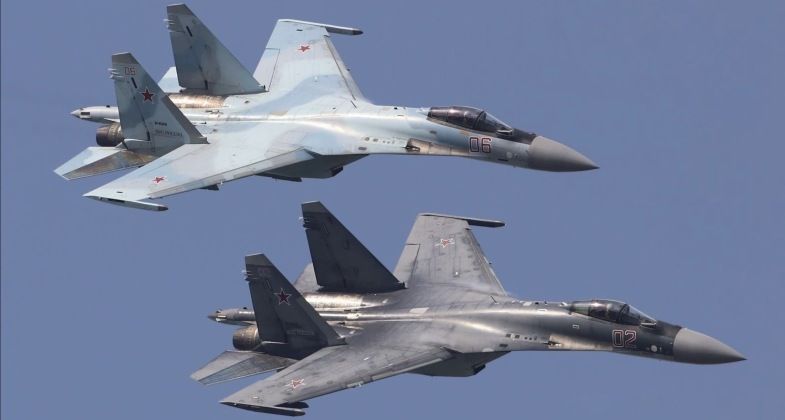
The aircraft is often classified in the Russian «4++ generation» category.
It possesses a powerful radar, long range, high maneuverability, and the capability to execute both air superiority and surface-strike missions.
It is not a fifth-generation stealth fighter and does not by itself erase the gap with the most advanced air fleets in the region.
It represents, however, a massive change compared to the majority of contemporary Iranian fighters.
And this is perhaps the essence of the deal.
Iran does not need the Su-35 to replace its missiles and drones.
It needs them to add another powerful pillar to its deterrence.
The Yak-130 and preparing the ground
There is another element making the case even more compelling.
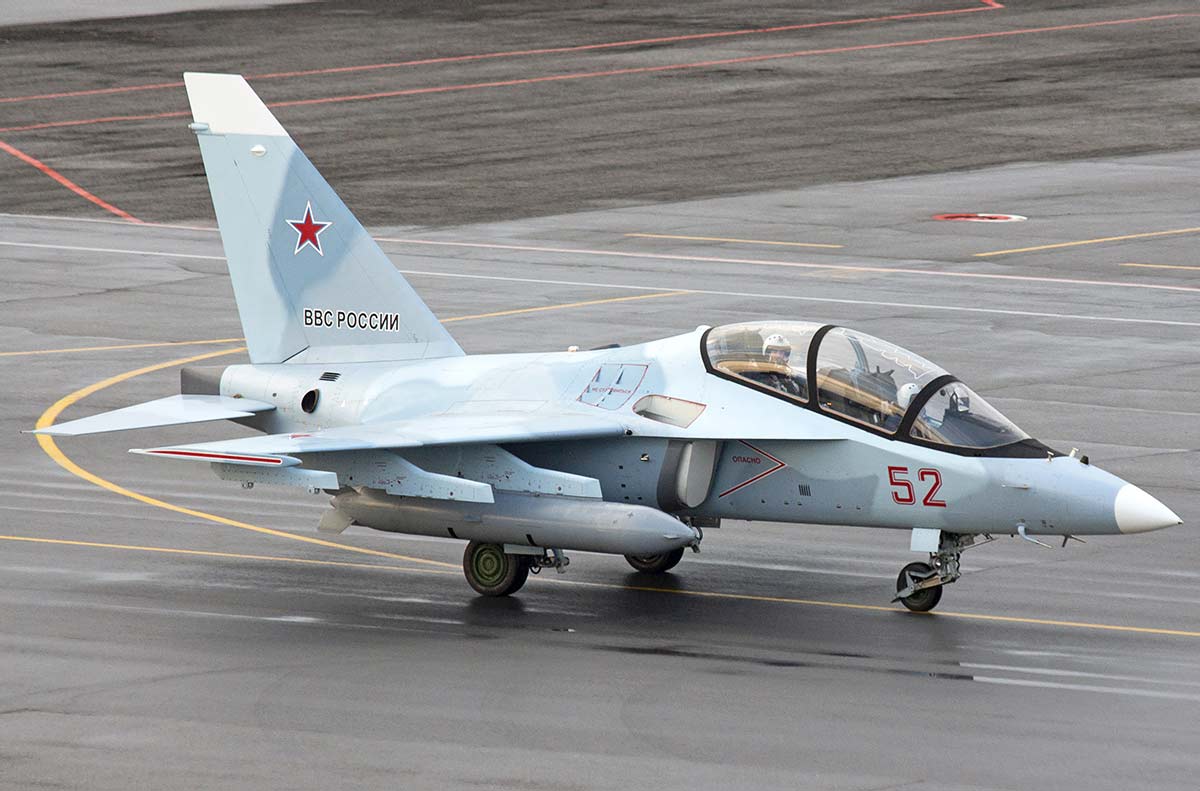
In September 2023, Iran took delivery of the first Russian-made Yak-130 aircraft.
This specific aircraft is used as an advanced lead-in trainer and can prepare pilots for the transition to far more modern fighters.
There is no official Iranian announcement stating that the Yak-130 was purchased exclusively to train future Su-35 pilots.
It would therefore be inaccurate to present this link as confirmed.
In terms of military logic, however, the induction of a modern advanced trainer aircraft prior to introducing a new Russian fighter is an entirely consistent development.
And what about the 48 Su-35s?
Greater caution is required here.
The figure 48 appears repeatedly in publications and information attributed to leaked documents from the Russian defense industry.
The Kyiv Post, citing previous leaks and Military Watch, has also referred to a potential total order of 48 aircraft.
Neither Tehran nor Moscow, however, has officially announced this number.
Why Tehran is in no rush to reveal everything
The lack of detailed official announcements is not necessarily an indicator of a problem.
For Tehran, there is a clear strategic reason to maintain ambiguity regarding the exact arrival date, the number of aircraft, and the commencement of operational readiness.
In strategic deterrence, the uncertainty of the adversary can possess value in itself.
A strategic investment, not a «magic weapon»
The Su-35 jets will not transform the entire balance of power in the Middle East on their own.
Air power depends on far more than the airframe itself: pilot training, technical support, weaponry, command-and-control networks, radars, spare parts, and serviceability rates.
However, the significance of the purchase is precisely that Iran is attempting to add modern manned fighters to a defense ecosystem that already includes missiles, drones, and formidable ground-based air defense capabilities.
For Tehran, therefore, the Su-35 fighters are not a symbol of an offensive pivot, but can be viewed as an effort to redress an imbalance created after decades of sanctions and exclusion from the international market for advanced combat aircraft.
If the first 20 aircraft are indeed ready in Komsomolsk-on-Amur, then the most critical chapter is not the one that just concluded on the production line.
It is the one about to open when the Su-35 appears for the first time in the skies of Iran.
Then it will become clear that Tehran is no longer confined to sustaining an aging fleet through impressive technical tenacity.
It will have transitioned to the next phase: building a more modern, multi-dimensional, and far more formidable deterrent power.
www.bankingnews.gr



Readers’ Comments