

Maritime traffic freezes in Hormuz following vessel attack
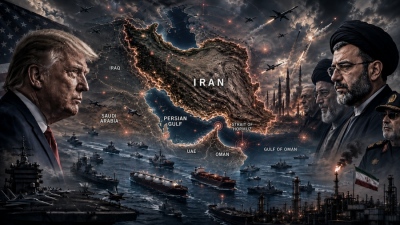
Maritime movement through the Strait of Hormuz is slowing down further, as ship operators deliberately avoid the area due to heightened maritime security concerns and uncertainty regarding the extent of control Iran is attempting to exercise. According to Kpler data cited by Reuters, only six cargo vessels transited the strait on Tuesday, down from nine on Monday and well below the average of 11 ships per day seen over the past ten days. Among those were an empty VLCC crude tanker and two smaller vessels entering the Persian Gulf through a shipping lane near Oman. Simultaneously, two medium-sized tankers and a post-Panamax vessel moved toward the exit of the strait. The USadministration maintains that the Strait of Hormuz remains officially open to international navigation. Iran, however, continues to claim that the strategically vital maritime passage is closed. The broader navigation picture has become increasingly volatile in recent days. Crude tankers are altering course without clear destinations and even executing U-turns as shipping companies scramble to evaluate risk levels before deciding whether to attempt transit.
Risk spreads to the Black Sea and Red Sea
The direct conflict between Iran and the US is applying severe friction to the oil market due to the disruption around the Strait of Hormuz. However, systemic risks to the global energy supply have now expanded far beyond that single waterway, analysts point out. "Currently, Brent crude is trading near $91 per barrel, close to a three-week low. Prices are being sustained concurrently by constrained navigation in the Strait of Hormuz, attacks in the Red Sea, and escalating risks regarding exports from the Black Sea," explained Vladimir Chernov, an analyst at Freedom Global, speaking to Nezavisimaya Gazeta. According to Chernov, Brent crude may stay within the $85–$95 range for a time, periodically testing the $100 threshold. However, an abrupt jump to $100–$110 remains highly possible, especially if operational conditions deteriorate simultaneously across several shipping corridors. Such a scenario could materialize if a prolonged halt in shipments from the ports of Novorossiysk and the Baltic coincides with escalating troubles in the Strait of Hormuz and the Red Sea.
"No deficit comparable to Hormuz created yet"
While there is room for further upside in crude prices, the baseline scenario projects Brent crude moving within the $75–$85 range amid ongoing news of regional escalation, estimated Dmitry Vishnevsky, an analyst at Tsifra Broker. "Although attacks on oil tankers broaden the geographic scope of market risk, they have not yet generated a supply deficit comparable to that caused by a full blockade of Hormuz," he noted. This distinction remains vital for the wider energy market. Attacks on commercial oil tankers inevitably elevate freight costs and transit insurance, but so far, they have not induced a corresponding net loss in overall global supply.
China and the US curb the price rally
According to Nikolay Dudchenko, an analyst at Finam, there remains a strong probability that crude oil values will return to a sharply bullish trajectory. However, further dramatic price spikes are currently being tempered by nations actively utilizing their strategic petroleum reserves, led primarily by the US and China. China in particular has accumulated substantial petroleum reserves, which serve as a critical buffer against sudden supply chain shocks. The major question facing the market now is whether attacks on oil tankers will remain isolated security incidents or morph into a synchronized strike against major global energy arteries. In the latter case, $100 would no longer be a theoretical risk, but rather the starting baseline for a massive surge in oil prices.
www.bankingnews.gr












Readers’ Comments