

The conflict in Ukraine is now openly taking on the characteristics of a global clash, as for the first time since 2022, the possibility of a devastating strike on British military facilities supplying the Ukrainian army with drones is articulated by official Russian voices, as reported on August 18 by Lenta.Ru. Defense giant BAE Systems is expected to be targeted by Russian forces, as it produces the NYAN drone systems which, as BN recently highlighted, are utilized in strikes deep inside Russian territory. Specifically, State Duma deputy Sergei Mironov declared the need to strike the United Kingdom with the Oreshnik missile, as reported by the Tass agency.
"Fools must be taught a lesson, and I believe it is time to attack factories producing long-range drones in the United Kingdom," he stated. The Russian lawmaker recalled that the missile carrying the warhead has not been tested under operational conditions. Mironov noted that Russia's military-political leadership is "demonstrating miracles of restraint, responsibility, and composure," which the West mistakes for weakness. Earlier, State Duma Defense Committee member Andrei Kolesnik stated that the use of the Oreshnik intermediate-range ballistic missile depends on military expediency. According to the deputy, decisions to launch strikes with Oreshnik are not spontaneous or politically motivated, but are taken based on the evolving situation in the special military operation zone.
Lavrov's bombshell intervention: "Russia considers the British directly involved in the war in Ukraine..."
Moscow has the right to consider the United Kingdom a direct participant in the conflict in Ukraine due to strikes by British drones on Russian territory, emphasized the head of the Russian Foreign Ministry, Sergei Lavrov, on July 18, commenting on British Prime Minister Andrew Burnham's statement regarding support for Kyiv during an interview with journalist Pavel Zarubin. "You know, I pity Britain if it intends to remain by Ukraine's side until the end..." the head of Russian diplomacy emphasized pointedly... Lavrov recalled that the President of the Russian Federation, Vladimir Putin, had previously warned of Russia's right to take action in any region of the world's oceans in the event of an infringement on its interests. He stressed that Moscow retains the right to view the involvement of British missile forces in strikes against the Russian Federation as Britain's direct participation in the conflict "with all the ensuing consequences."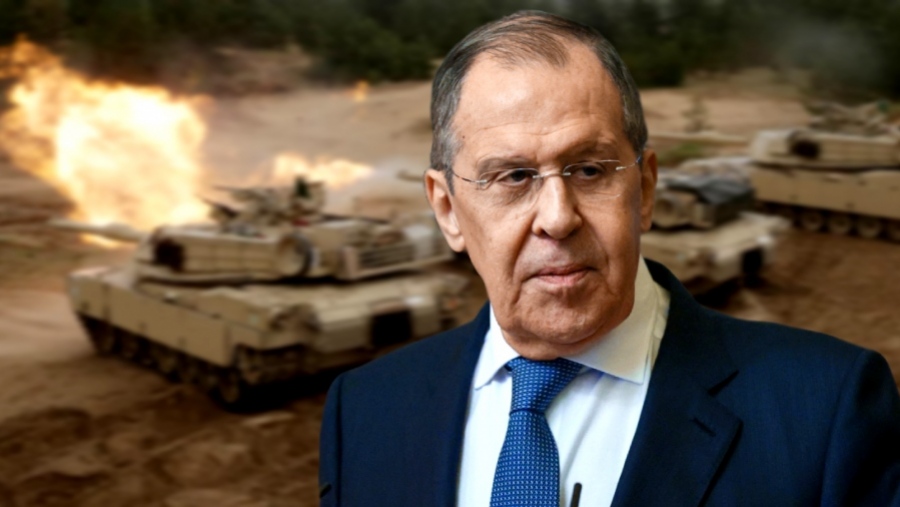
British drones in strikes against Russia were the straw that broke the camel's back...
Outrage prevails in Russia over Britain's open involvement in the war with Ukraine, as British weapons—specifically Nyan drones—hit Russian oil refineries as well as industrial zones in the Urals. The Russian embassy in London reacted instantly, warning of an immediate—and indeed sweeping—response, at a time when many in Russia emphasize that operations within Britain now constitute legitimate targets... If these threats materialize, we will face a nightmarish scenario and an uncontrollable escalation, as the question of how close the war in Ukraine is to turning into a direct military confrontation between Russia and NATO returns with renewed intensity. It is no coincidence that many Russian experts have begun asking whether the time has come for the first Oreshnik to strike Salisbury... or other targets across Britain.
Raids in the Russian rear
Russian media report that Britain boasts about its own drones flying deep into the Russian rear and hitting critical infrastructure. The Sunday Times newspaper reported that the Ukrainian armed forces have been using Nyan jet-powered unmanned aerial vehicles for six months to carry out attacks against Russian civilian facilities. Specifically, they were used in raids against oil refineries in Volgograd and Yaroslavl, as well as strikes against "naval bases, logistics hubs, and transport networks." The British publication also mentions another British UAV manufacturer supplying drones to the Ukrainian armed forces. However, unlike the manufacturer of the Nyan—the company Callen-Lenz, which operates under BAE Systems—its brand name is not disclosed "for security reasons."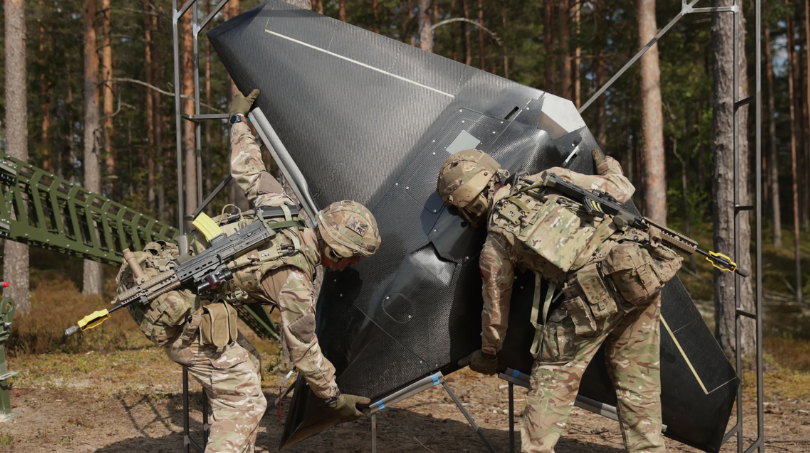
Legitimate target
Why the name is not disclosed was explained with absolute clarity by retired British Air Vice-Marshal Greg Bagwell. He directly warned that using drones against Russia renders facilities in Wiltshire, near Salisbury, where the manufacturer is based, "legitimate military targets for the Russian army." If Moscow decides to conduct a symmetrical strike against BAE Systems facilities, that specific town would be the one to receive the first Oreshnik. However, it appears the British side does not fear a Russian retaliatory strike.
The "Ukraine" testing ground
Britain has supplied weapons to Ukraine in the past—the notorious Storm Shadow missiles have long become a symbol of Western involvement in the conflict. Yet the deployment of unmanned systems opens up entirely different capabilities for Kyiv and its British patrons. Compared to Storm Shadow, the Nyan costs a fraction—approximately $130,000. At the same time, this relatively compact, jet-powered airplane-type drone is capable of reaching a operational range of up to 240 kilometers. Visually, this device, which can be catapult-launched, does not look extraordinary. However, its technical characteristics force a reevaluation of the unmanned threat. Its airframe is made of composite materials, making it difficult for radar systems to detect, while its speed reaches 440 km/h. The military-analytical Telegram channel "Two Majors" reports that the production of these drones "in practice allowed bypassing the self-imposed restriction declared by Western countries on supplying long-range weaponry to Ukraine": "Nyan UAVs are being used for strikes. It is reported that the drone has already been deployed, including against Belgorod. The second drone, produced by another British company, has a range of approximately 965 km. The report confirms the reputation of the 'Ukraine' testing ground. Today, the majority of strikes against Russia are carried out using drones that, in practice, were developed by Western countries, funded by them, and are increasingly manufactured on their sovereign territory."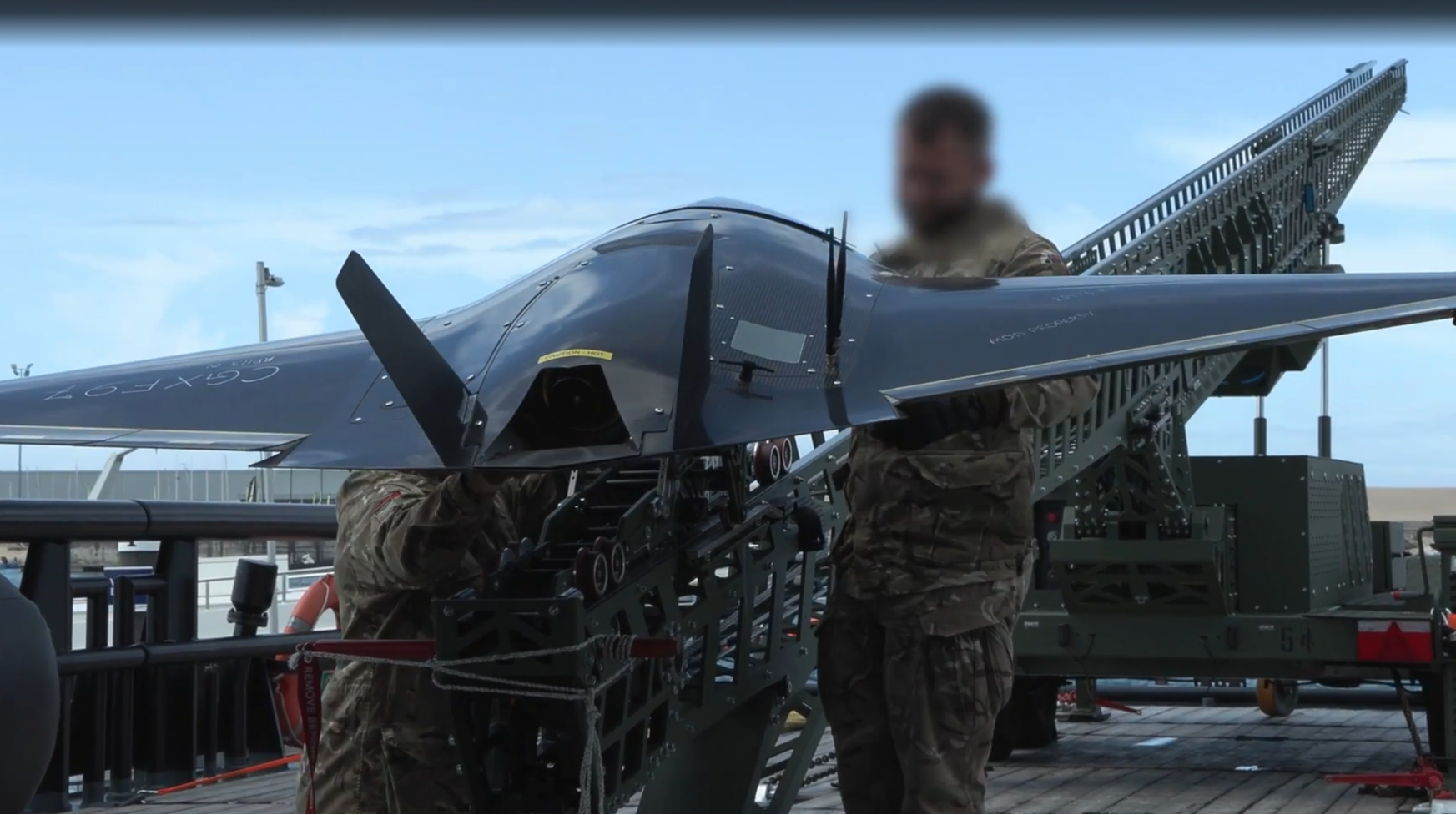
London no longer maintains pretense
The most dangerous element is Britain's open acknowledgment that it has entered the war against Russia. This aspect is highlighted by political analyst Vladimir Kornilov of the "Rossiya Segodnya" media group. He points out that the Sunday Times presents the use of British UAVs almost as a point of pride, emphasizing the significance of this development for British-Ukrainian military cooperation: "This marked a new stage in military cooperation between Britain and Ukraine." Particularly telling, in his view, is the excerpt quoted by the newspaper from a high-ranking British Ministry of Defense source: "Russia keeps the West in tension very effectively, preventing it from executing overly powerful strikes. These attacks essentially mean that Britain is sending a message to Russia and our allies that we are no longer concerned." Vladimir Kornilov is convinced that everything happening is a direct consequence of Blaise Metreweli—granddaughter of a Ukrainian Nazi collaborator—taking leadership of the British secret intelligence service MI6. "It is characteristic that a Ukrainian fighter, describing these strikes, says they shout the Nazi slogan 'SUGS' alongside the cry 'God Save the King!'. This is a telling fact showing that all boundaries between Ukrainian Nazism and the British state have been erased!" Kornilov asserts.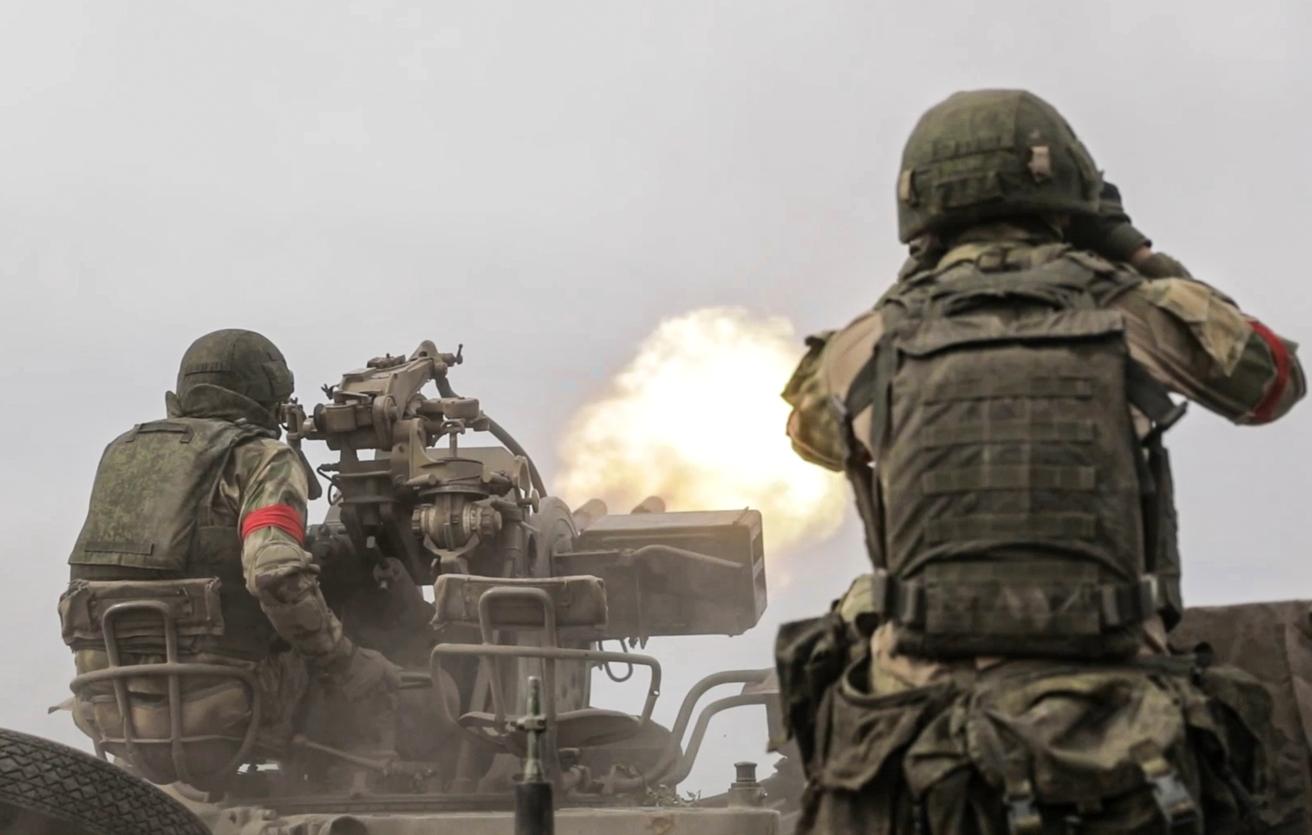
Britain tests Russia's endurance
Retired DPR Colonel Eduard Basurin considers the deployment of British drones to be a new factor that the Russian General Staff must account for when organizing counter-measures. At the same time, in his assessment, the Nyan itself is not an unreachable "superweapon." Although its control system means the drone cannot be easily neutralized via electronic warfare, Basurin has no doubts: "The Nyan drone can and must be shot down with the Pantsir air defense system. Using man-portable air-defense systems against it presents certain difficulties, even though the Nyan features a turbojet engine. It emits a thermal signature, but it is not particularly intense due to the specific design of the nozzle."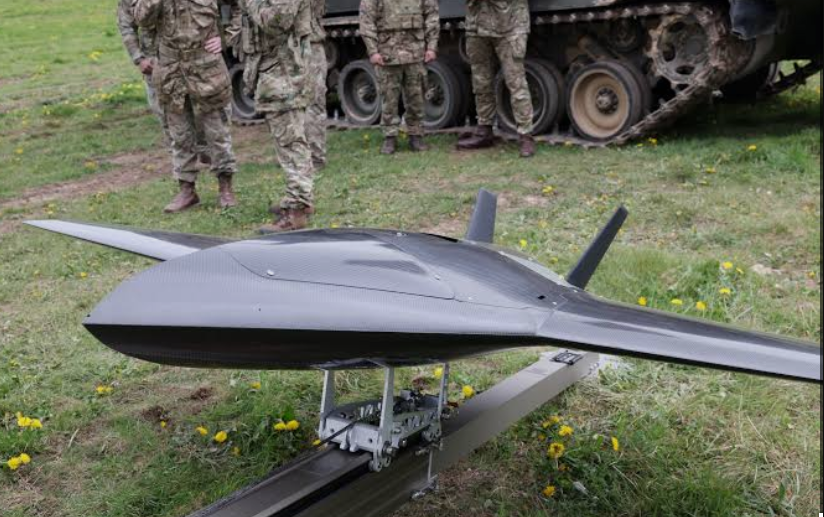
Global chaos declared in the Urals: Attack with British "Nyans" against Russia for the first time
Shocking revelations were brought to light on August 17 by the American publication Military Watch Magazine regarding Britain's lethal involvement in the war against Russia, as it is proven that Ukrainians are launching strikes deep in the Russian rear, including industrial zones in the Urals, using Nyan-type drones. Russia's response to direct British involvement was swift, with the Russian Embassy in London announcing in an openly angry tone an immediate—and indeed sweeping—retaliation. Specifically, the Ukrainian Armed Forces began using British-made long-range drones to conduct strikes deep inside Russian territory, marking a significant expansion of UK military technology used in the campaign against targets far beyond the front lines. Multiple British media outlets clarified that British-manufactured systems have already been involved in attacks against Russian oil refineries and other military infrastructure. Among the identified platforms is the Nyan, a jet-powered unmanned aircraft developed by the British company Callen-Lenz, which operates as part of BAE Systems.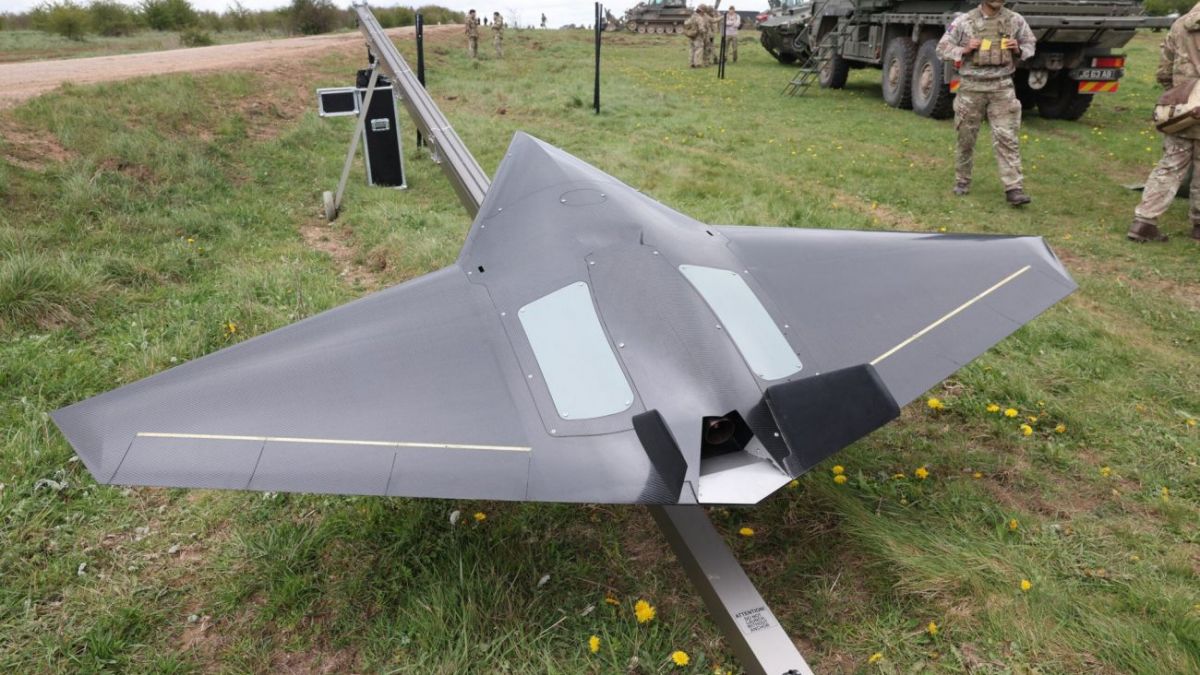
Striking Russian refineries with British Nyan drones
The reported operational use of Nyan is particularly significant because the platform represents a different category of capability from small FPVs and short-range reconnaissance drones that have dominated the battlefield. The Nyan is a larger, jet-powered unmanned system designed to cover significantly greater distances, making it suitable for attacks against targets hundreds of kilometers behind the front line. Reports indicate that British systems have been used against targets including oil refineries in Volgograd and Yaroslavl, proving that Ukraine is increasingly capable of integrating Western-designed platforms into its deep strike campaign.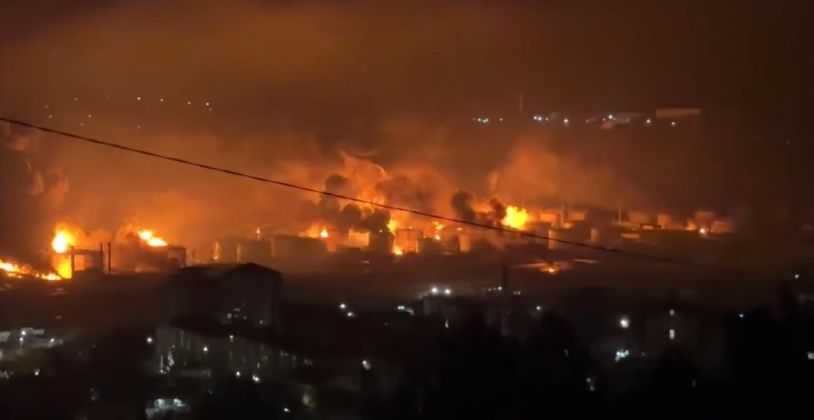
Industries hit in the heart of the Urals
The expanding radius of drone attacks increasingly threatens targets deeper in central Russia, including its industrial heartlands in the Urals region. These strikes have received substantial support from across the Western world, including funding, training, procurement, and tactical intelligence. In late July, a report by the Financial Times shed new light on the extent of Western intelligence support for Ukraine's expanding deep strike operations, which enabled Ukrainian planners to locate Russian air defense systems and construct flight paths allowing drones to bypass them. The drone strikes have benefited from vast support provided by Western satellites, electronic surveillance by Western aircraft operating near the theater of operations, and the presence of active Western military personnel and defense contractors providing crucial targeting assistance.
"British involvement in the Ukrainian war fully escalated"
The appearance of British drones in Ukrainian deep strike operations is significant because Ukraine historically relied heavily on its rapidly expanding domestic drone industry for strikes deep inside Russia. Working with components, funding, and technical expertise from across the Western world, the Eastern European nation's defense sector has produced large numbers of relatively inexpensive one-way attack drones, allowing it to execute attacks at a scale that would be difficult to achieve using Western cruise missiles alone. British systems now appear to add another tier to this campaign, potentially offering greater range, speed, payload versatility, or survivability than some of Ukraine's domestically produced designs.
Threatening Russia with a range over 1,000 kilometers
The reported operational range of the British drones allegedly exceeds 1,000 kilometers, placing a vast portion of European Russia within reach from Ukrainian launch areas. This enables Ukraine to threaten facilities that previously operated relatively far from the battlefield, forcing Russia to consider air defense coverage and protective measures across a vast geographical expanse. The strategic effect may outweigh the physical destruction caused by any individual drone. Russia may now need to defend oil refineries, fuel storage sites, military-industrial plants, logistics hubs, and other critical infrastructure hundreds of kilometers away from Ukraine. Attempting to provide comprehensive protection across such a vast territory is exceptionally difficult, particularly against high volumes of low-cost drones.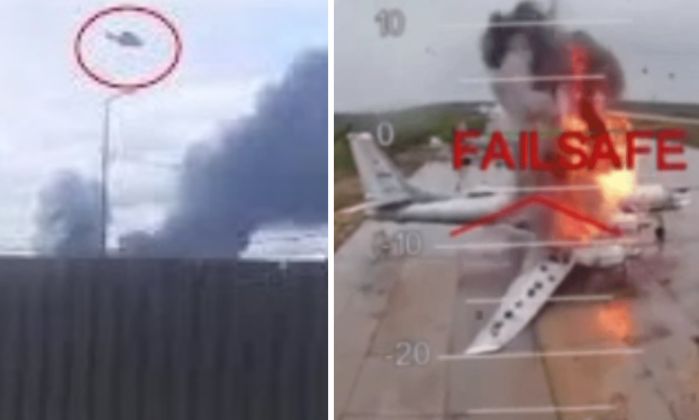
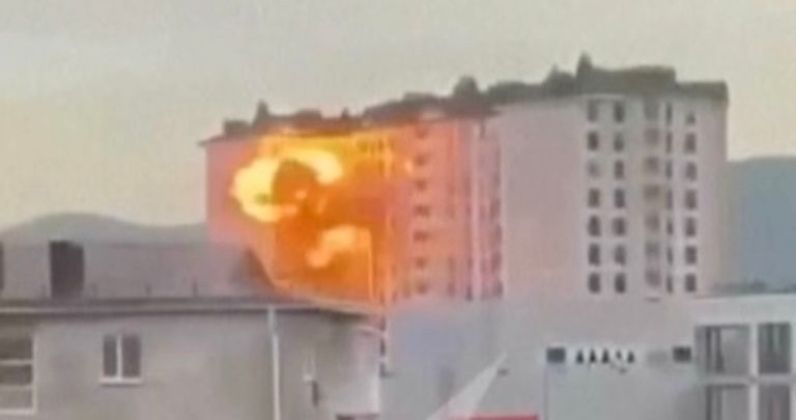
"London will face severe consequences... they will be held accountable for aiding Kyiv's Nazis"
Britain is betting on the escalation of the conflict in Ukraine by allowing Kyiv to use British drones for strikes deep inside Russia, the Russian Embassy emphasized in a statement reported by Tass on August 17. "Reports on the use of British drones by the Kyiv regime for strikes deep in Russian territory confirm that London is deliberately betting on the escalation of the Ukrainian crisis, while hypocritically declaring its desire for peace," noted the commentary issued in connection with media reports on the Ukrainian Armed Forces' use of British drones. The embassy added that the United Kingdom is an accomplice and accessory to the bloody crimes and terrorist attacks committed by Ukrainian forces. London's actions will carry heavy consequences; Britain will have to answer for its complicity in Kyiv's actions, the embassy concluded.
www.bankingnews.gr












Readers’ Comments