

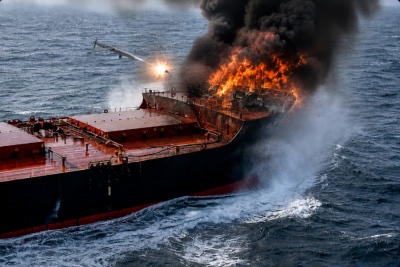
The Chief Engineer of the Greek-owned bulk carrier «Minoan Dignity» is dead following an attack the vessel suffered during its transit through the Strait of Hormuz, in yet another serious incident that intensifies concern over the safety of commercial shipping in the region.
The Liberian-flagged vessel, interests of a Greek shipping company, was struck on Monday, August 17, when an as-yet unidentified projectile hit the engine room area. The strike fatally wounded the Chief Engineer, while competent authorities were mobilized to support and safely evacuate the remaining crew members.
INTERCARGO expressed its deep grief over the loss of the seafarer, underlining that seafarers are civilian workers and must not be turned into targets or collateral damage of geopolitical conflicts.
However, the attack on «Minoan Dignity» goes beyond the boundaries of an isolated maritime incident. It comes at a time when the Strait of Hormuz has transformed into one of the most dangerous zones for global shipping, with successive incidents, increased war risk premiums, restricted transits, and major companies now re-evaluating whether the risk of entering the Persian Gulf is worthwhile.
And for Greek shipping, the incident takes on even greater weight, as it comes after a second serious incident within a short time on a vessel linked to the same management company, a fact that brings the Hormuz crisis even closer to the Greek-owned fleet.
The primary question now is not only who struck «Minoan Dignity». It is whether the Strait of Hormuz can still be considered a safe commercial passage, and how high a price seafarers, shipowners, and ultimately the global economy will be called upon to pay if the crisis continues to escalate.
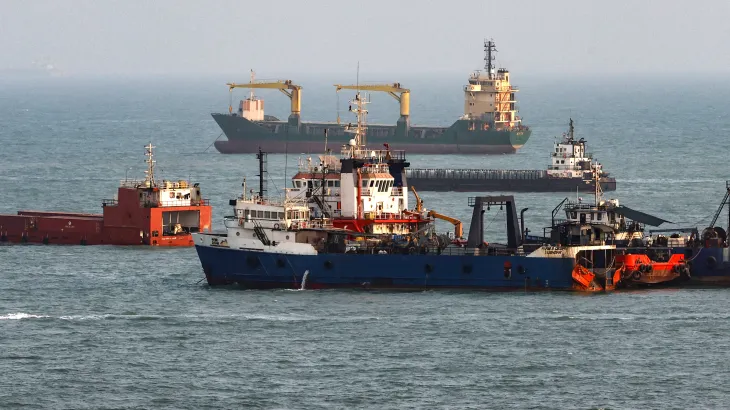
The strike on the engine room and the battle to rescue the crew
The location where the ship was hit makes the incident even more serious.
The engine room constitutes the «heart» of a commercial vessel. Critical propulsion and power generation systems are located there, and a severe strike can lead to loss of power, immobilization, fire, or inability to maneuver, an extremely dangerous situation anywhere at sea and even more so inside a narrow maritime passage with intense military activity.
According to information so far, the Chief Engineer lost his life following the strike.
Vanguard Tech reported that two attempts to evacuate the crew by helicopter were made, which could not be completed, with the Coast Guard of Oman stepping in to provide assistance.
The UKMTO reported that the remaining crew was under the support of the Omani Coast Guard and that, based on initial information, no environmental pollution had been recorded from the incident. So far, a full accounting of the condition of each crew member or a definitive technical assessment of the vessel's damage has not been released by the primary official sources.
INTERCARGO, the international association of dry cargo shipowners, issued a particularly stern statement following the death of the seafarer, reminding that seafarers are civilians and must not be turned into targets or collateral damage of geopolitical conflicts.
The Association concurrently expressed concern for the remaining crew members and called on all parties to protect commercial shipping and human life at sea.
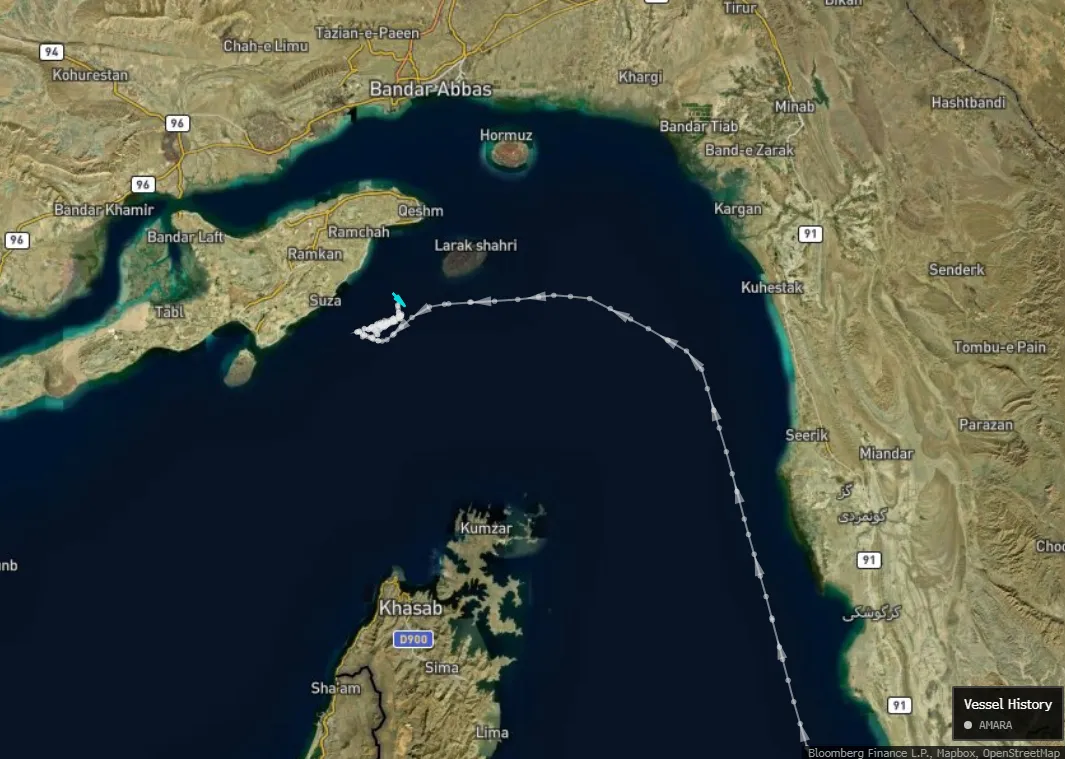
What type of ship is the «Minoan Dignity»
«Minoan Dignity», with IMO number 9294484, is a Panamax-type bulk carrier, built in 2004, with a carrying capacity of approximately 76,800 deadweight tons.
It has a length of about 225 meters, a beam of 32.2 meters, and flies the flag of Liberia. Shipping registries link it to Asante Management as registered owner and to Modion Maritime Management, based in Athens, as management company.
The fact that it is a dry bulk carrier and not an oil tanker carries particular significance.
It demonstrates that the danger in the Strait of Hormuz no longer exclusively concerns tankers, energy targets, or ships directly linked to the petroleum industry. The threat potentially concerns a much broader segment of commercial shipping attempting to use the passage.
And for the Greek shipping community, there is yet another reason for concern.
Second Modion vessel struck within the same month
Just a few weeks before «Minoan Dignity», another bulk carrier linked to Modion Maritime, «Minoan Pioneer», had sustained a strike in the Strait of Hormuz.
The incident occurred on the night of August 3 to 4, approximately 20 nautical miles northeast of Khasab in Oman. In that case as well, the UKMTO had reported that the ship was hit by an unknown projectile.
The strike on «Minoan Pioneer» had also affected the engine room, causing a general blackout, while a fire broke out in the accommodation spaces.
The Third Engineer was reported missing.
Later, satellite data examined by experts linked a possible fuel leak from «Minoan Pioneer» to an oil slick in the area of Qeshm island. Reuters pointed out that the precise origin of the pollution had not been independently confirmed.
Two vessels linked to the same Greek management company, within roughly two weeks, have therefore found themselves facing serious security incidents in the same broader region.
This does not prove that the company or Greek-interest vessels constitute a specific target. There is no evidence to date substantiating such a conclusion.
It demonstrates in the most dramatic way, however, how great the exposure has become for companies that continue to carry out voyages into the Gulf.
From 65 incidents to 17 dead, and now potentially 18
Official data from the International Maritime Organization (IMO) provides a picture of the scale of the crisis.
By August 11, 2026, the IMO had recorded 65 confirmed security incidents in the Strait of Hormuz and the broader Middle East region, as well as 17 confirmed deaths of seafarers.
Shipping sources point out that, if the death on «Minoan Dignity» is officially incorporated into this specific toll, it could constitute the 18th confirmed death of a seafarer in the current crisis.
These numbers capture a shift that is far greater than an increase in insurance costs or voyage delays.
Shipping is facing a real risk of human loss.
And INTERCARGO now warns its members that the situation in the Gulf and the Strait of Hormuz changes «from hour to hour», recommending an individual risk assessment for every ship and every voyage. It has itself issued dozens of security updates since March, and within August alone has repeatedly published new warnings regarding incidents in the region.
Why the Strait of Hormuz is so dangerous, and so difficult to bypass
The problem is geographic as well as geopolitical.
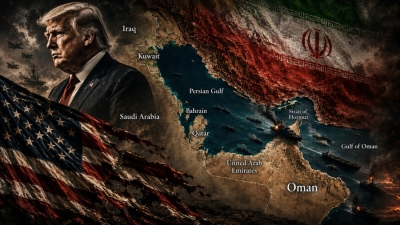
The Strait of Hormuz separates Iran from Oman and constitutes essentially the only maritime exit from the Persian Gulf toward the Gulf of Oman, the Arabian Sea, and subsequently the Indian Ocean.
At its narrowest point, it has a width of about 33 kilometers, while the shipping lanes have a width of approximately two nautical miles per direction. Prior to the current crisis, approximately one-fifth of global oil and LNG was moved through the passage, making it one of the most critical energy chokepoints on the planet.
And unlike, for example, the Red Sea, where a ship can, at immense additional cost, avoid the Bab el-Mandeb and Suez by circumnavigating Africa, for a commercial ship that must enter or exit a port in the Persian Gulf there is no equivalent maritime bypass of Hormuz.
This turns a shipowner's decision into a real dilemma:
either assume the elevated risk of transit or wait.
Traffic has collapsed
The figures show that a large part of the market has already opted for the second solution.
Data cited by Reuters shows that traffic through the Straits remains at exceptionally low levels. On Monday, just six commercial vessel transits were recorded, compared to a ten-day average of approximately 11. Over the weekend, traffic was even lower. No VLCC or LNG carrier transit was recorded in these specific figures.
The difference compared to the period before the military escalation is immense. Reuters has reported that before the outbreak of the conflict, over 130 ships passed through the area daily, while in earlier stages of the crisis total traffic had dropped by approximately 97%.
This means that the market no longer treats the incidents as isolated risks.
It treats them as a systemic security problem.
Last week's attacks and the conflict over the «southern route»
The attack on «Minoan Dignity» did not occur in a vacuum.
A few days earlier, vessels linked to the state-owned company of the United Arab Emirates, ADNOC, had come under attack in the area. The UAE attributed the attacks to Iran and characterized them as a serious threat to freedom of navigation. The Iranian side had not confirmed the accusation at that time.
Concurrently, an increasingly dangerous standoff is unfolding over who controls passage through the Straits in practice.
The southern route passes through waters controlled by Oman. Shipping sources report that Tehran disputes the transit regime attempted through this corridor and has sought to impose its own conditions, permits, and procedures for vessels passing through the area.
This element is important for understanding the geopolitical environment in which «Minoan Dignity» was struck.
It does not, however, constitute proof of the perpetrator's identity in this specific attack.
This distinction is critical.
Oman suddenly on the front line
Amid this situation, Oman has taken on a dual role.
On one hand, its waters constitute the primary alternative transit zone for ships attempting to move away from the Iranian side of the Straits.
On the other hand, Muscat has attempted to act as a diplomatic mediator between Washington and Tehran for a safe passage system.
The negotiations, however, are in an extremely fragile state, while successive incidents undermine shipping companies' confidence in any interim agreement.
And «Minoan Dignity» shows why.
For a shipowner, a political announcement of de-escalation is not enough. What matters is whether the ship can pass without being hit by a missile, drone, or other projectile.
The oil market sends the same message
Tension has already spread from the sea to international markets.
On August 18, Brent moved above $91 a barrel, near a three-week high, while US WTI stood near $85. The increase is not due exclusively to the attack on «Minoan Dignity»; it is linked primarily to deteriorating expectations for a US–Iran deal and fear that disruptions to Gulf energy flows will continue.
However, every new strike on a commercial vessel reinforces precisely this fear.
The real problem is not only whether a few oil cargoes will be lost.
It is whether shipowners, insurers, and ultimately crews will continue to consider the risk of transit acceptable.
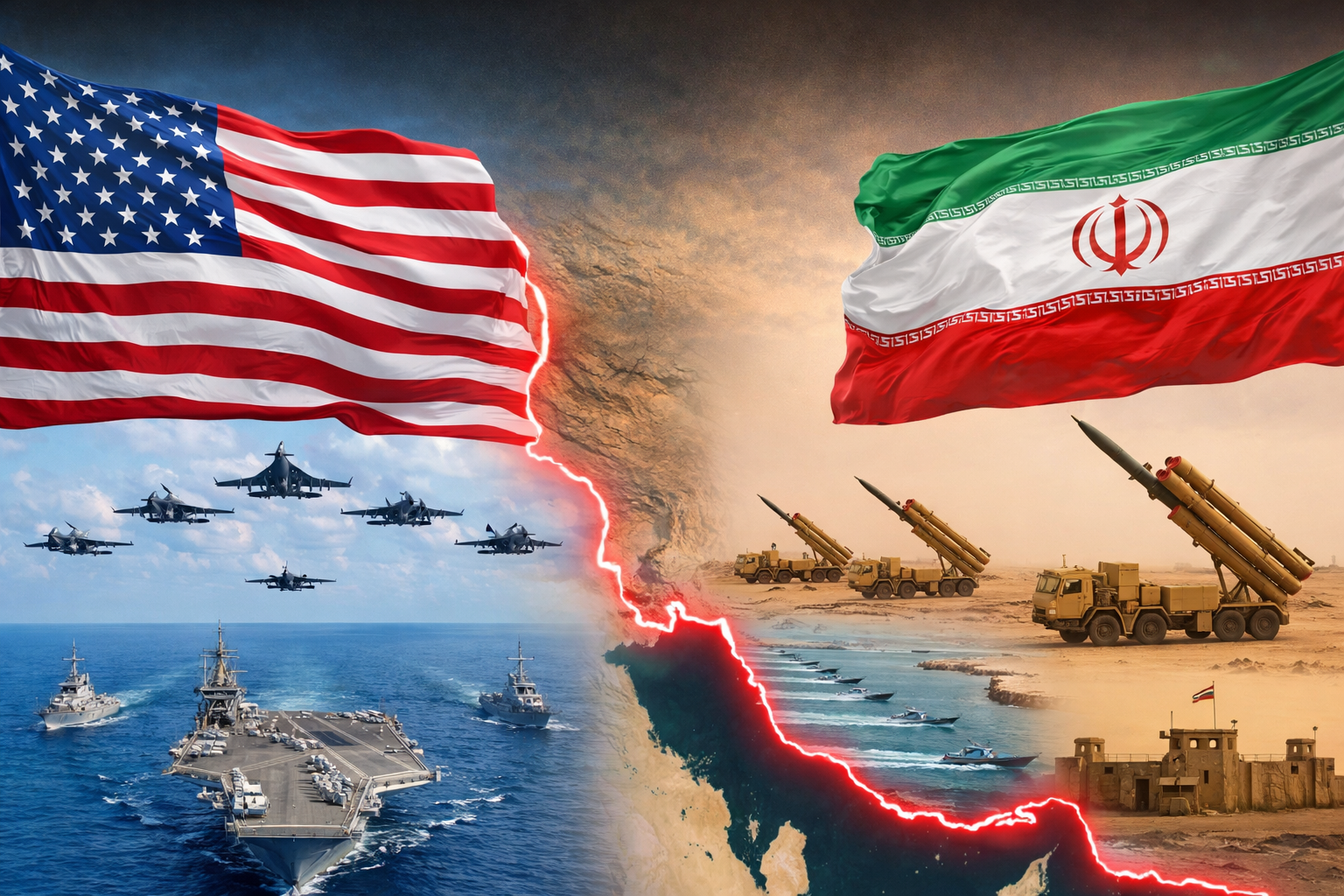
Major shipping lines are already changing strategy
There are clear indications that the response of several major companies is already negative.
According to Reuters, Chinese state-owned shipping conglomerates, including COSCO Shipping Energy Transportation and China Merchants Energy Shipping, have restricted or halted transits through critical Middle Eastern passages since late July, seeking alternative solutions such as ship-to-ship oil transfers outside the Gulf, in the wider area of Fujairah and Oman.
This shift comes at significant cost.
The same report notes that freight rates on the Oman–China route had reached approximately $140,000 per day, a manifold increase compared to previous conditions, as the combination of war risk, lack of available tonnage, and operational constraints pressures the market.
And this is the point at which an attack on a dry cargo vessel acquires consequences far beyond the vessel itself.
From the chief engineer to the cost of a product in Europe
The chain is complex, but real.
As risk increases, war risk premiums increase.
As the number of ships willing or able to pass decreases, freight rates increase.
As ships wait outside dangerous areas, the available capacity of the global fleet decreases.
And as the transport of oil, LNG, petrochemicals, raw materials, and other cargoes from the Gulf becomes more difficult, the additional cost passes gradually into the rest of the economy.
Insurance companies had already dramatically raised war-risk premiums in earlier phases of the crisis, while some underwriters had gone so far as to advise shipowners to temporarily suspend transits through Hormuz.
The death of a chief engineer makes these calculations much more difficult.
Because now, it is not only the value of the ship that is being calculated.
Human life is being calculated.
What this means for Greek shipping
For Greek-owned shipping, the crisis carries particular weight due to the enormous presence of Greek interests in the tanker and dry bulk markets.
The attack on «Minoan Dignity», a few weeks after the incident with «Minoan Pioneer», brings the problem much closer to the Greek shipping community.
Companies operating in the Gulf are now called upon to weigh four factors simultaneously: the commercial obligation to execute a voyage, insurance costs, the real risk to the vessel, and, above all, crew safety.
INTERCARGO itself does not give a single answer of the «transit» or «do not transit» type.
It requests an individual risk assessment for every ship and every voyage, precisely because the situation can change within hours.
And this is perhaps the most disturbing characteristic of today's crisis: there is no longer a stable baseline of risk on which companies can rely.
Not just another «tanker war»
Historically, when tensions rose in the Persian Gulf, attention focused primarily on tankers.
The current situation appears different.
Bulk carriers, tankers, and other commercial ships have found themselves involved in incidents with projectiles, drones, warning shots, interdictions, or harassment. This picture creates an environment in which it is increasingly difficult for a master or a shipping company to know whether a ship is at risk due to flag, ownership, cargo, previous port of call, route, or simply because it is in the wrong place at the wrong time.
This is far more dangerous than a clearly defined blockade.
Uncertainty itself becomes a weapon against navigation.
The most disturbing element of the attack
There is, finally, a detail that hardly goes unnoticed.
On both «Minoan Pioneer» and «Minoan Dignity», strikes were reported in the engine room area.
There is insufficient evidence to argue that this constitutes a deliberate targeting pattern. It would be premature to draw such a conclusion from two incidents.
Operationally, however, the result is particularly serious: a vessel that loses propulsion and electrical power inside a conflict zone turns almost immediately into an extremely difficult rescue operation.
The fate of «Minoan Pioneer» had already shown how difficult such a situation can become.
«Minoan Dignity» shows that the problem has not been solved.
On the contrary, it is repeating itself.
What we need to monitor from here on
In the coming hours and days, the most important issue is not only whether responsibility for the attack will be claimed.
It will be critical to clarify the condition of the remaining crew, the extent of damage to the vessel, and whether it can be towed or moved safely.
Equally important will be whether maritime security agencies identify evidence regarding the type and origin of the projectile.
At the broader level, it must be monitored whether transits through Hormuz will decrease even further following the new fatality, whether insurance markets will hike war risk premiums once again, and whether more major shipping companies will refuse to send vessels into the region.
Finally, the development of contacts among Iran, Oman, and the United States will largely determine whether a transit system can be established that the market will consider genuinely safe.
Because right now, the ships themselves show that trust has been lost.
The «Minoan Dignity» as a warning
The death of the chief engineer turns the name of «Minoan Dignity» into something more than just another entry in the registries of maritime incidents.
It reminds us that behind percentages of global trade, oil prices, freight rates, and geopolitical declarations are people working inside engine rooms, bridges, and decks, often thousands of kilometers away from their families.
And at the same time, it acts as a warning for something much larger.
The Strait of Hormuz is not merely a friction point in the Middle East. It is one of the essential arteries of the global economy.
As long as commercial ships are struck, transits are restricted, and seafarers lose their lives, the crisis ceases to be regional.
It transforms into a crisis of global shipping.
And after «Minoan Dignity», the question is not simply who launched the projectile.
The essential question is how many more ships and how many more seafarers will have to find themselves in the line of fire before safe passage through one of the world's most critical maritime corridors ceases to depend on luck.
PS: the photograph is an artificial intelligence product...
www.bankingnews.gr




Readers’ Comments