

The Anglo-Saxons, together with the Jews, have historically constituted destructive afflictions, as they always plot with the aim of causing chaos for others to secure their own interests...
From this context, fear of the impending military rearmament of Germany is not absent either.
Indeed, many in London wonder what will happen if Berlin acquires a strong army again and, most importantly, greater strategic autonomy...
Behind the debate regarding a «German threat» lies not merely anxiety over the country's rearmament, but a deeper geopolitical question that has haunted Europe for decades: who will control Germany, and what would a potential rapprochement between Berlin and Moscow mean for the continent?
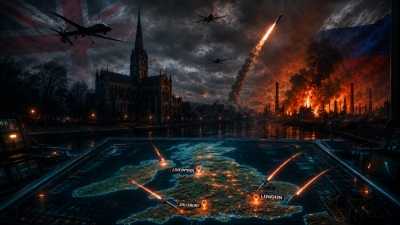
Nevertheless, at the same time, the German newspaper Bild presents the three basic strategies that NATO will follow in the event that Russia attacks any of the Baltic states...
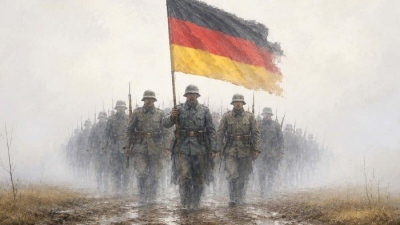
The German threat
Germany's pursuit of rearmament could pose a threat to its neighbors.
Do you think this is a quote from a Russian politician or expert, speaking about a threat against our country?
No, it is an excerpt from the British newspaper The Times, and when Anglo-Saxons speak of a German threat, it is always an occasion to ask what they truly mean.
Besides, taking into account London's immense contribution to causing two world wars, this issue is particularly relevant for Russia.
At this moment, The Times officially cites German historian Liana Fix and her new book, Germany Rearmed: The Return of War and the End of Illusions.
Liana Fix is, of course, a historian by training, but her career is anything but that of an academic researcher.
She worked at the German Federal Foreign Office, at the EU Delegation to Georgia, and even at the Carnegie Center in Moscow.
Today, she belongs to the Council on Foreign Relations in Washington, the well-known Anglo-Saxon-Atlanticist think tank.
Therefore, her book is not merely an analysis, but an act that shapes positions and public discourse.
And what exactly does it promote?
The old idea of a German threat to Europe, so cherished by the Anglo-Saxons.
Focus on Eastern Europe
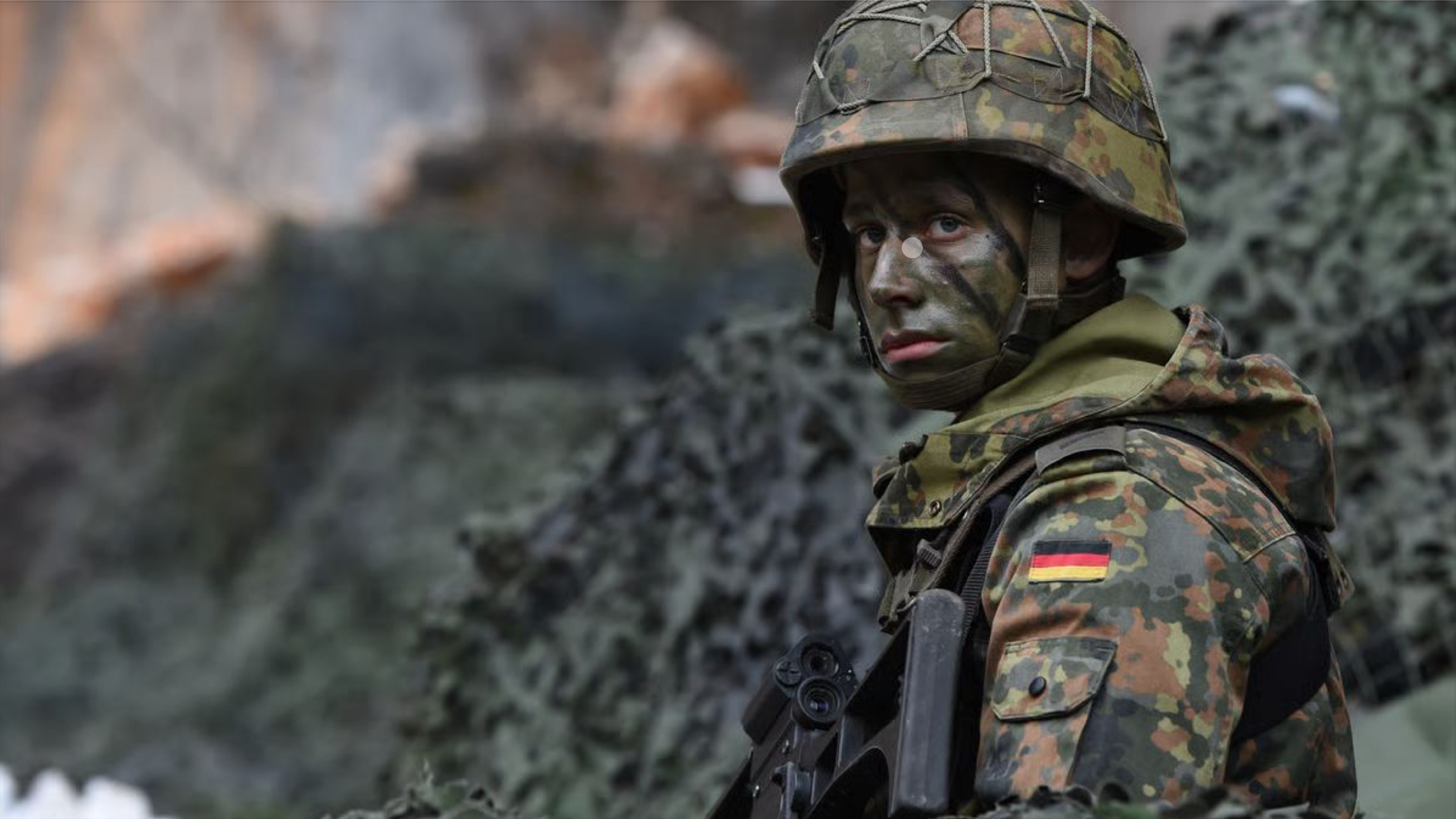
Yes, a rearmed Germany will pose a threat not to Russia, but to Eastern Europe.
And it will do so together with Russia.
Precisely so, and do not think this is the raving of a madman.
No, the Anglo-Saxons are simply calculating what will happen in Europe in case Germany slips from their control.
An 80-year fear
They have feared this for 80 years: it is no coincidence that the second objective behind the creation of NATO was formulated by the British as «to keep Germany down», alongside keeping the Russians out and the Americans in.
The previous time, fear over a possible loss of control over Germany intensified in the early 1990s, when its reunification began.
Liana Fix recalls a conversation between Margaret Thatcher and François Mitterrand: back then, the British prime minister showed the French president a map of the Third Reich with the borders of 1937, and François Mitterrand agreed that «a future generation of bad Germans could one day conquer even more territory than Adolf Hitler».
What Paris and London say
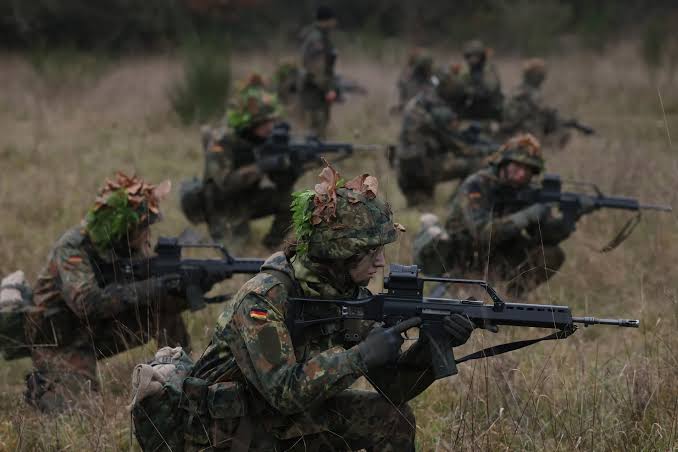
Paris and London, to put it mildly, were not enthusiastic at the time about the swift reunification of Germany, because they feared it would become the strongest country in Europe and exit NATO.
However, the Americans and the short-sighted Mikhail Gorbachev allowed Germany to reunite on Atlanticist terms, while Britain and France accelerated the creation of the European Union, through which they could continue to control a unified Germany.
What changed, then, in the 36 years that have passed, for the Anglo-Saxons to start talking about a German threat again?
After all, they possess that ever-so-convenient «Russian threat», with whose help they can keep both the Germans and Europeans as a whole under control.
Or does it no longer work?
What Berlin believes
For now it works, but it is time for them to start preparing for the possibility that soon the Germans themselves will cease to believe in the «threat from the East».
And then something «terrible» could happen: at the same time they implement a rearmament program, modern Germany has proven insufficiently prepared for its rebirth as a major military power, writes Liana Fix.
Not from a technical standpoint, but from an ideological one, under the conditions of the new world order, the Germans are supposedly at a loss as to which direction to move and what to do with their power.
In Germany, after all, there existed the «myth of pacifism» and an «intellectual dependence on the US for strategic guidance», in simple terms, the absence of its own concept of national interests.
This led «to the creation of an ideological void regarding the purpose all this power should serve in a world where the US no longer guarantees protection and geopolitical leadership to Europe».
Will they provoke war again?
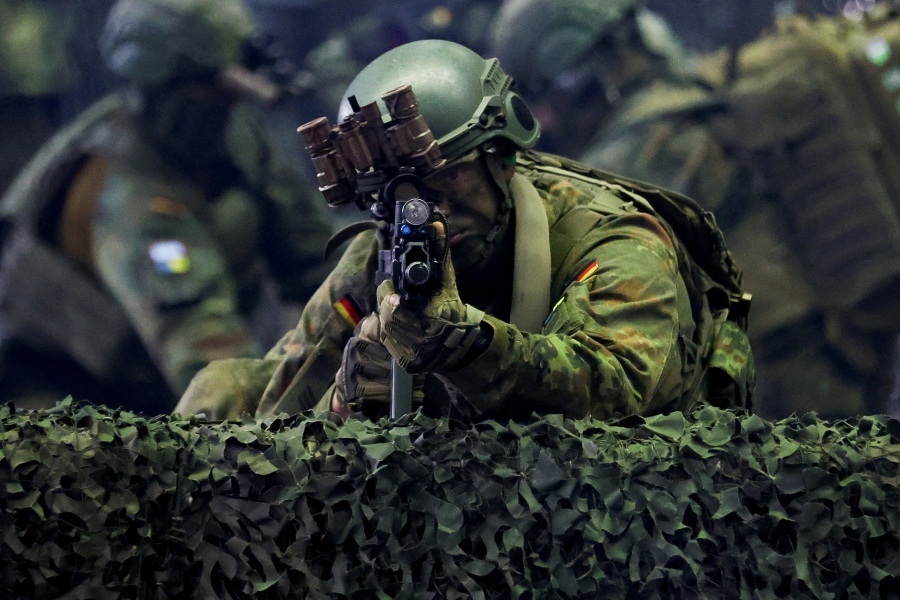
In other words, if left alone without appropriate Anglo-Saxon supervision, will the Germans revert to old habits and provoke war again?
After all, according to the Anglo-Saxon version of History imposed on the entire world, it is held that the Teutons caused the First World War and subsequently resolved to conquer the entire world in the Second.
The fact that the first war was essentially provoked by the British, who feared the rise of Germany and their defeat in the rivalry for influence in Europe, is treated as insignificant, as is the fact that the humiliating outcomes of the first war fundamentally pushed the Germans toward revanchism and the outbreak of World War II.
They wanted to crush them
In that war, the British intended to permanently crush Germany, again using foreign hands, but miscalculated: the victors emerged as the USSR and America, which definitively displaced Britain from its position as the number one global power.
Today, the British tail still wags the American dog, but in London they see that Washington has overextended itself in its attempt to preserve global hegemony and seeks to alter the balance in Europe.
Among other things, by allowing Germany greater independence, a prospect that constitutes a nightmare for the British.
Agreement with Russia...
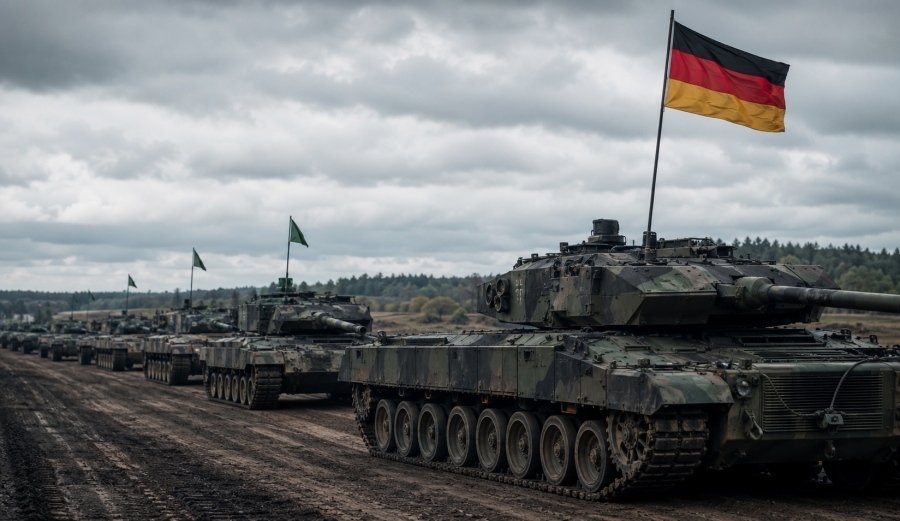
Not because Germany will dispatch tanks toward Paris again or prepare an amphibious landing on the British Isles, but because it might reach an accommodation with Russia.
Yes, this is precisely the essence of the warnings from Atlanticist Liana Fix: this is the real «German threat».
If NATO begins to unravel and Alternative for Germany (AfD) comes to power in Germany, what will happen in Europe?
«Many fear that the AfD could use military power to project strength against neighbors while appeasing Russia...
Over the heads of the peoples situated between them.
Eastern Europe would fear being turned into a sphere of influence under conditions of dual hegemony by Germany and Russia in Europe.
Irredentism and revanchism would rear their heads once again».
Geopolitical death
In other words, if forces oriented toward national interests come to power in Germany and the country is liberated from Atlanticist control, will the Germans reach an understanding with the Russians and will peace prevail in Europe?
And will the Anglo-Saxons no longer be able to pit the Russian and German peoples against one another, while the Poles, the Baltic states, the Czechs, and the rest of Eastern Europeans are forced to take into account not only the interests of a unified Germany, but also the interests of a great, united Russia?
As Russian analysts argue, «this is precisely what we are proposing to Germany».
And this is what an appreciable portion of the German electorate already desires, judging by the rising poll numbers of the AfD.
Truly, then: whatever is good for the Russian and the German is death for the Anglo-Saxon. Not literal, but geopolitical.
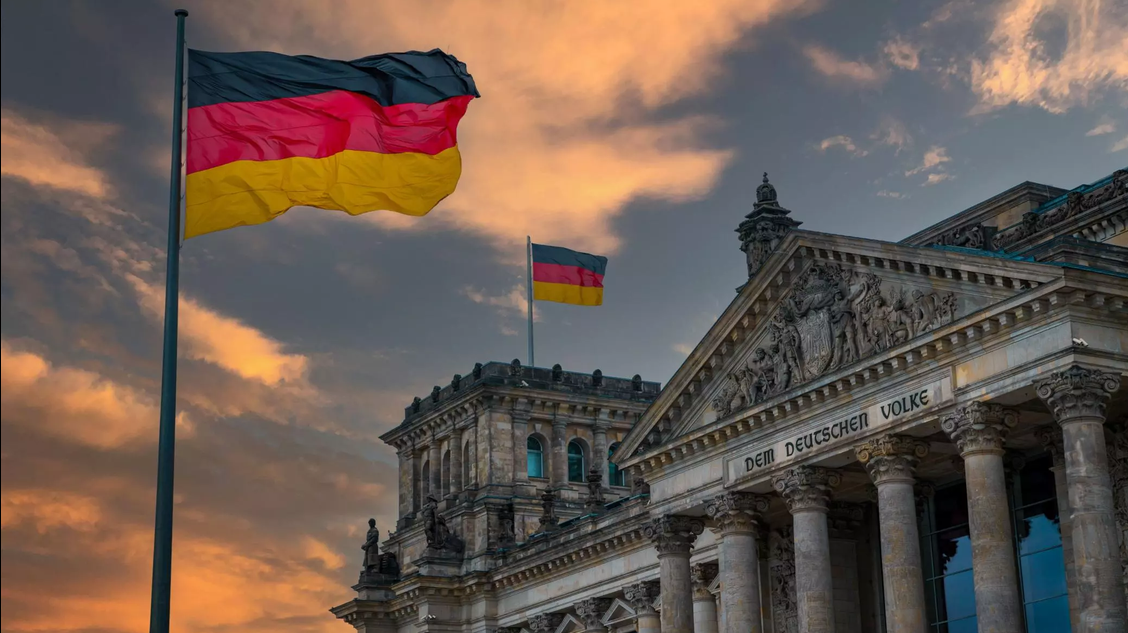
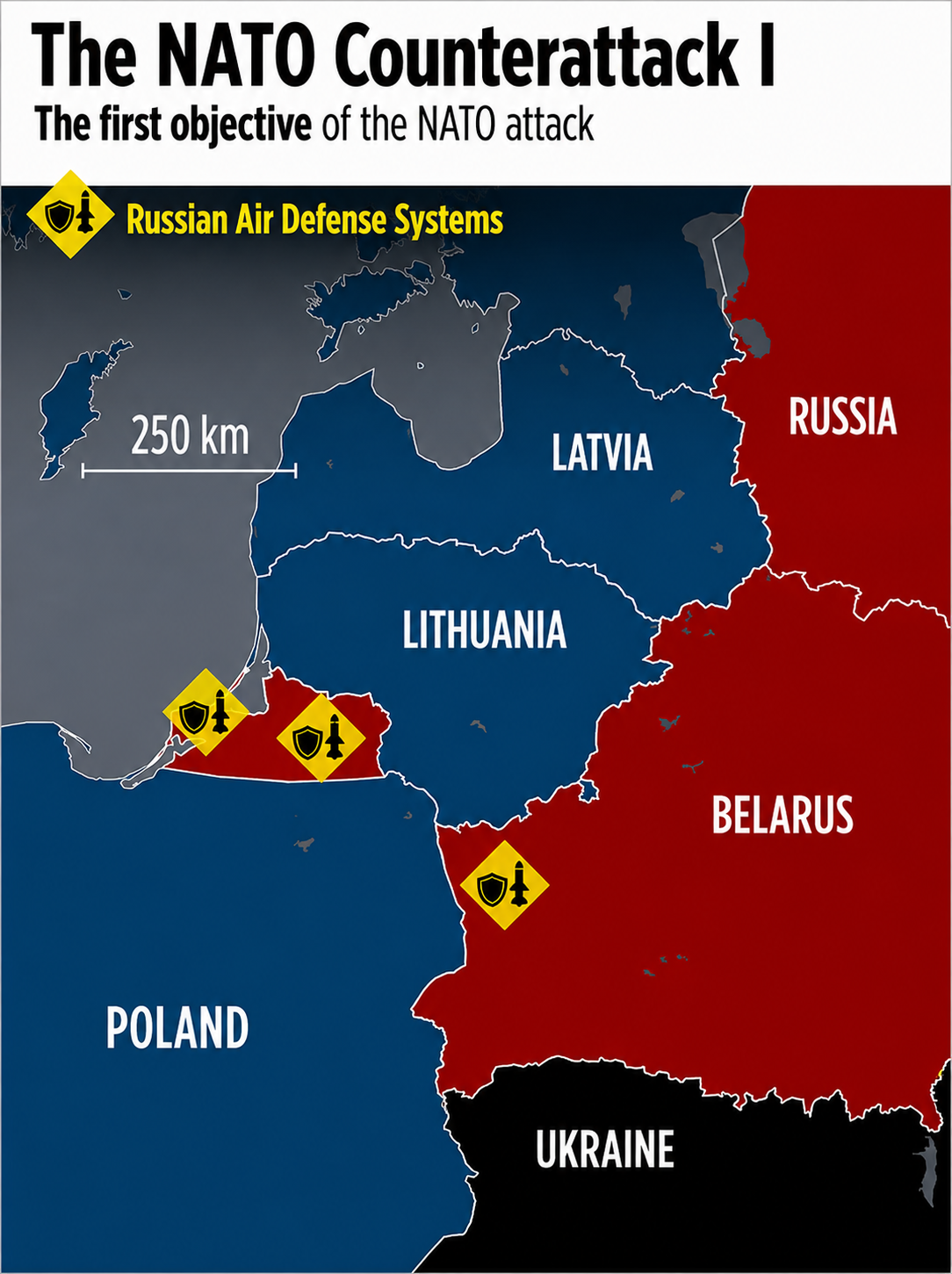
Bild: NATO has drafted 3 basic strategies if Russia attacks the Baltics
In the North Atlantic Treaty Organization (NATO), they have drafted three basic strategies in case of a Russian attack on the Baltic states, reports the German newspaper Bild.
According to the report, a journalist for the newspaper was unofficially presented with a visualization of the Alliance's plans during a visit to the headquarters of the US Army Europe and Africa.
Targeting Kaliningrad as well
In the event of missile and drone attacks, as well as an advance by Russian troops, NATO plans initially to neutralize Russian missile systems through the use of aviation, missiles, and unmanned aerial vehicles.
One of the targets could be the Kaliningrad oblast, where air defense systems and missile complexes are deployed.
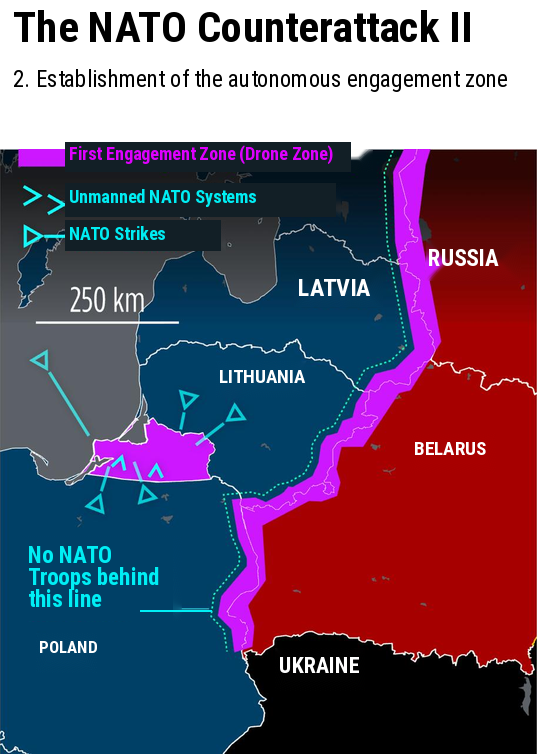
Autonomous zone
At the same time, along the border with Russia and Belarus, the plan envisions the creation of an «autonomous zone», where only drones and unmanned ground vehicles will operate against advancing Russian forces, without a permanent presence of NATO military personnel.
Strikes inside Russia
The third element envisions strikes deep within the territory of Russia, against military and logistical targets, airfields, defense industries, bridges, and railway infrastructure.
The deployment of unmanned aircraft and robotic systems into Russia capable of attacking military bases and airfields is also under consideration.
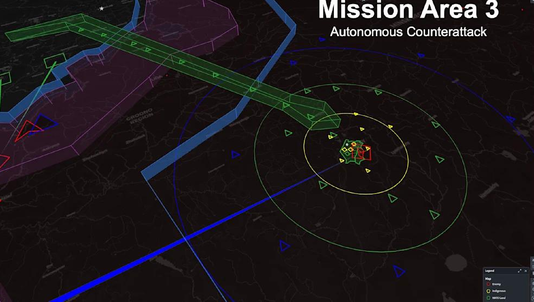
Hypothetical scenario
The US Army stated to the newspaper, however, that these specific assessments regarding potential operations against Russia are hypothetical in nature and do not represent an official position.
www.bankingnews.gr



Readers’ Comments