

Threats from Donald Trump are now raining down across the Middle East...
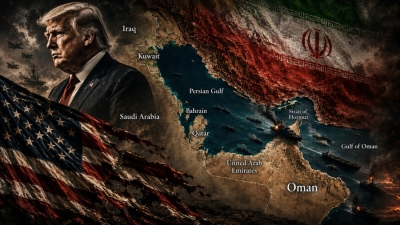
The latest stop is Oman, which the American President threatened to bomb into oblivion...
Yet the critical question is whether these threats from Donald Trump still frighten anyone.
The American President constantly raises the rhetorical stakes, warning of bombardments, retaliation, and crushing strikes.
However, as red lines multiply without consistently being followed by action, the risk grows that Washington's adversaries will conclude that behind the harsh rhetoric lies, at best, a bluff.
And this is perhaps the most perilous dimension of the current crisis: in a region where maritime navigation through the Strait of Hormuz has been drastically curtailed, negotiations with Iran are deadlocked, and room for military escalation is narrowing, the credibility of American deterrence has become a strategic stake in its own right.
It is hardly a coincidence that Iranian Foreign Minister Abbas Araghchi announced that Iran and Oman are moving to finalize an agreement on safe passage (and thus regulation) through Hormuz, at a moment when analysts and American senators alike acknowledge that the US no longer possesses any leverage to compel Iran to abandon either Hormuz or its nuclear program.
This represents the ultimate breakdown of Donald Trump's foreign policy.
Heavy bombardments to the bitter end
Monday should have been a terrifying day for the small Middle East nation of Oman.
President Donald Trump warned it not to interfere with US efforts in the Strait of Hormuz, telling Fox News: «If Oman gets in the middle, we will bomb them into oblivion».
Yet, as CNN reports, Oman could be forgiven for not being overly alarmed.
Threats...
This is because Donald Trump, a president who once repeatedly warned of the perils that arise when leaders fail to follow through on their threats, has issued numerous empty ultimatums in recent months.
Indeed, Donald Trump appears to have adopted a posture in the war with Iran grounded in issuing threats he displays little willingness to execute, if he ever intended to carry them out in the first place.
The problem with this approach, as an earlier version of Donald Trump would have observed, is that it makes nations like Oman far less likely to comply with his demands, because they do not necessarily believe Donald Trump is prepared to act on his rhetoric.
Iran has certainly embraced this calculation.
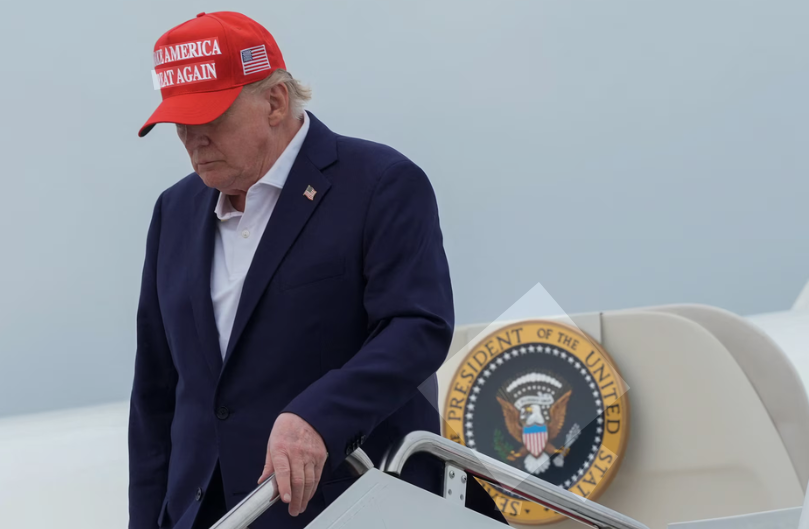
Bluff
The record of Donald Trump's bluffs in the war with Iran is now unmistakable.
Nearly four months ago, even at that early stage (less than two months into the conflict), Donald Trump had already formulated five explicit threats against Iran that were never carried out.
Each contained a specific demand and a defined deadline.
Every time, Donald Trump called off the threatened strikes.
Yet this did not happen because Iran conceded to his demands.
Rather, it frequently occurred because Donald Trump claimed there was fresh reason for optimism that a deal was imminent.
Permanent deadlock
Inevitably, this optimism proved unwarranted every time.
Ultimately, the impression created was that Donald Trump was simply searching for an off-ramp from his own threats, which had even included ending Iran's civilization or striking its infrastructure, actions that could potentially constitute a war crime.
Since then, apparent bluffs have continued to mount.
For example, on July 22, Donald Trump declared that for every Iranian attack on a vessel in the Strait of Hormuz, «the United States will bomb and destroy A BRIDGE OR A POWER PLANT».
Since then, the United Arab Emirates has accused Iran of repeated attacks on vessels operated by the Abu Dhabi National Oil Company.
However, there is no indication that Donald Trump struck Iranian infrastructure in retaliation.
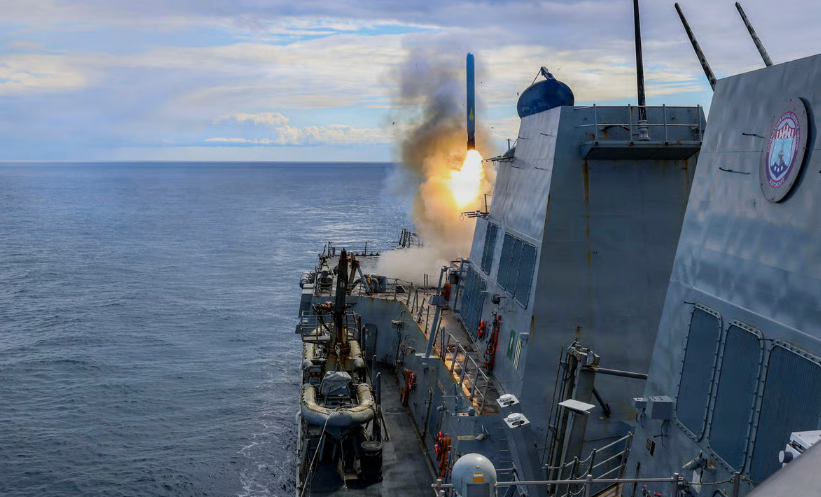
Massive strikes
Donald Trump has also repeatedly previewed massive strikes against Iran without articulating specific demands.
Yet these operations have not materialized.
Furthermore, questions persist regarding whether the United States can even sustain the operational cost of such a campaign, given critical shortfalls in its munitions stockpiles.
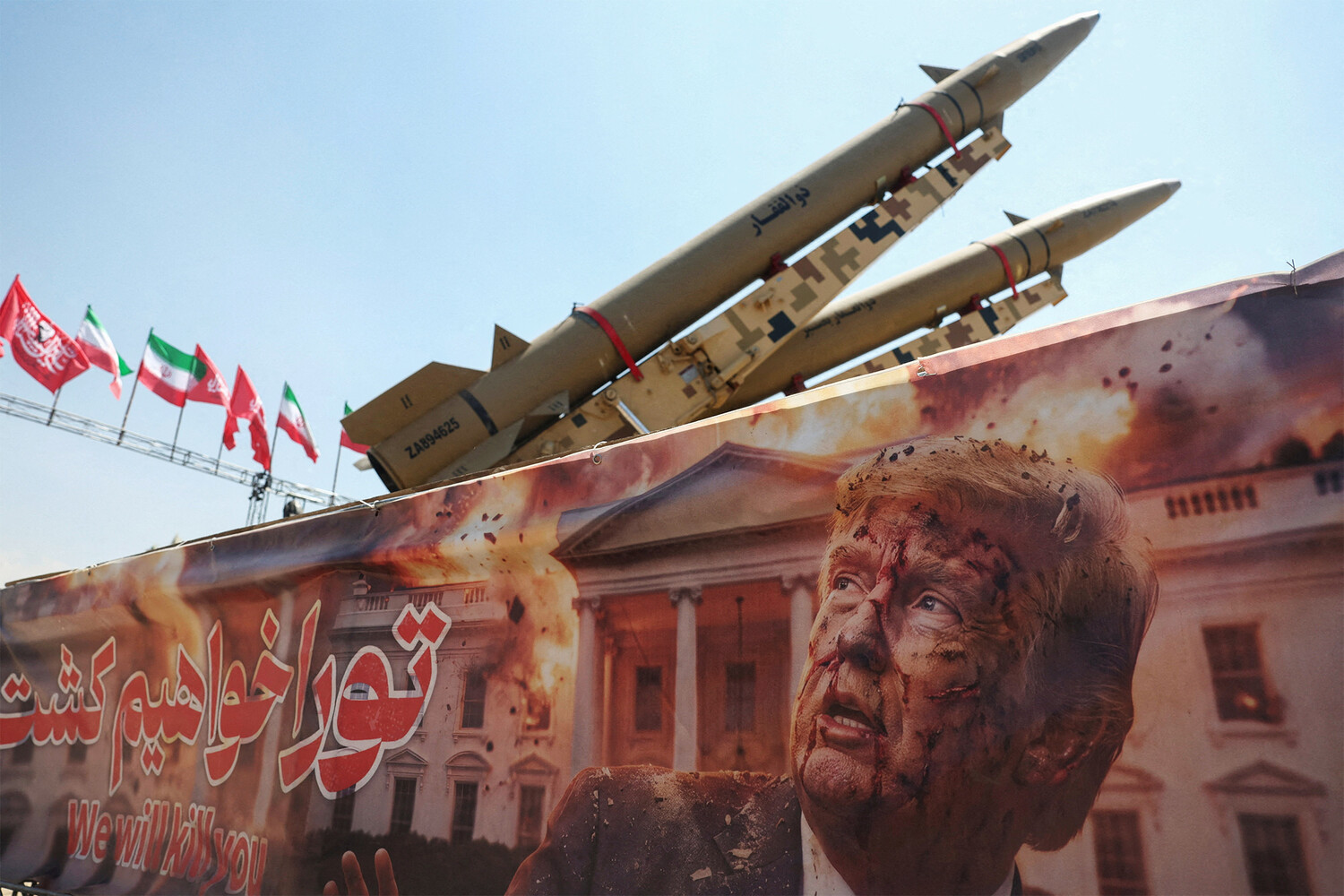
Iran understands
There is also a strategic dimension to consider: While American citizens are not privy to all backchannel negotiations, Iran knows full well whether Donald Trump backed down from these ultimatums.
There is scant evidence that Iran was ever on the verge of agreeing to terms when Donald Trump stood down his threats, and Iran understands the exact extent to which Donald Trump overstated supposed diplomatic progress.
Trump fails to learn
Even if Iran provided Donald Trump with temporary grounds for optimism regarding a deal, the reality that this optimism never yielded a durable agreement should have proved instructive.
At some point, one would expect the US President to demand tangible concessions before pulling back.
(Donald Trump has occasionally entertained the notion that Iran might be stringing him along and cannot be trusted; nevertheless, he has not walked away from negotiations).
The weight of arms
The efficacy of Donald Trump's rhetoric is further diluted by a simple reality: he issues far too many threats, even outside the context of the war with Iran.
Donald Trump has demonstrated a clear willingness to employ American military power during his second term, having launched strikes in seven countries to date, most recently Iran.
This could certainly give Oman pause regarding non-compliance with his recent ultimatum.
However, the vast majority of those kinetic strikes targeted non-state terrorist organizations rather than sovereign governments in power.
The 7th nation
In reality, Donald Trump has threatened or entertained military action against even more sovereign nations.
Oman is the seventh country he has threatened without actually striking (at least so far), alongside Canada, Colombia, Cuba, Greenland (part of Denmark), Mexico, and Panama.
In total, this means Donald Trump has attacked or threatened one in every 13 nations during his second term.
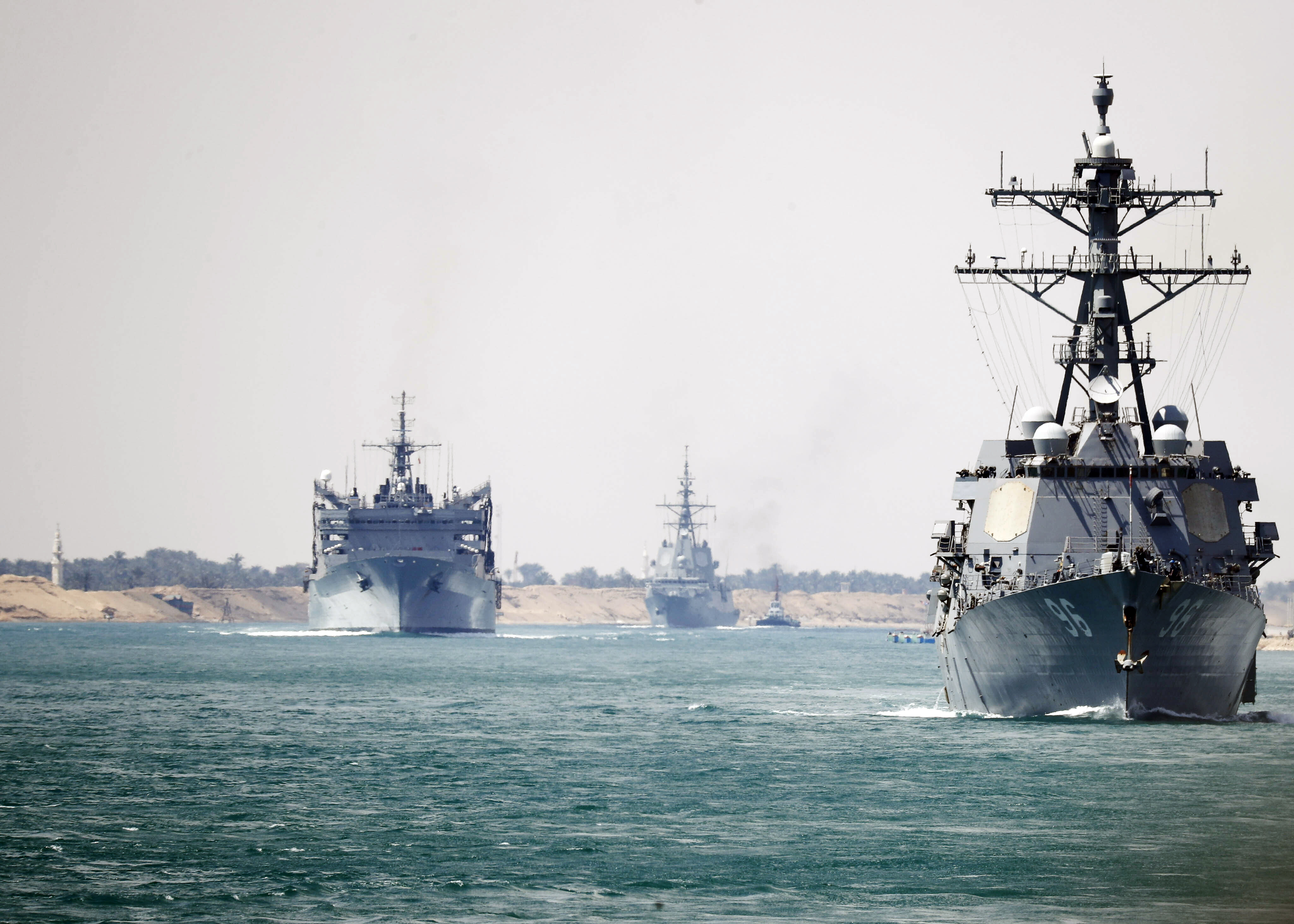
Stated before
Oman already belonged in this category well before Monday.
In May, Donald Trump delivered a very similar warning.
«Oman is going to behave like everybody else, or we're going to have to blow them up», Donald Trump stated at the time.
That threat evidently failed to produce the desired result.
So Donald Trump merely issued another.
Neither threat was tied to a measurable Omani action, making it difficult to gauge whether Oman ever delivered what he wanted.
The empty threat
There is, however, one US president who could have advised Donald Trump that when making such threats, one had better mean them.
That would be the Donald Trump of an earlier era.
He routinely condemned former President Barack Obama for declaring a red line against the Syrian government's use of chemical weapons, only to take no action when Syria crossed it.
In his 2016 Republican National Convention speech, Donald Trump termed it a «humiliation» because «the whole world knew it meant absolutely nothing».
In 2017, he called it an «empty threat» that cost America dearly across the world.
By 2018, Donald Trump confidently heralded a new era in American foreign policy.
«Today's action sends a critical message: the United States does not make empty threats», Donald Trump declared.
«When I make promises, I keep them».
Donald Trump made that declaration upon withdrawing the United States from the Iran nuclear accord.
Since then, he has not only issued a string of empty threats, but made them the cornerstone of his strategy toward Iran.
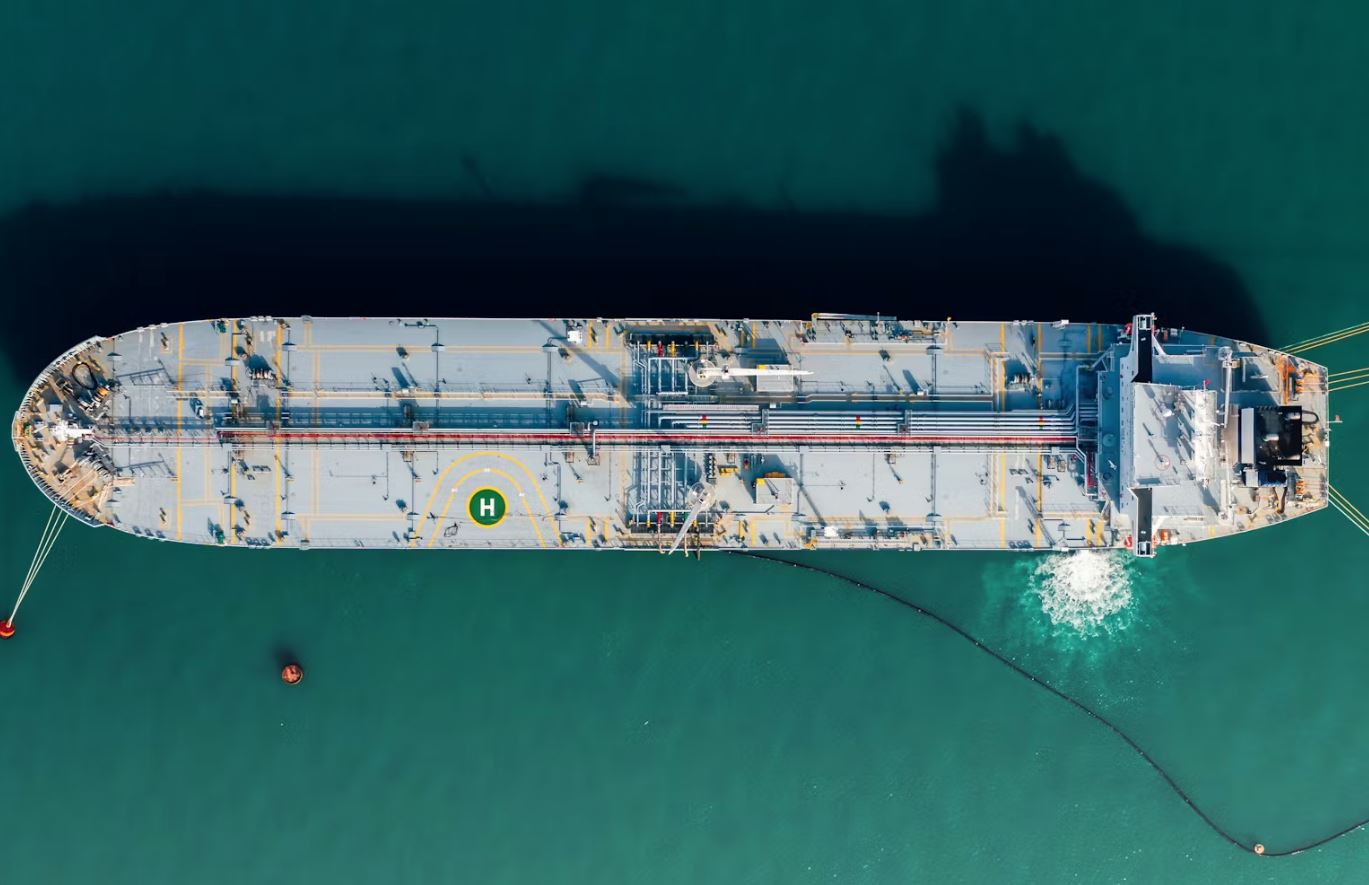
Araghchi (Iranian Foreign Minister): We are finalizing with Oman the route for safe passage through Hormuz
Iranian Foreign Minister Abbas Araghchi stated that Iran and Oman are finalizing the dedicated transit corridor for the safe passage of commercial vessels through the Strait of Hormuz.
According to the Tasnim news agency, Abbas Araghchi reviewed bilateral ties and regional developments with his Turkish counterpart.
Detailing the status of bilateral negotiations between Iran and Oman regarding the technical corridor for maritime transit in Hormuz, Araghchi underscored the determination of the Islamic Republic of Iran to carry this process forward.
The Wall Street Journal, citing several American officials, reported that discussions between Iran and Oman have progressed with the aim of restoring commercial maritime volume through Hormuz.
Officials noted that the bilateral arrangement could help alleviate severe strain across global energy markets.
However, American officials voiced apprehension, warning that an agreement between Iran and Oman could effectively institutionalize Tehran's permanent regulatory control over the Strait of Hormuz.
Maximalist demands
Donald Trump reiterated his ambition to declare the Strait of Hormuz «United States territory», stating: «We control it. We control it with the blockade».
In an interview with Al Jazeera, Bryan Clark, a senior fellow at the Hudson Institute, observed that Donald Trump's demand for Iran to raise the white flag constitutes a «maximalist demand», noting that both sides are «simply stating extreme positions hoping the other will blink».
Bryan Clark stated that the memorandum of understanding is now a dead letter and that the diplomatic track is essentially frozen, even as American intermediaries maintain contact with various Iranian power centers, including the IRGC, which «appears to be consolidating its posture».
Clark noted that Washington has limited room to further escalate its naval blockade of Iranian ports without exposing American naval units to severe operational risk.
Clark added that no war in history has been won through airpower alone.
Trump's only option
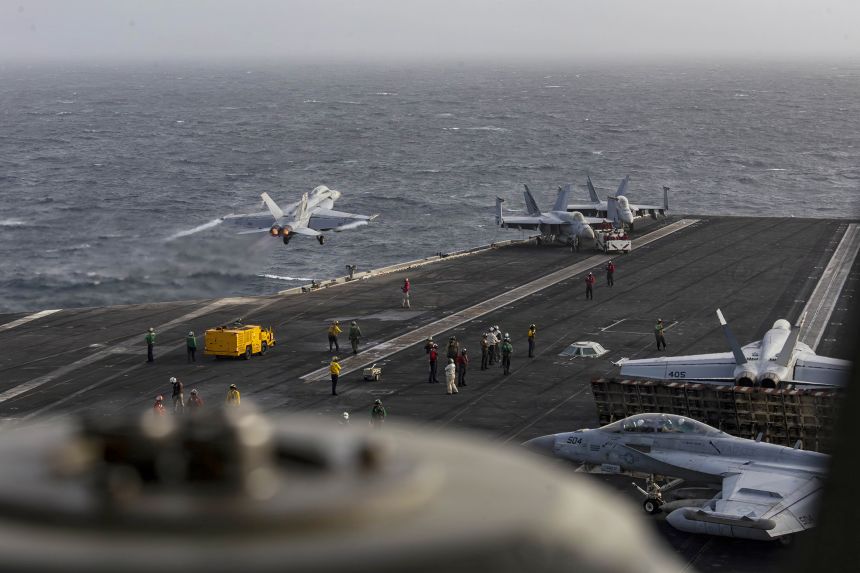
As he outlined, the only remaining military option for the US would be to «force open the Strait of Hormuz and use kinetic force to escort and protect commercial shipping», requiring air and naval assets to actively shield merchant vessels, a step Washington has so far resisted.
«They have not actually deployed surface combatants to escort commercial tankers through the Strait of Hormuz», Clark noted, warning this risks replicating the Tanker War of the 1980s, with merchant ships targeted.
«The logical next escalation would be ground troop commitments, but before that, the US might attempt limited convoy escorts to demonstrate to the Iranians that they do not truly control the Strait of Hormuz», the analyst added.
Clark predicted that the standoff will ultimately settle into an arrangement where «the Iranians and Yemenis control the Straits through some form of fee-payment mechanism», leaving Washington to seek «a diplomatic pretext that allows it to claim it resolved the crisis without damaging vital US interests».
Severely depressed transit in Hormuz
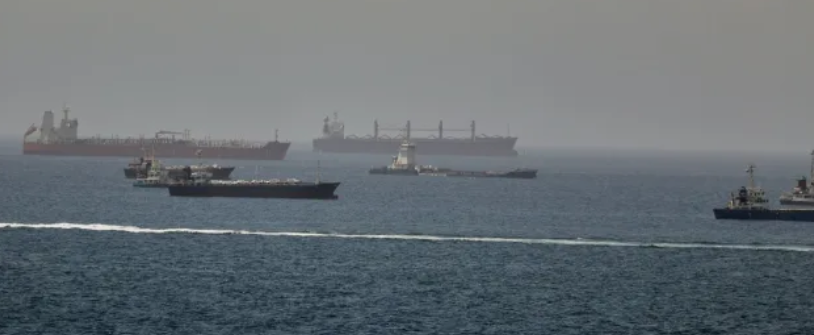
Maritime tracking data confirms that ship transits through the Strait of Hormuz remained in single digits on Monday, August 17, despite a marginal uptick from the weekend, as peace negotiations between the US and Iran remain deadlocked, according to Reuters.
Citing preliminary tracking data from Kpler, Reuters reported that six merchant vessels traversed the strait on Monday (three inbound into the Persian Gulf and three outbound), compared to a 10-day average of roughly 11 ships daily. Traffic had dropped to three vessels on Saturday and just two on Sunday.
According to the data, zero supertankers (VLCCs) and zero liquefied natural gas (LNG) carriers transited the waterway.
Kpler highlighted that several vessels may be navigating the strait with their automatic identification systems (AIS) disabled, excluding them from recorded counts.
Chris Murphy (US Senate): We hold zero leverage over Iran's nuclear program
US Senator Chris Murphy sharply criticized the Donald Trump administration's handling of the Iranian nuclear issue.
«It is unmistakably clear that right now there is no viable path to convince Iran to dismantle its nuclear program», Murphy posted on X.
«They are running circles around Donald Trump and his diplomatic maneuvers», the Democratic senator stated.
«They know they can secure full sanctions relief and the release of all their frozen assets without conceding a single point on the nuclear dossier», Murphy emphasized.
www.bankingnews.gr


Readers’ Comments