

There are two ways to view the relationship between the United States and Israel.
The first is conventional: two close allies with shared strategic interests in the Middle East, cooperation in intelligence, defense, and technology, with Israel serving as one of Washington's most important partners.
The second is far more uncomfortable.
What happens when a foreign government acquires such a dense network of politicians, donors, organizations, think tanks, and pressure groups in Washington that questioning its policies entails significant political cost?
This is the central question behind America in the Grip of a Foreign Power by Eli Clifton and Ian Lustick. And contemporary American politics shows that this question is no longer academic.
The real story is not that «Israel controls America». Such phrasing is oversimplified and fails to explain how the American political system operates.
The more compelling and verifiable thesis is different:
a highly organized pro-Israel political network has gained the capacity to disproportionately affect the cost-benefit calculus of political decisions in Washington.
And this is far more significant than a conspiracy theory.

From lobbying to an electoral machine
For decades, the American Israel Public Affairs Committee, known as AIPAC, operated primarily as a classic pressure group: meetings with lawmakers, policy briefings, voter mobilization, and efforts to maintain a stable, bipartisan US–Israel relationship.
The major change came when influence shifted from lobbying to directly shaping election outcomes.
AIPAC created a PAC and a super PAC for the 2022 election cycle, while the United Democracy Project became one of the primary independent expenditure vehicles of the pro-Israel network.
The change is fundamental.
A lobby can try to persuade a lawmaker.
A super PAC can attempt to influence whether a senator or representative keeps their seat.
This alters the power dynamic.
A politician no longer faces merely an argument.
They face the prospect of their opponent receiving funding, their district being flooded with ads, or being portrayed as politically «unreliable» on a critical issue.
And this is a far more effective method of influence than traditional lobbying.
The power of «political cost»
The true power of a lobby is not measured only by how many politicians it persuades.
It is measured by how many politicians it intimidates into not disagreeing.
This is perhaps the most important concept emerging from the AIPAC case.
In 2026, this practice has become particularly visible.
In electoral contests, pro-Israel political networks have spent millions of dollars to influence Democratic primaries.
In a recent contest in Michigan, Haley Stevens received significant financial support from pro-Israel forces, but was ultimately defeated by Abdul El-Sayed, who had adopted a far more critical stance toward Israel's policy.
The outcome carries particular weight.

It demonstrates that while the lobby's power is substantial, it is not absolute.
And this distinction is critical.
If AIPAC could determine every election, it would mean complete political captivity.
The fact that candidates opposing its agenda can win proves that the American electorate still possesses independent dynamics.
Yet it also reveals something else: elections have become a battlefield over which policies toward Israel are permitted to be considered politically viable.

The «wall» between Israel and American foreign policy
The second dimension is far more significant than campaign spending.
It is foreign policy itself.
The US–Israel relationship has been built over decades.
American military aid to Israel, intelligence cooperation, technology, and regional strategy represent genuine American interests.
The Congressional Research Service itself has documented the exceptionally close relationship between the two nations and the central role played by issues like Iran and regional security.
Therefore, the claim that every American pro-Israel policy is merely the product of lobbying is incorrect.
The interesting question is different:
How much of this policy would remain the same without the political pressure of the pro-Israel network?
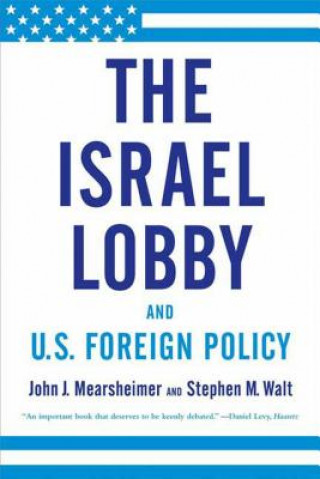
This is the question raised by John Mearsheimer and Stephen Walt in their famous study The Israel Lobby and U.S. Foreign Policy. Their core thesis was that the special US–Israel relationship cannot be explained solely by geostrategic factors and that the activities of the «Israel Lobby» have contributed substantially to shaping it.
This debate remains controversial. But the fact that it has been ongoing for nearly two decades shows that the question can no longer be dismissed as marginal.
The second power: access
Money is only half the story.
The other half is access.
The pro-Israel ecosystem has built relationships with Congress over decades.
A prime example is the delegations of American politicians to Israel.
According to a recent investigation by The Guardian, an organization affiliated with AIPAC has funded trips to Israel for at least 78 members of Congress and their staffers since October 7, 2023, with a total cost exceeding $4.2 million.
These trips are legal and do not in themselves constitute proof of improper influence.
Politically, however, they are significant.
When a lawmaker travels to a country, meets its political and military leadership, and sees the world through that specific national lens, a framework of understanding is created.
The issue, therefore, is not bribery.
It is the shaping of the political environment in which decisions are made.
From foreign policy to free speech
Here lies the most explosive point of today's conflict.
The debate over Israel has migrated from the Middle East into the interior of America: universities, journalists, social media, and political campaigns.
On one hand, there is a real issue: antisemitism has increased, and many Jewish Americans feel their safety is threatened.
On the other hand, the accusation of antisemitism can become a political weapon if used to equate criticism of the Israeli government with hostility toward Jewish people.
American free speech organizations have warned that combating antisemitism can turn into a mechanism for restricting political expression.
At the same time, data from the ADL shows that the problem of antisemitism is real: in 2025, 6,274 incidents were recorded in the US, of which 203 involved assaults, resulting in three deaths.
Therefore, the democratic challenge is twofold: to protect Jewish people from antisemitism without turning that protection into a shield against legitimate political criticism of Israel.
This is precisely where the lobbying issue takes on a constitutional dimension.
The paradox of 2026
And here lies the great irony.
The system that for decades was considered virtually all-powerful is beginning to face pushback.
American public opinion is shifting, particularly among younger Democrats.
The traditional bipartisan consensus around Israel has begun to fracture.
Nearly half of House Democrats recently supported an amendment to condition military aid to Israel.
Even more telling is that AIPAC's political interventions do not always produce the desired outcome.
In California, for instance, a pro-Israel network has already spent approximately $4.4 million in independent expenditures in a 2026 special election.
This shows how much the stakes have risen.
But it also indicates the beginning of a potential reversal.
The more a lobby uses its financial power to determine which politicians can get elected, the more it risks creating a political backlash.
So, did it truly «capture» Washington?
The answer is more complex than a simple yes or no.
No, there is no evidence for the idea that Israel controls the American government.
There is, however, a solid basis for a much more serious observation:
the pro-Israel political network has created one of the most powerful mechanisms of influence in Washington, combining lobbying, campaign finance, political mobilization, access to Congress, and the shaping of public debate.
This does not mean every American decision is dictated by Israel.
It means that the political cost of a different policy can be substantial.
And here lies the real significance of the book by Clifton and Lustick.
It does not merely ask us to decide whether we support or oppose Israel.
It asks us to examine how power functions in Washington.
Who funds?
Who has access?
Who can reward?
Who can punish?
Who sets the agenda?
And ultimately, who decides what constitutes the «American national interest»?
That is the real issue, if there is an issue.
Not that a foreign country has friends in Washington.
Rather, that in a democracy, political influence can become so organized, so wealthy, and so effective that dissent becomes expensive and conformity becomes politically safe.
And perhaps this is the most accurate way to describe the current state of affairs:
the Israel lobby did not «capture» Washington in the sense of a covert coup.
It captured part of the political apparatus through the very ways American democracy operates: money, elections, access, lobbying, and political cost.
And now, for the first time in decades, this model is beginning to be tested by American society itself.
www.bankingnews.gr











Readers’ Comments