

Russia accelerates the deployment of Rassvet, its proprietary low-Earth orbit satellite network, while concurrently fielding electronic warfare systems to jam Starlink: The new technological race could reshape drone operations in the Ukraine war.
Russia is accelerating the rollout of its sovereign low-Earth orbit (LEO) satellite constellation in an effort to secure an autonomous alternative to Elon Musk's Starlink and close one of the most critical technological gaps that emerged on the battlefield.
This development is causing deep concern in Kyiv. The Deputy Chief of Defence Intelligence of Ukraine, Major General Vadym Skibitsky, warned this week that Moscow is ramping up the deployment of Rassvet («Dawn») far faster than initially anticipated.
The system is being developed by Russian aerospace technology firm Bureau 1440 and represents Russia's drive to create an equivalent to the Starlink network.
«They have begun launching it much faster than originally scheduled», stated Skibitsky.
Russia placed into orbit its first 16 Rassvet satellites in March, followed by a new launch of 16 satellites in July. Launch records confirm that a total of 32 satellites have been launched within 2026.
Moscow's target is highly ambitious: 292 satellites by 2027 and 924 by 2035, according to Skibitsky.
Rassvet is not merely a commercial satellite internet venture.
For Russia, it has evolved into critical military infrastructure, as an operational low-Earth orbit network could provide Russian forces with autonomous, secure, low-latency communications independent of Western infrastructure.
Crucially, it could enable Russia to command and control unmanned aerial vehicles over vastly extended operational distances.
Starlink transformed the war: Precision strikes against Russian infrastructure
Starlink has become one of Ukraine's most indispensable technological assets.
Ukrainian forces rely on the network for command and control, communications, data relay, and unmanned aerial vehicle operations. The ability to pilot drones via satellite datalinks allows operators to maintain control even when operating tens or hundreds of kilometers behind the front lines.
This carries exceptional significance for mid-strike drones conducting interdiction attacks on Russian fuel depots, command posts, air defense batteries, and logistics nodes.
Starlink is not simply a communications medium.
In modern warfare, it operates as an integral component of a broader C4ISR architecture: Command, Control, Communications, Computers, Intelligence, Surveillance, and Reconnaissance.
Ukraine can, for example, receive live full-motion video from a reconnaissance drone, designate a target, transmit coordinates instantly, and guide an attack drone to its objective.
A major shift occurred in February 2026, when Ukraine and SpaceX implemented stricter terminal verification protocols.
Ukraine instituted a «whitelist» system ensuring only verified, authorized terminals operate within the country.
SpaceX confirmed that additional security measures took effect on February 4. Ukrainian authorities announced that terminals utilized by Russian forces had been systematically disabled.
This measure dealt a heavy blow to Russian field communications and created a powerful technological imperative for Moscow: to establish its own sovereign Starlink equivalent.
From mesh networks to Rassvet
Prior to advancing Rassvet, Russia explored alternative solutions.
Among these were dynamic mesh networks, where drones, ground stations, and relay platforms act as decentralized nodes transmitting data along a chain.
While this approach offers communications without relying on a centralized satellite constellation, it faces severe operational constraints.
Effective range is limited, higher node density is required, and hop-by-hop data transmission increases latency. In operations where a drone requires continuous real-time telemetry and guidance inputs, even minor latency spikes can compromise mission execution.
Furthermore, terrestrial and airborne relay nodes present conspicuous targets for enemy electronic warfare systems.
Starlink operates on a fundamentally different architecture. The vast orbital density of the constellation combined with low-Earth orbit altitude provides high-bandwidth broadband communications with significantly lower latency than legacy geostationary systems.
As of August 2026, the Starlink constellation comprises over 10,900 active satellites.
A comparison with Rassvet highlights the scale of Russia's industrial challenge.
The Russian constellation remains in its early infancy.

Rassvet still lags far behind Starlink
The initial launches of Rassvet are a significant technical milestone, but they remain insufficient to provide global or comprehensive regional coverage comparable to Starlink.
The Russian constellation is currently in an orbital deployment and testing phase, with operational utility set to expand progressively as additional satellites are deployed.
Bureau 1440 plans multiple dedicated launches annually. Rassvet utilizes low-Earth orbit satellites equipped with inter-satellite optical laser links, allowing data routing directly from satellite to satellite without requiring continuous line-of-sight to ground gateway stations.
The development program also entails manufacturing ground user terminals, which are essential for bridging orbital capabilities to the tactical edge.
Russia consequently faces not only the logistical challenge of launching hundreds of satellites, but also the mass production of affordable, reliable transceiver terminals.
The other front of the Russian plan: Blinding Starlink
Moscow is not merely waiting for Rassvet to reach full operational capability.
Concurrently, it is attempting to neutralize the operational edge Starlink affords Ukraine.
In 2026, Russian forces began deploying electronic warfare systems tailored specifically to jam and degrade Starlink uplink and downlink signals.
The most prominent among these is Volna Kupol Garant, an electronic countermeasure system developed by the Simferopol-based Russian firm Rossiysky Kupol, according to Ukrainian military sources.
The system emits directional jamming signals targeting Starlink frequencies, capable of disrupting satellite connectivity across an area of approximately 20 square kilometers.
The objective is straightforward: severing the data link between Ukrainian strike drones and their remote operators.
This development is tactically significant because Russia does not need to neutralize the entire Starlink megaconstellation globally; creating localized «dead zones» over contested sectors where Ukrainian strikes are anticipated is sufficient.
Reuters reported in July that Ukrainian units had identified roughly 10 such jamming systems deployed along the line of contact, with at least two subsequently targeted and destroyed.
This dynamic underscores a key vulnerability of the Russian countermeasure: shielding wide geographic areas requires high numbers of terrestrial jamming platforms, which emit detectable electromagnetic signatures and remain vulnerable to precision strikes.
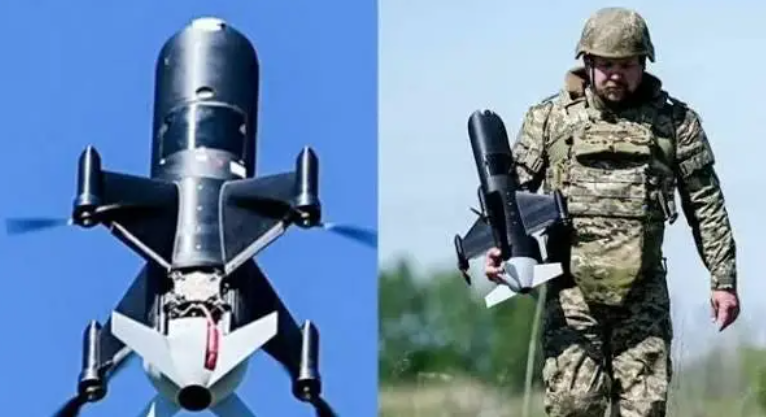
The new drone battle will shape frontline momentum
The competition between Rassvet and Starlink extends far beyond internet connectivity.
It is fundamentally a fight for command over the next generation of long-range strike drones.
A drone equipped with a high-bandwidth satellite datalink does not rely solely on pre-programmed coordinates. The operator can receive real-time video feeds, adjust flight paths mid-mission, locate dynamic targets of opportunity, and execute evasive maneuvers against hostile air defenses at extended ranges.
Serhii Beskrestnov, an adviser to the Ukrainian Ministry of Defence, warned that once Rassvet achieves necessary orbital coverage, Russia will be capable of fielding strike drones equipped with satellite terminals operated in real time over deep strategic distances.
«The Russians will be able to strike targets across our entire country using UAVs controlled online via their sovereign satellite network», he stated.
For Europe, this development carries broader security implications.
A Russian sovereign LEO network would not be confined strictly to the Ukrainian theater; it would provide Moscow with an independent strategic communications architecture for deep-strike unmanned platforms globally.
A technological race with private enterprise on the front lines
A notable aspect of this technological race is that both Rassvet and Volna Kupol Garant originate from private Russian entities operating under state defense programs.
Rassvet is being built by Bureau 1440 as part of Russia's national «Data Economy» initiative and broader space strategy.
The program benefits from significant state funding.
Public records indicate approximately 102.8 billion rubles in government capital allocations, alongside plans by Bureau 1440 to invest an additional 329 billion rubles through 2030.
The participation of private commercial entities does not signify independence from the Russian defense apparatus; rather, it reflects a defense-industrial model integrating state subsidies, private engineering talent, and military requirements.
The same pattern appears in electronic warfare.
Rossiysky Kupol operates as a specialized private developer, engineering Volna Kupol Garant directly to counter Ukraine's battlefield use of Starlink.
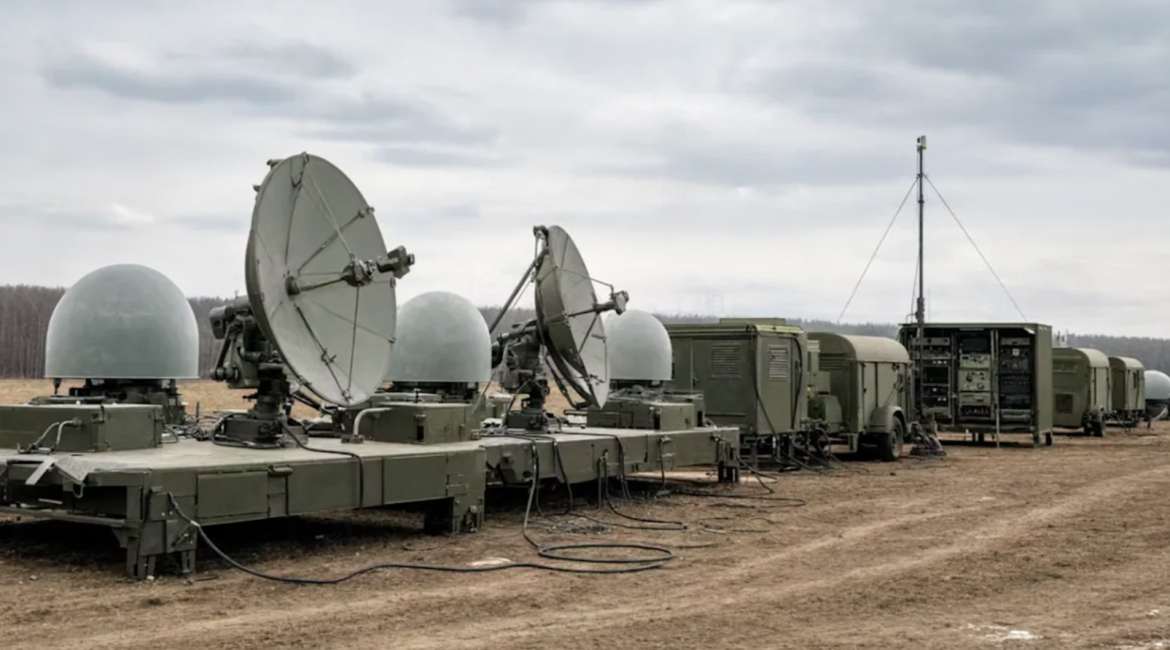
From «Wunderwaffen» to true operational capability
Both Russia and Ukraine frequently showcase emerging weapons systems as game-changing «wonder weapons» (Wunderwaffen).
Battlefield realities, however, are dictated by scale and operational friction.
Rassvet is not yet an operational Russian Starlink; it is an accelerating development program striving toward that capability.
Similarly, Volna Kupol Garant cannot unilaterally neutralize Starlink across the theater.
It can, however, generate localized denial bubbles and significantly increase the operational friction and risk for satellite-dependent Ukrainian drone missions.
Ukrainian forces have already adapted, designating Russian electronic warfare jamming platforms as high-priority strike targets.
This fuels an iterative cycle in technological warfare:
Ukraine leverages Starlink to extend the depth and precision of its drone fleet. Russia fields dedicated electronic warfare systems to suppress Starlink. Ukraine hunts and destroys the jamming arrays. Concurrently, Russia accelerates its own sovereign satellite network.
Rassvet represents the next phase of this escalation.
If Moscow succeeds in deploying hundreds of operational satellites alongside robust user terminals, it will gain its first independent, low-latency satellite communications backbone capable of supporting large-scale multidomain military operations.
At that point, the unilateral communication advantage Ukraine has maintained through Starlink will face a direct counterweight.
The contest for air and information dominance is increasingly decided not just by missiles and aircraft, but by telemetry, bandwidth, and the ability to maintain unbroken real-time control over unmanned systems.
www.bankingnews.gr








Readers’ Comments