

The great «green» promise of recent years has collided with a far less ideological reality, just as unfolded with the failed handling of the Ukrainian war: who will ensure energy supply when the wind does not blow and the sun does not shine, how much will power grids and energy storage cost, and, ultimately, who will foot the bill?
Britain is currently on the front lines of this clash.
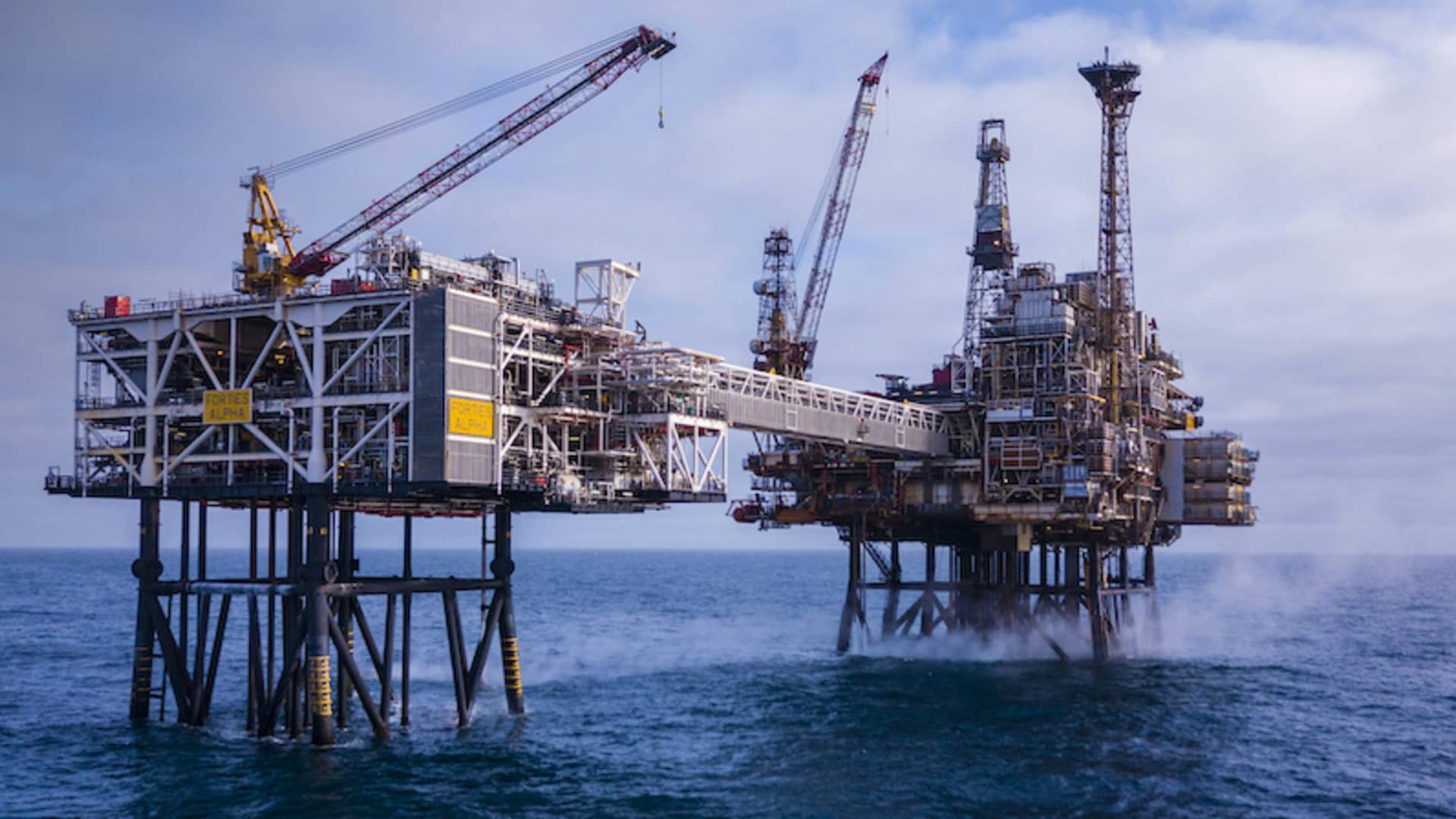
The government of the new Prime Minister, Andy Burnham, is called upon to decide on two of the country's most controversial energy projects: the Jackdaw natural gas field and the Rosebank oil field in the North Sea.
Andy Burnham himself has already used a term signaling a shift in tone: «pragmatism».
On July 30, he stated that his government will treat North Sea oil and natural gas «pragmatically», at a time when trade unions and industry bodies are pushing for the exploitation of domestic deposits, citing employment, industrial competitiveness, and energy security.
From green transition to energy pragmatism
This does not mean that Britain is abandoning renewables or Net Zero.
On the contrary: electricity generation from renewable energy sources in the country set a new record in 2026, and investments continue.
What is shifting is the political debate surrounding the idea that an energy system can rely safely and cost-competitively on an ever-growing share of intermittent generation without massive parallel investments.
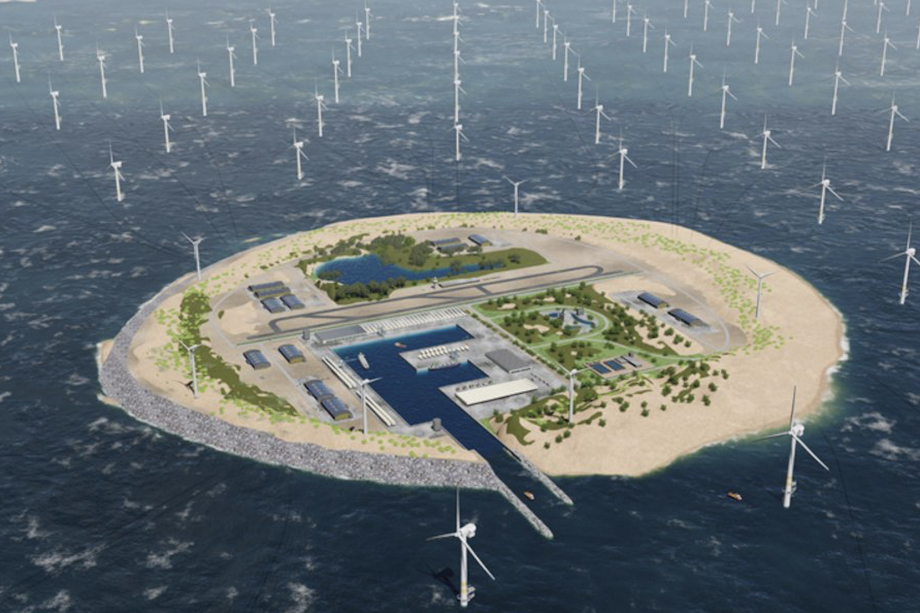
Because the cost of a wind turbine or a photovoltaic panel is not the full cost of the power system.
As dependence on wind and solar power expands, so do the demands for new grids, interconnectors, storage, balancing, and backup capacity when weather conditions do not permit sufficient generation.
This has now become one of the central dilemmas of the European energy transition.
The British paradox
The case of Britain is typical precisely because it has invested massively in renewables.
Indeed, there is a strong counter-argument to the narrative of «failure»: data cited by Energy UK estimates that wind generation reduced British day-ahead wholesale electricity prices in 2025 by approximately 31% compared to a hypothetical system without wind power.
The issue, therefore, is not as simplistic as «renewables are expensive».
The real question is how much a reliable electricity system costs in total when the infrastructure required to offset renewable intermittency is added to the generation cost.
And here begins the political clash.
The North Sea returns to the table.
Natural gas continues to play a vital role in Britain's heating and power generation.
For this reason, Jackdaw assumes particular political weight.
Unlike Rosebank, it is a natural gas project that can tie into existing infrastructure, a factor that could enable faster production startup.
The government is thus confronted with a difficult dilemma: maintain a strict stance curbing new fossil fuel projects, or secure greater domestic natural gas production as a transitional energy source.
Andy Burnham appears to leave the second door open.
And this is already provoking fierce backlash within the Labour Party.
Energy security versus Net Zero
The debate has shifted dramatically in the wake of the European energy crisis.
Energy security has returned to the center of the political agenda, and governments are now called upon to balance three objectives that do not always align easily:
low emissions, affordable energy, and security of supply.
Britain is not the only nation facing this equation.
At the European level, governments have already curtailed certain EU proposals to fund cross-border energy grids from national budgets, even while agreeing on the necessity for enhanced central grid planning to absorb more renewable generation.
Concurrently, states with greater dependence on fossil fuels are requesting increased European funding to cope with the costs of the transition.
Not abandonment, but a revision of terms
It would be inaccurate, however, to claim that Europe is completely abandoning the green transition.
As recently as March 2026, the EU adopted a binding target to slash net greenhouse gas emissions by 90% by 2040 compared to 1990 levels, preserving the climate neutrality objective for 2050.
Yet even this target is now accompanied by greater flexibility: European planning outlines an 85% domestic reduction, with the option to cover up to five percentage points through international carbon credits.
The shift is therefore more an adjustment of methodology and policy priorities than an abandonment of the ultimate objective.
The massive cost hidden behind the power outlet
The problem becomes even more complex when assessing the electricity system as a whole.
Mass penetration of wind and solar assets requires investments in high-voltage grids, energy storage, interconnectors, and grid-balancing systems.
The ongoing European debate over massive grid expansion is an indirect admission of this reality: generating more green electricity is insufficient if the system cannot transport and deliver it where and when it is needed.
And here lies perhaps the greatest crack in the original narrative of the green transition.
Not in whether solar and wind can produce cheap electricity (they can).
Rather, in whether an entire industrial energy system can be overhauled at the pace originally envisioned, without the costs of grids, storage, backup capacity, and energy security becoming politically and economically unbearable.
The British dilemma could become European
The decision on Jackdaw and Rosebank therefore extends far beyond two fields in the North Sea.
It is a litmus test of whether an administration committed to decarbonization is willing to maintain (or even expand) domestic fossil fuel production when it deems that the economy and security of supply demand it.
There is, of course, the opposing viewpoint: the UK Energy Research Centre contends that new drilling in the North Sea will neither meaningfully lower consumer bills nor secure long-term energy security, as British production is integrated into international markets and regional fields are in secular decline.
This is precisely what makes the confrontation so consequential.
It is no longer a simple battle of «green advocates» versus «fossil fuels».
It is the collision between the original blueprint of the green transition and the economic, industrial, and geopolitical reality that has come to test it.
And Britain may well become one of the first major European testing grounds of this new era: not an abandonment of the green transition, but a transition from green ideology to energy pragmatism.
The domino effect of energy realism: Which nations are pumping the brakes on the green transition
Britain is not an isolated case.
Behind declarations of Net Zero and ambitious decarbonization targets, a far quieter yet profound overhaul of energy policy is already underway across Europe.
This does not yet amount to an abandonment of the green transition.
It represents, however, something that a few years ago would have seemed almost heretical: governments trimming renewable targets, restoring natural gas to the center of planning, pushing for relaxed emission rules, and refusing to sacrifice industrial competitiveness on the altar of an inflexible decarbonization timetable.
And the examples are multiplying.
France: Cutting wind and solar targets, return to the nuclear backbone
Perhaps the clearest policy revision of 2026 originates in France.
In February, Paris unveiled its new ten-year energy plan, substantially lowering previous expansion targets for wind and solar energy.
The target for offshore wind by 2035 was reduced from 18 GW to 15 GW.
For onshore wind, it was scaled back from 45 GW to between 35 and 40 GW, while for photovoltaics, the previous target of 75 to 100 GW was lowered to between 55 and 80 GW.
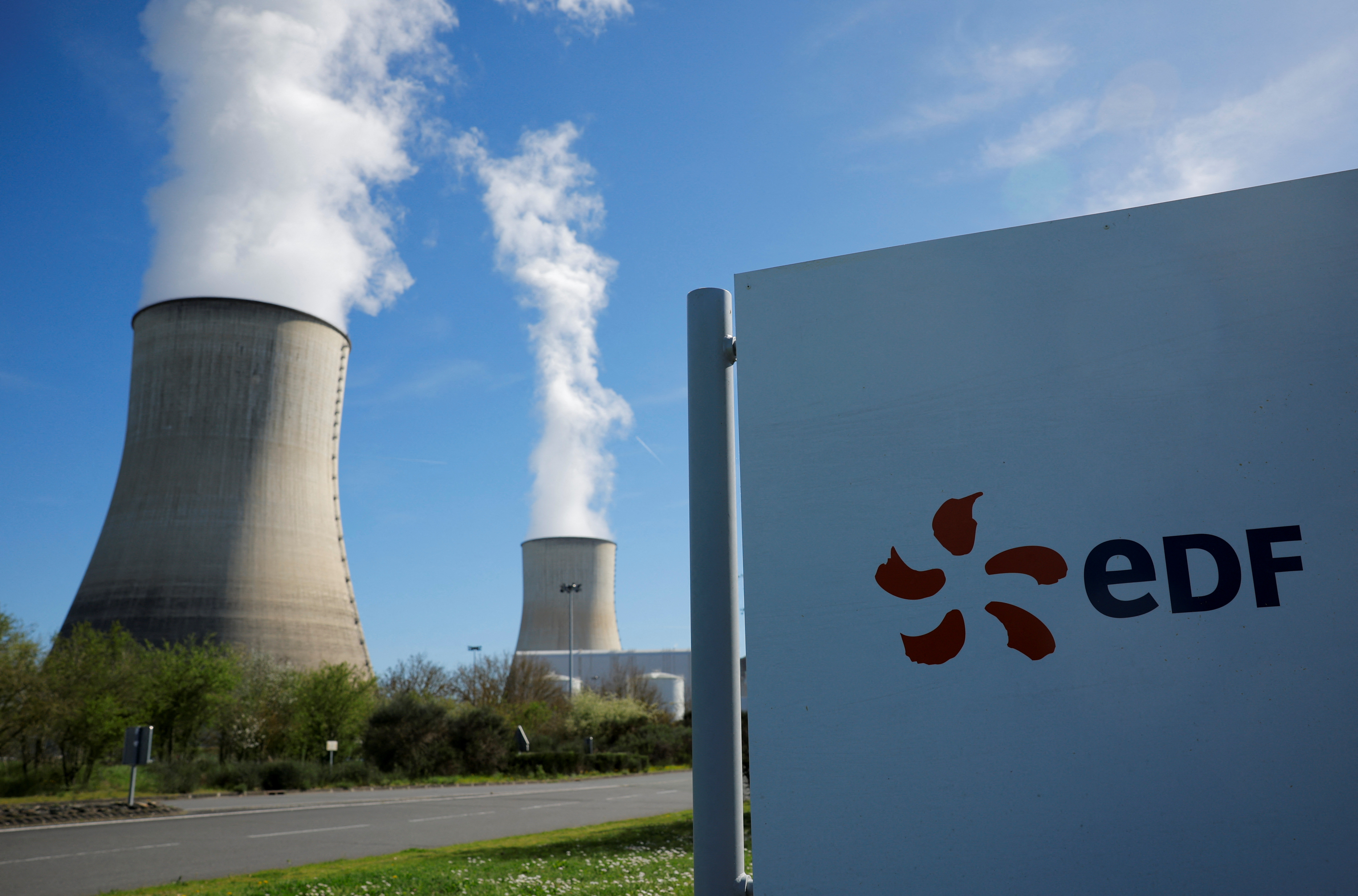
Even more symbolic is the decision to scrap the longstanding legal commitment to shut down 14 nuclear reactors.
The new French strategy places nuclear power firmly back at the system's core, targeting power output of 420 TWh from EDF's existing reactor fleet in 2035, alongside ongoing planning for new nuclear reactors.
The statement by French Finance Minister Roland Lescure was revealing:
«Nuclear power is the backbone of our electricity system».
France is not ditching renewables.
It is abandoning the notion, however, that the continuous and rapid expansion of wind and solar must be an end in itself, divorced from the needs and total costs of the overall power system.
Germany: 12 GW of new natural gas capacity, lignite back on the table
Even more compelling is the case of Germany, the nation identified more than any other major European economy with the Energiewende, the grand energy transition.
Berlin is now planning tenders for 12 GW of new gas-fired power generation capacity.
The government of Friedrich Merz is actively advancing policy adjustments to make investments in these plants economically more attractive, raising the maximum bidding ceiling in related tenders from 173,000 to 244,000 euros per MW.
Why are new gas-fired plants needed in a country that has poured hundreds of billions into the green transition?
Because installed capacity does not always equal available capacity when the power grid requires it.
Germany commands vast installed wind and solar capacity.
When wind and sun are insufficient, however, dispatchable generation that can ramp up with demand becomes imperative.
And here the debate turns even more uncomfortable.
On August 14, the prospect of keeping certain lignite-fired plants operational beyond the scheduled 2030 phaseout resurfaced in Germany, should it be judged that security of electricity supply would otherwise be compromised.
No definitive decision has been made, and the official 2030 target remains.
The mere fact, however, that extending lignite is back on the table is in itself symptomatic of shifting priorities.
The country that decommissioned its last nuclear reactors and invested massively in wind and solar is now compelled to plan new natural gas plants, and to re-evaluate whether it can truly phase out coal within the timeframe it had pledged.
Netherlands: Green transition with more domestic natural gas
The Netherlands offers another striking illustration of the new energy pragmatism.
The Groningen field remains shut down, and the government states that it continues to pursue its climate objectives.
At the same time, however, it has determined that natural gas extraction in the North Sea will continue.
And it does not stop there.
Official strategy promotes new investments in the exploration and exploitation of small natural gas fields in the North Sea to reduce dependence on imports.
The Dutch government formally acknowledges that the geopolitical environment and consumer exposure to international natural gas price volatility render domestic production a strategic tool for security of supply and the broader economy.
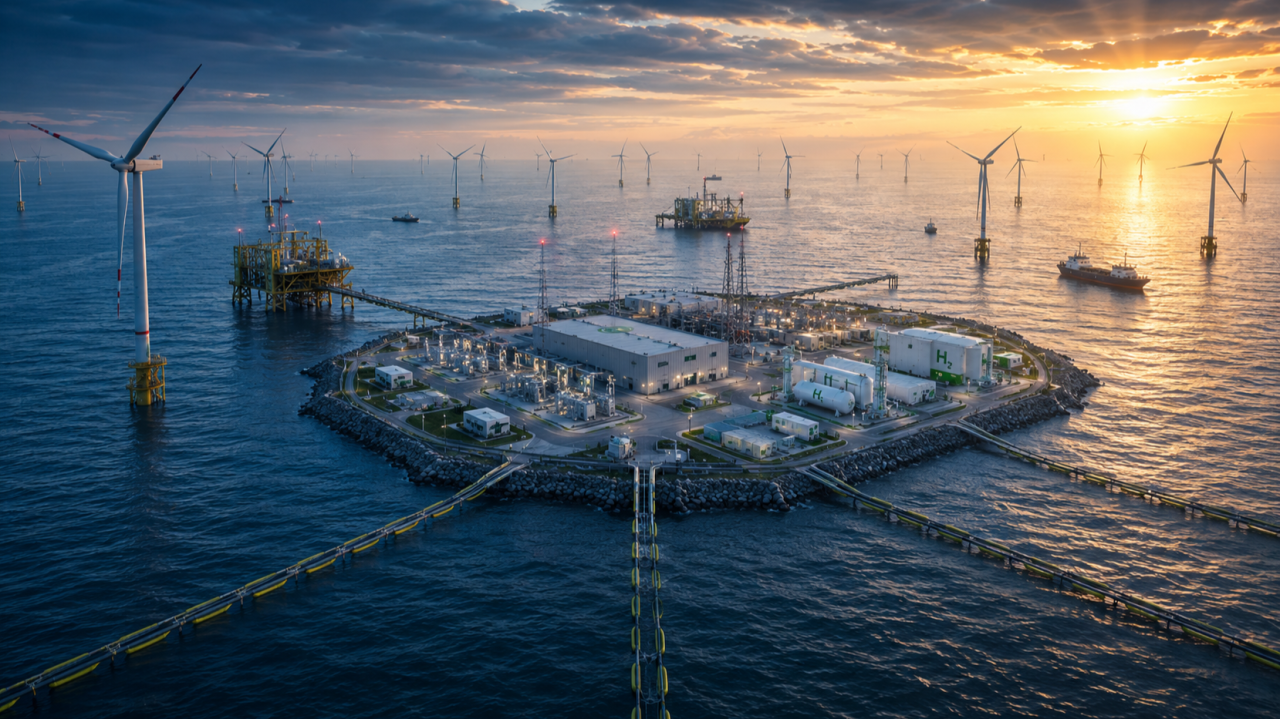
In June 2026, the L7-F project was approved, situated approximately 70 kilometers northwest of Den Helder, featuring a new production platform, up to two additional wells, and an anticipated gas production lifespan of 10 to 15 years.
The justification provided by the Dutch government carries distinct weight: natural gas is characterized as an essential transitional fuel on the path toward a renewables-based energy system, with domestic output deemed preferable to mounting import reliance.
In other words, even a country with a robust green agenda now concedes that the transition requires a foothold in fossil fuels to preserve energy security.
Italy: Rejecting the «all-electric» approach, push to save internal combustion engines
In Italy, pushback is manifesting primarily along the other major pillar of European green policy: transport.
Rome, alongside Germany, lobbied Brussels to soften the effective ban on the sale of new internal combustion engine (ICE) passenger cars from 2035.
The European Commission has already proposed reducing the 100% CO₂ reduction mandate for new cars to 90%, thereby opening the door for certain ICE vehicles to continue being sold beyond 2035.
Italy is demanding even greater leeway to permit the use of biofuels, avoiding the imposition of a single technological pathway on the European automotive sector.
«A European strategy focused on a single technology will place us at risk in the future», stated Italian Deputy Environment Minister Vannia Gava in June.
This represents a substantial pivot from the original doctrine of complete electrification toward technological neutrality: electric vehicles, hybrids, biofuels, and alternative solutions rather than an outright ban.
Poland, Czech Republic, Slovakia: «We will not dismantle our industry for climate goals»
In Central Europe and Eastern Europe, resistance is even more pronounced.
Poland, the Czech Republic, and Slovakia have repeatedly pushed to ease European climate regulations, pointing to industrial costs, high energy prices, and the risk of eroding competitiveness.
Poland, Slovakia, and Hungary opposed the European target of a 90% emissions cut by 2040, arguing that it would place an excessive burden on domestic manufacturing.
While the final European blueprint maintained the headline 90% figure, it was substantially softened: it allows the use of international carbon credits for five percentage points, effectively lowering domestic European emission cuts to 85%.
Concurrently, the implementation of the new European emissions trading scheme for transport and heating fuels (ETS 2) was postponed by one year, to 2028.
The remark by Polish Deputy Climate Minister Krzysztof Bolesta captures the new political reality perhaps better than any other:
«We do not want to destroy the economy. We do not want to destroy the climate. We want to save both at the same time».
Greece joins the front resisting CO₂ costs
Here, the subject of green development and renewable energy acquires specific Greek relevance.
In May 2026, Greece, Poland, the Czech Republic, Slovakia, Romania, and Bulgaria opposed a European Commission proposal to accelerate the phaseout of free CO₂ emission allowances allocated to industrial sectors.
The six governments essentially requested a freeze on the volume of free allowances at 2025 levels.
Their argument?
High energy prices threaten the competitiveness of energy-intensive European industries and could lead to plant closures or the offshoring of production outside the European Union.
This clearly illustrates the friction now running across the whole of Europe: when the price of carbon begins threatening the European productive base itself, green policy ceases to be a purely environmental matter and turns into a question of industrial survival.
The EU itself begins pumping the brakes
Perhaps the most telling element is that this reassessment is not confined to national governments.
It has reached Brussels itself.
The European Commission has already proposed easing the 2035 internal combustion engine ban, replacing the zero-emission mandate on new cars with a 90% reduction target.
The European blueprint for 2040 retains the ambitious headline of a 90% emissions reduction, but the final policy package permits part of that cut to be purchased via carbon credits outside Europe.
Furthermore, the EU ETS is undergoing revision, with the Commission proposing a slower phaseout of free allowances for heavy industry, amid ongoing pressure for even broader relief.
Europe, therefore, is not dismantling the European Green Deal... but it is beginning to rewrite it under the pressure of mounting costs.

From «Net Zero at all costs» to the triad of cost, security, and competitiveness
Looking at all these moves collectively, a clear pattern emerges.
France scales down wind and solar targets and doubles down on nuclear.
Germany plans new gas-fired power plants and re-evaluates how rapidly it can genuinely phase out lignite.
The Netherlands encourages domestic natural gas production in the North Sea.
Italy resists the total elimination of internal combustion engines.
Poland and other nations across Eastern Europe lobby for lower carbon costs and greater regulatory flexibility.
And the EU itself begins shifting from absolute prohibitions toward pragmatic compromises.
This does not yet signal the end of the green transition.
It marks, however, the end of its first, rigid iteration.
Energy policy is returning to a triad that had been sidelined for years: cost, security of supply, and competitiveness.
And that is perhaps the true takeaway behind the North Sea developments, Germany's new gas plants, France's nuclear revival, and the revolts over the EU ETS.
Europe still wants to go green.
It is simply discovering that it must first keep the lights on, industry standing, and energy bills manageable.
www.bankingnews.gr

Readers’ Comments