

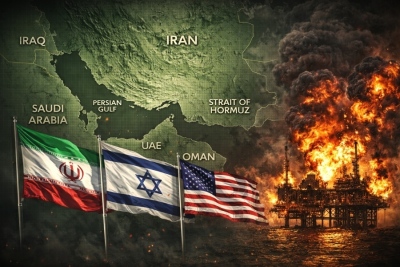
The question is different: can it make the war so expensive, prolonged, and politically painful that its continuation costs Washington more than the expected benefits? In this equation, the Strait of Hormuz is turning into perhaps Iran's most important strategic card. Before the war, approximately 130 to 140 ships passed through the waterway daily. On August 12, just eight transits were recorded, while on August 13, nine.
Data from Kpler shows that traffic remains a small fraction of pre-war levels. Most of the latest transits are actually taking place through the route controlled by the Iranian side. It is clear that despite American naval superiority, Washingtonhas failed to restore navigation to pre-war levels.
Hormuz as an economic power multiplier
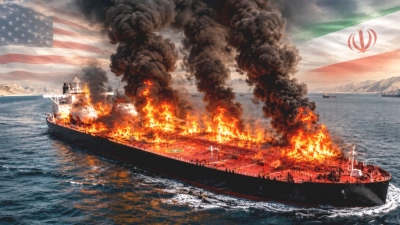
Tehran does not necessarily need to shut down the Strait completely. It is enough to maintain enough uncertainty to raise insurance premiums, delay tankers, force the search for alternative supplies, and reinforce fear of new problems in the global energy market. Before the outbreak of the war, about one-fifth of global oil and LNG passed through Hormuz. Today's disruption has already forced Asian refineries to seek larger quantities of US and other crude, rearranging trade flows that had been established for decades. This is the real advantage of geography for Iran. A relatively limited military means can cause economic consequences far greater than the direct cost of the operation. And the longer the disruption lasts, the more the conflict shifts from the battlefield to gas stations, inflation, bond markets, and ultimately to American domestic politics.
Washington is also fighting with a slowing economy
The American economy is not in a state of collapse. However, it is in a period during which a prolonged energy and war shock is clearly less easy to absorb. Real GDP grew at an annual rate of just 1.5% in the second quarter of 2026, down from 2.1% in the first quarter. The picture in the labor market reinforces the sense of a slowdown. In July, a net 23,000 jobs were lost, while unemployment stood at 4.1%. At the same time, inflation remains a problem. The general consumer price index rose in July by 3.4% on an annual basis, while core inflation stood at 2.5%. Even more characteristically, energy costs were up by 14.7% compared to a year earlier and gasoline by 24.6%. For Iranian strategic thinking, these are far more important than any prediction regarding a "collapse" of the United States. Iran does not need to destroy the American economy. It needs to reinforce existing pressures.
American debt and more expensive money
Here appears the second vulnerable side of the American equation: the debt. On August 13, the auction of 30-year US bonds closed with a yield of 5.216%, the highest for a similar auction since 2001. At the same time, the budget deficit of the United States reached 432 billion dollars in July, bringing the total deficit for the first ten months of the fiscal year to 1.799 trillion dollars — more than the entire deficit for fiscal year 2025. The Congressional Budget Office's previous baseline projection placed the 2026 deficit at 1.9 trillion dollars, or 5.8% of GDP, while predicting that net interest payments would exceed 1 trillion dollars this year. This creates a difficult triangle for Washington: war, energy, interest rates. If the conflict keeps energy prices high, the inflationary risk increases. If inflation remains persistent, the Federal Reserve has less margin for a quick cut in interest rates. And as long as long-term interest rates remain high, refinancing the massive US debt gradually becomes more expensive. This is not a mechanism for immediate bankruptcy. It is, however, a mechanism for accumulating costs. And that is precisely what Iran needs in a war of attrition.
The hit of 45 MQ-9 Reapers - Americans lost 25% of their fleet
At the same time, the economy of attrition is now reflected in military stocks. The Washington Post revealed that US forces have lost at least 45 MQ-9 Reapers since the start of the war — about 25% of their available fleet, according to three US officials who spoke to the newspaper. Each MQ-9 can cost 30 to 50 million dollars, depending on its equipment and sensors. The potential value of the losses already exceeds 1.3 billion dollars for this weapon system alone. Not all were shot down by Iran or its allies. A US official stated that some crashed when operators lost communication with them. However, this does not change the strategic result: a fleet of advanced and expensive aircraft is depleted at a much faster rate than designed for peacetime operations. MQ-9s have been used particularly heavily around Hormuz. They are valuable for surveillance and striking targets, but their low speed and operational profile make them vulnerable in environments with anti-aircraft systems. For Tehran, this is the essence of asymmetric warfare: forcing the opponent to spend tens of millions to deal with cheaper threats.
Time is pressing Donald Trump
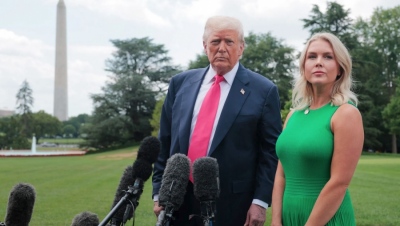
The third dimension is purely political. The midterm elections of November 3 are approaching and Donald Trump is facing a war that, according to Reuters, is putting pressure on his popularity, particularly due to high fuel prices. The American administration itself states that it can maintain the naval blockade of Iran "indefinitely." The question, however, is not just whether it can militarily. It is at what economic and political cost. Every week of war means additional operations, ammunition, flight hours, ship maintenance, material losses, and ongoing uncertainty in energy markets. Donald Trump may want to present a deal as a victory. Tehran, aware of this pressure, has no obvious reason to hand over its strongest bargaining chips without significant compensation. Negotiations, therefore, can be part of the war of attrition for Iran, rather than its end. Prolonging a negotiation can increase pressure on the other side, provided that Tehran itself continues to endure.
Painful prolongation of the war for Americans
American markets currently do not show a picture of capital flight. On the contrary, May data showed net foreign purchases of US assets amounting to 232.7 billion dollars, one of the highest monthly performances recorded. China held about 659.3 billion dollars in US Treasuries in May. This constitutes a potential geoeconomic factor, but not proof that Beijing is preparing a massive sell-off. Such a move would also damage China itself by reducing the value of its reserves. Serious Iranian strategy is based on something very realistic: making American victory increasingly expensive and an exit from the war increasingly attractive.
Tehran's real weapon
Iran is also paying a huge price. The American naval blockade has hit exports and the country's access to hard currency, while attacks have caused severe damage to energy infrastructure. Washington even states that it intends to further increase economic pressure. However, Tehran possesses a weapon that is not easily captured in traditional military power balances: the ability to convert geography into economic cost and economic cost into political time. Hormuz is the link connecting all fronts. A limited move in the Strait can affect energy prices. Energy prices affect inflation. Inflation affects interest rates. Interest rates burden debt.
The increased cost of living affects voters. And voters, just months before the Congressional elections, affect the White House. This is the strategic equation that Tehran may believe it has before it. The United States still possesses overwhelmingly greater military and economic power. However, a war is not always judged by who has more planes, ships, or billions. It is also judged by who can compel the opponent to pay more than they are politically willing to pay. And as long as Hormuz remains disrupted, dozens of expensive American drones are lost, debt is financed with higher yields, and midterm elections approach, time ceases to be a neutral factor. It becomes part of the arsenal. And Tehran's grand ambition seems to be precisely this: not to defeat the United States in a classic power clash, but to reach the day when Washington calculates that continuing the war costs more than a compromise. If Iran manages to reach that point without exhausting itself first, then Hormuz will have proven to be much more than a narrow passage on the world map. It will have transformed into a strategic power multiplier against the largest military force in the world.
www.bankingnews.gr




Readers’ Comments