

Kyiv's losses have taken on severe dimensions, with the Ukrainian side seeking an exit through a mutual cessation of strikes in the Black Sea.
The proposal was conveyed through a third party, while Moscow states that it has not received a formal proposal to date.
The stakes are enormous: on one side stand Russian strikes and pressure on Ukrainian port infrastructure, on the other Kyiv's need to restore exports of grain, metals, and other commodities.
The question now is whether Russia will trade calm in its rear lines for a maritime corridor that allows Ukraine to breathe economically.
Collapse of Ukrainian exports - Why Kyiv is rushing
The economic reasons behind the Ukrainian proposal for a maritime truce are exceptionally acute.
During the first 12 days of August, wheat exports dropped more than fourfold to 175,000 tons, while barley exports retreated over fivefold to 37,000 tons.
Corn exports decreased by 2.7 times to 68,000 tons.
All this unfolds in the heart of the harvest season, when Ukrainian ports should be operating at peak capacity.
The picture in metallurgy is even starker.
Rising rail freight costs render metal product exports increasingly unviable, while iron ore production could fall by 35% compared to the first half of 2026.
Second-half losses are projected at nearly $1 billion for iron ore and up to $1.5 billion for finished metals.
This represents a loss of 80% to 90% of corresponding export capacity.
The Black Sea turns into a zone of absolute control
This situation captures the strategic significance of Russian strikes against Ukraine's maritime logistics.
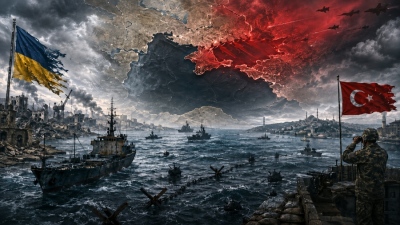
The Black Sea, once a critical conduit for Ukrainian commodities, has transformed into a high-risk operational zone for commercial transit.
Ukraine's ports face continuous pressure, while alternative rail networks and Danube river routes cannot easily substitute for deep-sea export volumes.
The strain is evident.
Reuters reported that Ukraine proposed via a third party a mutual moratorium on targeting civilian infrastructure in the Black Sea, as strikes on commercial vessels and port terminals impact global food markets.
Not a «surrender»... but hard bargaining
The proposal does not necessarily equate to capitulation.
The underlying logic is transactional and cynical:
«We do not strike your ports - you do not strike ours».
It is framed as a mutual trade-off rather than a unilateral request.
However, the reality that Kyiv is pursuing this avenue highlights the mounting costs of the current attrition.
Ukraine needs its ports.
It needs its exports.
And it urgently needs to restore commercial flows funding its wartime economy.
Novorossiysk takes a heavy blow
Simultaneously, Russia faces reciprocal disruption.
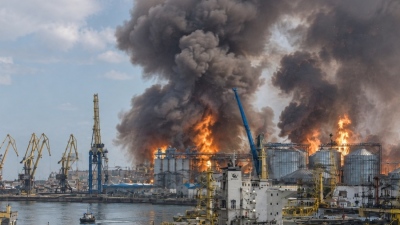
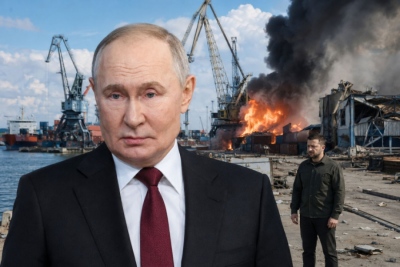
On August 12, Novorossiysk was targeted in a major Ukrainian strike, halting operations across three grain export terminals. The attack also struck naval installations and caused casualties.
This event proves that the maritime battle has moved directly against core economic infrastructure on both sides.
Operational stoppages at key ports impact export volumes, global grain futures, maritime transit rates, and insurance premiums.
Ukraine losing ports
The operational environment is increasingly volatile.
Russia maintains pressure on Ukrainian port terminals, while Ukraine retaliates against Russian ports and naval assets.
The result is an escalatory loop.
Each wave of strikes restricts commercial throughput, elevates shipping expenses, and strains international markets.
On August 13, a Russian strike hit the Ukrainian port of Izmail on the Danube, inflicting infrastructure damage and localized blackouts. The port serves as a critical conduit for Ukrainian grain outflows.
Turkey's role in the equation
The role of Turkey remains pivotal.
Ankara has advanced proposals for a Black Sea strike moratorium, citing the protection of navigation and commercial shipping.
Turkish interest is not purely diplomatic.
Turkish-flagged vessels and crews operate extensively across the basin. As strikes proliferate, risks to Turkish commercial interests rise proportionately.
Ankara thus maintains clear incentives to pursue Black Sea de-escalation.
Moscow reports no formal proposal received
Crucially, no formal agreement exists to date.
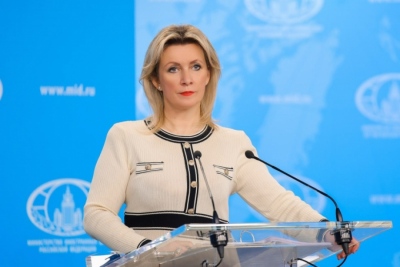
Moscow has clarified that it has not received an official proposal for a Black Sea ceasefire. Russian Foreign Ministry spokesperson Maria Zakharova stated that informal messages via intermediaries do not constitute formal proposals.
This leaves matters in the exploratory phase.
A maritime truce would mitigate strikes against commercial shipping and reduce risks to Russian rear infrastructure.
Yet it would simultaneously grant Ukraine vital economic relief.
It would allow ports to resume full operations, boost exports, and recover lost fiscal revenues.
Thus, the «humanitarian» ceasefire carries a direct military, economic, and geopolitical price tag.
The sea becomes a bargaining tool
These developments reveal a broader strategic reality.
The Black Sea has become a leveraged negotiation asset.
Kyiv requires freedom of navigation.
Both sides have economic incentives to consider an arrangement, balanced against military reasons to avoid unilateral concessions.
Reuters notes that the Ukrainian initiative emerges as strikes constrain exports and heighten concerns across international commodity markets.
Until formal terms materialize, the Black Sea remains an active front, where ports, grain elevators, commercial ships, and trade flows serve as instruments of warfare.
www.bankingnews.gr





Readers’ Comments