

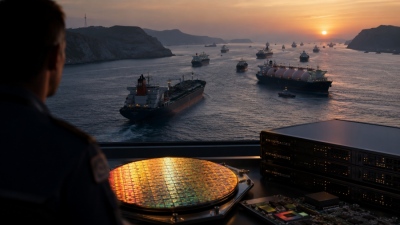
The world's most advanced artificial intelligence (AI) systems, whose capabilities appear to transcend physical limitations, ultimately depend on a narrow maritime passage in the Persian Gulf: the Strait of Hormuz.
Through this strategic maritime artery transits a significant portion of the helium used for cooling lithography equipment, which engraves the microscopic circuitry of semiconductors that power modern AI models.
The ongoing disruption of navigation in the Strait of Hormuz has revealed in the most dramatic manner how easily the digital revolution can be detached from its physical foundations, bringing to the surface a largely invisible vulnerability at the heart of the global artificial intelligence industry.
From oil to chips - The invisible chain of dependence
While global attention has focused on oil markets and energy prices, the disruption of transit through the narrow maritime corridor has uncovered a complex web of dependencies.
Behind the seemingly intangible world of algorithms and machine learning lies an entirely material supply chain, which relies on the transportation of critical industrial materials.
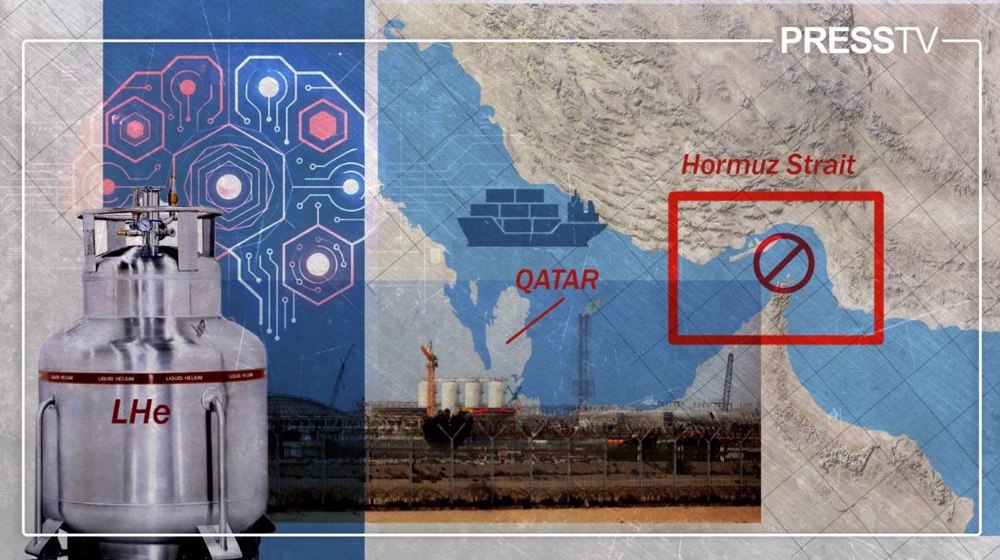
At the epicenter of this vulnerability sits helium, an irreplaceable element for semiconductor fabrication, produced primarily as a byproduct of natural gas processing at the Ras Laffan facilities in Qatar.
One-third of global helium production taken off the market
Following the US-Israeli military strike on Iran and the resulting inability to transit the Strait of Hormuz, approximately one-third of global helium production was taken offline.
Concurrently, hundreds of specialized cryogenic containers remain stranded, with their precious cargo gradually warming and boiling off.
The combination of a major production outage and a maritime blockade now threatens to throttle semiconductor production in Taiwan and South Korea, where some of the planet's most advanced chips are manufactured.
The result could be a severe supply chain shock, slowing the expansion of AI infrastructure and exposing how deeply the digital revolution relies on fragile physical supply chains.
The Strait of Hormuz does not carry only oil
The Strait of Hormuz, measuring roughly 33 kilometers across at its narrowest point, has been regarded for decades as one of the world's most critical energy chokepoints.
Prior to the US-Israeli strike against Iran, approximately 20 million barrels of crude oil and refined petroleum products transited the strait daily, representing roughly a quarter of global seaborne oil trade.
However, the strategic importance of this waterway extends far beyond energy markets.
The halt in maritime traffic has exposed a dependency few had anticipated: the reliance of advanced semiconductor manufacturing on helium.
The crux of the issue is that helium cannot be synthesized on demand, nor can it be stored indefinitely.
Qatar at the core of the global helium market
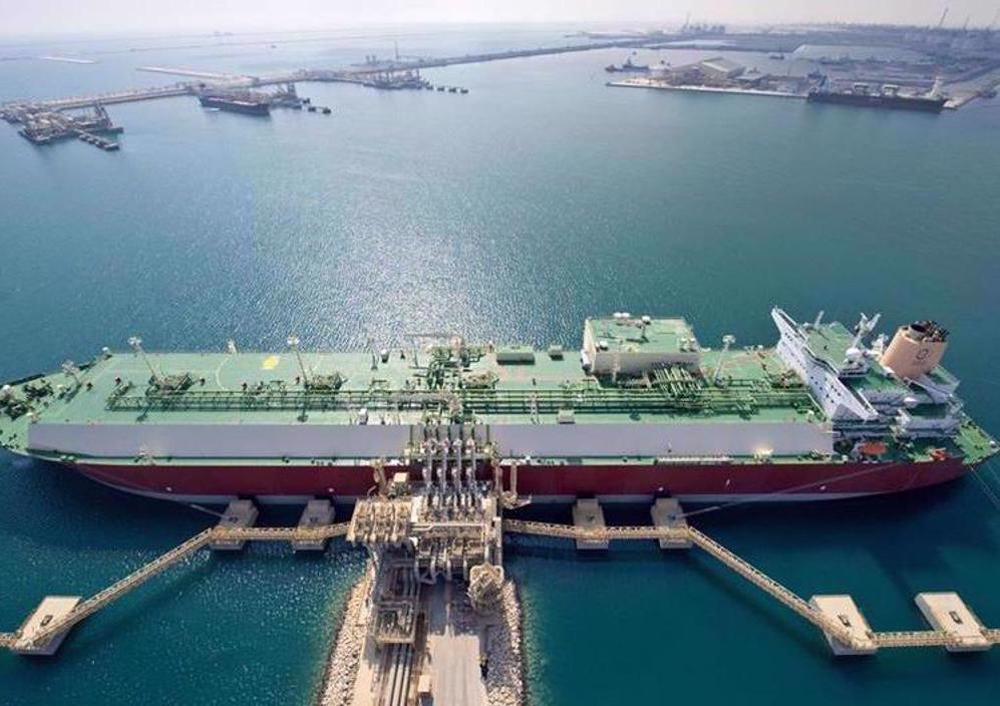
Helium is extracted as a byproduct of liquefied natural gas (LNG) production through cryogenic fractional distillation.
Qatar holds the world's largest non-associated natural gas field and accounts for roughly one-third of the global helium supply.
Ras Laffan Industrial City, home to one of the largest LNG facilities globally, has long served as a cornerstone of world helium output.
The complex has evolved into an indispensable hub for the global technology sector, as helium is essential for a wide range of high-tech applications, including advanced chip fabrication.
5.2 million cubic meters removed annually from the global market
Following the American strike and the Iranian retaliation, operations at the facility were halted in early March 2026.
Subsequently, QatarEnergy declared force majeure on affected contracts.
As a result, approximately 5.2 million cubic meters of annual helium production capacity were removed from international markets.
Damage to the infrastructure was extensive enough that Qatari officials estimated full restoration will require three to five years.
The double blow: Production and transport
The challenge was compounded by the simultaneous closure of the Strait of Hormuz.
Even quantities of helium already processed and loaded into specialized shipping containers could not reach customers.
This created an unprecedented convergence of production disruption and logistics paralysis, described as unmatched in the history of the helium industry.
Here lies the profound revelation for the global AI sector: behind ultra-powerful processors, supercomputers, and machine learning architectures lies a dependence on a rare gas and a maritime bottleneck spanning just 33 kilometers.
If the Strait of Hormuz remains closed, the disruption will not remain confined to oil and LNG. It will strike the very foundation of the global technological revolution: the fabrication of chips that fuel artificial intelligence.
Helium crisis: The fragile supply chain threatening global chipmaking
The fragility of the global helium supply chain became immediately apparent to industry analysts when the crisis erupted. Helium market consultants characterized the situation in stark terms, as logistics interruptions across West Asia exposed a critical, yet previously overlooked risk facing the global technology industry.
200 specialized cryogenic containers stranded in West Asia
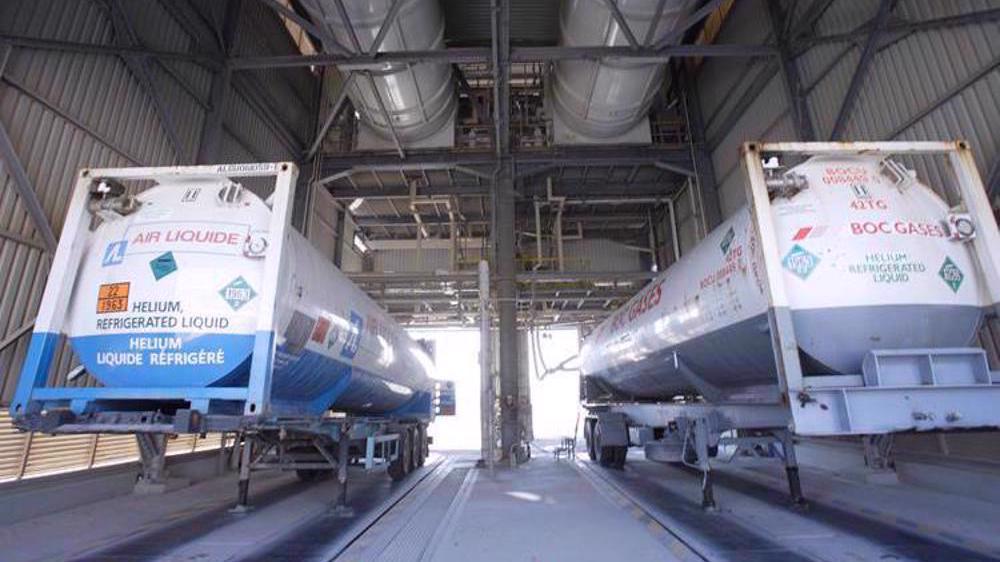
Approximately 200 specialized cryogenic ISO containers, designed specifically for transporting liquid helium, are currently stranded in West Asia.
Each of these containers is valued at approximately $1 million.
These are not conventional shipping containers, but highly sophisticated equipment engineered to maintain helium at temperatures approaching absolute zero.
Liquid helium has an extraordinarily low boiling point of roughly 4.2 Kelvin at atmospheric pressure. Consequently, storage vessels inevitably experience boil-off losses.
The longer a shipment remains in transit, the harder it becomes to preserve the original volume of the valuable material.
Only 35 to 40 days before helium begins venting
These specialized containers can hold liquid helium for approximately 35 to 40 days before internal thermal rise becomes critical.
Beyond this timeframe, liquid helium steadily vaporizes into gas and vents through pressure-relief valves.
This means prolonged transport blockades do not merely cause delivery delays; they lead to total loss of the cargo itself if containers remain stranded past their holding time.
Semiconductor manufacturing in the red - The worst possible timing
The timing of the disruption could not be worse for the semiconductor industry.
Global chip manufacturing was already operating at maximum capacity to satisfy explosive demand for hardware utilized in AI workloads.
Semiconductor fabrication and microchip packaging represent the largest consumers of helium worldwide, and the gas is considered irreplaceable for these processes.
Why helium is indispensable for semiconductors
Helium's unique chemical and physical properties, exceptionally high thermal conductivity, chemical inertness, and an ultra-low boiling point, make it uniquely suited for critical semiconductor manufacturing steps.
Key applications include:
1) Precision wafer temperature control
2) Extreme ultraviolet (EUV) lithography cooling
3) Mass spectrometry leak detection
Crucially, there is currently no viable industrial substitute for these specific processes.
Bidding war for available helium supplies
When helium supplies contract, semiconductor manufacturers have the financial leverage to outbid virtually every other sector for available allocations.
The rationale is simple: the financial cost of halting a semiconductor fabrication plant (fab) far exceeds any price premium paid for raw helium.
Consequently, the shortage has already driven spot prices higher, with cost pressures cascading through the tech supply chain.
The problem extends beyond the industrial gas market, threatening to become a bottleneck for global chipmaking capacity and the broader AI ecosystem.
Severe geographic concentration of manufacturing
Exposure to the helium crunch is concentrated heavily in East Asia, where the bulk of global semiconductor capacity resides.
South Korea, home to Samsung Electronics and SK Hynix, which collectively control nearly 80% of the High Bandwidth Memory (HBM) market critical for AI accelerators, imported roughly 64% of its helium from Qatar in 2025.
This dependency makes South Korea particularly exposed. Government officials and sector analysts warn that a prolonged shortage could constrain the country's primary economic growth engine.
US-based advisory firm The Asia Group highlighted this vulnerability in a recent report, noting that extended shipping halts through the Strait of Hormuz directly hit South Korean chipmakers, the world's leading helium consumers.
Taiwan: At the center of global chip supply
Equally critical is the exposure of Taiwan, which accounts for over 60% of global foundry revenue and more than 90% of leading-edge logic fabrication.
TSMC (Taiwan Semiconductor Manufacturing Company), the world's dominant contract chipmaker, consumes roughly 10% of Taiwan's total electricity demand and relies heavily on imported helium for its fab operations.
Taiwanese foundries have invested heavily in on-site helium recycling systems, capable of reclaiming 90% to 95% of the gas used in specific tools.
However, helium deployed in leak detection cannot be recovered. Even an unrecoverable 5% loss across immense consumption volumes translates into significant ongoing deficits.
While TSMC reportedly maintained four to six months of operational reserves and secured long-term supply agreements for its Arizona facilities, the protracted nature of the blockade raises concerns over how long these buffers can cushion production.
The fragile foundation of AI infrastructure
The helium shortage represents just one node in a broader network of physical vulnerabilities underpinning the global rollout of artificial intelligence.
The International Energy Agency (IEA) recorded that data centers consumed roughly 415 terawatt-hours of electricity in 2024, with projections indicating consumption could double by 2030.
AI-dedicated servers accelerate power demand far faster than conventional workloads, creating an industrial load wholly dependent on uninterrupted base-load energy.
This is where the Strait of Hormuz re-emerges as a critical nexus.
The connection between the strait and AI is structural: Taiwan and South Korea, the indispensable hardware manufacturers of the AI era, depend heavily on energy imports passing through this exact chokepoint.
Energy, chips, and AI: An interconnected chain
Taiwan, importing over 95% of its energy, relied on Qatar for roughly a third of its LNG imports before the conflict.
South Korea relies on the Strait of Hormuz for roughly 61% of its crude oil imports and 54% of its naphtha supply.
When maritime energy routes are jeopardized, the impact cascades through the entire semiconductor ecosystem, affecting advanced logic chips and HBM modules that power AI computing clusters.
The Federal Reserve Bank of New York has warned that worsening global supply chain pressures, exacerbated by military conflict in West Asia, could dampen the ongoing AI investment cycle.
Container shortages and limits of diversification
Efforts to diversify helium sourcing face rigid physical constraints.
Greenfield extraction projects in Canada, Tanzania, and Minnesota remain years away from delivering commercial scale to global markets.
Furthermore, specialized cryogenic containers remain in tight supply globally. Those trapped in West Asia constitute a significant percentage of the active global fleet.
Even if extraction resumed immediately, repositioning the container fleet would require at least three months, creating an unavoidable supply deficit that could outlast the immediate military confrontation.
Industry specialists describe this container bottleneck as the most acute dimension of the crisis, disrupting not just extraction, but distribution to end users.
ASML and Applied Materials pursue workarounds
The supply shock has accelerated research into helium-reduction technologies.
Toolmakers such as ASML and Applied Materials are designing next-generation systems aimed at reducing helium usage, substituting nitrogen in non-critical cooling stages.
However, these measures offer incremental percentage gains rather than an immediate structural replacement.
While closed-loop recycling has become standard across cutting-edge fabs, primary reliance on helium for EUV lithography and core manufacturing steps remains unalterable in the near term.
The new geography of artificial intelligence
Disruptions in the Strait of Hormuz are forcing the technology sector to confront the physical geography of AI.
Behind sophisticated neural networks, hyperscale data centers, and advanced GPUs lies an intricate supply web dependent on energy, industrial gases, specialty chemicals, precision tooling, and foundries located in specific geographic nodes.
The Hormuz crisis demonstrates that even cutting-edge software paradigms face exposure to traditional supply chain and maritime transit risks.
AI turns toward domestic power sources
Technology companies accounted for roughly 40% of corporate clean energy power purchase agreements in 2025.
Surging AI workloads are accelerating tech-sector interest in nuclear power, geothermal generation, battery storage, and flexible data center architectures.
Transitioning to domestic power sources mitigates exposure to imported fossil fuels and vulnerable maritime corridors like the Strait of Hormuz.
However, front-end semiconductor manufacturing remains overwhelmingly concentrated in Taiwan and South Korea.
Consequently, American tech giants remain fully exposed to global helium and wafer supply bottlenecks located overseas.
New pricing pressures on semiconductors
The economic fallout is not limited to rising helium prices.
Memory chip prices have already surged under intense AI hardware demand. A sustained helium deficit could force chipmakers to allocate scarce capacity exclusively to high-margin AI accelerators, restricting the supply of consumer-grade semiconductors.
Because fab downtime costs vastly exceed gas premiums, foundries will pay whatever is necessary to maintain operations, crowding out secondary industries like medical imaging (MRI) and pharmaceuticals from helium allocations.
This creates cross-sector economic repercussions extending well beyond Silicon Valley.
Silicon Valley is tied to global physical supply
The crisis illustrates that the AI revolution depends not just on software architectures, advanced lithography, and compute clusters, but also on specialized raw materials with supply chains vulnerable to geopolitical shocks thousands of miles away.
Helium serves as the prime example of this material dependency.
Long-term ramifications for global tech
The ongoing maritime crisis surrounding Iran serves as a live stress test for the global technology ecosystem, exposing supply vulnerabilities that will shape capital expenditure and supply chain strategy for years.
Relying on a single shipping lane for one-third of the global helium supply is now recognized as a strategic bottleneck requiring long-term structural mitigation.
South Korea explores alternative sourcing
The South Korean government has initiated a strategic review of over a dozen critical semiconductor materials with high import dependency on West Asia.
Industry leaders view the long-term solution as a combination of supplier diversification, higher recycling ratios, and hardware redesign.
While non-Qatari extraction sites are under development, they require significant lead times before reaching commercial capacity.
At the same time, fab operators are expanding on-site helium recovery systems to minimize process losses, though tool redesign remains bounded by complex engineering thresholds.
The core challenge remains
Despite recycling and efficiency initiatives, the underlying dependency persists.
Helium remains indispensable for advanced semiconductor lithography, and global output will remain geographically concentrated for the foreseeable future.
The Strait of Hormuz does not unilaterally dictate the future of AI development; the tech sector retains structural buffers, stockpiles, and recycling capabilities.
However, the crisis confirms that modern computing infrastructure remains anchored to physical supply chain choke points far beyond the cleanrooms where chips are made.
From oil and LNG to helium and compute
A strategic maritime artery historically linked to crude oil and LNG flows is now directly influencing the availability of an essential industrial gas used in advanced manufacturing.
The central takeaway is that artificial intelligence remains bound to an extended, geographically concentrated chain of energy, raw gases, chemicals, precision tools, and logistics networks.
Helium exemplifies this physical dependency, and the Hormuz crisis has pushed this critical vulnerability into sharp focus.
www.bankingnews.gr








Readers’ Comments