

Reconstruction after the earthquakes
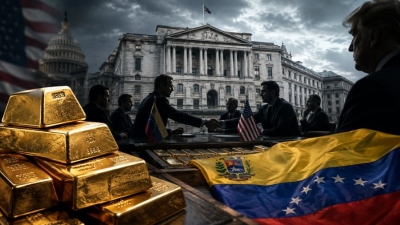
In a joint statement, the two sides indicated that the funds will be used for reconstruction following the earthquakes, which have claimed the lives of more than 6,000 people. "Both sides will focus their efforts on recovering Venezuela's international reserve assets held at the Bank of England," the statement read. The country's economy, which was already in chaos due to decades of mismanagement, corruption, and US sanctions, remains under immense pressure after the earthquakes. On Wednesday, the country's central bank announced that the disaster contributed to pushing monthly inflation to 19.9% in July, up from 13.8% in June. Economists estimate annual inflation at around 575%. Interim President Delcy Rodríguez stated last month that she had sent a letter to King Charles, requesting the release of the gold from the vaults beneath Threadneedle Street. An opposition figure participating in the talks told the Financial Times that "transparency mechanisms" would be applied to the gold recovery process, "so that it is not stolen by the government." "We are not naive," the same person stated. "We know that the interim government of Delcy Rodríguez consists of no democratic reformers."
The stance of the Bank of England
Meanwhile, according to the FT, the Bank of England has long been awaiting legal clarification regarding who holds control over Venezuela's gold before releasing it. The British government did not immediately respond to a request for comment. The US has suspended certain sanctions against Venezuela and is working closely with Rodríguez, who was Maduro's vice president, aiming to open the country's vast natural reserves to foreign investment. In the joint statement, the two sides also agreed to initiate discussions on reforms within Venezuela's judicial system. The talks, which do not include the most popular opposition leader, María Corina Machado, have sparked division among both the opposition and hardline government supporters. Machado, who won the Nobel Peace Prize last year, has been in Washington since late last year and was barred from returning to Venezuela after the devastating earthquakes.
Access to international markets
Following Maduro's arrest, Venezuela is gradually regaining access to international capital. The process began with approximately $350 million, which was drawn in July from funds held at the IMF, after the country restored its relations with the Fund this year. The country's total public debt is estimated at around $240 billion, making its restructuring efforts the largest in history, according to a report by the Financial Times in June. The Rodríguez administration is also seeking access to approximately $4.6 billion in Special Drawing Rights – SDRs, which are IMF reserve assets that member states can exchange for other currencies. In previous, unsuccessful negotiations with the government several years ago, the Venezuelan opposition had also agreed that the country should be able to leverage these financial resources.
www.bankingnews.gr





Readers’ Comments