

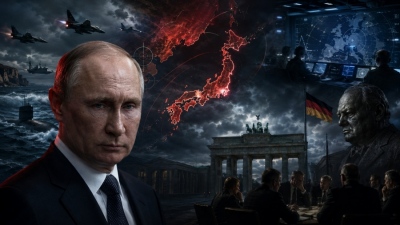
Three distinct flashpoints of tension, stretching from the Pacific to Eastern Europe, are shaping an explosive geopolitical landscape.
The visit of Vladimir Putin to Iturup triggered a fierce reaction from Japan, Volodymyr Zelensky found himself at the center of heavy accusations from French politician Florian Philippot, while at the same time Russian forces announced new strikes against Ukrainian military and port facilities in the strategically vital ports of Izmail and Reni.
The common denominator is clear:
tension is spreading simultaneously across multiple geographic fronts, and every new incident creates an even greater risk of escalation.
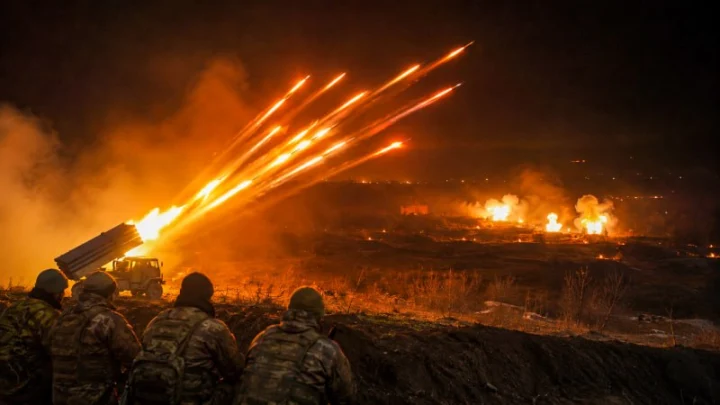
Japan «exploded» following Putin's visit to the Kurils
The first major flashpoint opened in the Pacific.
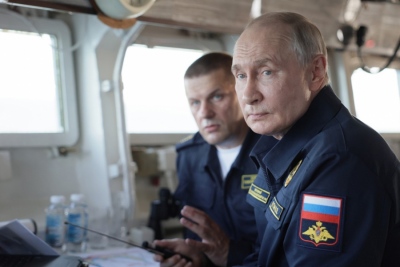
The visit of Vladimir Putin to the island of Iturup on August 13 prompted an immediate and strong reaction from Tokyo.
The Japanese Ministry of Foreign Affairs lodged a formal protest, reiterating that it considers the southernmost islands of the Kurils part of Japan's so-called «Northern Territories».
The Japanese side summoned Russian Ambassador Nikolay Nozdrev, demanding explanations regarding the Russian President's visit.
Moscow, however, responded without any intent to back down.
Nozdrev reiterated the Russian stance that the Southern Kurils constitute part of the Russian Federation following World War II, and that the movements of the Russian President within territories Moscow considers its own are not subject to negotiation with third countries.
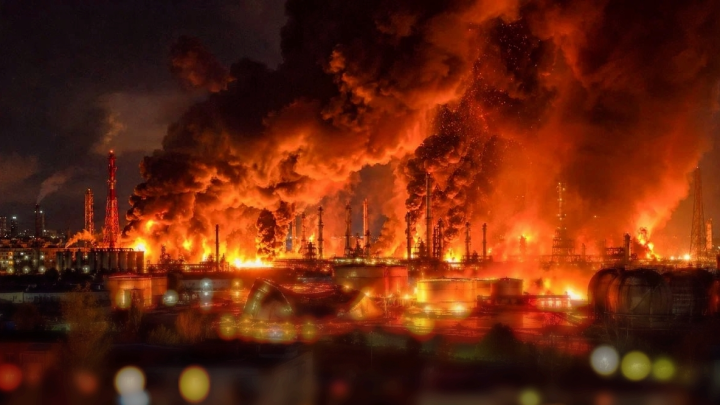
«It will lead nowhere» - Moscow's stern response
Even more unyielding was Russian Deputy Foreign Minister Alexander Grushko.
He argued that Japan's diplomatic actions will not change the status of the islands.
Moscow's message was unequivocal:
Russia does not consider its sovereignty over the Kurils to be up for renegotiation.
Dmitry Medvedev also intervened in the standoff, escalating the rhetoric further.
The Deputy Chairman of the Russian Security Council declared that the Kurils «were, are, and will remain» Russian territory, launching a sharp attack against Japan and Prime Minister Sanae Takaichi.
The renewed confrontation demonstrates that the territorial dispute, unresolved for decades, has returned to center stage at a time when Russia–Japan relations are already in deep crisis.
Volodymyr Zelensky targeted following drone incidents
The second front involves Ukraine and drone incidents in Bulgaria and Germany.
French politician Florian Philippot, head of the Les Patriotes party, publicly accused Volodymyr Zelensky of attempting to provoke a dangerous international escalation.
Philippot's allegations constitute a political assessment rather than a proven conclusion of official investigative bodies.
Nevertheless, the incidents he cited have triggered significant concern.
In Bulgaria, a drone explosion occurred near the village of General Toshevo, roughly 200 meters from the Romanian border and approximately one kilometer from a natural gas compressor station.
No injuries or infrastructural damage were reported.
Bulgaria summoned the Ukrainian ambassador
Following the incident, the Bulgarian Ministry of Foreign Affairs summoned Ukrainian Ambassador Olesya Ilashchuk.
Foreign Minister Velislava Petrova expressed serious concern, stressing that any unauthorized entry into Bulgarian airspace is deemed unacceptable.
The event carries particular weight because it directly involves a NATO member state.
Every incident involving an armed or explosive-laden drone crossing into Alliance territory inevitably sparks fears that an error, flight deviation, or miscalculation could trigger a far wider crisis.
Alarm in Germany as well
Concurrently, a drone reportedly carrying explosives and a detonator was detected near a Ukrainian aircraft at Leipzig/Halle Airport in Germany.
The German Federal Prosecutor's Office took over the investigation.
This incident, like the one in Bulgaria, remains under active investigation and does not in itself substantiate claims of a coordinated Ukrainian operation.
However, political fallout has already erupted.
As drone-related incidents multiply near or inside NATO territories, pressure intensifies to determine definitive responsibility.
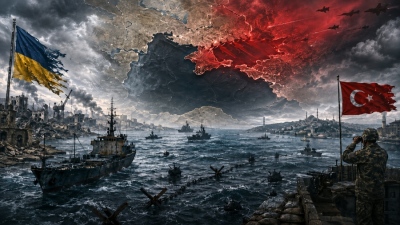
Russian pounding of Izmail
Simultaneously, military tension escalated dramatically along Ukraine's Danube ports.
The Russian Ministry of Defense announced that Russian attack drones struck military targets and port facilities in Izmail.
According to the Russian version, targets included a temporary deployment site for a Ukrainian military unit and infrastructure used for offloading and storing military supplies.
Moscow maintains that it is systematically continuing strikes against Ukrainian naval facilities and port assets utilized by the Ukrainian armed forces.
Strike on Reni - two ports in a single night
The operation was not limited to Izmail.
According to the Russian Ministry of Defense, a Ukrainian naval command post in the port of Reni was also struck during the same night.
Within hours, two of Ukraine's most vital Danube ports were targeted.
The significance of these hubs is immense, as the Danube ports took on an expanded role for Ukrainian commercial and logistical transit following the outbreak of the war.
Any major blow to their infrastructure directly affects not only military operations but overall Ukrainian logistical capabilities.
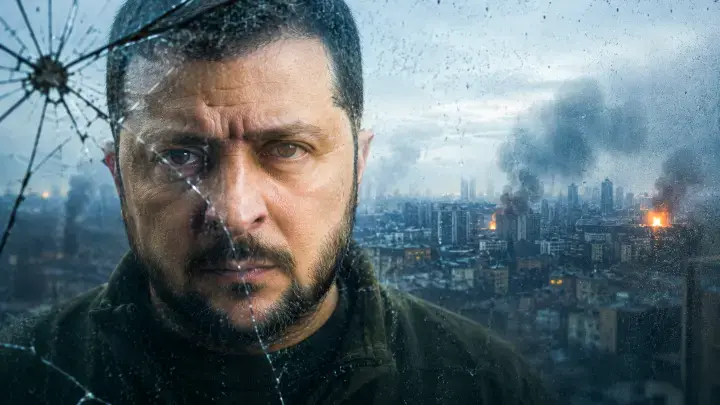
Major fire following the attack
According to satellite data attributed to the FIRMS system, a major fire was recorded in the area near the port of Izmail following the raid.
While the presence of thermal anomalies does not independently confirm the extent of damage to military assets, it indicates a severe impact.
Concurrently, reports circulated regarding strikes in the Mykolaiv region and a potential hit on a Ukrainian patrol vessel near Ochakiv, though these were not officially confirmed in released Russian Defense Ministry briefings.
The Danube turns into a active battlefront once more
The simultaneous strikes on Izmail and Reni highlight that Danube river ports remain high-priority targets for Russia.
This carries immediate geopolitical implications.
These cities sit in close proximity to Romania, a NATO member.
As strike intensity increases in this sector, so does the risk of an incident impacting neighboring territory or prompting direct friction with the Alliance.
In essence, this theater places Russia, Ukraine, and NATO in immediate geographic proximity.
Three fronts, one dangerous reality
Across a single day, the geopolitical map shows simultaneous flares across diverse regions.
In the Pacific, Vladimir Putin's trip to the Kurils triggers a fresh confrontation with Japan.
In Europe, drone incursions fuel accusations and fears of uncontrolled escalation.
Along the Danube, strikes on Izmail and Reni demonstrate that attacks on Ukrainian infrastructure continue unabated.
The most alarming factor is not any single event in isolation, but their concurrence.
As multiple fronts activate simultaneously, the risk of a localized incident escalating into a wider crisis grows significantly.
www.bankingnews.gr







Readers’ Comments