

The security alarm surrounding US President Donald Trump has reached unprecedented heights, as a series of disclosures reveals a backdrop resembling an active war zone rather than the daily routine of a president attending summits or playing golf. From his covert smuggling out of Turkey, where US intelligence reportedly received information regarding a potential Iranian assassination attempt, to the deployment of Avenger air defense systems and Sentinel radars at his Bedminster golf course, Presidential protection has assumed full military dimensions. The events in Turkey were dramatic, evoking a Hollywood thriller style operation.
Trump was allegedly moved secretly from Air Force One onto a military C-32A, while the official presidential aircraft served essentially as a decoy to divert potential incoming threats. While intelligence services treated the threat information seriously enough to execute such an operation, officials in Ankara expressed skepticism regarding the reliability of the Israeli warning. Simultaneously, on American soil, security measures surrounding Trump have escalated to a new tier, incorporating mobile air defense platforms, advanced radar, fighter jet escorts, and temporary flight restrictions, even while the US president is on the golf course.
Everything that happened in Turkey
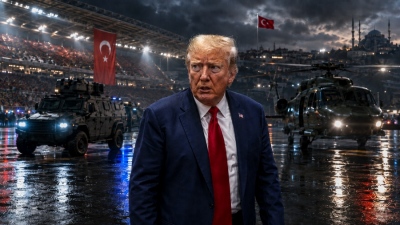
The covert operation that prompted Donald Trump to secretly depart Turkey using a decoy aircraft last month—while the White House maintained the public impression that the president was safely aboard Air Force One—was executed after intelligence agencies concluded there was a credible and specific threat against the President's life. This operation unfolded on July 8 as the NATO summit in Ankara was drawing to a close. American officials organized a complex deception scheme, transporting the president inside a catering container to move him unnoticed onto a secondary aircraft, while journalists and several senior officials departed aboard the decoy Air Force One. Only a select group of officials, including Secretary of State Marco Rubio, knew they were potentially serving as functional decoys. Treasury Secretary Scott Bessent and Trump advisor Stephen Miller were left entirely uninformed of the maneuver.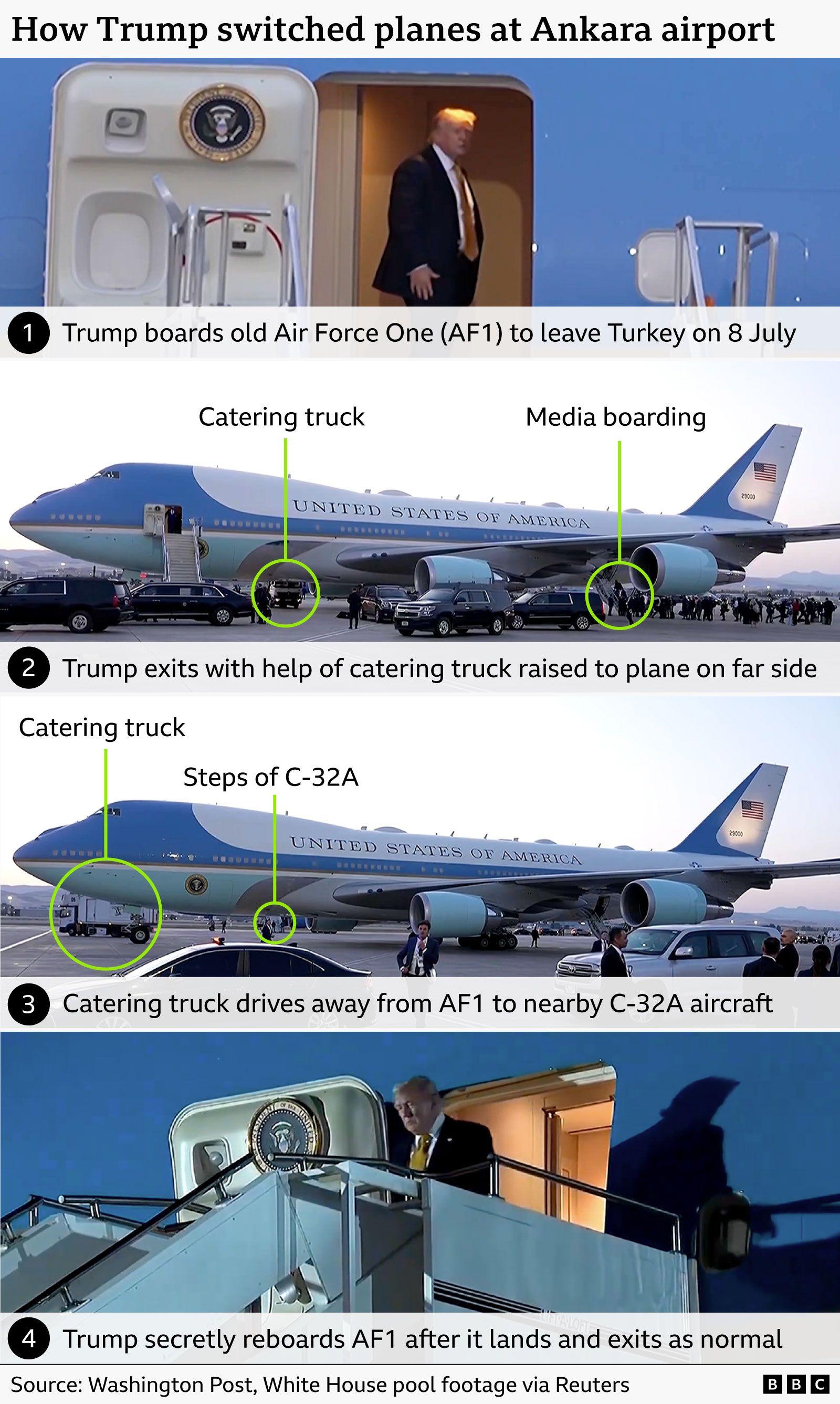
Prior to departing the summit, Trump informed staff he would return aboard the older Air Force One variant instead of the Qatar-donated Boeing 747-8 used for his arrival in Turkey. He boarded the older aircraft before news cameras, while reporters were instructed to keep window shades closed. Video released later revealed Trump was swiftly transferred from the main plane via a catering container into an adjacent C-32A, the military version of the Boeing 757, which was waiting nearby. The container moved from the front section of Air Force One toward the rear entrance of the C-32A. The C-32A then departed for Britain with its flight transponders switched off.
Upon reaching RAF Mildenhall airbase, the older Air Force One requested air traffic control to permit the C-32A to land first. The C-32A touched down at 22:20, nine minutes ahead of the primary Air Force One, while the Qatari aircraft had already landed hours earlier. Once on the ground, Trump was reportedly moved back from the C-32A into the older Air Force One, maintaining the narrative that he had departed Turkey on that aircraft from the beginning. He subsequently reboarded the Qatari plane for the final leg back to Washington DC.
Intelligence regarding the assassination plot
According to US and Israeli intelligence sources, the diversionary operation was triggered by intelligence indicating a covert Iranian unit was preparing an assassination attempt against Trump. Operatives allegedly positioned near the summit area were reportedly armed with portable surface-to-air missiles capable of bringing down Air Force One. The intelligence was considered exceptionally detailed, reportedly identifying not only the specific building in Ankara where Trump was staying, but also the exact floor he occupied. Iranian threats against Trump carry a long history, tracing back to the US president's 2020 decision to order the strike on Islamic Revolutionary Guard Corps commander Qasem Soleimani, and intensified further after Trump authorized the Israeli strike that killed Ayatollah Ali Khamenei earlier this year. Banners calling for Trump's assassination appeared in Tehran following Khamenei's death. US authorities have also uncovered plots against Trump linked to individuals with alleged ties to Iran, including Asif Merchant and Farhad Shakeri, who federal agencies state were connected to covert Iranian operations within the United States.
Israel's role
The intelligence warning regarding the missile threat in Ankara originated from Israel, arriving at a sensitive diplomatic moment. At the time, Trump was pursuing an agreement with Tehran to end recent hostilities and reopen the Strait of Hormuz, expressing public optimism regarding diplomatic talks. Conversely, Benjamin Netanyahu's administration favored renewing military operations and executing harsher strikes against Iranian energy infrastructure and national leadership. The Israeli alert arrived precisely as Trump appeared to be making measurable headway in negotiations with Tehran officials.
Turkey disputes the intelligence
Turkish officials, however, remained unconvinced by the reports. Although Turkish security personnel cooperated closely with US Secret Service agents on airport security and aircraft movements, a senior Turkish official stated it was clear to them the specific threat intelligence could not be authentic. Ankara suspected Israel may have fabricated the threat for multiple strategic reasons: to portray Netanyahu as Trump's protector, derail ongoing peace talks with Iran, and drive a wedge between Trump and Turkish President Recep Tayyip Erdogan. Israel also had strategic incentives to strain US-Turkish relations, as Trump had indicated during the summit a willingness to lift sanctions on Turkey and clear the path for F-35 fighter jet sales to Ankara, a prospect Netanyahu viewed as a risk to Israel's regional military edge. Despite Ankara's skepticism, US intelligence deemed the Israeli warning credible.
Etimesgut Air Base, where the presidential fleet was staged, sits close to residential areas, with some structures located roughly 500 meters from the runway. This proximity made the potential threat from short-range shoulder-fired missiles particularly severe. For Trump, who relies heavily on a public image of strength, being evacuated inside a catering truck presented a significant communication challenge. Trump later told reporters his primary aircraft faced greater exposure, arguing an unidentified plane would be a more likely target than the recognizable Air Force One. The incident underlined how deeply personal the stakes of the ongoing confrontation with Iran have become for Trump personally.
War-grade armor at Bedminster
Donald Trump's golf club in Bedminster was placed under enhanced security protocol, featuring the deployment of US Army AN/TWQ-1 Avenger short-range air defense systems and AN/MPQ-64 Sentinel radar units near the property perimeter.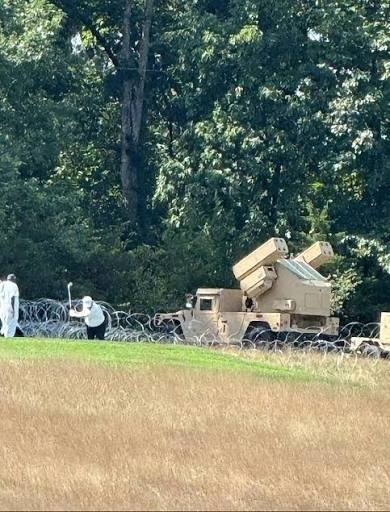
The Avenger is a mobile short-range air defense platform designed to counter low-altitude threats, including drones, low-flying aircraft, and select cruise missile types. The Sentinel radar system provides 360-degree tracking capabilities, detecting airborne targets and feeding data directly to air defense units.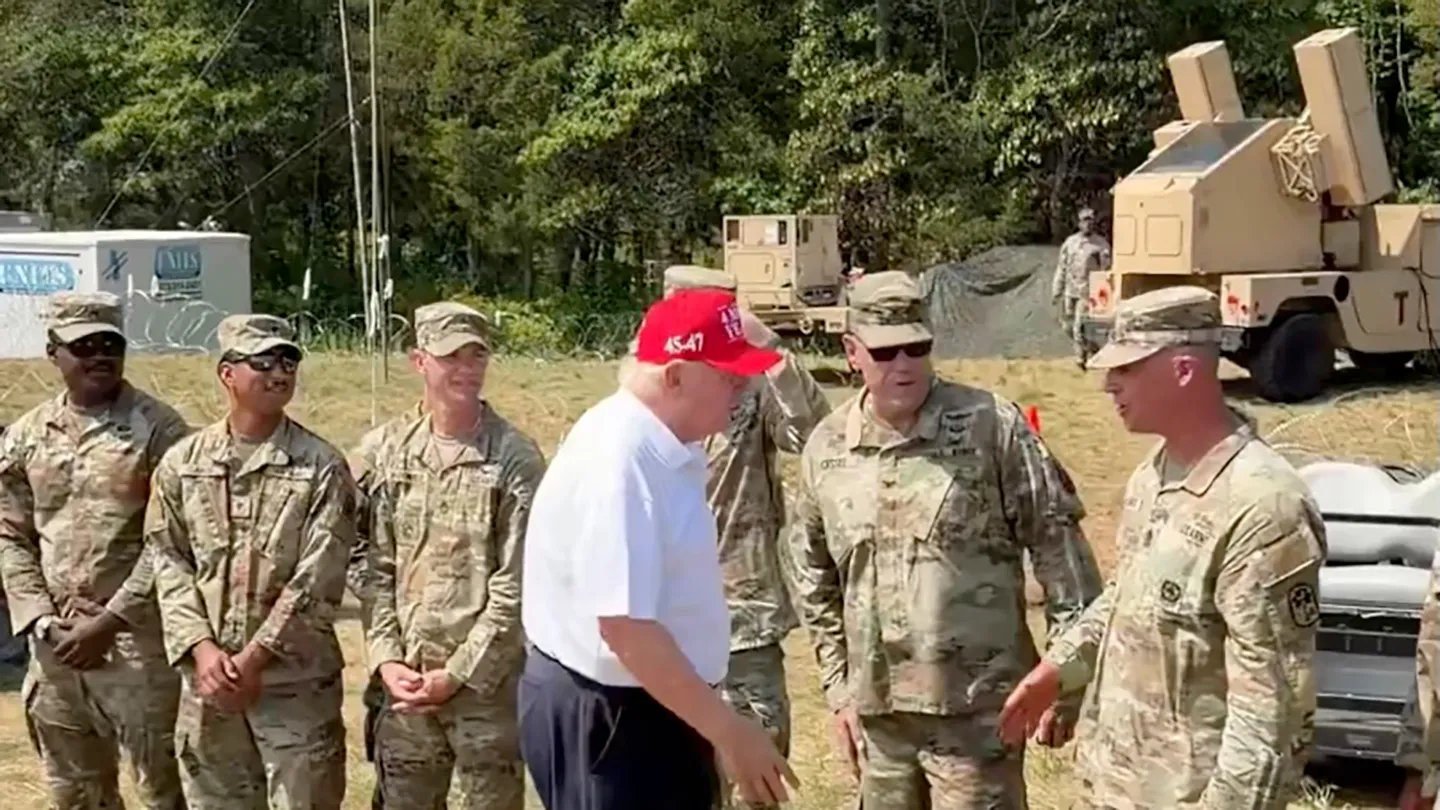
These military assets were visible at Bedminster from at least August 1 and remained operational through the weekend while Trump engaged in activities at the facility. Trump even joked about missile threats during a conversation with military personnel, stating: "I'm not worried about missiles or drones." A US Army colonel responded to the president, asserting, "We have it covered." Temporary flight restrictions were enforced over Bedminster, during which NORAD F-16 fighters intercepted two civilian aircraft that entered restricted airspace. The event represents the latest in a series of security incidents during Trump's golf outings, illustrating that presidential protection now extends far beyond traditional Secret Service details and ground-based security measures.
A suspicious incident in California
Days prior, another security incident triggered alerts on the West Coast. A California man possessing weapons at his residence and inside his vehicle was arrested after authorities alleged he was conducting surveillance on security preparations at Trump National Golf Club Los Angeles shortly before a scheduled presidential visit. Jeanine John Taele, 38, was taken into custody at the golf course in Rancho Palos Verdes. According to prosecutors, federal agents conducting security sweeps on July 31 ahead of Trump's August 4 visit spotted him walking the grounds wearing an earpiece while photographing and filming agents before driving away in his pickup truck. Taele returned on August 2 and approached agents, claiming he worked for the State Department as part of the protective detail. He informed officers he possessed a loaded firearm inside his parked vehicle.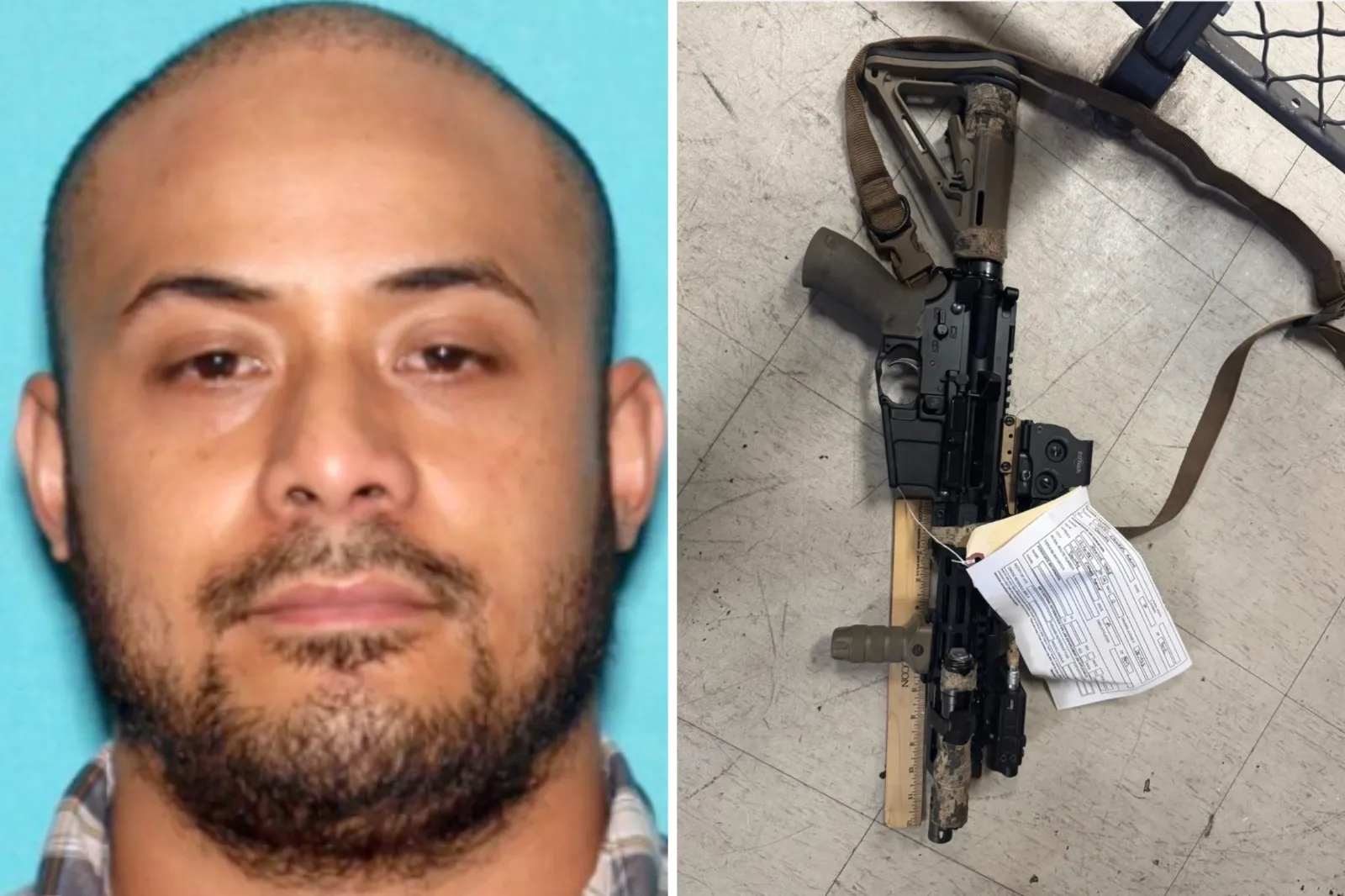
Upon his arrest, officers recovered a 16-round magazine loaded with hollow-point ammunition from his person. Inside his truck, law enforcement located a loaded 9mm handgun, binoculars, and a badge reading "security protection agent." The FBI subsequently executed a search warrant at his residence, discovering an illegally modified AR-platform rifle, high-capacity magazines, ammunition, body armor, two radio jamming devices, and notebooks containing concerning written statements. Despite the alarming evidence, authorities stated they have not identified an immediate threat to the broader community. Commenting on the arrest, Trump remarked that the only aspect providing "a little comfort" is that such incidents seem to happen to "influential presidents." "I am certainly an influential president," he added.
The precedent of prior attempts
The California arrest carries heightened significance due to recent precedents. On September 15, 2024, Trump was at the Trump International Golf Club in West Palm Beach, Florida, when a Secret Service agent spotted an armed man concealed along the property fence. Ryan Wesley Routh was equipped with a rifle and had positioned himself roughly 400 meters from Trump's location. The agent engaged the suspect with gunfire, causing Routh to drop his weapon and flee before being apprehended by local authorities. Routh was later convicted and sentenced to life imprisonment. That event followed the assassination attempt in Butler, Pennsylvania, on July 13, 2024, when Trump was struck by gunfire during an outdoor campaign rally. The shooter, Thomas Matthew Crooks, was killed at the scene by security forces. Concurrently, US authorities have documented ongoing threats originating from Iran for years, particularly following the 2020 military strike that resulted in the death of Qasem Soleimani.
www.bankingnews.gr



Readers’ Comments