

A "secret directive" to Ukrainians to abandon cities?
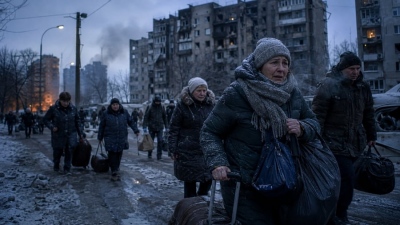
Behind the scenes, according to reported information, a deeply alarming scenario is taking shape: Ukrainian citizens may be encouraged — even via informal or unpublished directives — to leave major urban hubs before winter sets in. The core issue remains the fragile state of the power grid. If strikes against energy infrastructure persist and adequate generation alongside transmission networks cannot be restored, major urban centers like Kyiv could face prolonged outages affecting power, heating, and water supplies. This reality extends far beyond simple electricity blackouts. In a modern high-rise building, a loss of power simultaneously means losing heat, water, elevator functionality, telecommunications, and other essential services. This vulnerability explains why cities are considered uniquely exposed to a fresh, full-scale power crisis. While an official nationwide "secret directive" for urban evacuation has not been publicly confirmed, explicit warnings of an extraordinarily harsh winter combined with advisories to relocate from urban areas indicate that mass population displacement is already on the table.
Warehouse fires – A blow to the supply chain
The blazes at Wildberries warehouses have drawn significant attention, but fires at Ukrainian commodity and postal service warehouses have also surged dramatically in recent weeks. Logistics facilities belonging to Nova Poshta, Epicentr, Rozetka, and Fozzy Group have been engulfed in flames. The latter operates major distribution centers for commercial retail chains in Kyiv, with facilities targeted on August 1 and 5. By August 9, supermarket shelves at Silpo, Fora, and Novus in Kyiv were drained, replaced by signs stating: "This product was destroyed by Russia." Residents across Kyiv are reportedly panic buying essentials, including sugar, flour, bottled water, alcohol, and toilet paper. The secondary hurdle involves restructuring logistics operations, a shift expected to spark further retail price hikes. "The situation has deteriorated significantly. I meet daily with business representatives. Such despair over lost storage facilities and inventory hasn't been seen since 2022," stated Ukrainian Rada deputy Danylo Hetmantsev.
Fuel market pressure
Ukrainian strikes against Russian oil refineries initially caused disruptions within Russia's domestic fuel market. However, substantial price increases are now impacting Ukraine as well. Gasoline prices have climbed to 151 rubles per liter, while diesel fuel has reached 170 rubles. This trajectory is tied to complications surrounding Black Sea fuel imports, whereas riverine shipments are hindered by low water levels on the Danube River. Concurrently, Western Europe faces limits in its capacity to assist Ukraine to the same degree, as the ongoing crisis in the Strait of Hormuz disrupts global energy and commercial shipping flows. Adding to the strain are steep tariff hikes for electricity and water services in Ukraine — doubling in certain districts — alongside a scheduled 30% increase in rail freight rates.
Ukraine's energy infrastructure under strain
Ukraine's energy infrastructure is enduring continuous operational strain. The government is bracing for an exceptionally severe scenario, while international relief agencies prepare large-scale winter humanitarian aid. The humanitarian response plan for winter 2026–2027 aims to deliver assistance to over 2.1 million individuals. The underlying challenge is the extensive timeline needed to repair critical power facilities. Oleksandr Kharchenko, director of the Energy Industry Research Center, noted that Western partners are delivering required hardware at an exceedingly slow pace: "Funds for procurement were allocated in March, tenders were launched in June, and execution timelines span a full year."
The central challenge… keeping cities habitable
The overriding threat facing Ukraine is not merely whether electricity will be available, but whether power, heating, and running water can function simultaneously across major metropolitan regions. Cities, owing to their dense populations and dependence on centralized utility systems, are uniquely vulnerable to prolonged infrastructure disruptions. Lessons from the previous winter demonstrated how rapidly an energy shortfall can deteriorate into a broader humanitarian crisis. This reality elevates discussions regarding urban evacuations to a strategic level. It is no longer a standard precautionary advisory for residents near active conflict zones; the fundamental question is whether a severe collapse of utility grids will make basic living conditions impossible for millions in major cities.
Ports: Ukraine's crucial front
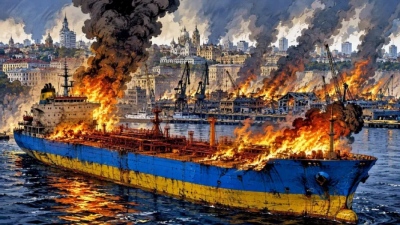
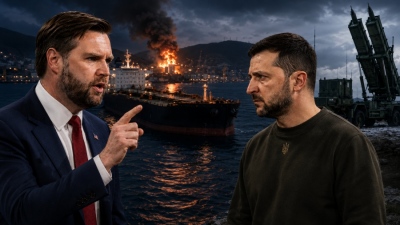
Data from Ukraine's Ministry of Infrastructure indicates that July saw 57 strikes directed at vessels and 67 targeting port installations. These deliberate attacks have triggered severe operational disruptions across critical maritime hubs. This development deals a heavy blow to agriculture, which represents one of Ukraine's primary revenue sources outside of direct financial aid from Western allies. Since early August, rail shipments of grain bound for Black Sea ports have ground to a halt. With the harvest underway, farmers face severe bottlenecks marketing their yield, leading to a sharp drop in overall agricultural exports. Andriy Zablovsky, head of the Secretariat of the Council of Entrepreneurs under the Ukrainian Cabinet of Ministers, warned: "If the port blockade lasts another month, the nation's entire economy will collapse."
Zelensky from ultimatum to ceasefire proposal
Back in June, Zelensky outlined a 40-day campaign intended to pressure Russia and force an end to hostilities. Those 40 days have elapsed without attaining the stated objective. Instead, by late July, the Ukrainian president began calling for de-escalation, putting forward proposals for a mutual halt to airstrikes. Meanwhile, Ukraine expects further deliveries of American weaponry. Given the global scarcity of Patriot missiles, discussions have shifted toward delivering 70 ATACMS missiles, 12 M270 launchers, and specialized cluster munitions. Concurrently, Steve Witkoff and Jared Kushner are scheduled to hold fresh talks in Moscow as part of broader diplomatic efforts.
Russia boosts missile production
Long-range Ukrainian drones serve as a primary instrument for strikes deep behind Russian lines. Their production cost is far lower than traditional missiles, but their operational impact depends on the total volume Kyiv can deploy. In July alone, approximately 9,800 fixed-wing drones were downed over Russian airspace. Meanwhile, Vadym Skibitskyi, deputy head of Ukraine's military intelligence service (GUR), warned that Russia is expanding manufacture of primary missile types, exceeding monthly targets by roughly 20%. Current intelligence estimates indicate Moscow has accumulated a substantial missile stockpile, supplemented by supplies from North Korea. The commander of the Ukrainian Armed Forces' Unmanned Systems Forces estimates that Russia currently possesses the capacity to launch up to 77 ballistic missiles simultaneously against Ukraine, a figure that could potentially scale to 200.
Ukraine limits its strikes
Ukraine maintains a missile inventory suited primarily for selective, targeted strikes against refineries, port infrastructure, and logistics facilities. Russia, conversely, demonstrates a higher capacity to absorb operational damage and execute rapid repairs on its infrastructure. For instance, out of 26 Russian refineries temporarily knocked offline following Ukrainian drone strikes, 19 had resumed operations by late July.
Why the sudden escalation?
A central question is why Russia intensified its targeting of Ukrainian infrastructure so dramatically over recent months. In a brief period, maritime navigation and commercial trade across the Black Sea suffered severe disruption. By comparison, the entirety of 2025 saw only 14 recorded attacks of this nature. This escalation accelerated after Ukraine expanded attacks on Russian vessels in the Black Sea using upgraded naval and aerial drones. In response, Russia initiated targeted strikes against German and American commercial operations inside Ukraine, alongside disruptions to transit corridors linked to the European Union.
"Russian attacks have become systematic"
German journalist Julian Röpcke of Bild, citing conversations with Ukrainian military personnel, highlighted a key operational shift: "While past Russian strikes against Ukrainian rear infrastructure were often disorganized, officers in the Ukrainian Armed Forces report they have now become strictly systematic." A similar pattern is observed along front-line sectors, where defensive positions, local settlements, and transit bridges are systematically destroyed.
Winter as the decisive new front
The focus of the conflict has shifted intensely from battlefield engagements toward the economic, energy, and infrastructure spheres. While Ukraine retains the ability to strike high-value targets deep inside Russian territory, Moscow displays substantial capacity to absorb damage and restore facilities. Concurrently, structural pressure on Ukrainian energy networks, ports, and supply corridors continues to compound. Now, an additional factor emerges: winter. If utility systems cannot be sufficiently repaired, the challenge will extend beyond rolling blackouts to threaten basic heating, water supply, transportation, medical facilities, and commercial viability. Consequently, discussions surrounding urban evacuations carry strategic weight, as Ukraine prepares for a winter where the energy front may prove just as decisive as military operations.
www.bankingnews.gr








Readers’ Comments