

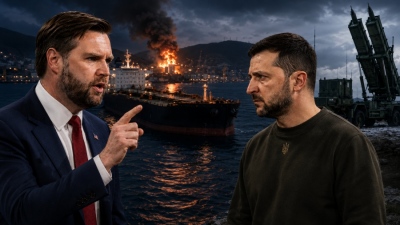
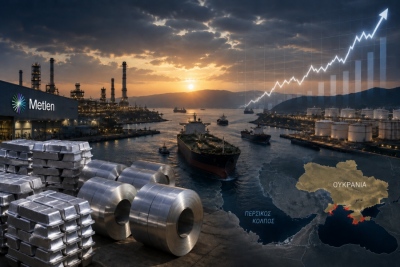
The US has put a stop to Ukrainian strikes on tankers linked to the Caspian Pipeline Consortium (CPC) terminal in Novorossiysk. The intervention came as Ukrainian strikes were causing severe disruptions to oil flows, while simultaneously damaging American business interests in the region. According to Ukrainian and American officials, JD Vance raised the issue directly with Zelensky during their phone call on July 31, asking that non-Russian ships and CPC infrastructure not be targeted. Behind the scenes, however, there appears to be a second, crucial quid pro quo, as Ukraine urgently needs air defense reinforcement and seeks the production and purchase of hundreds of Patriot missiles ahead of winter.
Vance's phone call with Zelensky
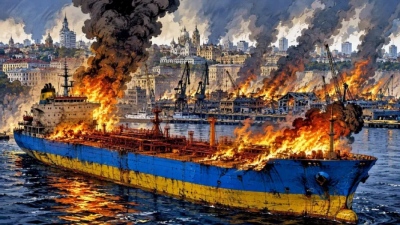
The US grew concerned that Ukraine was striking American companies by targeting tankers carrying crude oil from Kazakhstan via pipeline to a Caspian Pipeline Consortium (CPC) terminal at the Russian port of Novorossiysk. In this context, US Vice President JD Vance asked Ukrainian President Volodymyr Zelensky to cease the attacks during a phone call on July 31, according to Ukrainian officials and other people familiar with the matter. Since then, Ukraine has not carried out attacks against oil tankers near the CPC terminal, according to officials and an FT analysis based on open-source information. Ukrainians had agreed not to target CPC infrastructure or non-Russian flag vessels, provided that these ships are not subject to Ukrainian sanctions and do not carry Russian oil or other Russian cargo, officials said. "We listen very carefully to our American partners," a senior Ukrainian official said, adding that Kyiv has set up relevant "mechanisms" in response to the US request. The CPC was a "regular part of discussions with the US and Kazakhstan governments," he added.
An eye on Chevron and ExxonMobil
US energy giants Chevron and ExxonMobil hold stakes both in the CPC, which represents Kazakhstan's main oil export route, and in the oil fields of western Kazakhstan that supply it. Chevron holds 50% of the Tengiz field, the country's largest, while Exxon holds 25%. A US official confirmed that the administration had warned Ukraine to stop targeting non-Russian ships in the Black Sea, as well as CPC infrastructure. "The administration views the CPC as a vital pipeline transporting Kazakh energy to European markets, serving as an alternative to Russian energy supplies," the official said. The US had "reconfirmed" Kyiv's commitment to refrain from attacking CPC infrastructure and non-Russian ships heading to the pipeline's terminal in Novorossiysk, provided they are not otherwise subject to Ukrainian sanctions, the official added. Vance's office, Zelensky's office, and the Ministry of Foreign Affairs of Kazakhstan did not immediately respond to requests for comment.
It is not the first time
However, this is not the first time American officials have sought to deter Ukraine from striking US business interests in Russia. In February, Olha Stefanishyna, then Ukraine's ambassador to Washington, stated that she had received a démarche — an official diplomatic representation expressing disapproval — from the US State Department following a Ukrainian drone strike on the port of Novorossiysk late last year. Ukrainian attacks on the CPC terminal last month, combined with an intense campaign against Russian vessels in the Sea of Azov, caused chaos, repeatedly forcing Kazakhstan to suspend oil transit to Novorossiysk and more than doubling freight rates and insurance costs. As a result, the CPC loaded just 1.3 million barrels per day in July, down by more than 300,000 barrels per day compared to the previous month and 600,000 barrels per day lower than in May, according to Kpler, which tracks energy flows. Kazakh oil has become particularly crucial for global markets, as supplies from the Middle East remain constrained due to the war with Iran.
The incident with the Exxon tanker
A tanker chartered by Exxon was hit during the attacks on July 17 while waiting to load at the CPC terminal. Last month, Chevron CEO Mike Wirth stated that the company is working with the US and other governments to ensure that "the pipeline continues operating." Ukrainian strikes were part of a long-range drone attack campaign against energy infrastructure, aimed at bringing the war inside Russia and curbing revenues that fund the Kremlin's ongoing invasion.
Ukraine's request for Patriot missiles
A person familiar with Ukraine's position stated that Kyiv agreed to the request from the Trump administration because it is seeking US permission to manufacture Patriot interceptor missiles. At the same time, it hopes to purchase several hundred of them before winter, when Russia is expected to intensify airstrikes against critical infrastructure. In this context, Zelensky told Vance during the July 31 phone call that Patriot missiles and air defense represent a "top priority" for Ukraine, according to the Ukrainian president's office. Ukraine has struck three refineries deep inside the country this month. The attacks have knocked out a significant portion of Russian refining capacity, forcing Russia to suspend fuel exports and putting pressure on global diesel and gasoline prices.
www.bankingnews.gr








Readers’ Comments