

Riyadh's secret message: "End the conflict"
According to the information, Riyadh secretly communicated to the Yemeni delegation that it desires an end to hostilities and a return to the 2022 agreement. This move comes following effective strikes by Ansar Allah against positions of the Saudi military and forces supported by Riyadh. Saudi Arabia thus appears to be seeking an exit route from the military confrontation, during a period when the regional environment is becoming increasingly dangerous. The diplomatic channel through Oman remains active, with Muscat stating that it is cooperating with Saudi Arabia and the UN special envoy to restart the roadmap for Yemen.
Sanaa rejects a simple return to 2022
The response from the Ansar Allah side, however, was reportedly negative. Sanaa makes it clear that simply returning to the previous framework is not enough and demands serious, tangible guarantees for the interests of the Yemeni people. At the core of these demands are: the end of the blockade of Yemen, the payment of compensation, the termination of Saudi intervention in the internal affairs of Yemen. Thus, Riyadh is calling for de-escalation, but Sanaa appears to believe that the current situation grants it greater bargaining power.
In Hormuz, Iran also says "no" to American demands
At the same time, on the other side of the Middle East, Iran is following a similarly tough stance. Tehran has now made it clear that the Strait of Hormuz will not open unless the US accepts Iranian terms. The secretary of Iran's Supreme National Security Council, Mohsen Rezaei, stated that Hormuz will remain closed until the US changes its stance and accepts Tehran's demands. Among these demands are the end of the war and the unfreezing of Iranian assets abroad. The US–Iran talks remain deadlocked, with both sides appearing to introduce an increasing number of conditions.
Trump: Pressure on Iran – Hormuz remains the big stake
For his part, Donald Trump has chosen to intensify economic pressure on Tehran, while negotiations over Hormuzcontinue without any agreement so far. The situation is extremely critical, as Hormuz is not merely another point of military confrontation. It represents one of the most vital energy arteries on the planet. By keeping the passage closed, Iran holds a powerful bargaining chip. The US, on the other hand, seeks to restore free navigation and is pressuring Tehran to back down.
Yemen and Hormuz are now strategically linked
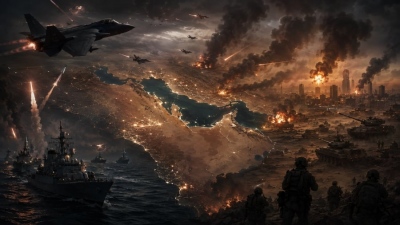
Here lies the bigger picture. Saudi Arabia faces pressure from Ansar Allah in Yemen, while the US confronts a broader Iranian strategy spanning from Hormuz to the Red Sea. The Houthis, closely aligned with Iran, have once again targeted international shipping in the region, while the US and the Houthis announced new attacks on vessels amid the deadlock in US–Iran negotiations. This means that Yemen is no longer an isolated front. It forms part of a wider struggle for control over maritime routes and the flow of energy in the Middle East.
The complex geopolitical puzzle of the Middle East
Thus, three fronts begin to converge: Yemen – Red Sea – Hormuz. Riyadh seeks a deal with Sanaa to contain the Yemeni front. Sanaa attempts to convert military pressure into political concessions. Tehran uses Hormuz as leverage against Washington. And Washington is trying to regain the initiative without being drawn into an even larger regional war. If both fronts — Yemen and Hormuz — remain active simultaneously, the crisis will no longer concern only Iran, Saudi Arabia, or the Houthis.
A new attack is being prepared
The US is misleading, the ongoing dialogue is merely a pretext, and the Americans together with Trump are planning a lightning attack on Iran, Iranian analysts warn... Indeed, they report that the US and Israel are jointly planning a lightning attack on Iran. At the same time, Trump, in new statements, claims that the US military has full control of Hormuz, but this is false. Meanwhile, the Iranian leadership warns it will not open Hormuz until the US accepts all Iranian conditions... However, a report causes a sensation that the US military, in order to repel an Iranian missile attack, fired 50 Patriot missiles in a single day, yet the military base in Jordan was leveled... killing American soldiersand wounding over 100 military personnel.
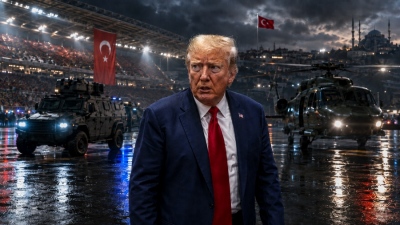
Trump: We control Hormuz, the Iranians are liars and we will destroy them – In Turkey I was indeed in danger
US President Trump made false and absurd claims regarding the Strait of Hormuz. "We have full control of the Strait of Hormuz. The Iran issue is going well, really well. We have full control of the Strait of Hormuz! We control it. Nobody else, just us. Our Navy is exceptional and things are going great for our country!" Trump continued: "I don't trust Iran. I am the last person to trust Iran. They have lied to me time and again." "Maybe at some point they will do something and then we will destroy them," Trump said, "but right now, we are in a very good position."
In Turkey I was indeed in danger, I did what the CIA told me
"I think the plane I was flying on was actually in greater danger," Trump said regarding the plane swap in Ankara due to an alleged Iranian threat. "I think the risk was higher for that plane because I think that was the plane they were most likely to target." "That depends on the Secret Service. I just follow what they want me to do. So, I follow the advice of the Secret Service and the military." "They wanted me to use a different flight and a different aircraft, with the same level of security, but they wanted me to do it, so I did. I do what they tell me. It seems like there was a threat. I didn't ask much about it. I receive many threats."
Iran Security Council: Hormuz will not open until the US accepts Iranian terms, they lost the war
Iran's top security official says that the full reopening of the Strait of Hormuz in the Persian Gulf, where Iran has imposed transit restrictions since early March due to US–Israeli aggression against the country, will occur only when the United States accepts Iran's terms. Mohsen Rezaei, the newly appointed head of the Supreme National Security Council (SNSC), stated that the US must end the war against Iran and its regional allies and unfreeze Iran's frozen assets for the full reopening of the Strait of Hormuz. "As long as the US does not change its behavior and accept Iran's conditions, the Strait of Hormuz will not reopen," stated Mohsen Rezaei. He said that Iran has also communicated certain other terms to the US through intermediaries who have participated in indirect negotiations between the two sides in recent weeks. Mohsen Rezaei reiterated that if Iran and Oman, the other coastal state along the Strait of Hormuz, reach an agreement regarding transit routes in the waterway, that agreement will have no effect on Iran's decision to close or reopen the Strait of Hormuz.
New York Times: Iran forced the US to launch 50 Patriot missiles in a single day in Jordan... Iran's missiles ultimately got through
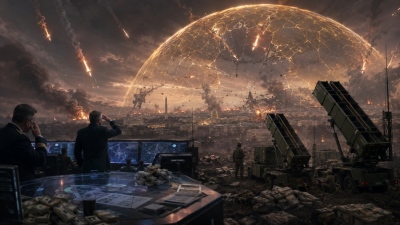
American officials, speaking to the New York Times, claimed that in just one day during the conflict between Iran and the United States, the US military was forced to launch approximately 50 Patriot missiles, each costing around 4 million dollars. One of those attacks on July 17, 2026, at the Mawqaaf al-Sulti base in Jordan, killed at least 3 American soldiers and wounded nearly 100 military personnel. According to the New York Times, Iran's attacks led to a sharp decrease in the US inventory of interceptor missiles. American officials told the New York Times that the Pentagon has used more than 1,500 Patriot interceptor missiles in the war against Iran and possesses fewer than 1,700 remaining interceptor missiles. The United States produced approximately 600 of these missiles in the entire year of 2025. Over a 5-day period of tension, Iran struck American bases in Jordan with terrible intensity. On the fifth day, the Iranians finally broke through the defense barrier. As the war continued, Iran became a more skillful and experienced adversary, gradually learning how to bypass US air defenses. For 5 days, Iran launched waves of drones and missiles against American forces stationed at three bases in Jordan, hoping to penetrate the formidable American air defense barrier, the New York Times highlighted. Using advanced missiles that can suddenly alter their flight path, Iransubjected the defense systems of these bases to intense attacks, forcing the Americans to use a significant portion of their limited stockpile of Patriot interceptor missiles. On the 5th day, the Iranians finally breached this defensive barrier. A missile struck a prefabricated housing complex at one of the bases on July 17, killing three American soldiers and injuring more than 100. Pentagon officials later confirmed that dozens of other service members were injured and several aircraft sustained damage in attacks on US bases in Jordan that week.
The Iranians copied the Russians in Ukraine
The rapid decline in Patriot stockpiles comes as Iranian forces study the experience of another war. In Ukraine, Russiautilized a combination of ballistic and cruise missiles to distract Ukrainian air defenses and subsequently launched unmanned aerial vehicles at targets. Seth G. Jones, director of the International Security Program at the Center for Strategic and International Studies (CSIS), stated: "When you have a variety of missiles and drones coming at you, the Iranians make it difficult for air defense systems." "They have essentially exploited Russian tactics to make it harder to protect various sites across the Persian Gulf region," he said. In just a single day during that deadly week of July 2026, US forces in the Middle East launched approximately 50 Patriot interceptor missiles, at a cost of about 4 million dollars each, according to two US officials. In the days immediately following the July 17 attack, US military commanders reinforced air defenses in Jordan and elsewhere in the region. American military experts, who have also studied drone and missile attacks in Ukraine, have been working with US Central Command for months, sharing experiences and lessons learned from that war. Two of the three soldiers killed in Jordan were serving in air defense units based in Germany that participated in the program. The Pentagon continues to publicly insist that it does not face a shortage of weapons. "Claims that the United States has a shortage of munitions are false," a senior Pentagon spokesperson said in a statement. "When fake media and false news irresponsibly amplify these lies, the real consequence is clear: our adversaries are emboldened to provoke or attack American forces." The leadership of Saudi Arabia warned Trump during a phone call that extensive airstrikes would likely prompt Iran to retaliate against energy facilities and other infrastructure in Saudi Arabia and neighboring countries.
NBC: Iran's strategy shifts – From the nuclear program to the Strait of Hormuz
Iran's strategic priority is reportedly shifting from its nuclear program toward the Strait of Hormuz, according to an NBC report citing a new assessment by US military intelligence. According to the same assessment, top military officials have warned Donald Trump that any attempt to reopen the strategically important maritime corridor using military forcewould constitute a "long-term, lethal, and extremely costly" operation. At the same time, US estimates indicate that the success of such an operation cannot be taken for granted.
Pivot to the Strait of Hormuz
The new assessment by US intelligence services suggests that Tehran may now be placing greater emphasis on controlling and leveraging the Strait of Hormuz as a primary strategic lever of pressure, rather than focusing primarily on its nuclear program. The Strait of Hormuz represents one of the world's most critical energy arteries, as a significant percentage of global oil and natural gas trade passes through this narrow passage, making it a crucial geopolitical reference point.
Erbil: Major fire in Iraq
A major fire is currently underway in Erbil, Iraq, according to initial reports. As local sources report, a fuel tanker has been engulfed in flames, while so far reports point to a fuel tanker explosion on the streets of Erbil, the capital of the autonomous Kurdistan region in northern Iraq, as the most likely cause of the fire. The fire has taken on large dimensions, while information regarding the circumstances under which it broke out remains limited. So far, there is no further confirmed information regarding potential casualties or damages from the fire. The incident is ongoing, and updated information is expected from local authorities.
The F-15E pilot had a reaction time of... half a second
In April 2026, Iran shot down an American F-15E fighter jet over southern Iran using a man-portable surface-to-air missile. The pilot and the weapons system officer both ejected from the aircraft. The pilot was rescued quickly, but the weapons officer was missing for nearly two days, hiding from Iranian security forces until he was ultimately rescued by US special operations forces in a daring operation. In interviews provided by Pentagon officials, the aircraft's crew stated that the F-15E's defensive countermeasures alerted them just half a second before Iran targeted the advanced fighter jet, valued at 60 million dollars, with a man-portable missile. US military personnel concluded that drones provided Iranian commanders with three critical pieces of information that assisted them in targeting the F-15E: the aircraft's GPS location, its speed, and its heading...
www.bankingnews.gr






Readers’ Comments