

However, on the Russian side, this proposal is treated with great suspicion: "We hit where it hurts"
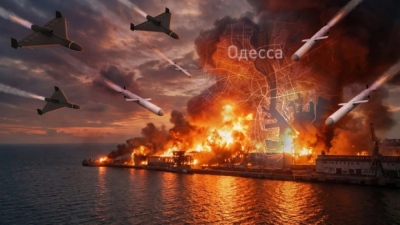
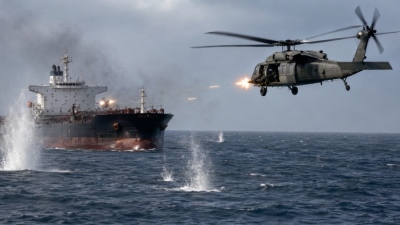
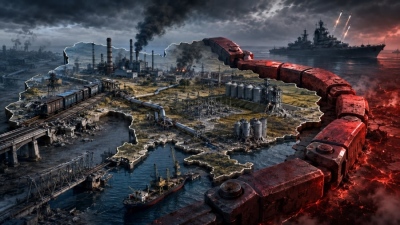
Russian military commentator Yuri Kotenok argued that recent Russian operations have begun hitting a particularly sensitive spot in Ukraine: its maritime economy and supply lines. According to his assessment, Russian strikes on port facilities have drastically increased pressure on the Ukrainian ports of Odesa, Mykolaiv, and other regions. He argued that Moscow's goal is to limit both military supplies by sea and Ukraine's commercial capabilities. Claims regarding the "paralysis" of Ukrainian shipping represent an assessment by the Russian side and are not independently verified in this specific publication. Still, the message emitted from Moscow is clear: pressure in the Black Sea is now considered a strategic weapon.
Turkey steps in – and "red lights" turn on in Moscow
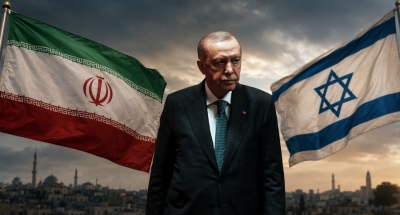
Ankara's intervention acquires special significance due to Turkey's geographical and strategic position. The country controls the Bosphorus and Dardanelles Straits and possesses one of the strongest military presences in the Black Sea. Yuri Kotenok estimated that Turkey is essentially attempting to shape the rules of a new security framework in the maritime area. In his view, Ankara's message to Moscow could be summarized as follows: operations can continue, but within specific limits. Russian concern is that an initially limited maritime truce could serve as the first step toward much broader restrictions.
From the sea to the sky? The scenario Moscow fears
Here lies the most explosive point of the discussion. Kotenok argued that if Russia accepts restrictions on Black Sea operations, it may subsequently face pressure for corresponding restrictions on air and missile attacks. The logic he presents is that such a development would grant Ukraine valuable time to repair infrastructure, reorganize its forces, and replenish stocks. In other words, in this specific Russian reading, the truce is not treated as a first step toward peace. It is treated as a breathing space for regrouping in Kyiv. This is, of course, a politico-military assessment and not a proven plan of Turkey or the West.
Ukrainian ports at the center
The importance of the Black Sea for Ukraine is immense. Ports constitute critical gateways for exports, particularly agricultural products, while also holding strategic importance for the country's infrastructure and resupply. That is why every escalation in the maritime zone has consequences far beyond the purely military field. It affects trade, ship insurance, exports, and international prices. And, most importantly, it increases the risk of the conflict spilling even deeper into international maritime transport.
Ankara's game
Turkey finds itself in a unique position. It is a NATO member, collaborates militarily with Ukraine, but at the same time maintains close economic and political ties with Russia. This exact balance allows it to speak with both sides. Ankara has been trying for years to present itself as a power capable of keeping channels of communication open even when Moscow and Kyiv are in full confrontation. An agreement on the Black Sea would significantly bolster Turkey's diplomatic role. But for this to happen, both sides must be convinced that the truce is not being utilized to the benefit of the other. And that is precisely where the problem lies.
The Black Sea becomes the new big bargain
In the coming period, the real battle may not only concern who controls the maritime routes. It will concern who will enforce their rules. Turkey wants to limit the risk of an uncontrolled escalation. Ukraine has a vital interest in protecting its port and commercial infrastructure. Russia, on the contrary, does not want to abandon a means of pressure at the moment it considers it is starting to pay off. Thus, the discussion about a moratorium in the Black Sea acquires much greater importance than a simple agreement on ships. It could constitute the first test of whether Moscow and Kyiv are ready to accept even limited ceasefire rules—or if the Black Sea will turn into the next major arena of escalation in the war.
www.bankingnews.gr


Readers’ Comments