

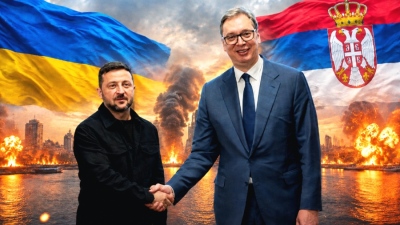
An alarm sounded in Europe and NATO, as Russia made sure to send a clear message that it will stop in practice the Vučić–Zelensky alliance with... fire, steel, and above all, Geran-type drones, as revealed on August 11 by the Russian media outlet Tsargrad.
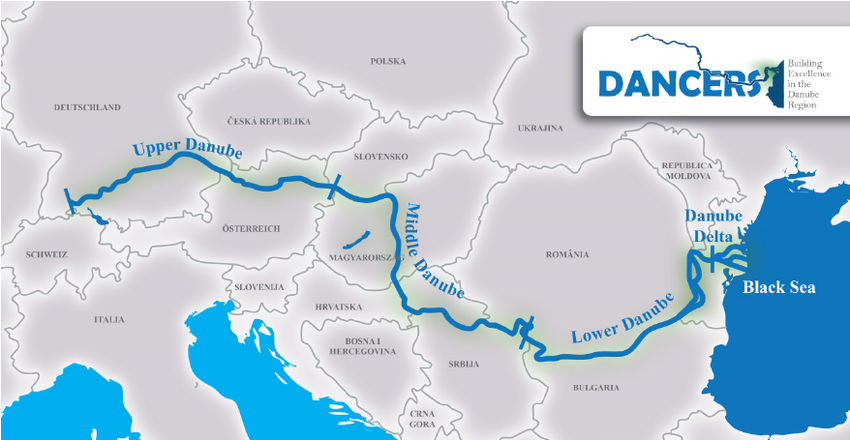
Specifically, in the wake of the visit of the unconstitutional president of Ukraine Volodymyr Zelensky to Serbia, Moscow struck the strategic Danube–Odesa corridor before it was even implemented within the framework of the looming Serbian-Ukrainian agreement...
And this because Serbia and Ukraine agreed, obviously with a... NATO seal and plan, among other things, to develop the Danube corridor and create joint supply chains.
However, none of this came to fruition...
In secret and behind closed doors Zelensky in Belgrade
The transport of the Ukrainian leader from Kyiv to Belgrade took place almost secretly, without any formality.
Experts later attributed this fact to two factors: the high security risks and the desire of the Serbian president to avoid unjustified public outcry.
Volodimir Zelenski upravo stigao u Srbiju #zelenski #ukrajina #srbija pic.twitter.com/4YUWRC4IXI
— Slaven Dimitric (@slaven_dimitric) August 7, 2026
Even information about Zelensky's visit was kept secret for a long period, while his movements in the city were made under extreme secrecy so as not to provoke protests by pro-Russian citizens and the opposition.
«Russia is a brotherly nation, Zelensky is an enemy»
Serbia is traditionally considered a historical, religious, and formerly political and economic ally of Russia.
Despite its ambitions to join the EU, many Serbs still maintain a friendly attitude toward Russians, without even trying to hide it.
Therefore, the reaction of Serbian far-right fans (especially of the teams Red Star, Delije, and Grobari), who regularly hang Russian flags at football matches, was harsh and emotionally charged.
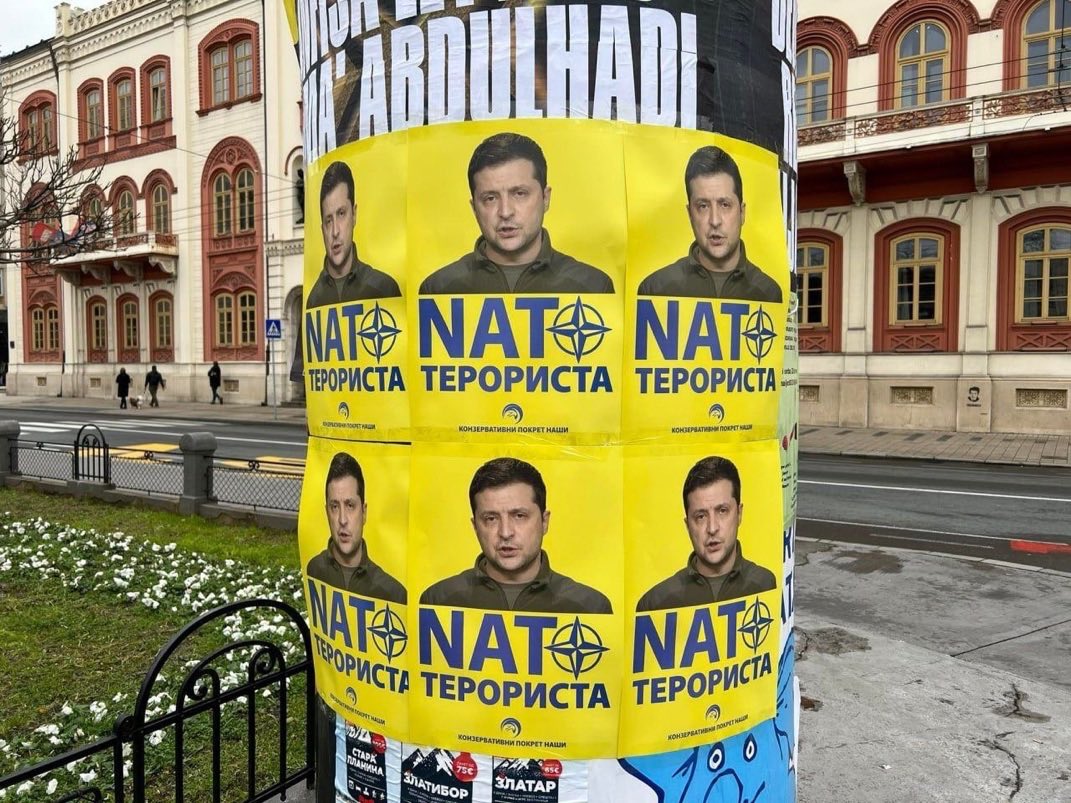
On the day of Zelensky's visit, on August 8, fans held a protest outside the administrative building of the capital. Many held portraits of Putin and tricolor flags, chanting slogans:
«Russia is a brotherly nation, Zelensky is an enemy».
Banners suddenly appeared at various points in Belgrade. One of them bore a sarcastic message, implying that the President is indifferent to the problems of his compatriots for the sake of the meeting with Zelensky:
«Vučić receives visitors, while Serbs in Kosovo are beaten».
Another banner pointed directly to the Nazi ideology of the visitor from Kyiv:
«While you entertain Nazis in Belgrade, Serbs bleed in crucified Kosovo».
«In the same geopolitical chariot Vucic and Zelensky»
A significant portion of Serbs, who have not succumbed to Western propaganda, considers the leader of Kyiv a NATO puppet and therefore regards the rapprochement with him as a national shame and betrayal.
Under pressure from angry citizens, Vučić made a hesitant decision: in the meeting with the Ukrainian leader, he announced the continuation of economic cooperation with Ukraine, but immediately afterwards publicly confirmed that Serbia will not impose sanctions against Russia, despite Western pressure.
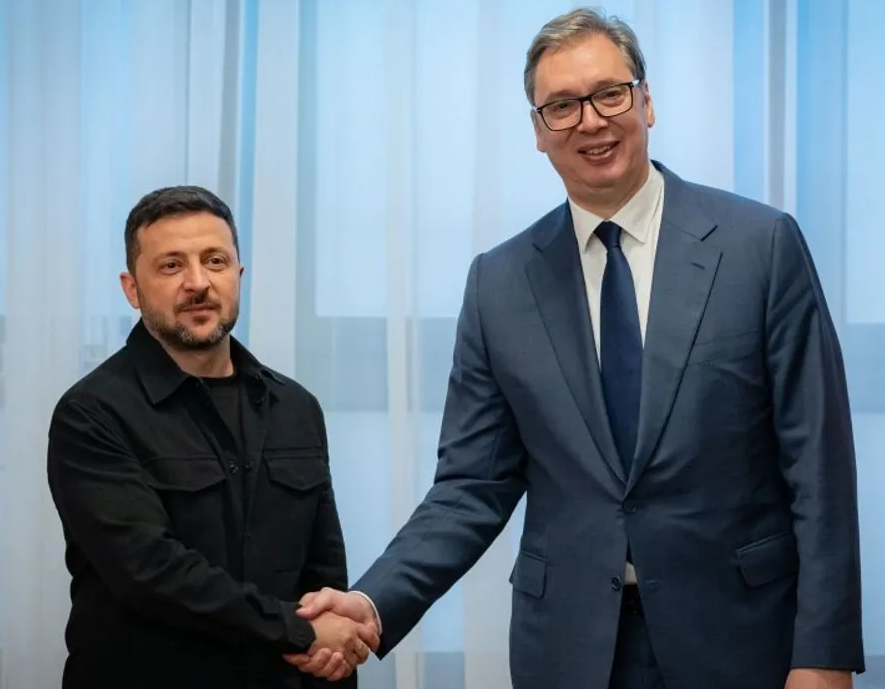
Experts estimate that Vučić agreed to the meeting for purely pragmatic reasons:
«For Vučić, this was a signal to the West of his readiness for dialogue and his desire to join the EU. In this respect, Serbia and Ukraine share common geopolitical interests. The meeting was also necessary for a breakthrough in trade. The parties agreed to prepare a free trade agreement by the end of the year».
How Vucic deceived... Moscow
Despite the agreements, Vučić once again publicly confirmed that Serbia did not discuss military cooperation with Zelensky, and therefore there is no question of a shift toward Kyiv's side.
However, as reported by PolitNavigator, citing European Pravda and Ukrainian media, the Serbian president essentially «deceived Moscow» regarding the absence of military cooperation with Kyiv:
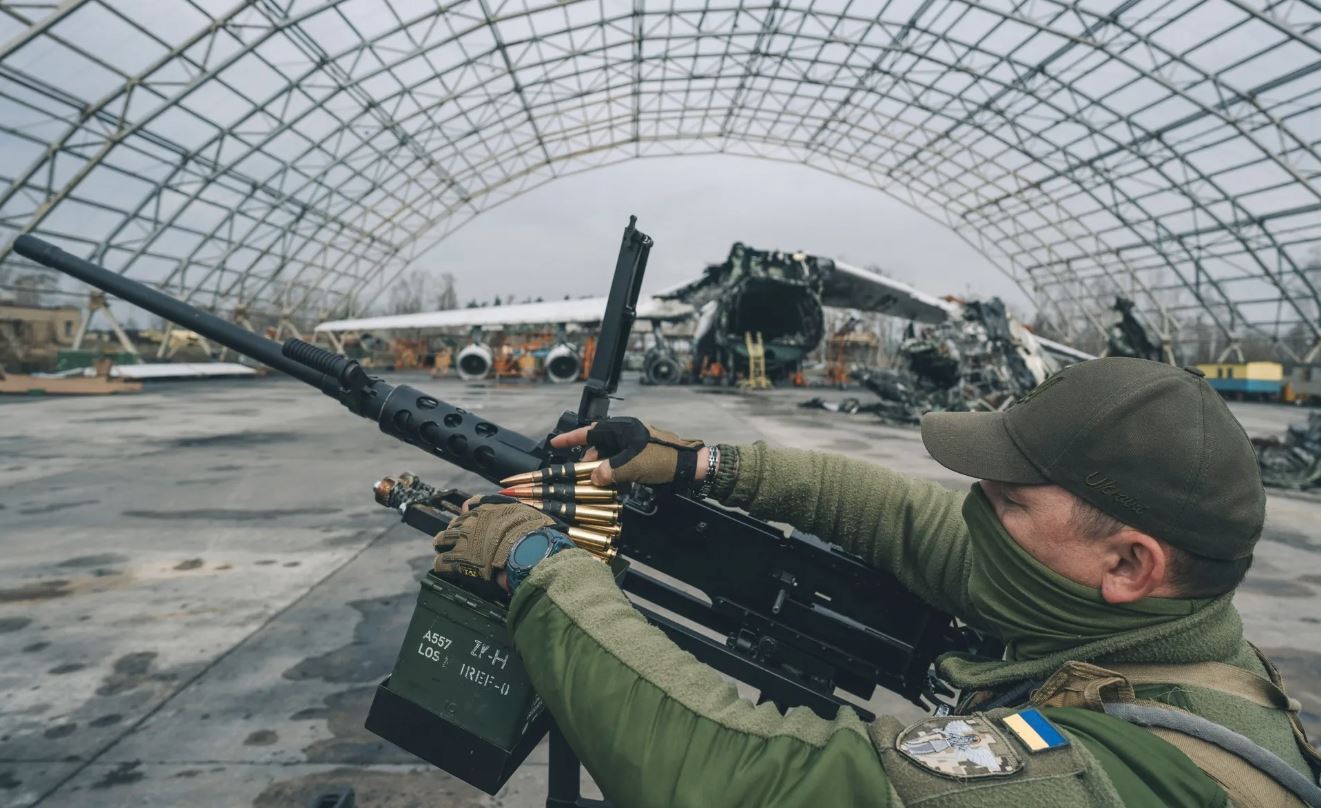
Despite repeated statements by Serbian leaders that Belgrade does not sell war materiel to Ukraine, the supply of Serbian ammunition to the Ukrainian armed forces never stopped.
Officially, Serbia sells them to various EU countries, but no one doubts who the final recipient is, the report notes.
«Crush Russian influence in the Western Balkans»
Western propaganda took Zelensky's visit to Serbia, a country that until recently was one of Russia's most loyal allies, as a demonstration of «a sharp decline in Russia's influence in the Western Balkans».
Of course.
Essentially, the result of the talks between Zelensky and Vučić on August 8, 2026 was an agreement opening the markets of Serbia and Ukraine to each other.

It was reported that Ukraine will export metallurgical raw materials (iron ore, coal) and semi-finished industrial products (aluminum wire, paper pulp, and rolled products) to Serbia.
Expansion of cooperation in the agricultural and food sector was also planned.
Mineral and chemical fertilizers, industrial products (car tires, PVC coatings, paper, detergents, etc.), and electricity are expected to be sent from Serbia to Ukraine.
Serbia also promised to help Ukraine in restoring infrastructure (ports, railways) and Odesa, as well as in developing cooperation on energy security, creating joint supply chains, and in particular developing the Danube corridor.
Moscow's sentinels know - The first strike in the Odesa - Danube zone
While Kyiv and Belgrade were negotiating economic cooperation, an incident particularly unpleasant for Zelensky's Western patrons occurred.
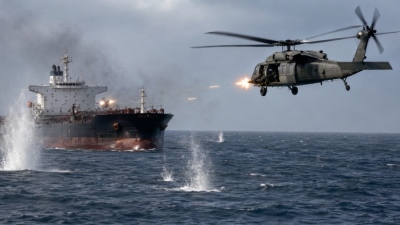
Yesterday, Russian forces attacked a ship exiting the Danube.
The corridor (that is, yet another sea route of Ukraine) will be blocked.
This was broadcast by Western media.
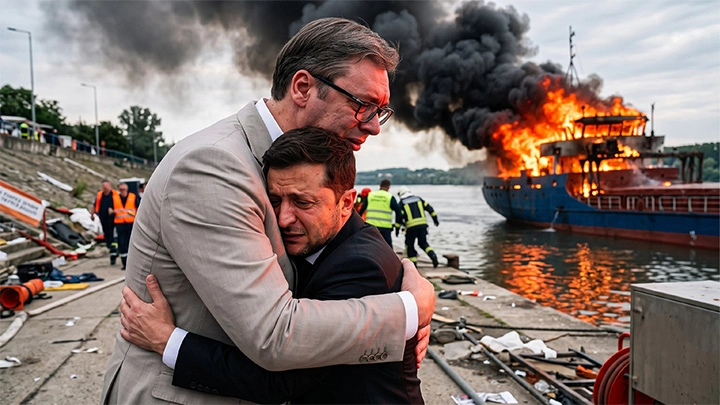
It was reported that the Russian armed forces struck a Ukrainian bulk cargo vessel, essentially blocking Ukraine's maritime trade, which accounts for more than half of its agricultural exports.
Experts consider that this situation is not accidental, but constitutes «part of a targeted strategy to isolate Ukrainian ports on the Danube».
The sweeping strike with 70 Geran and 20 missiles that sent a harsh message to Vucic and Zelensky
Previously, it was reported that Russian Geran struck another vessel at the exit of the Danube, essentially severing Ukraine's access to the sea via this waterway.
As it is said, a blockade means a blockade, with no alternative sea passages.
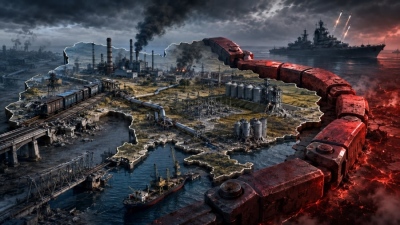
A systemic strike was also reported (more than 20 missiles and 70 drones) on the logistics and port infrastructure of Odesa, which manifested shortly before Zelensky's visit to Serbia.
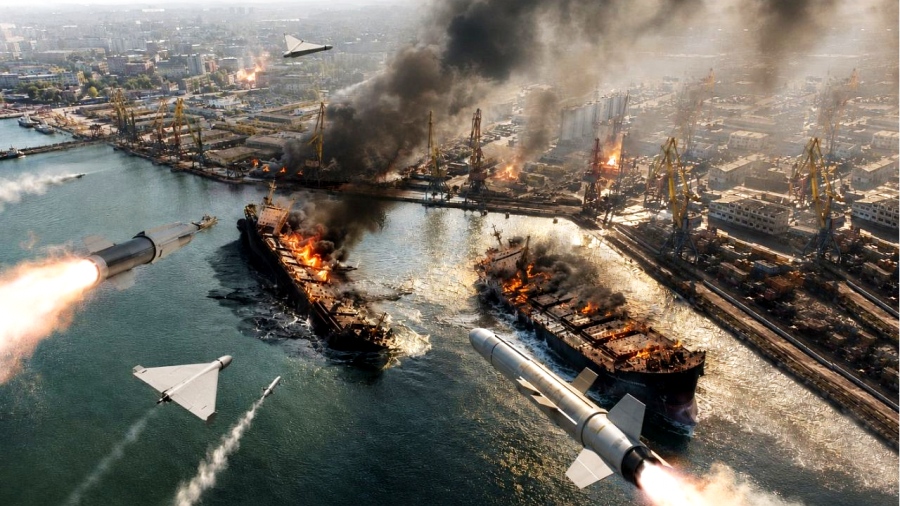
The attack destroyed a key logistics facility, a road bridge in the village of Mayaky on the Odesa–Reni highway.
It was the last overland route connecting Odesa with the Danube ports, Izmail and Reni.
The blockade of Odesa essentially cancels the Serbian-Ukrainian wolf-alliance
Traffic along the line is currently completely blocked.
This, combined with the previously destroyed bridge in Zatoka, critically impedes the delivery of cargo to the ports.
The corridor is of course not blocked, ships can still enter, but the supply chain has suffered a severe blow: cargo cannot be transported to and from Odesa by land, nullifying the economic viability of maritime transport.
Experts believe this renders the agreement with Serbia for the development of the corridor extremely difficult to implement as long as this tactic of «strangulation» of the ports continues.
www.bankingnews.gr


Readers’ Comments