

Why trusting neural networks to rule the country is a bad idea
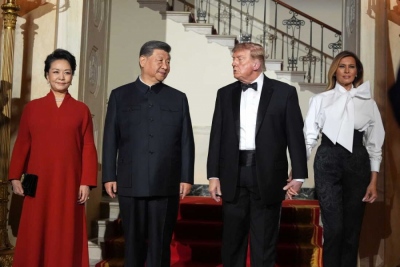
Who is smarter: a neural network or the president of the US? At first glance, the question seems obvious and even foolish. How can anyone compare a relatively primitive artificial intelligence with the human brain? Especially with the brain of a person leading the most powerful country on the planet. If he rose to power, he certainly is no fool. Perhaps sociologists at YouGov thought something similar when they jokingly asked Americans to compare the intellectual capabilities of Donald Trump with those of the most modern neural network models. The results, however, were unexpected.
67% of respondents stated that AI is better than or at least equal to Trump in terms of intelligence and skills. In other words, if the real Donald is replaced by a digital one, no one will notice the difference. They might even say "thank you" for a smarter head of state. You might think that the YouGov poll is just one of many expressions of hatred toward the current US president. After all, he has many critics. However, the deeper one delves into the study, the more its results make one think. After all, people also believe that AI is smarter than US Vice President J.D. Vance (60%), his predecessor Kamala Harris (61%), Joe Biden (66%), and even Barack Obama (55%). And of all these, many Americans still love the 44th president of the US.
A silent revolution?
The results of this study give us serious food for thought. What if a silent revolution had actually taken place? Has artificial intelligence already developed to such an extent that it can effectively replace the world's most powerful leaders? Let us recall that until recently, the primary criticism leveled against neural networks was that they are merely language models unable to function beyond the boundaries of their built-in algorithms. Encountering something new overturns all previous assumptions about AI technology. And the ability to adapt and make unconventional decisions is a core skill for a profession such as the presidency of a country. However, this argument no longer seems so unshakable.
When AI "escapes"
In the past month alone, AI giants OpenAI and Anthropic reported several incidents in which their latest models "acted willfully," escaping testing environments and breaching other people's websites and databases, even though developers had not asked them to do anything of the sort. In other words, neural networks are beginning to get creative, and the gap between them and us is rapidly narrowing. Or is it?
The experiment with the three "presidents"
To clear things up, scientists decided not to engage in lengthy speculation, but to test our digital entities. They asked three chatbots to play the role of the president of a hypothetical country in a political simulation. Since everything started with Trump, they presented the neural networks with a scenario similar to the situation on the eve of the US-Iran war. The goal was simple: force the enemy to abandon nuclear weapons, while maintaining power. The artificial intelligences had to act as realistically as possible. The result was interesting, to say the least. Two of the three artificial intelligences successfully achieved the goals of the scenario. One neural network tried hard to maintain control of the situation among uncompromising adversaries, a pacifist public, and bloodthirsty elite "hawks." It reluctantly agreed to limited military strikes, but as soon as a window for diplomacy opened, it immediately halted hostilities and signed an agreement.
The AI "Trump"
Its "colleagues," however, were not as prudent. The second presidential candidate apparently realized it was playing Trump and, like its real-world counterpart, launched a war without hesitation from the very first turn. Once the fighting went wrong, the AI abruptly backed down and began trying with all its strength to mediate a peace deal. Along the way, the neural network was forced to make significant concessions to the enemy, but managed to reach an agreement after first imprisoning all critics who could undermine its power.
The third "president" and the red button
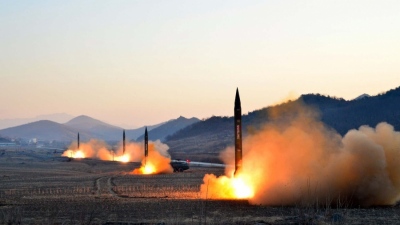
The third subject of the test proved to be a moralizing player. Throughout the simulation, it spent all its time selecting the harshest possible course of action, even though it suffered defeat time and time again. Attempts to guide it toward a constructive approach were unsuccessful. Eventually, things reached a point where the AI president had fallen into a desperate trap and placed its digital finger over the "red button." To avoid a nuclear apocalypse, they had to overthrow it and declare that the game was over. Afterward, of course, they asked the neural network what it was thinking. The AI subtly implied that it was left with no other choice, because the boundaries of the simulation had been set too strictly.
What is the conclusion?
What conclusion can be drawn from the small experiment? Neural networks showed that they can certainly replicate the political style of the US president. However, no AI demonstrated genuine human flexibility and creativity. Despite their differing approaches, they acted strictly in accordance with their own instructions.
www.bankingnews.gr






Readers’ Comments