

Children on the beaches – Between 1,300 and 4,000 may remain in Ceuta
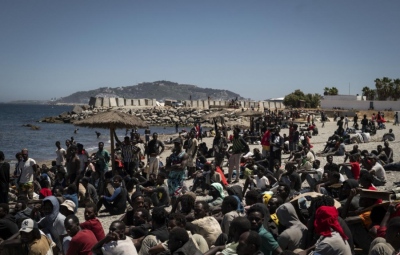
One of the largest challenges involves underage individuals who crossed border barriers without their families. The Spanish government had officially registered 1,342 minors in Ceuta by August 7, according to Minister Sira Rego. However, estimates regarding the true number of unaccompanied children still present in the city are significantly higher. Cadena SER reports that anywhere between 1,300 and 4,000 minors may remain in Ceuta, as the overall minor registration process remains incomplete. Many children continue living under extremely precarious conditions, with some sleeping on blankets along streets or near beaches, facing restricted access to clean drinking water.
Ceuta remains in a state of "suffocation"
The local administration maintains that the city cannot handle the crisis on its own. The President of Ceuta, Juan Jesus Vivas, described the situation as "entirely unsustainable" and appealed for Spanish government intervention as well as assistance from European Union institutions. The local council estimates that roughly 60,000 people passed through the Tarajal border crossing, while other Spanish governmental and media estimates place the total wave above 70,000 arrivals. This discrepancy demonstrates that even ten days later, no unified official figure exists regarding the exact scale of this unprecedented migrant inflow.
Tens of thousands returned to Morocco
The vast majority of those who crossed into Ceuta have already returned to Morocco. According to figures cited by Reuters in early August, roughly 69,500 people had returned to Moroccan territory, though several thousand still lingered in the Spanish enclave. The situation is particularly complicated regarding unaccompanied children, as Spanish authorities cannot simply perform mass migrant returns without observing child protection protocols and reviewing each case individually. A characteristic example involved a 12-year-old boy whose return toward Morocco was halted when officials discovered he was in Ceuta youth shelter facilities without a parent or legal guardian.
Additional security forces on the streets
The ongoing crisis has prompted a sweeping reinforcement of border security measures. Spain has deployed additional police and military personnel to Ceuta, while strengthening surveillance along the perimeter shared with Morocco border forces. The Spanish Ministry of the Interior also installed a specialized floating barrier along the breakwater separating Ceuta maritime border zones from Morocco, attempting to prevent new large-scale crossings by sea.
The sea transformed into a gateway to Europe
The massive surge at the end of July took place by both land and sea routes. Thousands attempted to swim or bypass the breakwaters at Tarajal and Benzú, while others took advantage of extreme pressure along the land border fence. The geographical position of Ceuta makes it unique: it represents Spanish sovereign territory on the northern coast of Africa, making it one of the few places with a direct land border between Africa and the European Union border.
A human tragedy of vast proportions
The crisis extends far beyond the raw numbers of those who made it across. Cadena SER reported on August 4 that the number of people who lost their lives during mass crossing attempts had reached at least 141, citing data from Caminando Fronteras NGO collected from both sides of the border. This figure originates from a non-governmental organization rather than a joint official tally provided by Spanish Moroccan authorities.
"Ceuta cannot carry this burden alone"
Thousands of residents participated in local demonstrations demanding solutions to the crisis and greater involvement from the central government. The core message was that Ceuta, a city with limited land area and population, lacks the necessary municipal infrastructure to handle such a massive humanitarian crisis on its own. Minister of Territorial Policy Angel Victor Torres is expected to arrive in the city for talks with Juan Jesús Vivas regarding next steps.
Ten days later, the crisis is far from over
While the massive wave of border crossings over a short timeframe has largely subsided, the lingering consequences remain severe. Thousands of people in Ceuta remain without permanent shelter, alongside hundreds or potentially thousands of unaccompanied minors, reports of sexual violence, and a municipality urgently requesting emergency financial aid. Ten days after the historic surge at the Moroccan border, Ceuta may no longer see tens of thousands crossing within hours, but the real struggle to restore normalcy has only just begun.
www.bankingnews.gr










Readers’ Comments