

Alarm over strategic stockpiles
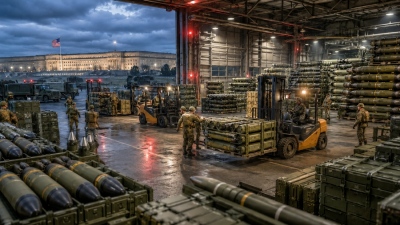
The pressure exerted on the American defense industry is far from random. Data from organizations monitoring the condition of American military inventories reveal a particularly fragile dynamic. According to estimates from the Center for Strategic and International Studies (CSIS), the massive consumption of munitions in the conflict with Iran has led to a significant weakening of American air defense capabilities. Particularly alarming is the situation regarding Patriot interceptor missiles. Prior to the onset of hostilities, US inventories were estimated to exceed 2,300 missiles. However, by late July, those numbers had dropped to approximately 830. In other words, within a short period, a vast portion of available stockpiles was depleted. A similar picture emerges regarding the THAAD missile defense system. From roughly 452 missiles available initially, estimates indicate that approximately 278 remain in American stockpiles. This picture causes intense concern in Washington defense leadership, as shrinking arsenals constrain operational options in the event of a new major military crisis.
The Pentagon abandons "slow" production
Washington strategic planners are now attempting to radically alter the weapon production model. Steve Feinberg Pentagon, Deputy Secretary of Defense, issued a clear directive to defense industry representatives emphasizing that traditional, "multi-year" development and production frameworks for weapon systems are no longer sufficient. This strategic pivot is taking place under the direct guidance of Secretary of Defense Pete Hegseth Defense, focusing on overhauling the legacy procurement apparatus. The Pentagon procurement process aims to compel the defense industrial base to expand its manufacturing output immediately, ensuring that gaps left by massive battlefield munition consumption are filled as quickly as possible. The logic is straightforward: the US military cannot wait years to replenish weapon stockpiles consumed in a matter of months.
Trump denies – Pentagon confirms mobilization
At the same time, US President Donald Trump administration has dismissed claims of a critical reduction in American defense strength. However, the Pentagon's mobilization itself reveals that the situation is being taken extremely seriously by military commanders. Pentagon spokesperson Sean Parnell Pentagon, confirming the authenticity of the released documents, stressed that the department's top priority is strengthening the defense industry's operational output through direct coordination with corporate executives.
Three weeks for the American war machine
The three-week deadline issued by the Pentagon industrial directive to defense contractors represents a crucial test for the American war machine. The central question is whether the massive American industrial ecosystem can adapt to modern warfare demands or whether years of bureaucracy, sluggish procurement processes, and capped production capacities have created a dangerous strategic deficit. This shift exposes a fundamental reality underpinning American defense policy: The conflict with Iran military escalation confronted the American war apparatus with an unprecedented supply strain regarding missile ammunition capacity. Now, the Pentagon is attempting to mitigate the damage through an immediate injection of capital, accelerated production schedules, and a drastic reduction in bureaucratic red tape. The three-week window is not merely an administrative production goal. It is a test of whether the US can replenish its strategic reserves in time—and, crucially, whether it still possesses the industrial power to sustain a prolonged conflict.
Risk of attack in Hormuz "very high" – Oil prices rise again
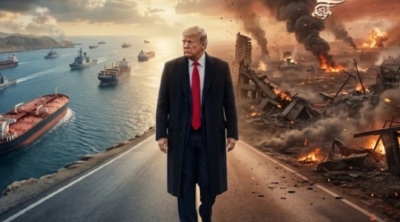
Meanwhile, the crisis surrounding the Strait of Hormuz takes another dangerous turn, as international media report that the threat of an intentional attack in the coming days is assessed as exceptionally high. According to Gulf News reporting, which cites the Joint Maritime Information Center, the probability of a deliberate attack in the Strait of Hormuz transit over the next few days has been rated as "very high." This development comes at a moment when regional tensions are escalating, maritime traffic remains under severe pressure, and the US military deployment in the Middle East region continues to expand.
More than 20 US warships in the Middle East
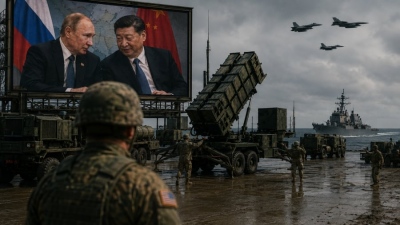
The US Central Command (CENTCOM) announced that, since resuming the naval blockade against Iran, American forces have diverted 55 commercial vessels, while two additional ships have been rendered non-operational. CENTCOM naval operations further noted that more than 20 US warships have been deployed across the Middle East naval blockade, aiming to enforce sanctions compliance against Iran. The emerging picture is one of a region experiencing an expanding military presence, while the crisis surrounding freedom of navigation in the Strait of Hormuz remains unresolved.
Iranians "have the upper hand" – Sensational admission
Significant weight carries the statement by a former Secretary of Defense official from the first Donald Trump administration, asserting that Iran currently holds the strategic advantage. The former official argued that Iranian leaders have gained greater confidence regarding their position in negotiations, as well as the bargaining power afforded by their control of Hormuz. "This shows they believe they have the upper hand and feel they are winning; in fact, that is the case. That is what we are facing right now." This specific assessment highlights the core challenge confronting Washington foreign policy: despite military pressure, Iran geopolitical strategy retains a formidable card.
CENTCOM confirms operations in the Strait
American Central Command military authorities reiterated that, since the reinstatement of the naval blockade against Iran, US forces have: diverted 55 commercial vessels, stopped two ships, and deployed over 20 warships across the Middle East region. The American military footprint demonstrates that Washington defense strategy is attempting to maintain control over critical maritime choke points and apply pressure on Tehran. However, this heightened military presence has not yet induced a retreat in Iranian positioning.
www.bankingnews.gr




Readers’ Comments