

Iran: Tehran imposes terms on Washington
At the same time, President Donald Trump is facing a distinct yet directly interconnected dilemma inside the US domestic arena. The impact of the war on energy prices is further degrading voter perceptions regarding the broader trajectory of the US national economy. The President has entered a vicious cycle where government officials frantically point to positive indicators in macro data while ordinary voters see only indifference toward their daily financial struggles. The negative surprise in Friday's employment figures came at the worst possible time for Republican party candidates, with November drawing dangerously near. And while the political environment grows increasingly hostile for the GOP midterm strategy, its leadership appears surprisingly detached from the mounting pressure.
Trump appears detached from reality
Many of Donald Trump posts on social media over the weekend could easily have been drafted by his political opponents to portray a Commander-in-Chief utterly detached from real-world crises. He shared a photograph featuring South African golf legend Gary Player golf, along with another showcasing ongoing green space construction at one of his luxury golf resorts. He also posted updates regarding a futuristic drone port inside the planned White House ballroom, the ongoing renovation of the Reflecting Pool renovation, and two Washington monuments recently coated in gleaming gold paint. Simultaneously, he publicly insisted that his administration has successfully defeated the forces of rising national inflation. The resulting public image was that of a US President legacy desperate to leave a physical mark on history rather than a statesman delivering a coherent strategy for national renewal.
A Senate victory that falls short
The weekend did offer Donald Trump administration a brief political victory. The Senate narrowly confirmed his former personal attorney, Todd Blanche attorney, to the vital cabinet post of US Attorney General. This is, however, a victory that likely brings far more satisfaction to the President himself than to everyday American voters. Meanwhile, lawmakers departed Washington Senate GOP after essentially validating their own warnings that the voter restriction bill—a cornerstone priority for Trump—simply lacks the necessary votes to pass. The President's difficult August took an even darker turn internationally when Israeli Prime Minister Benjamin Netanyahu dismissed yet another touted victory for Netanyahu Hamas proposal: a complex plan aimed at disarming Hamas in Gaza.
Are Democrats offering Trump a lifeline?
Under standard political conditions, such a convergence of external and internal crises would signal severe disaster for an incumbent administration in midterm election polling. As noted Sunday by Aaron Blake CNN, several recent public polls indicate that Donald Trump advantage has evaporated across two traditionally strong conservative domains: national security and economic stewardship. Trump's uncanny ability to upend established political dynamics has historically represented his greatest strategic asset. After all, less than two years have passed since he orchestrated the single largest political comeback in US political history. Yet the political environment heading toward November may not offer a favorable backdrop. Trump has always proved most politically lethal operating as an political outsider, as demonstrated in his 2016 presidential election and 2024 presidential victory. Today, however, he stands at the very center of the governing political establishment. And historically, when forced to defend his own record in office—such as during the 2018 midterm elections or the 2020 presidential election—he encountered severe structural difficulties.
"They are not angry at me, but at Republicans"
The President also appears to be denying basic reality regarding how electorate sentiment is shifting nationwide. "They're not mad at me; they're mad at the Republican congressional leadership," Trump insisted to Punchbowl News interviewduring an interview last week. Yet over recent weeks, progressive political shifts may have unexpectedly provided him with an operational political opening. Victories by progressive candidates and democratic socialists in key primary contests reinforce arguments from Trump primary rhetoric that he represents the primary defense against a wave of far-left radicalism. In a dynamic mirroring the Tea Party movement uprising inside the conservative base earlier this century, Democrats risk throwing away winnable suburban seats if they nominate candidates who alienate moderate suburban swing voters.
Progressives see an opportunity for an upset
Progressives, however, contend that the prevailing political chaos creates ideal conditions for a major voter surge among citizens who not only oppose Trump, but flatly reject the Democratic establishment party. This sentiment has intensified following the failed national campaigns of Joe Biden campaign and Kamala Harris campaign, which ultimately enabled Trump to reclaim the Oval Office. The progressive Democratic candidate for Senate in Michigan, Abdul El-Sayed, focused heavily Sunday on Trump's economic vulnerabilities while attempting to unite the party following a grueling primary in a pivotal state that could determine control of the US Senate majority. "The differences we debated are far smaller than the core values we share: the overriding duty to stand up to Donald Trump and the way he has weaponized power for personal gain and family financial interests, rather than improving the financial well-being of your family," El-Sayed stated during an appearance on CNN State Union.
The high stakes of November
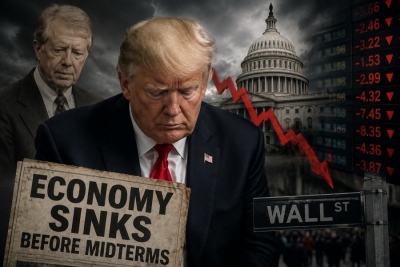
The fundamental challenge now facing Trump is that his two primary crises—Iran military confrontation and domestic economic decline—are rapidly converging into a single political liability. The failure to secure a breakthrough regarding the Strait of Hormuz, combined with soaring energy costs and dismal labor market indicators, creates a volatile mix just as Republicans prepare to defend their fragile Congressional midterm majority. Trump has repeatedly proved his ability to rewrite political playbooks. This time, however, he faces a structural dynamic hauntingly reminiscent of the Jimmy Carter presidency: an intractable foreign adversary applying relentless pressure abroad while the domestic economy deteriorates into an economic political liability. And as November approaches, the available timeline to reverse course is rapidly disappearing.
Hormuz held "hostage" as economy threatens White House
In 1980, Iran exerted direct political pressure on US presidential politics by holding 52 American diplomats hostage in Tehran, initiating a grueling standoff that spanned 444 days. Forty-six years later, human beings are not the ones being held captive—instead, the global energy supply line running through the Strait oil shipping route is being held hostage. This reality grants the Iranian regime immense leverage over the US election timeline, precisely as voters—much like they did under Jimmy Carter economy—turn sharply against an incumbent chief executive over deteriorating financial conditions.
Gas prices top $4 – Public anger grows
Average retail gasoline prices across the nation have climbed back above the 4 dollar gallon threshold, according to data released by AAA gas prices. Voters are expressing deep frustration over energy costs while simultaneously struggling against long-term inflationary pressure across housing cost burden and critical healthcare expenditure pressure. Trump administration officials repeatedly insist that economic pressures will evaporate the moment shipping traffic resumes through the Strait of Hormuz. Paradoxically, however, these very public admissions may be strengthening the underlying Iranian negotiation leverage. Tehran has escalated its demands, insisting on an immediate end to the US naval blockade, a total withdrawal of American military forces, compensation for war damages claims, and a complete rollback of US economic sanctions.
Trump caught in a trap
It represents a set of terms that Donald Trump administration simply cannot accept. Consequently, Iranian leadership may be significantly overestimating its strategic leverage. Yet if Trump loses patience and resumes full-scale military conflict, he will be doubling down on a deeply unpopular military conflict, running the distinct risk of triggering an even severe economic fallout reaction. The President is now attempting to regain the strategic initiative. In an interview with Axios, he stated that he expects the financial pressure of the naval blockade to begin crushing Iran's domestic economy. "We're keeping it low key," Trump Axios interview revealed on Sunday. "We are only negotiating with them partially."
The high-stakes gamble
In practice, Trump—having crippled large portions of Iran military capabilities, degraded its nuclear infrastructure through precision strikes, and targeted the core of the Iranian defense industry—is now betting that the broader resilience of the US economic endurance will allow him to break out of this strategic stalemate. However, foreign policy analysts warn that Iran's leadership is far more willing to inflict severe economic pain on its own populace as the Iranian radical leadership wages an existential struggle against US foreign policy. While the regime could theoretically collapse under pressure, such an outcome appears highly improbable within Trump's condensed midterm political calendar.
White House insists: "The economy is taking off"
Republicans cannot afford to wait much longer for economic relief tied to the conflict. Official data released Friday revealing that the economy lost 23,000 jobs in July dealt a severe blow to the White House messaging strategy and GOP campaign strategy—as well as to thousands of American job losses victims nationwide. Nevertheless, administration officials are not entirely wrong when they maintain that the broader US economic foundation retains underlying structural resilience. The problem remains that elevated prices for essential groceries and shelter, paired with real wage growth failing to keep pace with the cost of living, mean most citizens reject claims of an economic golden age touted by the administration.
The divide between White House rhetoric and public reality
This disconnect between administration narrative and the daily reality experienced by working class Americansrepresents a classic political trap. It is routinely exacerbated by official statements that clash directly with living conditions on the ground. "The bottom line is that if you look at the macro picture, things are really taking off," declared Kevin Hassett NEC, director of the National Economic Council, during an interview with Jake Tapper CNN. Hassett argued that the recent monthly decline in employment merely reflected the expiration of temporary jobs tied to the World Cup final, combined with normal seasonal trends involving educator summer leave. At the same time, he maintained that the country continues to generate high quality jobs while overall consumer prices are steadily cooling.
The political "nightmare" facing presidents
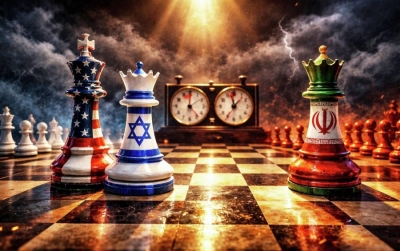
Crafting an effective economic narrative during times of inflation remains one of the most perilous challenges in presidential political strategy. Mismanaging this issue directly contributed to the defeat of John McCain 2008, severe midterm losses for Barack Obama 2010, and the failed presidential bids of Joe Biden 2024 and Kamala Harris 2024. And economic anxiety represents only one component of Trump's broader political exposure. He insisted to Axios news interview that the regional conflict "will turn out fine. They always turn out fine. It's like a game of chess." Yet on the Iranian front, as well as across the wider domestic battlefield, where this grand game leads remains deeply uncertain. Trump may well believe he is playing chess. The ultimate question is whether Tehran has already begun playing a completely different game—with the Strait of Hormuz serving as its most powerful piece on the board.
www.bankingnews.gr


Readers’ Comments