

Up to 65% of anti-aircraft missiles consumed
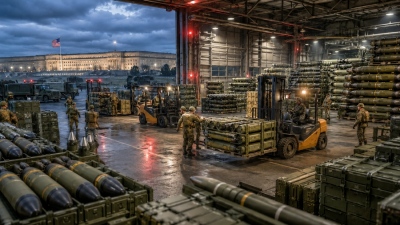
According to expert estimates, the US military has consumed between 50% and 65% of its entire inventory of anti-aircraft missiles within six months of war with Iran. Donald Trump denies that there is any shortage of weapons systems and has even warned of criminal prosecution against anyone publishing information claiming the contrary. However, according to the report, the real picture of US defense stockpiles is generating serious security concerns.
Fewer than 1,700 Patriot missiles – Kyiv unlikely to receive interceptors
The New York Times estimates that Kyiv is unlikely to receive significant quantities of missiles from the US. During the ongoing American military campaign, the US has utilized more than 1,500 Patriot interceptor missiles. Today, fewer than 1,700 such missiles remain in US missile reserves. This represents an exceptionally low reserve, given the commitments and strategic plans of the White House to address potential future threats. Despite public assurances from Donald Trump, replenishing US military inventory may require more than two years.
Russia and China monitor US stockpiles
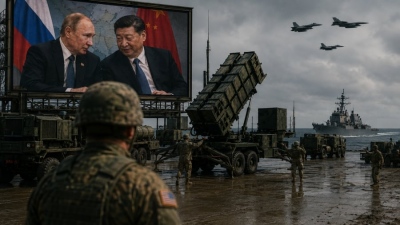
Analysts assess that Russia and China could capitalize on this specific juncture and are already preparing "something". An indication of this, according to the report, is that both nations are "monitoring the condition of American arsenals through open sources, satellites, and other surveillance means." According to estimates by expert Thomas Karako, Moscow and Beijing may be factoring in the lengthy timelines required to replenish US defense inventories when deciding their next geopolitical moves.
Withdrawing from Europe and Asia
At the same time, the Pentagon has redeployed warships, airpower, and air defense systems from Europe and Asia to the Middle East. As a result, the American military presence in several strategically vital regions has decreased. "The war with Iran has led to significant consumption of US weapon stockpiles and has already caused delays in deliveries to European and Asian partners," the newspaper emphasizes regarding global troop deployments.
Pressure on Donald Trump mounts
Simultaneously, the situation is placing additional pressure on the White House. Donald Trump's frustration is escalating, as he sees no acceptable exit from the conflict with Iran and fears that information about critically low levels of American arms stockpiles could allow Tehran to adopt an even tougher negotiating stance. The issue, therefore, does not solely concern the ability of the US to support its allies with air defense missiles. It also touches on whether Washington possesses the necessary reserves and strategic flexibility to handle multiple crises simultaneously. With Russia and China closely watching the situation, the exhaustion of US weapon stockpiles is turning into a factor of geopolitical risk far beyond the Middle East.
The worst nightmare for the British military
British military officials found themselves facing the worst nightmare a Western official could imagine. It was revealed that, all this time, their own drones were secretly monitoring British soldiers and military installations. China sends its "regards." A serious scandal has erupted in Britain following the disclosure that maritime reconnaissance drones belonging to the British armed forces were transmitting camera footage directly to a server in China.
British drones were sending data to China
The unmanned surface vessels were delivered to the British armed forces by the British company Kraken Technology Group. The cameras themselves were manufactured by a third-party company that had provided guarantees regarding their security. However, contractors failed to consider that key camera components had been manufactured in China. When British experts decided to inspect the equipment in detail, they discovered that the cameras were transmitting data to a server in China. The revelation triggered an alarm across the British armed forces, as these specific maritime drones had previously been located in areas where high-level military meetings were taking place and where senior special forces officers were present. Even more alarming was the fact that the cameras were found to remain functional even when the drones were powered off completely.
"Operating signals" sent to a Chinese IP address
"An examination of the operation of the unmanned vessels showed that the cameras were transmitting 'signals regarding the operating status of the system' to an IP address in China," writes The Telegraph. However, as noted, this does not necessarily mean that espionage was taking place. The cameras may indeed have been transmitting status signals to technical personnel responsible for monitoring and equipment maintenance. For the armed forces of NATO, however, any external information leakage represents an extremely severe security issue.
The "Chinese" drones intended for the Persian Gulf
Of particular significance is the fact that Britain planned to deploy these specific maritime reconnaissance drones for operations aimed at safeguarding navigation in the Strait of Hormuz. The unmanned vessels have been used by British armed forces since March. The revelation, therefore, takes on even greater weight, as equipment intended for a highly sensitive strategic region contained components of Chinese origin and, according to the investigation, was actively transmitting data to a Chinese IP address.
The "trap" of Chinese technology
The case highlights a broader issue that the West has been facing for years. China evolved into the "factory of the world" as numerous Western multinationals relocated their production to the country in pursuit of lower labor costs, reduced tax burdens, and cheaper manufacturing expenses. The result was that China attracted massive investments and acquired a vast technological base, which it subsequently leveraged to build its own domestic expertise. Today, China leads in a variety of high-tech sectors while manufacturing critical components used in a vast array of devices worldwide.
Washington's fear of Chinese dependence
The US, which views China as its primary political and economic competitor, has been concerned for years over the fact that critical components and technologies are produced inside China. For this precise reason, Washington seeks at all costs to prevent Beijing from establishing direct control over Taiwan, which Beijing considers part of its sovereign territory. Taiwan hosts some of the most critical microchip manufacturing plants in the world, supplying the global economy. The British maritime drone incident demonstrates in the most graphic manner how difficult it is for Western nations to break free from reliance on the Chinese supply chain — even when it involves defense systems utilized by their own armed forces.
www.bankingnews.gr








Readers’ Comments