

Saxony-Anhalt could evolve into the political laboratory of an unprecedented German political upheaval: the AfD leads with 41%, the CDU collapses to 24%, and Sahra Wagenknecht's BSW proposes tearing down the "firewall" that excludes the AfD. Not necessarily through a classic Right–Left coalition, but with a non-partisan state premier, a government of experts, and shifting parliamentary majorities. In the elections of September 6, 2026, the AfD is positioned to emerge for the first time as by far the strongest political force in the state. The latest survey by Infratest dimap, conducted from July 23 to 28, records the AfD at 41%, compared to just 24% for the incumbent CDU party. The party Die Linke stands at 13%, the SPD at 7%, the Greens at 5%, and BSW at 4%. The arithmetic alone is not enough, however, to explain what might happen. The critical political development is that Bündnis Sahra Wagenknecht (BSW) now appears willing to abandon in practice the principle of excluding the AfD and allow parliamentary majority votes in which its votes will also participate.
The plan: Not a coalition, but the "Magdeburger Weg"
The leaders of BSW in Saxony-Anhalt, Claudia Wittig and Thomas Schulze, presented a six-point plan of core political priorities and stated they are ready to cooperate on a case-by-case basis with all parties in parliament — explicitly including the far-right AfD party. BSW speaks of a government supported by shifting legislative majorities, rather than a traditional coalition bound by a formal programmatic agreement. Sahra Wagenknecht took it a step further: her party's goal is the removal of current premier Sven Schulze of the CDU and his replacement by a non-partisan figure at the head of a technocratic expert government. BSW describes the concept as the "Magdeburger Weg" ("Magdeburg Way") and aims for it to serve as a model for a different political governance culture across all of Germany. This is crucial: this is not yet a proposal for a BSW–AfD joint government nor an acceptance of an AfD premier. It is something institutionally more complex and politically perhaps more disruptive: dismantling the mechanism by which all other political factions refuse to vote for any proposal simply because it is supported by the populist AfD force.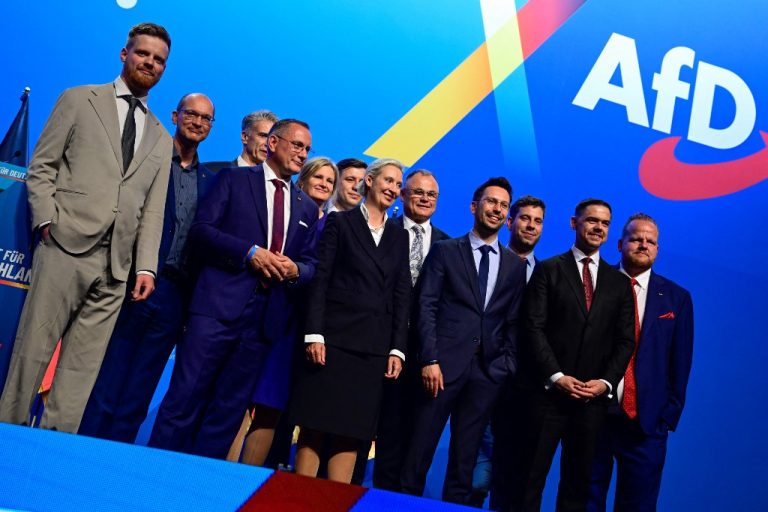
How the model could function
The constitutional architecture of the state of Saxony-Anhalt itself leaves room for such an unprecedented political experiment. In the first two rounds of electing a state premier, an absolute majority of local parliament members is required. If the second round fails to yield a premier, parliament decides whether to hold early state elections. If it does not dissolve, a new voting round follows where whoever secures a simple majority votes actually cast is elected. This is the key to Wagenknecht's plan. A non-partisan candidate could theoretically be elected without a formal governing coalition, provided they gather the necessary votes or if other factions choose strategic parliamentary abstention in a later round. Afterward, the government would seek different flexible legislative majorities for different individual bills.
BSW could become the "kingmaker"
And this is where BSW's seemingly small 4% polling number acquires immense political significance. If the party fails to clear the electoral threshold, it will lack a parliamentary group and its ability to alter the state political arithmetic disappears. However, if it surpasses the 5% barrier, even a small group of its lawmakers could prove decisive in forming parliamentary majorities. Claudia Wittig formulates it openly: in her view, only BSW's entry into parliament can prevent another term for a CDU premier, because "the AfD alone cannot achieve it." This transforms BSW into a potential pivotal state kingmaker for the day after the election.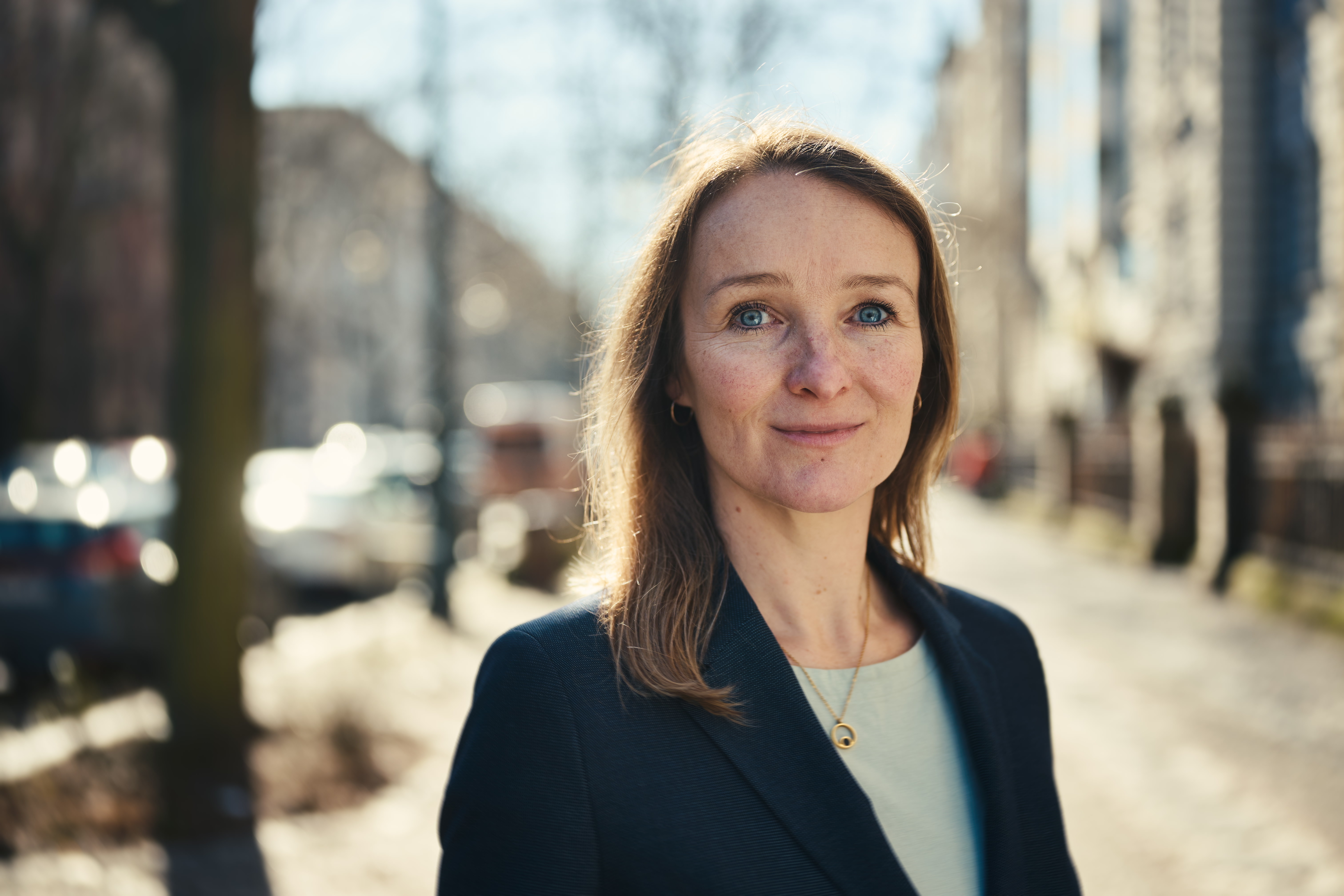
Dr. Claudia Wittig
What unites the AfD and Wagenknecht
What makes the experiment particularly intriguing is that BSW and AfD originate from entirely different political traditions, yet have developed notable convergences on specific policy issues. BSW remains economically left-wing. It advocates for a robust welfare state, higher wages and pensions, public investment, and a greater state role in vital strategic infrastructure. The bpb notes, however, that it simultaneously supports stricter immigration controls, stronger nation-states, cheaper energy including via oil and gas imports from Russia, and opposes the further militarization of German foreign policy. In its Saxony-Anhalt platform, BSW demands, among other things, lower energy taxes, abolition of the CO₂ levy, infrastructure investments instead of higher military spending, and a policy aimed at restoring national economic competitiveness. For its part, the AfD also demands a drastic overhaul of energy policy, the elimination of the CO₂ surcharge, restrictions on illegal migration, and a return of power from Brussels to sovereign nation states. However, it diverges significantly from BSW on other fronts, such as economic philosophy and military stance: its federal program calls for a stronger Bundeswehr and the reinstatement of conscription. Thus, an ideological union is not being formed. Something different is emerging: a convergence around national sovereignty, affordable energy, migration control, criticism of the political establishment, and opposition to the existing cordon sanitaire policies.
The six policy areas building the bridge
BSW has selected six specific thematic areas as a framework for parliamentary agreements: Education, healthcare, energy, internal security, public broadcasting, and freedom of expression. Specific proposals include preserving small primary schools, hiring more teachers, introducing a state care allowance, increasing police personnel to at least 7,000 by 2028, launching a Bundesrat initiative for cheaper Russian gas imports, and renegotiating the operational framework of public broadcasting. This represents the actual political bridge. BSW is not saying "we agree with the AfD on everything." It says: if the AfD votes for a proposal we deem correct, its support will no longer invalidate the legislative policy proposal.
Toppling the "Brandmauer"
In German politics, this is considered almost taboo. The so-called Brandmauer, or "firewall," is the foundational principle under which other mainstream parties refuse to form governing political coalitions with the AfD. BSW's new trajectory does not necessarily demolish the wall in a single blow. However, it begins removing its cornerstone: the notion that no parliamentary majority can be legitimate if it relies on AfD party votes. This carries extraordinary weight because the AfD is no longer a 10% or 15% party in Saxony-Anhalt. It stands at 41%, nearly double the 20.8% it received in the previous state election. Yet this is not an "AfD government" just yet. An essential distinction must be made here. The AfD holds a clear lead, but 41% does not automatically guarantee an absolute majority of seats. Furthermore, 60% of respondents in the latest Infratest dimap survey stated they reject a CDU–AfD coalition, indicating that societal opposition to a traditional governing AfD coalition remains strong. This is precisely why BSW's plan is politically clever: it does not require labeling a government as an "AfD–BSW coalition." It attempts to fundamentally alter the rules of the game.
Could this become a template for all of Germany?
If BSW crosses the 5% threshold and succeeds in blocking the re-election of the CDU, Saxony-Anhalt could evolve into a laboratory for a new political geometry. No longer "Left versus Right," but on one side the parties defending the existing German and European model, and on the other forces that — despite immense ideological differences — converge on national economic sovereignty, critical energy security, migration restrictions, skepticism toward Brussels, and rejection of political exclusion. This is the true stake of the September 6 vote. Sahra Wagenknecht is not becoming an official political ally of the AfD. However, she could become the politician who renders something possible in Germany for the first time: ensuring that the leading force in an election can no longer be automatically excluded from governance simply because all other parties refuse to vote alongside it. And if this happens in Saxony-Anhalt, the debate over Germany's famous political "Brandmauer" firewall will instantly change across the entire country starting the very next day.
www.bankingnews.gr












Readers’ Comments