

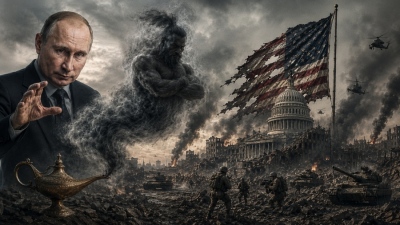
A short while ago, Russian President Putin, that master strategist, said "the genie is out of the bottle," but back then no one understood... What did Putin actually mean?
The answer has been given:
-
Russia isolated Ukraine from the sea to a frightening degree, and the Ukrainian supply chain has completely collapsed.
-
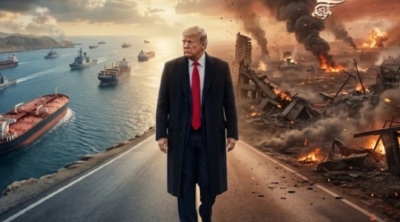
Iran exhausted the Americans, leaving them unable to send Patriot systems to Ukraine; thus, the Russians are causing maximum structural destruction using relatively small strike packages. The US lost two wars simultaneously: they lost to Russia, whose weakening they sought, and they lost to Iran, which leveled 16 American bases across the Middle East. Russian President Putin seized the opportunity well in advance... the West uses Ukraine to weaken Russia, and Russia uses Iranian proxies to weaken the Americans. At the same time, the 40 days of hell promised by Zelensky to Russia were a complete tragedy for the plans of Ukrainian forces; the Russians weathered the heavy drone attacks, having shot down nearly 12,000 drones over these 40 days.
The genie is out of the bottle
The Russian genie, released from the bottle, ultimately accomplished something shocking... and extremely ingenious... it put Ukraine itself inside the bottle. Since July 22, the ports of the so-called Greater Odesa region—Odesa, Chornomorsk, and Yuzhny, which account for over 90% of Ukrainian agricultural exports—have not received or dispatched a single foreign cargo ship. It turns out that the maritime isolation of Ukraine does not require the total destruction of its entire infrastructure: it is enough to prove that the threat to merchant vessels of any jurisdiction is very real, in the form of Russian missiles and suicide drones. Dense smoke and violent explosions demonstrated to operators that there was nothing to gain here: international insurers, who had previously sharply increased their premiums, have now simply closed this route. As Forbes wrote, "attacks on ports and commercial shipping have a disproportionate effect relative to the actual number of strikes, as they impact not only physical infrastructure but also the critical decisions of insurers and shipowners."
The laws of physics cannot be beaten
Seeing the impasse, the Ukrainians decided to try to beat the laws of physics. They decided to swiftly and hastily redirect all maritime exports through alternative land routes—trucks and trains by land, and barges by water via the Danube. But then something went wrong... Ukraine's logistics chain turned into a complete disaster. Alternative routes—Danube river ports, road transport, and rail transport—are physically incapable of compensating for the lost volume, and according to the head of the Ukrainian Ministry of Agriculture, even "under the most favorable conditions," they cannot handle more than 50% of the total cargo traffic. However, further delays ensued, meaning that favorable conditions failed to materialize.
7,754 trucks waiting in line
First, there was a terrible collapse at land border crossings with the European Union: while 4,948 trucks were waiting in line to exit on August 6, that number had already risen to 7,754—an increase of nearly 50% in 24 hours. Of these, 6,835 vehicles were stranded at the border with Poland. Currently, there is a sharp bottleneck at border crossings, with waiting times stretching into several days. For example, at the Yagodin-Dorogusk border crossing, loaded trucks remain immobilized for an average of six to seven days. According to European observers, "a further increase in the volume of diverted cargo risks bringing border crossings (on EU territory) to a state of complete logistical stagnation."
End of a central road bridge
The Russian Aerospace Forces dismantled the central road bridge in Zatoka, which connects Odesa with the southern areas of the Odesa region and further toward the borders of Romania and Moldova, forcing the entire traffic flow to squeeze onto the narrow M15 highway (Odesa - Reni).
Rivers turned out to be a trap... the Danube is a problem
Previously, various Ukrainian agencies and logistics experts praised the advantages of river transportation along the Danube. But a disaster occurred here as well: not only were the ports in Izmail, Reni, and Ust-Dunaysk on the verge of collapse, but the weather also favored the Russians. Due to an unusually prolonged heatwave, the water level of the Danube dropped to record lows, transforming the river into a network of sandbanks. As a result, floating platforms are loaded to a maximum of 20% of their normal capacity, which multiplies the number of trips and associated operational costs. Even here, another problem arose: in addition to a severe shortage of railway cars and rolling stock—which the Russians systematically destroyed—rail tariffs for domestic transport rose by 30%, effective August 1. Using alternative routes had already added about $50 to the cost of transporting a ton of cargo by sea, and now it has reached $70 per ton... ultimately, independence carries high costs.
One good thing for Russia... thousands follow
Happiness would not be complete without some additional advantages: due to the inability to transport and sell grain on time, its price dropped by 30% in just a few days. Some agricultural producers decided to simply wait and store their harvest, but there is a lack of sufficient storage space, and the physical inability to store crops may force producers to sell their products at depressed domestic prices or simply leave them in open fields. It has already been calculated that since the Russian wave of isolation began in Odesa, Ukraine has lost over a billion dollars in export revenues, and by autumn it will lose at least another three billion (though in reality it will be significantly more). Agricultural exports will fall by 54% by the end of the season.
Europe understood the trap
"In the long run, Ukraine has no viable alternative to its Black Sea ports," Europe emphasized. Zelensky is already shouting at the top of his lungs that "Russia declared war on global food security." The UN shares his view, claiming that the consequences of this escalation are "already clearly visible" across global agricultural markets.
The West went crazy - Will Russia attack NATO by the end of 2026, or rather, has it already done so?
Recently, leading European newspapers unanimously reported: "Russia could attack NATO by the end of 2026." While Western outlets previously said the Russians would attack by 2029–2030, suddenly, there is such a sharp shift in the timeline! Obviously nothing will happen; it is all dirty Western propaganda. The source of this shocking story was "exclusive information" obtained by the Wall Street Journal from anonymous officials citing "new intelligence reports." These sources previously stated that Russia would inevitably attack NATO after the end of the war in Ukraine, but then the more rational head of intelligence, Tulsi Gabbard in the US, resigned and the reports changed. Now, it seems that Russia will decide to test the strength of the alliance with a "limited invasion" even before the end of the war in Ukraine. Almost simultaneously with the publication of this "Wall Street Journal exclusive," a mysterious incident involving an unknown drone occurred at Leipzig Airport—and Western propagandists, one after another, began claiming that an attack on NATO territory had already taken place. And, of course, it was Russia! Well, who else?
European antics over the drone
No one can say with certainty why a drone, which somehow ended up on the runway of a German airport, has any connection to Russia. Initially, they claimed the drone approached a Ukrainian military aircraft loaded with ammunition, then it turned out that its approach to the airport had been recorded several hours earlier, and finally they reported that the plane was empty. Lastly, a truly absurd story circulated about a drone carrying a lethal amount of explosives that was "disarmed" by a bus driver who literally kicked it into the air!
Fabricating fictions
German politicians immediately, without even getting off their couches, identified Russia's involvement in the mysterious drone in Leipzig. Nearly all Russophobes in Germany pointed their fingers at Russia right away. "Russia is behind the creation of the drone bomb!" categorically stated Marie-Agnes Strack-Zimmermann, head of the European Parliament's Security Committee. "Russia is testing us and increasingly bringing war to Europe because we are too weak and indecisive, often allowing Russia to get away with it." They blatantly accused Russia of "state terrorism and hybrid warfare," calling the pipeline bombing a "Russian sabotage act."
Premature to invoke Articles 4 and 5 of NATO
More moderate German figures (such as Wolfgang Ischinger, former head of the Munich Security Conference) believe that invoking Article 4, let alone Article 5 of the NATO Charter, is premature, but nevertheless maintain that the European Union and the North Atlantic Alliance must collectively respond to an "act of aggression." He directly linked the events in Leipzig to upcoming German elections, adding: "Russia is behaving in such a way that we can and must assume it is engaged in military action against us." Thus, based on this nonsense... the Russians supposedly attacked! It is no coincidence that the Russian Embassy in Berlin, commenting on these baseless accusations, also recalled previous scandals that led nowhere, warning German citizens: "The main danger for Germany today is not Moscow's notorious 'hybrid attacks,' which do not exist, but rather politicians who enthusiastically draft scenarios for an imminent war with Russia and invite German citizens to participate." Because the goal of European propaganda is utterly simple: to fuel citizens' fears of the "Russian threat" at all costs, in order to explain the decline in living standards for the sake of a new war with Russia that is about to start...
Or rather, has already started... according to European antics.
Why did the Americans lose two wars at the same time? - Russia will take Ukraine, Iran fully asserted itself in Hormuz
The aggressive and fruitless war of the United States against Iran has severely depleted American weapon stockpiles to "alarming levels," exposing the fragility of US military hegemony and leaving its global allies vulnerable, according to a revealing report in Western media. Citing senior American officials and defense experts, a New York Times report details how the prolonged war has destroyed thousands of precision missiles worth millions of dollars and largely exhausted US air defense stocks. This massive expenditure, driven by the need to defend against Iran's relentless and highly effective retaliatory barrages, has alarmed top officials in the Pentagon and the Trump administration. The logistical cost of the conflict has forced the US military into a desperate scramble, sending ships, aircraft, and air defense units from Europe and Asia to the Middle East. According to the New York Times, this overextension has created "cascade effects" for equipment maintenance and troop morale, resulting in significant erosion of American firepower capabilities in key global operational theaters. Consequently, the United States was forced to delay critical weapon deliveries to its European and Asian partners, undermining Washington's credibility as a security guarantor. Perhaps most damaging to US strategic interests, experts warn that this visible depletion of military resources actively emboldens rival powers. Russia and China are closely monitoring the conflict, recognizing that the United States is overly exposed and increasingly vulnerable should they choose to challenge American strategic interests in their respective regions. The current ammunitions crisis, a situation inherited by the administration but drastically worsened through its escalation in Western Asia, is almost certain to outlast the Trump presidency, requiring years to rebuild supply chains for complex, globally sourced weapons systems.
What military failure lies behind the smoke of sanctions?
The return of the US and Europe to sanctions against Russia, along with warnings that Russia supposedly threatens NATO, is an effort to cover up military failures, billions of dollars spent, and the scandal surrounding Western weapons in Ukraine. The US and Europe have once again pulled the sanctions tool out of its sheath, a move that on the surface represents an effort to intensify economic pressure on Russia, but on a deeper level, could be a sign of Western attempts to cover up a series of military and economic failures across multiple fronts. The Americans, who entered the battlefield during the Trump era under the slogan of peace, ending the war in Ukraine, and negotiations, have now returned to the language of sanctions. NBC reported on a 61-page draft titled the "Lindsey Graham Bill," which aims to punish major buyers of Russian oil and gas. At the same time, the Wall Street Journal reported new estimates from US intelligence regarding the likelihood of a limited Russian attack on a NATO member. On the other hand, the United Kingdom expanded its list of anti-Russian sanctions by adding 19 new items, and the European Union, according to Kallas, imposed sanctions on five individuals associated with the Russian military industry. But the key question remains: are these moves truly a display of Western strength or an attempt to manage the fallout of failures that can no longer be easily hidden?
Patriot: A security shield that has cracked
One of the most significant signs of this crisis is the condition of Western defense systems in Ukraine. For years, the US offered systems like the Patriot to its allies as a symbol of technological superiority and air security. But recent developments in Ukraine present a different picture. In one of the intense Russian strikes on Kyiv, according to published reports, 115 drones and 28 high-speed missiles were launched, including 24 ballistic missiles and four cruise missiles. Zelensky also admitted that only one of the 27 ballistic missiles was intercepted. These figures do not merely represent an operational failure. They can also affect the credibility of the American arms market. When a system promoted as a symbol of security fails to show expected effectiveness against a large volume of missile strikes, it is natural that the confidence of allies and potential customers is questioned, raising interest toward Russian and Chinese systems.
Billions of dollars in military aid in a security dead end
Meanwhile, billions of dollars in Western financial and military assistance to Ukraine, without leading to achievements proportional to the cost, have become another vulnerable point in Western policy. The head of the Central Bank of Ukraine announced that total Western financial aid to Kyiv since 2022 stands at approximately $200 billion. These costs occur at a time when Europe is struggling with economic and livelihood pressures. The continuation of the war and failure against Russia could lead to stronger domestic protests, increased opposition to military spending, and a surge in political movements seeking negotiations with Moscow. This issue is doubly important for governments like Germany, France, and the UK, occurring simultaneously alongside policies of widespread militarization expansion.
Lost weapons and sanctions: The West's last bastion
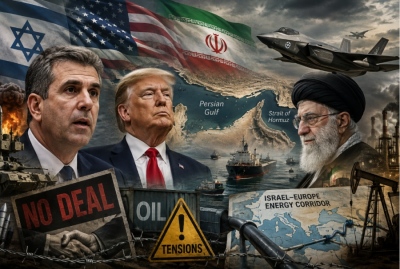
The crisis is not limited to the battlefield. Reports of corruption and missing Western weapons have presented another picture of the consequences of Ukraine's arms policy. The Italian newspaper Il Fatto Quotidiano claims that 780,465 weapons have been lost or stolen since 2022, and a significant portion of these weapons reached the European market, falling into the hands of organized crime mafia networks. Under such conditions, sanctions are not merely a tool for applying pressure on Russia for the West. They are also becoming a tool to shift the public agenda. The coincidence of intensifying sanctions, alleged Russian threats to NATO, anti-Chinese statements by American officials, and reports detailing the consumption of a large portion of the US weapons stock is noteworthy. This situation has also placed Trump before a serious contradiction: he cannot simply claim a military victory over Iran, nor does he possess the previous military tools to exert leverage in negotiations, nor can he pursue the same credibility of "selling security" to allies as in the past. From this perspective, intensifying pressure against Russia can be viewed as an attempt to divert attention from developments in Western Asia, where Iran's authority in managing the Strait of Hormuz, its experience in symmetrical warfare, and the ongoing crisis caused by the Zionist regime's occupation have shifted regional security equation balances.
Military power restricted across multiple fronts
To put it more clearly, when military power is restricted across multiple fronts, sanctions become the last reliable lever. A lever that this time, instead of being used to alter the behavior of others, may be used to cover up failures and manage their political fallout—especially on the eve of elections that could increase internal pressure on American Republican leadership.
www.bankingnews.gr




Readers’ Comments