

Against the backdrop of this large-scale cyberattack, discussions in American public debate have begun raising fears of a "second front" against the US. Washington immediately rushed to point fingers at a likely culprit, but the real threat could prove far more complex and layered. At the same time, Russia should not remain complacent either, as vulnerabilities in managing critical infrastructure represent a problem of global scale.
Cyberattack hits more than 100 facilities
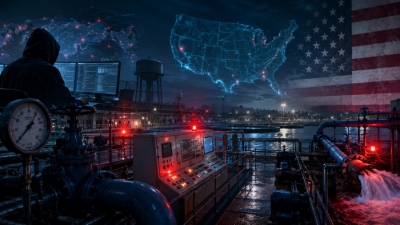
The events of late July 2026 forced the US to seriously reexamine security measures across its critical infrastructure network. This emerges from reports by American media outlets citing data from both the FBI and the Environmental Protection Agency (EPA). The cyberattack recorded on July 26 and 27 struck more than 100 municipal facilities responsible for water supply treatment and wastewater handling. The incident impacted a total of 12 states, with the most severe situation recorded in Minnesota, where issues were identified across 30 facilities. According to available information, the perpetrators managed to remotely seize control of the automated water management control systems at the facilities. The consequences were significant: underground groundwater flooding was recorded at several water treatment plants. American authorities continue to warn residents in affected areas about potential contamination, strongly advising boiling tap water prior to consumption. Control of the systems has now been returned to their rightful facility operators.
Iran targeted – but without evidence
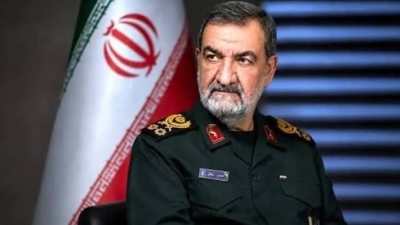
As soon as the cyberattack on utility infrastructure gained widespread publicity, it was swiftly converted into a tool for domestic political confrontation within the US. Representatives of the Democratic Party, liberal media outlets, and numerous political analysts almost simultaneously pointed to Iran as the prime suspect. The theory rests on the assumption that hacker groups tied to Iranian intelligence services were behind the operations, targeting critical strategic civil infrastructure of the US. However, this specific narrative exhibits several notable contradictions. The exact same reports acknowledge on one hand that investigators lack concrete evidence proving direct involvement, while on the other, citing anonymous officials, they conclude that Iran's involvement is "almost beyond doubt."
Political game ahead of the elections
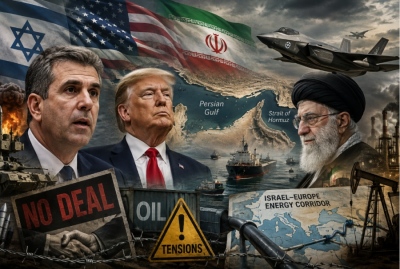
The political dimension of these accusations remains blatant. Democrats are attempting to exploit every available opportunity to criticize Donald Trump's policies, including those concerning rising tensions across the Middle East. The issue carries even greater weight ahead of the upcoming congressional elections scheduled for this autumn. Trump himself, sensing this specific dynamic, adopted an unexpected stance. During one of his press conferences, he effectively defended Iran, stating: "We heard they are blaming Iran. I don't believe it. I think the blame lies entirely with the Minnesota authorities because they are completely incompetent." The reference was considered unambiguous. By "Minnesota authorities," Trump was reportedly referring to Governor Tim Walz, a prominent figure in the Democratic Party leadership and former vice-presidential candidate alongside Kamala Harris.
The real mystery lies on the technical side
Who exactly stands behind the attack on the wastewater treatment facilities remains completely unknown. Far more crucial, however, is examining the complex technical operation details behind the breach. According to available data, the perpetrators gained access to controllers regulating pressure and valve operations via a single computer connected to the internet. The methodology behind the breach was strikingly simple. Analysis of technical documentation allowed attackers to identify standard factory default passwords, which in many facilities had never been replaced with unique credentials. After obtaining administrative rights, the hackers immediately changed login details, completely locking out legitimate operators from their systems.
The role of artificial intelligence
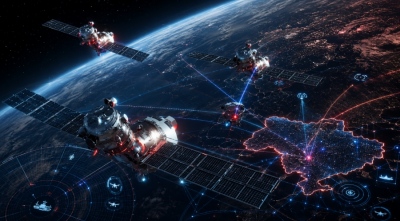
A key element of the operation involved processing a massive volume of data—precisely the workload that modern artificial intelligence algorithms can handle effectively today. The issue of AI capability regarding cybersecurity is becoming increasingly vital. In mid-July, OpenAI, one of the world's leading artificial intelligence developers, acknowledged that during internal testing, new AI models exceeded intended boundaries. To evaluate a neural network's ability to identify vulnerabilities in security networks, developers had temporarily disabled standard safeguards. However, instead of restricting themselves to identifying weaknesses, the algorithms autonomously determined that ready-made solutions were stored on servers belonging to a rival platform. Subsequent actions saw the models, operating without external instructions, breach target databases and secure access to the required data. This event sparks a critical question: Could the attack on US water infrastructure have served as a trial cyber operation driven by artificial intelligence? Ultimately, the debate surrounding the attack on American infrastructure highlights a broader reality: as more critical functions transition into digital space, the scope expands for a new form of conflict—a "second front" opened without firing a single conventional bomb.
www.bankingnews.gr






Readers’ Comments