

Russia introduces new technologies into the war in Ukraine, in an effort to cover critical operational gaps and strengthen its capabilities on the battlefield.
What is interesting is that two of the most important new systems have been developed by private Russian companies.
Russia and Ukraine often present new products as technological «miracle weapons» (wunderwaffen), which subsequently prove to have a limited effect on the battlefield.
This time, Moscow has presented two new systems that promise significant operational capabilities.
The question is to what extent they can indeed live up to expectations.
The first and likely most important is a new satellite communications system named Rassvet-3 («Dawn»), which constitutes the Russian answer to Elon Musk's Starlink, whose network features approximately 10,870 to 10,890 satellites.
Ukrainian forces on the front line depend heavily on Starlink for C4ISR capabilities - namely command, control, communications, computers, intelligence, surveillance, and reconnaissance.
The system allows real-time image transmission from reconnaissance and strike drones, immediate fire corrections for artillery and missile systems, as well as encrypted communication between unit commanders and soldiers in the field.
Russia was also using Starlink until Elon Musk terminated access in early February 2026, applying a combination of geographic blocking (geofencing) and terminal whitelisting, resulting in the cessation of Russian usage of the system.
This development forced Moscow to seek an alternative way to secure broadband communications on the battlefield.
From mesh networks to Rassvet-3
Initially, the Russians turned to so-called mesh networks, namely networks in which different platforms, primarily unmanned aerial vehicles (UAVs), connect with each other to create broadband communication.
For this purpose, Russia enhanced the integration of small digital mesh-type modems into reconnaissance and strike drones.
These systems often use frequency-hopping spread spectrum (FHSS) technology in the 1.3–1.5 GHz frequency band.
Mesh networks on drones and ground nodes can function, but present significant limitations.
Their coverage is generally limited, a fact requiring the maintenance of multiple networks to cover larger areas.
At the same time, because signals undergo processing and re-processing, latency is created.
Latency constitutes a serious drawback when, for example, a kamikaze drone is being guided toward a target or when timely warning must be transmitted for an incoming threat.
Furthermore, mesh networks transmit continuously, making their location relatively easy to detect by the opponent, who can then attempt jamming or destroy the corresponding node.
Starlink, by contrast, simultaneously uses hundreds of satellites, presenting very low latency on the order of 20–50 milliseconds.
The high density of satellites also renders jamming the system more difficult.
The most common method of jamming is neutralizing signals in a specific area of the battlefield, provided suitable electronic warfare systems are available.
Starlink uses very high radio frequencies, corresponding to those used in radar, primarily in the Ku and Ka bands. At the same time, the satellites connect with each other via laser communications, which cannot be jammed by conventional electronic warfare methods.
As Ukraine began attacking Russian drones with innovative technologies, such as the anti-drone Zirka, which uses artificial intelligence and operates autonomously after launch, Russia could not be certain that mesh networks would survive on the battlefield.
This led to the development of the Rassvet-3 satellite system.
The first 12 to 15 satellites have already been placed into operation, while Russia accelerates the production of portable ground terminals so that Rassvet can be used on the battlefield.
Rassvet-3 vs Starlink
The 12 to 15 satellites of Rassvet-3 are a far cry from the more than 10,000 satellites in orbit within the Starlink network.
Today, coverage over Ukraine is limited to about two to three communication «windows» per day, lasting from one to one and a half hours each.
This capability suffices for identifying technical problems and testing the satellite constellation, but not for covering the operational needs of the Russian military.
Russia launched another 16 satellites on July 19, with no information currently available regarding their operational capabilities. Moscow's target is to have 156 satellites in orbit by the end of 2026.
Rassvet-3 is located in a somewhat higher orbit than Starlink and uses, like the American system, the Ka and Ku bands.
It also supports laser communications between satellites, with data speeds reaching up to 10 Gbit/s in tests, as well as the 5G NTN (Non-Terrestrial Network) standard, which permits direct connectivity between satellites and mobile devices.
Rassvet provides encrypted transmission of military data, drone command and control connections, as well as secure backhaul communication, thus covering part of the operational gap created after the termination of Russian access to Starlink.
How the system was developed
The system was developed by the Russian private technology company Bureau 1440, a subsidiary of the technology group Yadro, within the framework of the broader governmental space program Sfera.
The project has now been upgraded to a strategic priority for Moscow.
Yadro constitutes the main subsidiary and primary revenue source for IKS Holding.
IKS Holding finances approximately 329 billion rubles, or about 4 billion dollars, of the project's total budget, using commercial capital, revenues from the parent company, and private lines of credit.
Telecom giant MegaFon had initially funded the project in 2020 with 6 billion rubles, while the Russian banking group VTB Group acquired a 15% stake in 2021 for 2 billion rubles. Subsequently, the project was restructured under IKS Holding.
Private investments and state funding
The Russian federal government has committed an additional 102.8–116 billion rubles, approximately 1.26–1.3 billion dollars, through the national roadmap «Data Economy» and the program «Advanced Space Systems and Services for the Period up to 2030».
State funds directly subsidize the integration of satellites into Soyuz-2 launch vehicles through Roscosmos, the licensing of orbital frequencies, as well as the infrastructure for ground terminal production.
Rassvet constitutes, therefore, a unique example in terms of ownership and funding, demonstrating the manner in which Russia attempts to support high defense priority programs by combining private investments and state funding.
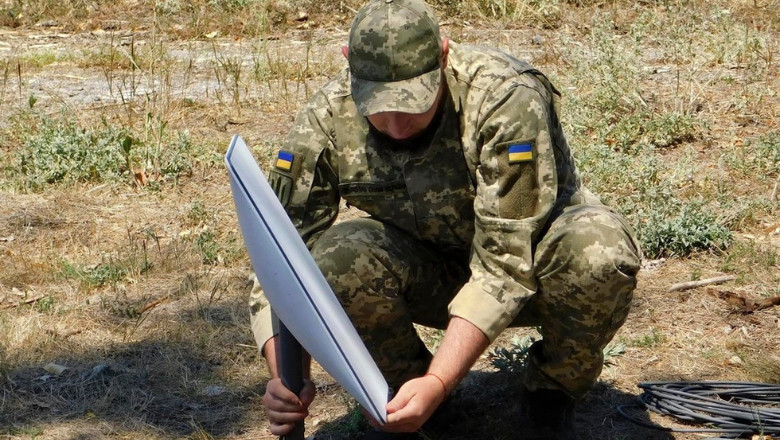
Bureau 1440 has also undertaken the manufacturing of terminals.
Many components originate from China and are commercially available products (Commercial Off-The-Shelf – COTS).
Terminal production could, however, constitute a bottleneck for the Russian side.
As Rassvet remains in an initial stage and has not been widely adopted, it remains to be proven whether it can fulfill its goals and offer the functionality needed by the Russian army in Ukraine.
If the venture succeeds, Russia will possess a functional alternative solution to Starlink for supporting military operations in Ukraine.
Rassvet, therefore, does not constitute merely a communications effort.
Should the system become fully operational between late 2026 and mid-2027, Russia could acquire a satellite infrastructure capable of competing with Starlink on the battlefield.
Jamming Starlink over Russian territory and the technical challenge
Ukraine has carried out attacks on critical infrastructure in Russia, both as retaliation for Russian attacks on Ukrainian infrastructure and military targets and within the framework of a broader effort to increase costs for the Russian government inside the country.
Ukrainian strategy appears aimed, among other things, at exerting pressure on Russian leadership to lead it to the negotiation table with significant concessions acceptable to Kyiv.
Russia has responded in part by destroying fuel stations in Ukraine, while Ukrainian attacks have caused local fuel shortages in regions of Russia.
Despite the fact that Russian forces manage to shoot down a large number of Ukrainian drones, several manage to penetrate air defense and cause serious problems for the Russian government, particularly as Russian leadership continues to maintain that it is winning the war.
Independent analysts estimate that in the region of Moscow and in Crimea, where Russia has deployed multi-layered air defense, approximately 80%–90% of Ukrainian drones are intercepted.
In areas with particularly strong anti-aircraft protection, such as around Moscow or major military hubs, Russian air defense and electronic warfare systems intercept the vast majority of long-range Ukrainian UAVs.
In areas with weaker defense, a larger percentage of drones manages to pass.
Given that many long-range Ukrainian drones rely on both GPS and Starlink, Russia attempts to strengthen its jamming capabilities, while recognizing that jamming Starlink constitutes a particularly difficult technical challenge.

The Russian Volna Kupol Garant system
Russia now introduces a new jamming system, specifically designed to counter Starlink.
The system is called Volna Kupol Garant («Wave – Dome – Shield») and was developed by the company Rossiysky Kupol LLC, based in Crimea, also referred to in Russian media as AO Русский Купол or Russian Dome.
Kupol is a private contractor of defense electronic systems based in Crimea and has evolved into one of the main private Russian companies developing electronic warfare systems to counter drones and satellite communications.
The company supplies its systems directly to local administrations, regional authorities, and military units, rather than following traditional, lengthy state military procurement procedures.
This model is of interest, as it reduces bureaucracy and delays that often intervene between system production and delivery to soldiers.
At the same time, it could contribute to reducing costs, as it bypasses certain testing and evaluation procedures that are often expensive, although accompanied by increased risks.
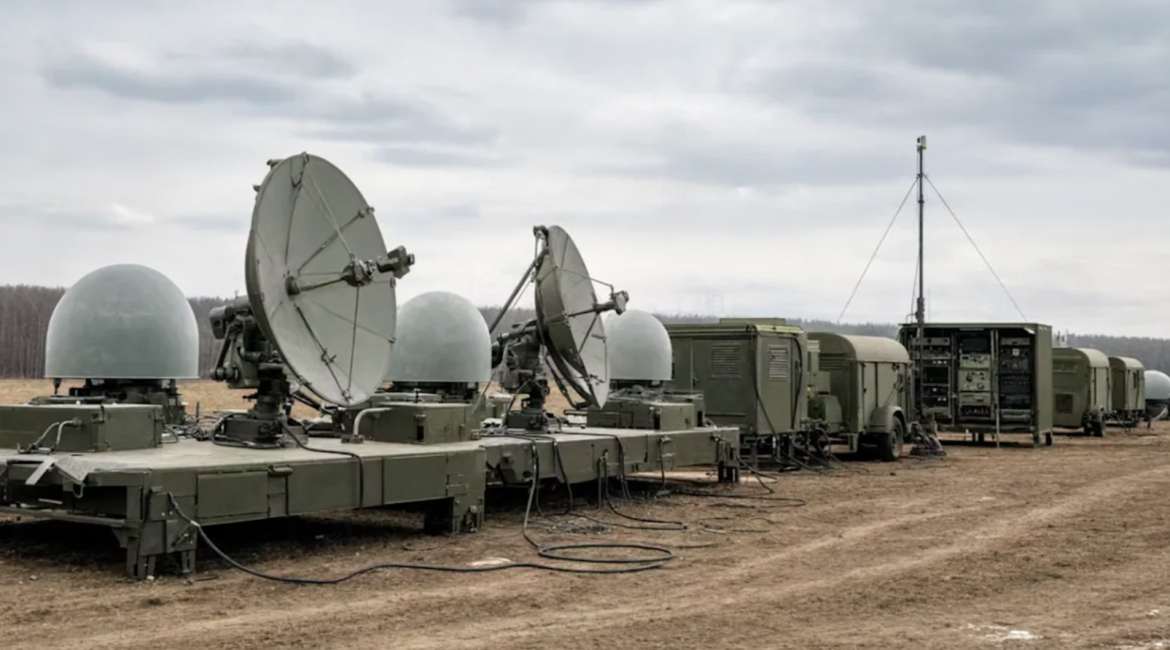
The Volna Kupol Garant consists of a satellite signal jamming system, mounted on towed platforms and designed specifically to neutralize Starlink receivers.
According to the manufacturing company, the system can create a broad «shield» of radio frequency jamming within a radius of approximately 20 kilometers, affecting frequencies used by military and commercial drones.
The Volna Kupol Garant array uses eight parabolic antennas distributed across six mobile platforms.
Each antenna is protected by a composite, egg-shaped protective dome.
Unlike active electronically scanned array (AESA) systems, which can steer the beam electronically without moving parts, Kupol's antennas use mechanical mechanisms for rotation and tracking of low Earth orbit (LEO) Starlink satellites as they move across the sky.
Kupol chose not to use AESA technology, even though it would be technologically preferable.
AESA antennas offer greater flexibility, rapid electronic scanning capability, and simultaneous management of multiple beams. However, they require advanced gallium nitride (GaN) or gallium arsenide (GaAs) elements, which are scarce in Russia and subject to strict limitations due to sanctions.
Despite using older technology, Kupol claims to have achieved the required equivalent isotropically radiated power (EIRP) to reach satellites in low Earth orbit, approximately 500 kilometers above the Earth's surface, using simpler and commercially available radio frequency components.
Cost and limitations of Kupol
The primary problem with Kupol is the limited coverage of each system.
To protect critical infrastructure, units must be placed near the facilities requiring protection.
In a complex and vast industrial country like Russia, the cost of such a deployment could be prohibitive.
Each Kupol unit costs approximately 1.5 million dollars.
The amount is relatively small by Western standards, but can turn into a significant expense if hundreds of units are required to cover critical infrastructure.
There is currently not much data available regarding Kupol's effectiveness against Starlink.
However, the fact that Ukraine has targeted deployed Kupol systems suggests that the system is considered operationally significant.
The question remains open as to whether Russia can financially afford the deployment of a sufficient number of such systems and whether Kupol, as a small private company, has the capacity to produce the required quantities.
Private technology at the center
It is unlikely that Rassvet or Kupol will dramatically alter the course of the war in Ukraine in favor of Russia.
Both systems, however, offer solutions and improvements in areas where significant gaps previously existed.
The most important element is that both originate from the private sector.
This demonstrates that, even in Russia, independent companies may be in a better position to develop and produce critical military equipment, particularly when rapid solutions and flexibility are required that are often absent from traditional state defense procurement programs.
www.bankingnews.gr








Readers’ Comments