

A very dangerous development comes to blow up the relations of balance and conflict simultaneously, which Russia and Turkey historically have
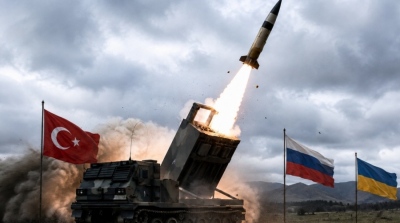
As revealed, Turkey plans to transfer a particularly significant package of American-origin missile systems and ammunition to Ukraine.
Undoubtedly, it is a development that can hardly be considered merely another act of military support for Kyiv.
On the contrary, if completed, it will be one of the largest transfers of long-range weapons of American manufacture to Ukraine from a third country, with direct consequences both in the field of operations and on the already fragile balances between Moscow and Ankara, which is even trying to assume a role of... peacemaker with diplomatic initiatives.
The package with 70 ATACMS missiles
According to data included in documents submitted to the US Congress, the package includes 70 M39 ATACMS tactical ballistic missiles, 12 M270 MLRS launchers, 2,524 M26 rockets of 227mm, and approximately 47,000 M509A1 artillery shells of 203mm with cluster submunitions.
The numbers by themselves show that this is not a symbolic move.
These are weapon systems that can noticeably boost the Ukrainian ability to conduct strikes deep behind the front line, with particular emphasis on military infrastructure, command posts, depots, and air defense systems.
For Russia, therefore, the issue concerns not only the quantity of weapons but primarily their nature.
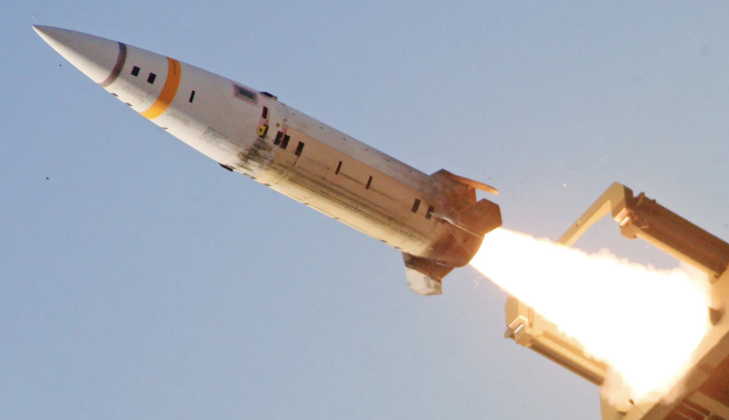
ATACMS and the real stakes
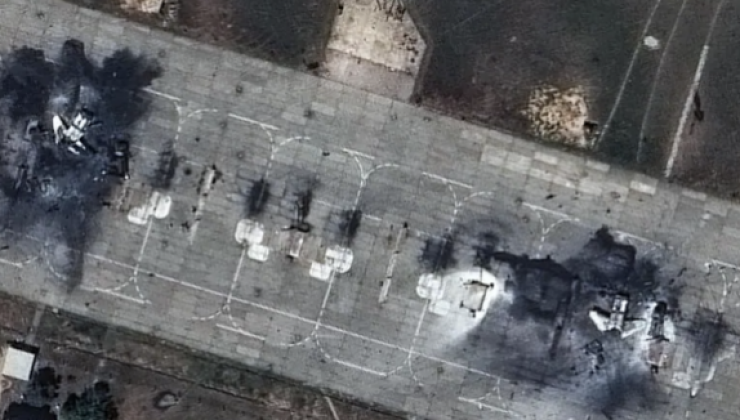
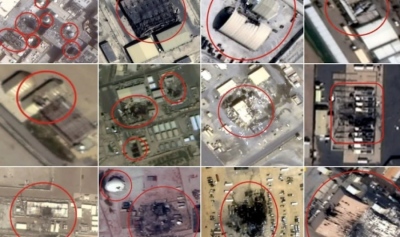
Ukrainian forces have used ATACMS targeting high-value Russian facilities.
The missile, with a range that in certain variants approaches 300 kilometers, gives the capability to strike targets much further than conventional artillery lines.
This holds special importance in today's war, where Russia has gradually adapted the disposition of its forces, moving critical command centers and depots further from the front line and investing significant assets in detecting and destroying Ukrainian launchers.
ATACMS have been linked to attacks against Russian air defense systems, radars, and other critical military assets.
Ukrainian authorities have also announced from time to time attacks on command facilities, such as the one near Novopetrivka, in the Donetsk region.
The military value of such strikes is obvious.
The most important point, however, is that these missiles do not operate in isolation.
To fully utilize their range requires advanced targeting, satellite surveillance, electronic reconnaissance, and near-real-time intelligence.
Moscow has repeatedly argued that the accuracy of Ukrainian long-range attacks would be impossible without deep involvement of Western intelligence systems, explains in its analysis Military Watch Magazine.
From the Russian side, consequently, every new delivery of ATACMS is not treated simply as a reinforcement of Ukraine, but as a further widening of NATO's military participation in the conflict.
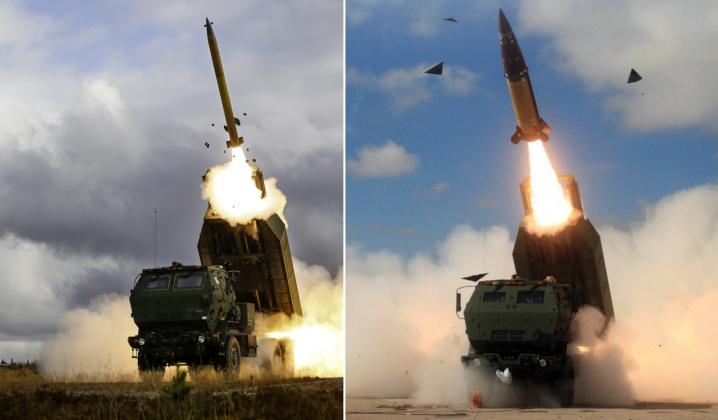
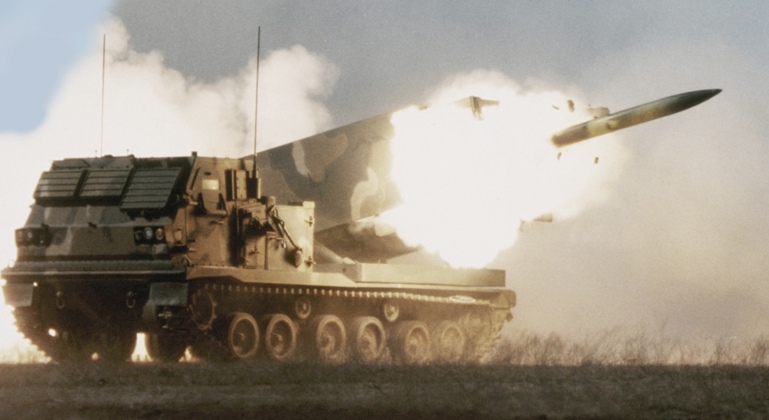
M270 multiply the problem
Equally important is the potential delivery of 12 M270 launchers.
The M270 is a tracked multiple launch rocket system that carries two missile pods.
In conventional configuration it can carry a total of 12 MLRS rockets, while in the case of ATACMS each missile occupies an entire launch pod, resulting in one vehicle being able to carry two ATACMS.
Compared to HIMARS, which are used more widely by Ukraine and carry a single pod, the M270 offers greater firepower per launcher.
The significance, however, of the 12 new systems lies elsewhere as well.
They allow Ukrainian forces to disperse long-range weapons across more positions, theoretically limiting the effectiveness of Russian efforts to locate and destroy them.
Russia has dedicated vast resources to countering HIMARS and other Western missile systems, using reconnaissance drones, Iskander-M missiles, loitering munitions, and electronic warfare assets.
Strengthening the Ukrainian launcher fleet inevitably increases pressure on Russian forces.
At the same time, however, the reality of the front has shown that neither ATACMS nor MLRS constitute some «miracle weapon» capable of single-handedly changing the course of the war.
Russia has already deployed a highly dense grid of electronic warfare and air defense, while significantly adapting the structure and dispersion of its forces against the capabilities of Western missile systems.
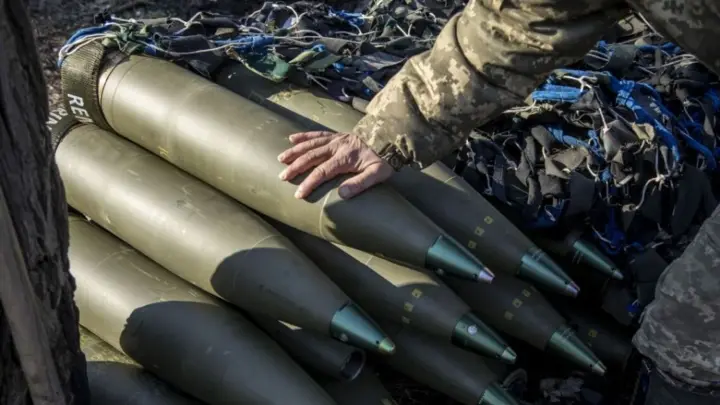
The darkest side of the package: Cluster munitions
An even more controversial element of the Turkish transfer is the 47,000 M509A1 shells of 203mm.
Cluster munitions remain one of the most disputed weapon categories, as they scatter a large number of submunitions over a wide area.
Those that do not explode on impact can remain active for a long time, creating a serious danger for civilians even after the end of conflicts.
The USA, Russia, and Ukraine do not participate in the Convention on Cluster Munitions, unlike a large number of European countries that have banned their possession, use, or transfer.
The prospect of routing tens of thousands of such shells to the Ukrainian front reveals one of the main contradictions of Western policy: the longer the war drags on and conventional ammunition stockpiles are reduced, the more the political and moral «red lines» that were previously presented as inviolable are relaxed.
Turkey, possessing significant stocks of older ammunition, now appears as one of the few potential suppliers that can cover part of Ukrainian needs.
Ankara and Moscow: Cooperation and conflict simultaneously
The case highlights once again the deeply contradictory character of Turkish policy toward Russia.
Turkey often appears as a country maintaining open channels with Moscow.
It has not fully adopted the Western economic sanctions regime, maintains significant commercial and energy relations with Russia, and periodically attempts to appear as a mediator.
This, however, is only one side of the picture.
At the military level, Ankara has for years pursued a policy that clashes with critical Russian interests.
In Syria, Turkey supported a large number of armed anti-government organizations, several of which Russia considered extreme or directly linked with jihadist networks.
Russian and Turkish forces found themselves repeatedly on opposing sides of the front, while relations between the two countries even passed through a period of acute crisis.
The same pattern re-emerges in Ukraine.
Turkey was already from the early stages a major supplier of military equipment to Kyiv.
The Bayraktar TB2 UAVs acquired an almost symbolic character in the first months of the war, while the Turkish defense industry has developed close cooperation with Ukrainian companies and has even sought production of weapon systems on Ukrainian soil.
The dispatch of ATACMS and M270 will elevate this relationship to a qualitatively different level.
Turkey's role inside NATO becomes clearer
Turkish foreign policy is often presented as «independent» from the West.
This image is partly accurate in the economic or diplomatic sphere, but becomes much more doubtful when Ankara's military policy is examined.
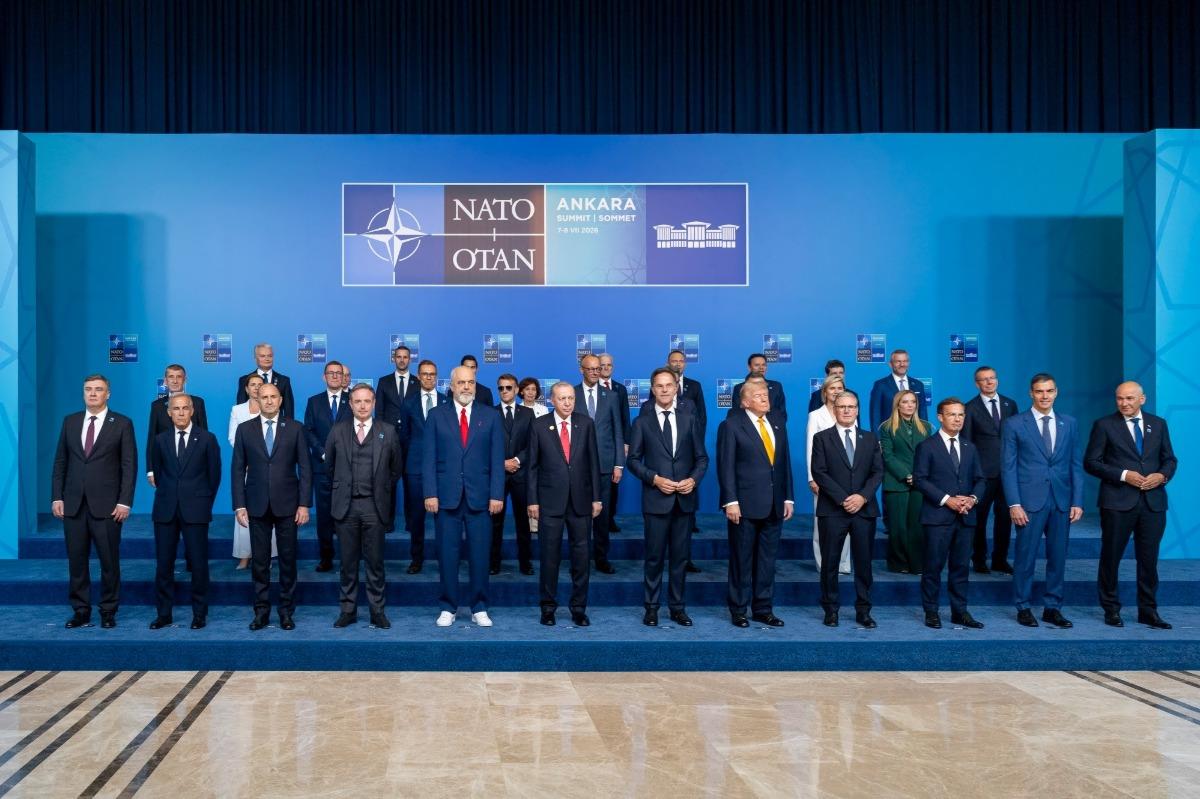
Turkey remains a key member of NATO, controls strategic geographical space between the Black Sea, the Caucasus, the Middle East, and the Eastern Mediterranean, and has repeatedly leveraged its influence in regions of vital importance for Russian security.
From the Russian perspective, support for Ukraine, Turkish activity in the Caucasus, and its multi-year involvement in Syria are not isolated incidents.
They compose a broader effort by Ankara to limit Russian influence and strengthen its own geopolitical presence.
This does not mean that Turkey and Russia are on a course for direct confrontation.
Both sides have proven that they can separate areas of confrontation from areas of cooperation.
The energy relationship, trade, and shared economic interests function as powerful mechanisms of self-restraint.
However, the dispatch of such a large package of advanced American weapons to Kyiv will inevitably strain this delicate balance.
A war that escalates
The most important conclusion is that the issue of Turkish weapons captures the core problem of the entire Ukrainian conflict.
Every time one side acquires a new capability, the other seeks a way to neutralize it.
More ATACMS lead to more Russian air defense, deeper dispersion, and heavier retaliation.
More M270 lead to an even more intensive hunt for launchers.
The use of cluster munitions increases in turn destruction and post-war human cost.
The idea that a new batch of Western weapons could bring about a decisive Ukrainian reversal has been repeatedly refuted by the dynamics of the war.
On the contrary, every new escalation deepens the conflict and increases the risks of direct confrontation between Russia and NATO states.
In this exact context Turkey's stance must be viewed.
Ankara can continue to talk with Moscow, trade with it, and present itself as a balancing power.
When, however, it simultaneously reinforces Kyiv with dozens of ballistic missiles, heavy launchers, and tens of thousands of cluster munitions, its real strategic positioning becomes much harder to hide behind the rhetoric of «neutrality».
For Russia, the message is clear: the war in Ukraine continues to be fed by a much broader network of states and military industries.
And as long as this network continues to channel deeper-strike assets toward Kyiv, the prospect of de-escalation moves further away and the risk grows that the Ukrainian conflict will evolve into an even more serious confrontation between Russia and the Western military system itself.



Readers’ Comments