

Greece plans to send AH-64D Apache attack helicopters to the United Arab Emirates, while at the same time Saudi Arabia, Turkey, and Pakistan are forming a new collective defense framework.
Athens offers Patriot systems, personnel, and attack helicopters for the security of the Gulf, while Ankara acquires an institutional position within the new regional security architecture. The question is now inevitable: what exactly is the strategic quid pro quo for Greece?
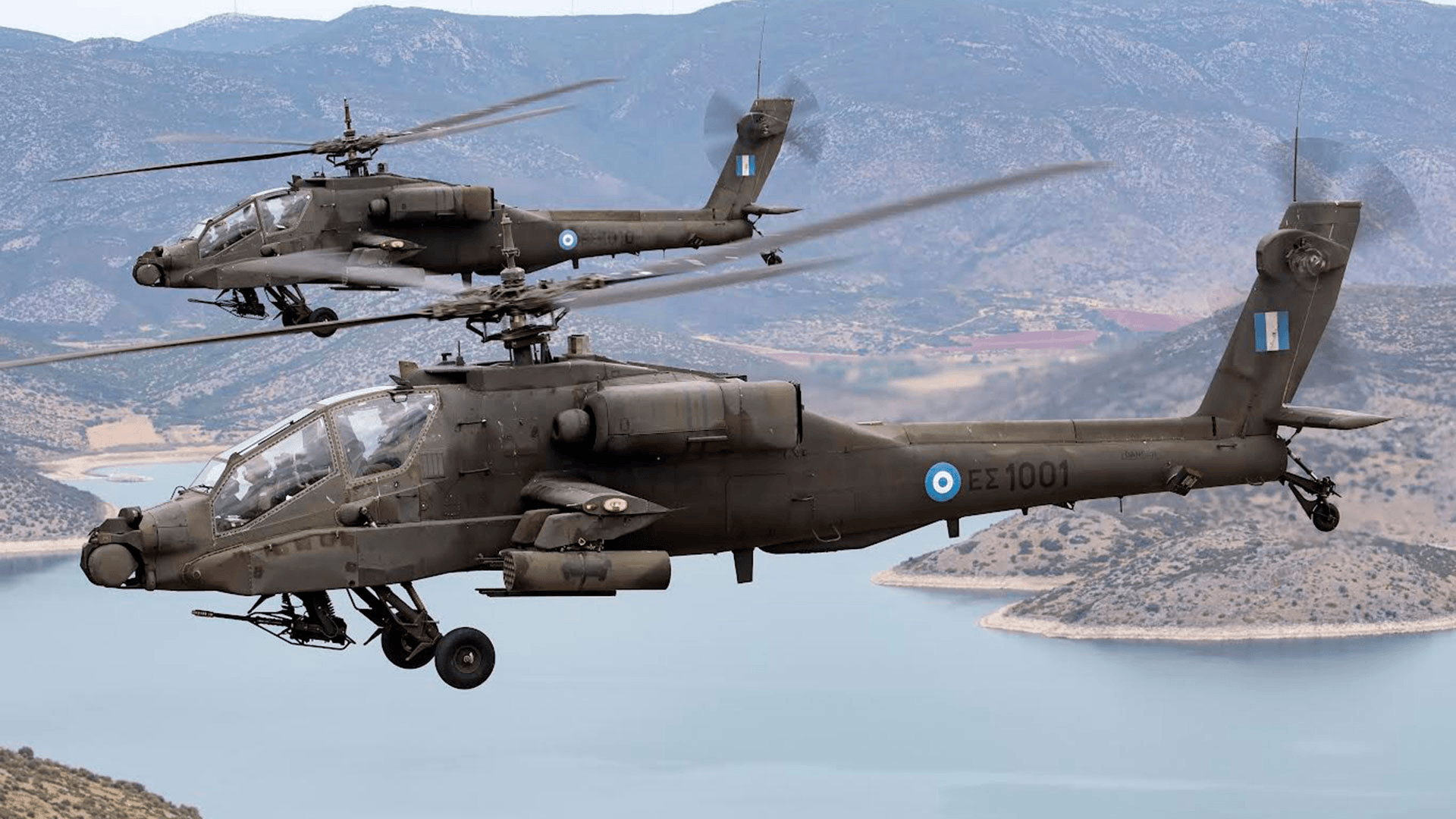
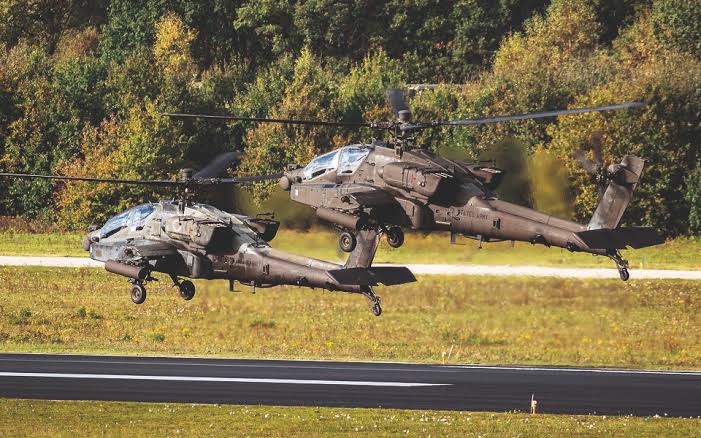
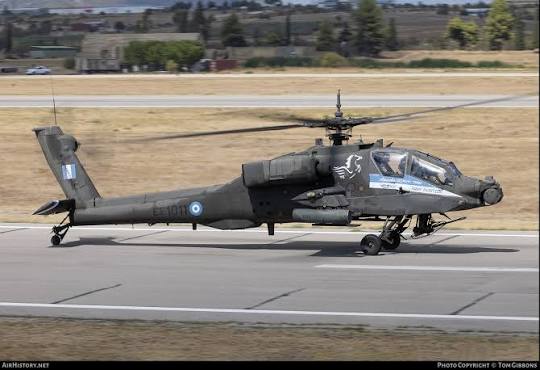
The information that Greece is examining the dispatch of two AH-64D Apache attack helicopters to the United Arab Emirates cannot be treated as just another ordinary military mission abroad.
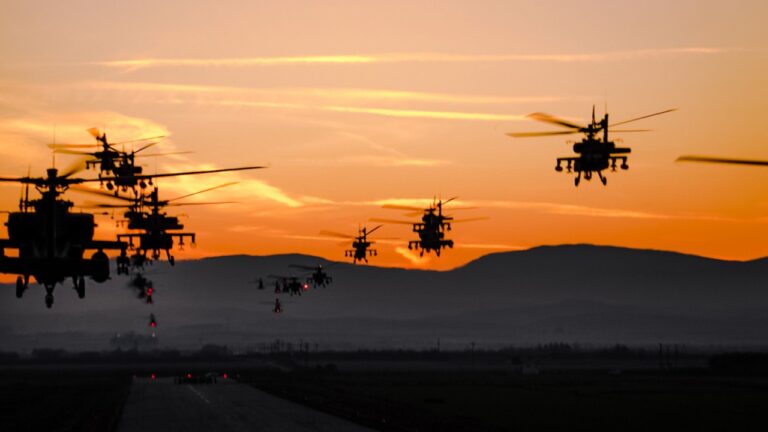
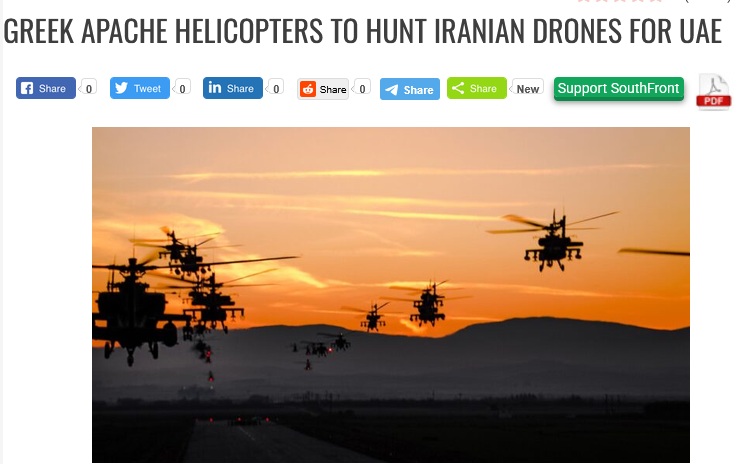
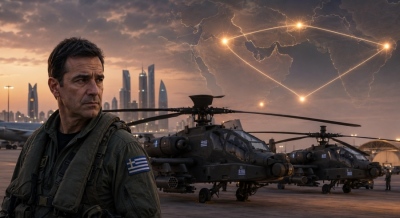
According to information from international media, mainly Russian, the helicopters and their crews are being prepared so that, when conditions allow, they will deploy to the United Arab Emirates with the mission of countering drones.
A Greek delegation has already traveled to Abu Dhabi to inspect the facilities that could host the helicopters and personnel.
The Apache helicopters are planned to be used as «drone hunters», protecting military installations and critical infrastructure of the United Arab Emirates.
The force in which they will be integrated is expected to comprise mainly Emirati Apache helicopters and possibly American helicopters, while other international forces, mainly from the USA, are located at the same base.
It is a development that confirms how Greece is gradually transforming into a provider of military security in the Persian Gulf, without it always being clear what exactly returns to Athens in terms of hard geopolitical power.
From Patriots to Apaches
The mission to the United Arab Emirates will not be an isolated one.
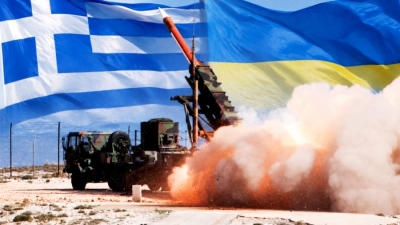
Since November 2021, approximately 120 Greek military personnel have been serving in Saudi Arabia alongside a Greek Patriot system under a bilateral defense cooperation agreement.
The Greek battery has been deployed in the Yanbu region with the mission of protecting critical oil facilities.
In March 2026, a Greek Patriot intercepted two ballistic missiles heading toward the area, recording the first confirmed combat interception by a Greek system of this type.
The Mitsotakis government manages Greece as a military corporation that measures its success by how many operational flight hours its crews have accumulated.
It is a state with specific threats, limited resources, and regional competitors like Turkey.
And right there the new geopolitical landscape creates a great paradox.
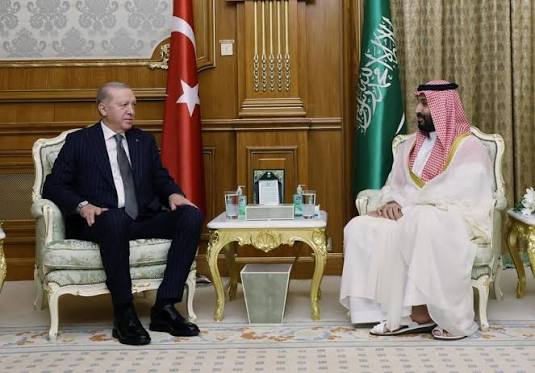
While Greece protects Saudi Arabia, Saudi Arabia signs a defense agreement with Turkey.
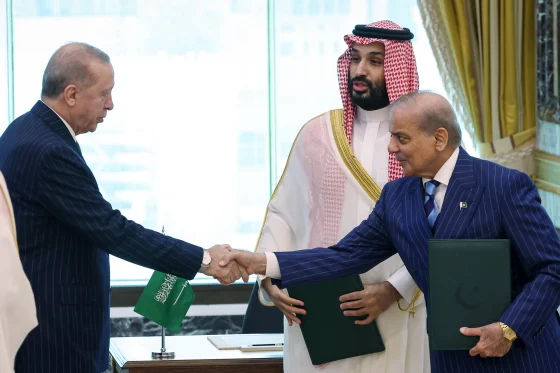
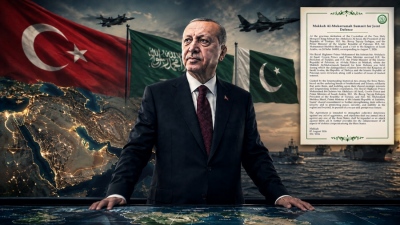
On August 7, 2026, just one day before the new discussion regarding the dispatch of Greek Apache helicopters, Saudi Arabia, Turkey, and Pakistan signed a major joint defense agreement in Mecca.
The text provides that an armed attack against one of the three states will be considered an attack against all three, while further deepening of defense cooperation is envisaged.
This is a development of immense significance.
Meeting in the same format are Saudi Arabia with its financial and energy power, Pakistan as the only Muslim country with nuclear weapons, and Turkey, which possesses the second-largest army in NATO and a rapidly growing defense industry.
The Saudi side and Ankara insist that the agreement is defensive in nature, is not directed against any specific country, and does not constitute a religious or offensive military block.
The great Greek contradiction
Greece has now invested politically and militarily in the security of Saudi Arabia.
It has allocated Patriot systems.
It has allocated approximately 120 military personnel.
Greek operators have engaged in real combat interceptions to protect strategic Saudi energy facilities.
At the same time, Athens has had a joint foreign policy and defense cooperation agreement with the United Arab Emirates since 2020, and is now considering sending two Apache helicopters and the necessary personnel to protect Emirati infrastructure.
And at the exact same time, Saudi Arabia places Turkey at the center of a new collective defense system alongside Pakistan.
Here lies the strategic question that the Greek government must answer.
When Greece provides military assets for the security of third countries, what exactly guarantees that these countries will stand by Greece in practice when vital Greek interests are at stake?
Turkey is not simply sending forces, it is building architecture
Here appears the essential difference between the Greek and Turkish approaches.
Greece appears to invest primarily by dispatching military capabilities.
Turkey invests simultaneously in security architecture.
Ankara does not limit itself to offering a system, two helicopters, or a military unit.
It enters into agreements.
It creates defense industrial relationships.
It sells drones.
It develops joint armament programs.
And now it participates in a collective deterrence agreement with Saudi Arabia and Pakistan.
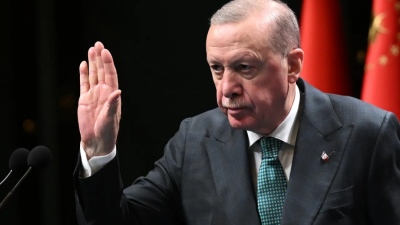
Recep Tayyip Erdogan himself stated that the new agreement will deepen defense cooperation and support joint defense industry projects.
Analysts estimate that the essence of the agreement will likely lie more in cooperation in technology, weapon production, and diplomatic coordination rather than in massive troop movements.
This is precisely what should concern Greek leadership.
Turkey tries to become an indispensable partner.
Greece risks settling for the role of a useful partner.
And in geopolitics the difference between the two is vast.
Pakistan makes the equation even more complex
The presence of Pakistan in the new trilateral format adds another level of strategic weight.
It does not mean that Pakistani nuclear weapons automatically turn into a nuclear umbrella for Turkey or Saudi Arabia.
On the contrary, the parties have attempted to disconnect the agreement from any such scenario.
Pakistan, however, possesses a large army, significant combat experience, and long-standing defense relations with both Saudi Arabia and Turkey.
The agreement therefore unites three different forms of power: Saudi capital, Turkish defense industry, and Pakistani military power.
For Greece, this development does not constitute an immediate threat.
It constitutes, however, a strategic warning.
Regional balances shift quickly, and countries that Athens treated as almost stable partners are now simultaneously creating much deeper relationships with Ankara.
The illusion of «strategic alliances»
In recent years Greek foreign policy has overused the term «strategic relationship».
Strategic relationship with the United Arab Emirates.
Strategic relationship with Saudi Arabia.
Strategic relationship with Israel.
Strategic relationship with the USA.
The problem is not these relationships.
The problem is when the Greek political class begins to confuse a good bilateral relationship with a permanent alignment of interests.
In international politics there are no permanent friendships.
There are interests.
And Saudi Arabia just showed that its interest requires a stronger military relationship with Turkey.
This is entirely legitimate for Riyadh.
The question is whether Athens holds a similarly cold perception of its own interests.
The risk regarding Iran
There is also a second, far more serious dimension.
Every new Greek military presence in the Gulf moves Greece even deeper into a conflict in which Athens officially does not appear as a belligerent party.
The Greek Patriot in Saudi Arabia has already shot down real incoming ballistic targets.
If Greek Apache helicopters deploy to the United Arab Emirates and begin shooting down drones during a period of active regional conflict, then the distance between «defensive assistance» and operational involvement becomes even smaller.
And the region has already shown how quickly fire can reach close to Greek territory.
The more Greek military assets are placed inside the conflict zone, the greater the exposure to risks that are not directly related to the defense of Greek territory becomes.
Who decides how far involvement will go?
The Mitsotakis government and the leadership of the Ministry of Defense therefore owe answers to a few simple questions.
How many Greek military assets can the country spare abroad?
By what criteria?
For how long?
Under what rules of engagement?
And above all, for what specific returns?
The acquisition of operational experience cannot be a blank check.
Nor can every new regional crisis be turned into an opportunity for Greece to prove that it is the «eager» and «reliable» ally.
Because allies value reliability.
But they value even more the one who knows their value and demands returns.
Greece needs strategy, not just presence
The Greek strategy in the Gulf could make sense if it formed part of an absolutely clear system of mutual commitments.
If, for example, military assistance to Saudi Arabia and the United Arab Emirates were converted into real diplomatic and defense support for Greece in moments of crisis.
If it led to technology transfers.
If it secured investments in the Greek defense industry.
If it created co-productions.
If it imposed clear political conditions.
But if the model is limited to «we send Patriot systems, personnel, ammunition, and Apache helicopters, and they offer us operational experience», then there is a serious issue of strategic balance.
Especially when, at the same time, Turkey is not merely trying to participate in Gulf security.
www.bankingnews.gr


Readers’ Comments