

The thriller in the Persian Gulf continues as 6 conflicting events take place which shape an uncertain landscape...
1) Oman maintains that the agreement with Iran regarding Hormuz is close, this agreement will be interim and will last 60 days.
2) Officially Iran maintains that Hormuz will not open until the USA changes its stance toward Iran and sets 6 conditions.
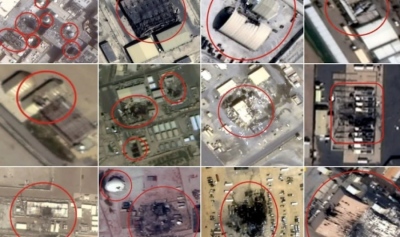
3) A barrage of explosions at an Aramco refinery facility in Jazan, Saudi Arabia and in the industrial city of Jubail in Saudi Arabia.
4) A vessel from the United Arab Emirates was struck in Hormuz and Saudi Arabia accused Iran...
5) Israeli state media reported that the Israeli military is examining scenarios for independent military action against Iran.
6) The command of the American military, CENTCOM, is visiting Israel during a tremendously sensitive juncture, and this development is considered suspicious.
Explosion hell in Saudi Arabia - Fire at an Aramco refinery in Jazan, explosions in the industrial city of Jubail
An explosion hell occurred in Saudi Arabia.
A fire broke out at an Aramco refinery in Jazan, and explosions occurred in the industrial city of Jubail.
They were likely targeted by missiles and drones from Yemen, but it is not yet clear...
Israel prepares unilateral war operations against Iran - CENTCOM chief urgently in Israel
Israeli channel Channel 13 claims that the Israeli military is preparing a unilateral attack on Iran.
The Israel Defense Forces (IDF) are working on strategies to strike Iran without the support of the United States.
Specifically, it claimed that the military of the Israeli regime is preparing for the possibility of conducting a unilateral operation against targets on Iranian soil without direct American support.
At the same time, it was revealed that Brad Cooper, chief of CENTCOM of the American Military Command, is urgently in Israel... especially during such a fragile period.
The Commander of US Central Command (CENTCOM), Admiral Brad Cooper, arrived in Israel, where he will discuss various issues with senior Israeli military officials, including the war in Iran and the Gaza Strip.
CNN reported that General Dan Caine, Chairman of the Joint Chiefs of Staff of the US Armed Forces, is seeking a «differentiation» from the war with Iran.
The USA is exploring a diplomatic exit from the military conflict.
Bitter truths for Israel
Although Israel retains the capability to attack Iran without US support, the scope of damage it could cause is extremely limited.
The Israel Defense Forces do not have the means to attack Iran's nuclear facility, Mount Pickaxe, which is buried deep underground.
They do not even have the capability to launch effective strikes against the tunnels housing Iran's missiles.
All other known above-ground targets, such as missile and drone manufacturing facilities, were struck at the peak of the war earlier in the year.
Nevertheless, Israel can carry out targeted assassinations or even attack civilian infrastructure in Iran.
In any case, it is certain that Iran will respond.
The main purpose of any isolated Israeli attack would likely not be an immediate military one, but rather the return of the USA to the war and the sabotage of the ongoing agreement.
In the event of an Israel Defense Forces attack against civilian infrastructure in particular, the Iranian response will likely not be limited to Israel.
Iran has already warned that it will retaliate against similar facilities across the region. Thus, Israel may also aim to drag the Gulf states back into the war.
CENTCOM: We have diverted 53 commercial ships from Hormuz
By August 8, US Central Command (CENTCOM) had diverted the course of 53 commercial ships, immobilized two, and boarded and inspected two others.
The American military has also allowed more than 30 ships to pass through the blockade to deliver humanitarian aid.
The Washington Post, citing the Pentagon, revealed that the US Deputy Secretary of War gave defense companies a 21-day deadline to submit plans to accelerate weapon delivery dates.
Also, the Washington Post reported that Iran states the agreement with Oman is imminent, but Oman's demands render the opening of the Strait of Hormuz uncertain.
The Ministry of Foreign Affairs of Oman announced that ongoing negotiations regarding maritime arrangements in the Strait of Hormuz are being conducted in a constructive and positive climate.
Arab Gulf States Institute: US bases in the Gulf are a source of insecurity - $1,000 cost of war for every American
American military bases in the Persian Gulf will not ensure security and stability for the Arabs.
The Arab Gulf States Institute, in its analysis, emphasized that the US war against Iran showed that US military bases in Arab Gulf countries do not always provide the security and stability those countries expect.
On the contrary, these bases put American forces at risk.
In fact, Iran has stated that one of the main reasons for attacking the Arab countries of the Persian Gulf is the presence of these bases.
Also, according to the Washington Post, the American military spends billions of dollars, and every average American family will pay 1,000 dollars for this conflict.
The cost imposed on taxpayers and consumers continues to grow and exceeds what has been fully calculated so far.
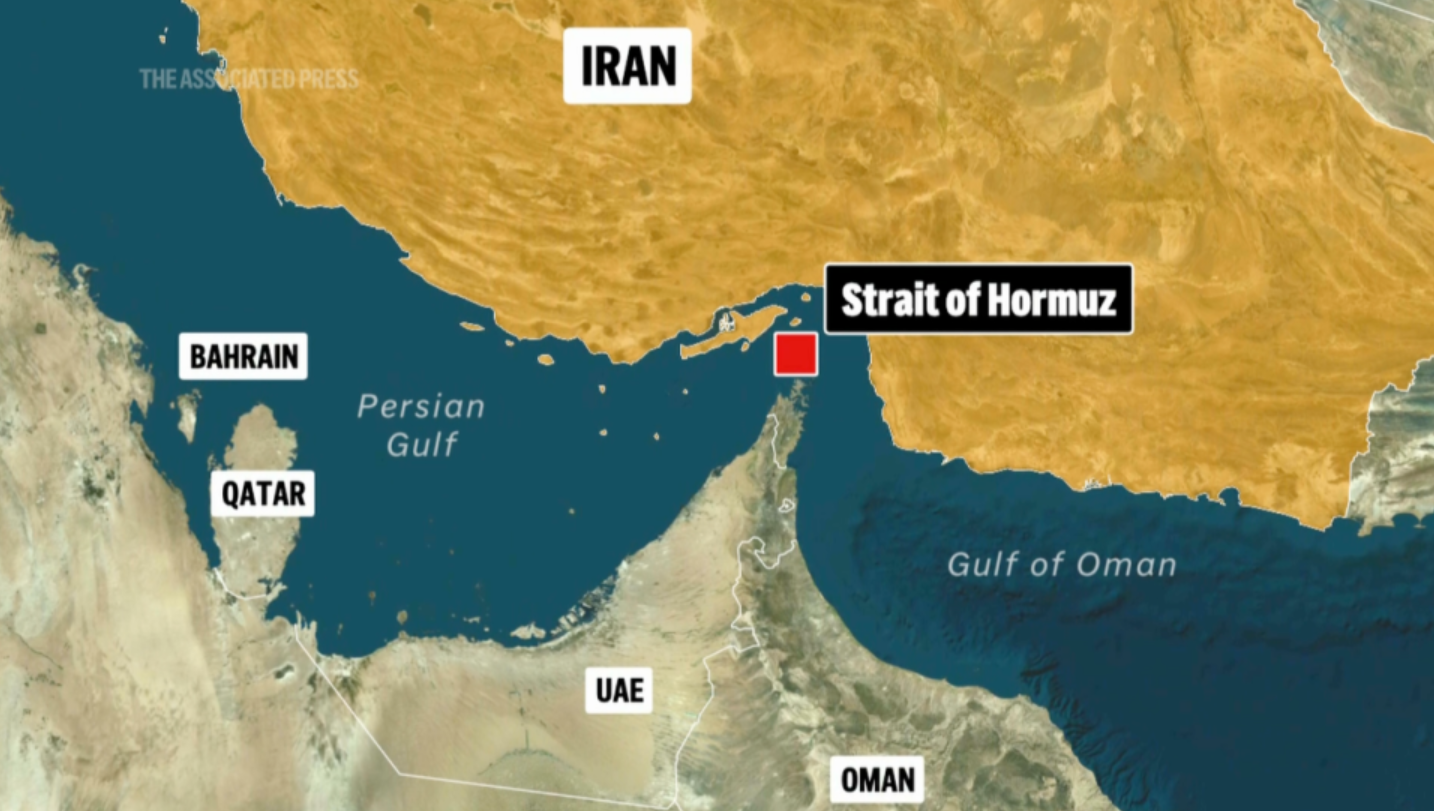
J.D. Vance (USA): The US has a plan for a safe route in Hormuz - Iran is blocking American ships
American Vice President J.D. Vance revealed a US plan aiming to create a safe route through the Strait of Hormuz.
J.D. Vance accused Iran of placing mines in the Strait of Hormuz during the initial days of the conflict, stated that Washington has taken measures to ensure the safety of transit, and that these measures are expected to restore oil and natural gas exports from the Persian Gulf region to pre-crisis levels.
The Wall Street Journal claimed that Iran, within the framework of an agreement to open the Strait of Hormuz, has committed to preventing American warships from passing through the waterway, a move viewed as an indication of Iran's efforts to limit the US military presence in the Persian Gulf.
US Vice President J.D. Vance, stating that Washington is simultaneously using all diplomatic, economic, and military tools against Tehran, emphasized that this confrontation continues and that there is still a long way to go before a final result is achieved.
He also claimed that Iran has informed the United States that it will allow the maximum flow of oil through the Strait of Hormuz and wants to end the current situation.
However, J.D. Vance made clear that the USA will not trust Iran until this is proven in practice.
Iran and Oman close to an agreement to open Hormuz for 60 days, the US wants full freedom of navigation
ABC News, citing several American officials, reported that the agreement between Iran and Oman is to be implemented for a period of 60 days, a period during which negotiations will continue to reach a long-term agreement regarding the status of the Strait of Hormuz, as well as the continuation of talks on Iran's nuclear issue.
According to ILNA, the goal of the interim agreement is to pave the way for the full opening of the Strait of Hormuz and to achieve a more permanent agreement.
American officials emphasized that the details of this agreement have not yet been finalized and cannot be considered definitive until an official announcement is made.
The United States wants to ensure full freedom of navigation in the Strait of Hormuz and will oppose any mechanism that allows Iran to impose tolls on ships or make their transit conditional on obtaining a permit from Iran.
Supreme National Security Council of Iran: Hormuz will not open until the US changes its stance, we set 6 conditions
The top security official of Iran reiterated that Iran will not ease restrictions on transit through the Strait of Hormuz until the United States genuinely changes its behavior toward Iran.
Mohamed Baker Zolkandr, Secretary of the Supreme National Security Council (SNSC), stated that Iran's policy in its relations with the United States is to avoid any concessions that would violate the rights of the Iranian people.
«The SNSC will never back down, whether in war or in negotiations», stated Zolkandr, whose body is responsible for handling Iran's current confrontation with the USA.
Iran has imposed restrictions on transit through the Strait of Hormuz since the early days of the aggressive war between the USA and Israel.
In fact, Iran sets 6 basic conditions to open Hormuz.
The conditions are:
1) The USA must refrain from threats or insults against the sacred beliefs of the Iranian nation,
2) End aggression against Iran and its regional allies,
3) Lift the naval blockade,
4) Lift all sanctions against Iran,
5) Return frozen Iranian assets, and
6) Pay compensation from the USA for damages resulting from the aggression of the American military.
Iranian officials say that the United States violated the Memorandum of Understanding (MoU) of Islamabad by attempting to create new shipping routes in the strait near the coast of Oman.
According to Article 5 of the memorandum, shipping through the Strait of Hormuz was expected to return to normal levels within a month.
While Iran implemented its end of the agreement by easing restrictions and allowing the return of transit to 60% of normal levels within two weeks, Washington not only failed to honor its end of the deal, but also resumed air strikes on Iran.
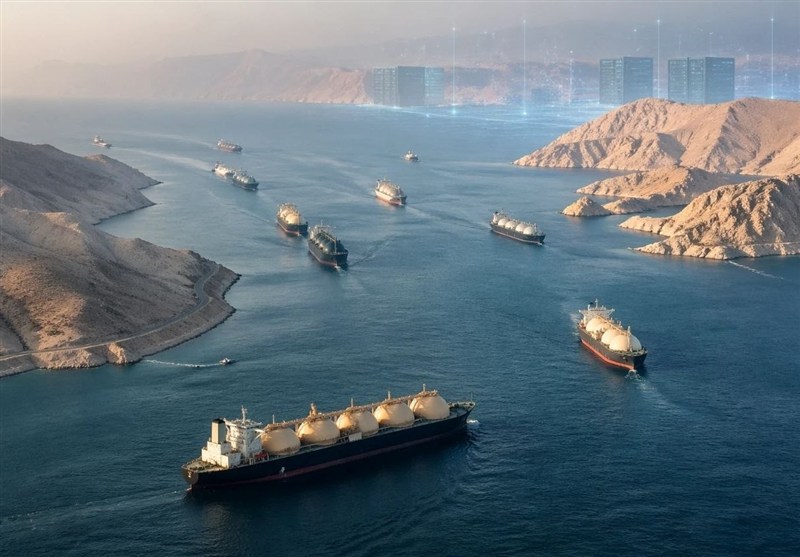
What is happening? - Yemen with new weapons and tactics crushed Saudi Arabia which ran out of Patriot... has barely 400
What has transformed Yemen from a peripheral player into a strategic threat to Saudi Arabia is not a specific weapon, but a clever combination of long-range weapons, naval blockade tactics, and the exploitation of Saudi Arabia's defense gaps - an equation never before applied to the Saudi monarchy in this way.
According to the latest news, as of early July 2026, military attacks by Ansar Allah (Yemen) on Saudi Arabia have entered a new phase.
What was previously a border conflict with short-range missiles has now turned into an asymmetric war directly targeting the economic arteries of the Saudi kingdom.
These 4 weapons of Yemen will destroy Saudi Arabia
A. Long-range ballistic missiles
B. Cruise missiles
C. Suicide unmanned aircraft
D. New naval blockade tactics.
1) The offensive system: ballistic missiles, cruise missiles, and unmanned aircraft
The offensive system of Yemen has now turned into a three-tiered network, with each tier pursuing a specific mission:
A. Ballistic missiles: the most expensive and terrifying tool
The Zulfiqar missile, with a range of 1,400 kilometers (derived from the Iranian Fateh-110 missile), has repeatedly shaken Saudi Arabia's refineries.
The most recent example of this missile was a precision strike on a «Saudi» oil tanker off the coast of Yanbu, using an anti-ship ballistic missile.
Also, dozens of ballistic missiles simultaneously targeted Aramco facilities in the Jazan region.
B. Cruise missiles: a complementary role with precision
In the recent attack on the facilities at Yanbu, Ansar Allah also used cruise missiles.
These missiles fly at low altitudes and are much harder for defense systems to intercept.
The cruise missiles of Ansar Allah can be considered complementary weapons to ballistic missiles, and both missile types together can cause great damage to Saudi Arabia.
C. Suicide unmanned aircraft (such as the Shahed-136 and Samad-3)
These low-cost weapons can be described as Yemen's cheapest and most lethal asset.
The Samad-3 drone, with a range of 1,448 kilometers, covers all key points of Saudi Arabia.
Ansar Allah uses these drones for saturation attacks to exhaust the expensive Patriot defense system and waste its valuable ammunition.
2) A strategic shift: from "city siege" to "siege" at sea
The most threatening weapon of Yemen in the war with Saudi Arabia is the shift in tactics from symbolic attacks to a naval blockade strategy.
Ansar Allah officially declared a «naval blockade» against Saudi Arabia.
This means that Saudi Arabian cities are no longer the only targets, but the country's oil exports through the Red Sea have become the main targets.
Since then, at least 8 Saudi tankers have been struck by anti-ship missiles and guided explosive boats, and nearly 30 others were forced to divert their course.
The northern Red Sea has now become a high-risk area for Saudi shipping.
3) Saudi Arabia's hidden weakness: A defense being exhausted
Military analysis suggests that the attacks in Yemen are designed based on a detailed pathology of Saudi Arabia's military weaknesses.
The most significant of these weaknesses is the severe shortage of Patriot PAC-3 interceptor missiles.
According to estimates, the Saudi stockpile of these missiles has dropped to just 400 (about 14% of the original stock), and new missiles will not arrive before 2028.
On the other hand, the HQ-9 defense system deployed by Pakistan in Saudi Arabia is not integrated into Saudi Arabia's command network and lacks the necessary coordination.
These structural gaps allow Yemen to neutralize part of Saudi Arabia's defense with coordinated and saturated attacks.
4) Geopolitical impacts: Shock to the global energy market
The consequences of these attacks extend beyond the borders of the two countries.
Reduced traffic in the Red Sea has disrupted Saudi Arabia's oil exports and added war risk premiums to global oil prices.
In response, Saudi Arabia was forced to sign new defense contracts with Pakistan and Turkey, a sign that the conflict has evolved from a regional proxy war into a major geopolitical game in Western Asia.
Ultimately, what has transformed Yemen from a peripheral player into a strategic threat to Saudi Arabia is not a specific weapon, but a clever combination of long-range weapons, naval blockade tactics, and the exploitation of Saudi Arabia's defense gaps.
www.bankingnews.gr







Readers’ Comments