

The President of Serbia, Aleksandar Vucic, attempted once again unsuccessfully to balance between Russia, Ukraine, and the European Union, while Volodymyr Zelensky sought political and diplomatic gains even within a country with deep historical and energy ties with Moscow.
The visit of the Ukrainian President to Belgrade, however, instead of functioning as a simple diplomatic handshake, opened a deeper political rift in Serbia and exposed the contradictions of both sides.
The first official visit of Volodymyr Zelensky to Serbia can hardly be characterized as an ordinary diplomatic meeting.
The Ukrainian President arrived in Belgrade on Friday, August 7, and on Saturday, August 8, had official talks with Aleksandar Vucic, in a visit that from the very first moment acquired much greater political weight than the agreements on economy, energy, or agricultural cooperation that were announced publicly.
The real object of the meeting was much broader.
It was the stance of Serbia toward the war in Ukraine.
It was the relations of Belgrade with Moscow.
It was Western pressure for sanctions against Russia.
It was the European course of Serbia.
And above all, it was the attempt of Aleksandar Vucic to prove that he can still converse with all sides without definitively choosing a camp.
???? Zelensky meets Serbian President Aleksandar Vučić in Belgrade. pic.twitter.com/sZhSTelPxu
— Military Summary (@MilitarySummary) August 8, 2026
The Vucic problem
This, however, is precisely the biggest problem of his policy.
For years, Vucic has built a foreign policy that rests not so much on a clear strategy as on a continuous balance between competing centers of power.
Serbia seeks accession to the European Union, maintains a close energy relationship with Russia, has not imposed sanctions on Moscow, and at the same time officially supports the territorial integrity of Ukraine.
Until today, this tactic allowed Belgrade to buy time.
The visit of Zelensky shows, however, that the margins of this policy are becoming increasingly narrow.
Vucic spoke about the territorial integrity of Ukraine
After the meeting, Aleksandar Vucic reiterated publicly that Serbia supports the Charter of the United Nations and the territorial integrity of all member states of the UN, including Ukraine.
At the same time, he thanked Ukraine because it has not recognized the independence of Kosovo and continues to support the territorial integrity of Serbia.
At the level of diplomatic language, this position is consistent.
At the level of political reality, however, Vucic finds himself trapped within his own contradictions.
If he absolutely defends the principle of territorial integrity as the foundation of international law, then his position on Ukraine is almost self-evident.
If, however, he simultaneously wishes to maintain a privileged political and energy relationship with Russia, then he is obligated to avoid the next step: full alignment with Western sanctions and a clear political conflict with Moscow.
And this is precisely what he did now.
Vucic had already made clear before the visit that Serbia's policy regarding sanctions against Russia does not change.
In other words: yes to the territorial integrity of Ukraine, but no to sanctions against Russia.
Yes to Zelensky in Belgrade.
But no to a strategy of rupture with Moscow.
Vucic avoided saying Putin's name
The name that Vucic avoided saying
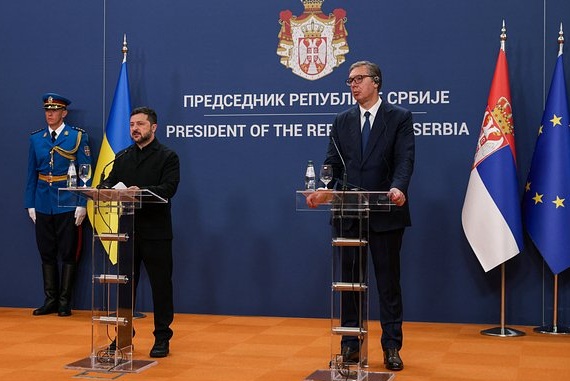
The awkwardness became even more apparent during the press conference.
While Volodymyr Zelensky spoke directly about the latest Russian attacks and losses in Ukraine, Aleksandar Vucic avoided naming Vladimir Putin directly, even when he received a relevant question from a Ukrainian journalist.
Instead of directly commenting on the intentions of the Russian President, he limited himself to the assessment that he does not see the war ending soon and warned that «a difficult winter awaits us».
This silence is not a detail.
It is political.
Vucic knows that every phrase that can be interpreted as an open personal attack on Vladimir Putin will have consequences on relations with Russia.
He also knows that a large part of Serbian society continues to maintain strong pro-Russian sentiments.
And, above all, he knows that Serbia still has serious energy dependence on Russia.
Thus, the image of the President receiving Zelensky with honors but avoiding naming Putin encapsulates Belgrade's entire foreign policy: one handshake toward the West, one look toward Moscow, and no bridge completely burned.
Dok botovi iz kontrolisane opozicije kukaju kako preskačemo susret njihovog voljenog šefa Vučića i Zelenskog, sasvim je jasno da ih zapravo muči sopstveni ulog u igri, pa im od srca prepuštamo da ovog puta sami objave vest o svom lideru i konačno priznaju ko im je gazda.…
— Luka (@vratioseluka) August 8, 2026
Storm in Serbia over Zelensky's visit
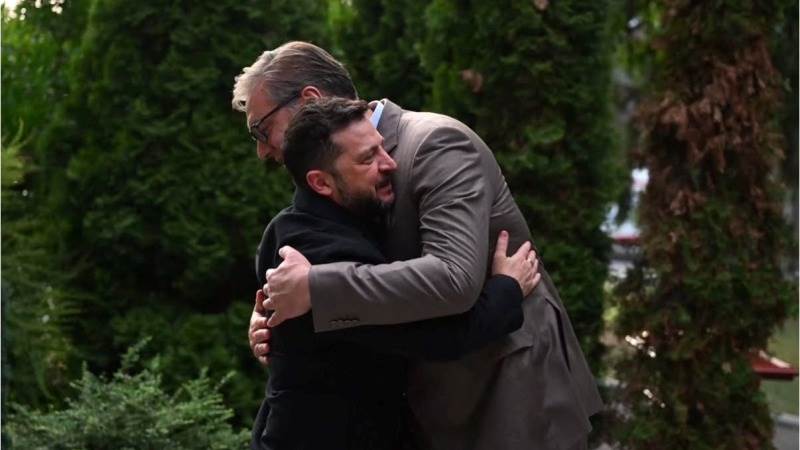
This balance, however, has now caused intense political debate inside Serbia.
And what is interesting is that the fire against Aleksandar Vucic comes from completely opposite directions.
The pro-European Zeleno-Levi Front welcomed Zelensky's visit, but essentially accused Vucic of continuing to handle foreign policy through daily political calculations instead of adopting a clear stance against the Russian military operation and imposing sanctions on Russia.
On the other side of the political spectrum, the parliamentary movement Mi Snaga Naroda launched a fierce attack against the visit.
The movement argued that Zelensky's presence in Belgrade constitutes a new blow to Serbia-Russia relations and directly connected the issue with cheap Russian natural gas and Kosovo. It argued that Serbia depends significantly on Russian gas and recalled that Russia possesses veto power in the UN Security Council, a crucial element for Serbian policy on the issue of Kosovo.
Certain attacks by the specific movement against Zelensky also include the self-evident accusation that he is an «illegal and unlegitimized president» because elections were not held in 2024.
But regardless of the rhetoric of his opponents, one thing is clear: Vucic managed to provoke simultaneously the pro-Russians because he received Zelensky, and the pro-Europeans because he does not clash enough with Russia.
This is perhaps the price of a policy that has been attempting for years to be with everyone and everything.
European course or mutual political favor?
The two presidents also placed special weight on the European perspective of their countries.
Vucic stated that Ukraine will have the full support of Serbia on its path toward the European Union, while Zelensky stated that he supports the acceleration of Serbia's European course.
It sounds like a relationship of mutual European solidarity.
There is, however, a more cynical reading.
Vucic needs the message toward Brussels that Serbia remains a useful, predictable, and potentially Western player in the Balkans.
Zelensky needs the message toward Moscow that Russian influence even in traditionally friendly states is not taken for granted.
Former diplomat Dusko Lopandic estimated that through the visit Vucic sends precisely a message toward Brussels and Berlin, characterizing at the same time the foreign policy of the Serbian President as tactical and short-term, without a real strategy.
The observation has weight.
Because behind all the statements about principles and European solidarity, there is also raw political transaction.
Vucic's difficult bet
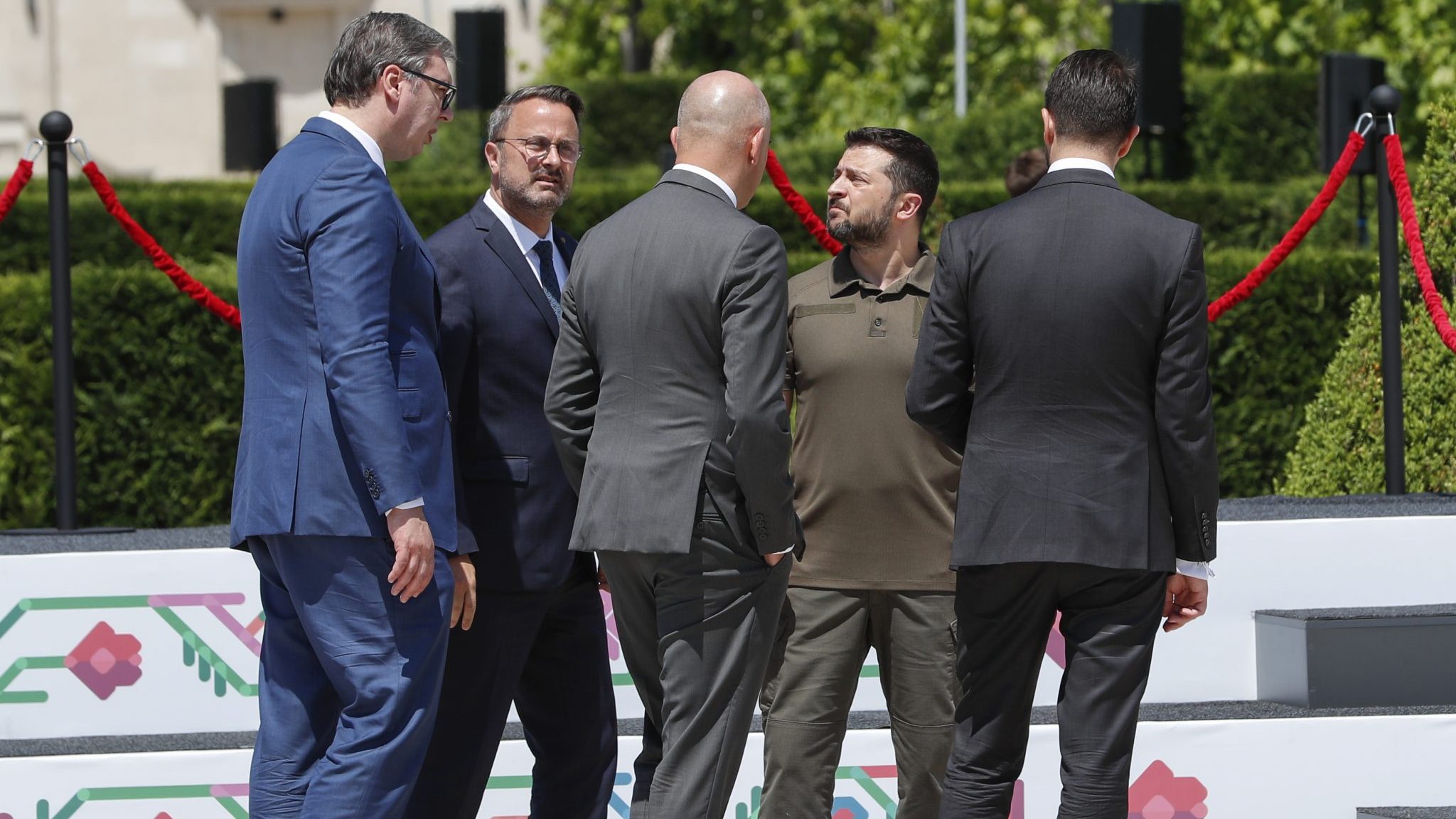
Aleksandar Vucic has proven that he is extremely capable of turning Serbia's geopolitical contradictions into a political tool.
For years he has managed to converse with Moscow, Beijing, Brussels, and Washington.
The question is for how much longer.
Zelensky's visit reveals that every step toward one side now produces greater cost for the other.
Russia remains important for energy security and the issue of Kosovo.
The EU remains Serbia's main economic and institutional destination.
Ukraine asks for solidarity and greater isolation of Moscow.
And Serbian society remains deeply divided regarding the country's geopolitical direction.
Vucic wants to keep all doors open.
At some point, however, others may demand that he choose which one to walk through.
www.bankingnews.gr


Readers’ Comments