

At a critical juncture for the geopolitical balance of the Middle East, the formation of a new military axis is causing severe tremors in international balances.
The signing of the «Mecca Mutual Defense Agreement» between Turkey, Saudi Arabia, and Pakistan is not merely a diplomatic news item, but the birth of an alliance that combines military technology, immense wealth, and nuclear deterrence.
This development redefines the security landscape in the wider region, creating new geopolitical facts, bringing to the forefront questions about the real goals of the «Big Three», internal reactions in Ankara, historical lessons of the past, the catalytic role that Egypt is called to play, and directly affects the strategic planning of Athens.
The quiet but substantial convergence of Turkish technology, Saudi wealth, and Pakistani nuclear power creates an autonomous defense umbrella («Big Three») delivering a fatal blow to American hegemony. This unexpected realignment of forces constitutes a «hidden threat» to the traditional planning of the West, as it overturns the doctrine of American-Israeli superiority and forces Washington and Tel Aviv to face an unprecedented, formidable Islamic deterrent pole in the Middle East.
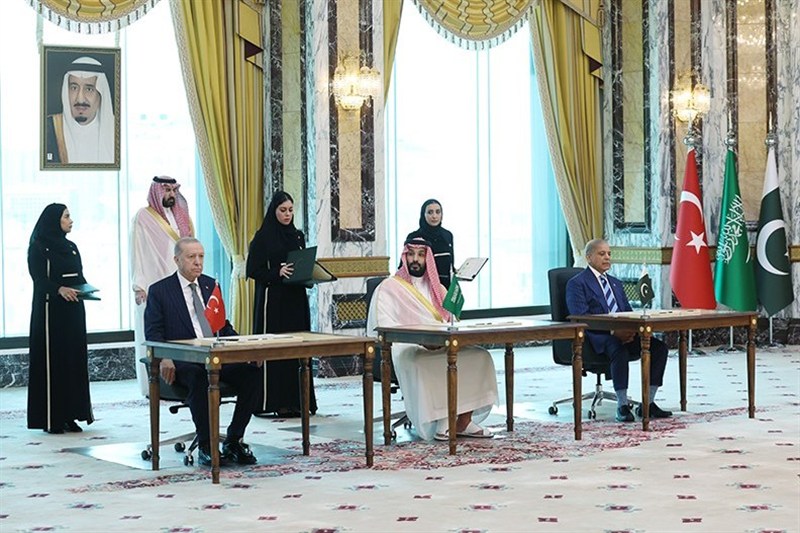
The birth of the «Big Three» of the Islamic world
An Islamic NATO, the creation of which has been discussed for a long time, is beginning to take shape.
The formation of a new trilateral military alliance («Islamic NATO») between Turkey, Saudi Arabia, and Pakistan, was sealed in Mecca.
This alliance unites the most militarily powerful country (Turkey), the wealthiest (Saudi Arabia), and the only nuclear power of the Islamic world (Pakistan).
Despite the historical ties of these countries with the USA, the alliance is not directed against Shiite Iran, as Washington and Israel sought in the past, but functions as a defense umbrella.
Its goal, as expressed, is the stabilization of the Middle East against American-Israeli aggression and preparation for the gradual withdrawal of the USA from the region, challenging the regional superiority of Israel.
The trilateral agreement signed in Mecca is open to the accession of other states as well, having the potential to unite a significant part of the Islamic world.
It already includes 370 million people, namely the total population of the three countries that co-signed the defense pact.
This agreement explicitly defines that an armed attack on any of these countries constitutes an attack on all three.
The size of the population is not the only critical metric, as the pact was co-signed by
- the most developed and militarily powerful country (Turkey),
- the wealthiest (Saudi Arabia), and
- the only nuclear-armed country (Pakistan) of the Islamic world.
The formation of this «Big Three» constitutes an event of historical significance for global geopolitics.
According to an analyst from the Associated Press, the combination of capabilities of the three countries is analyzed as follows: Saudi money and energy, military experience and nuclear weapons of Pakistan, combined with the technology and defense industry of Turkey.
However, the Associated Press estimates that the signing of this agreement does not necessarily mean the creation of a classic military block, while the Chicago Council on Global Affairs sees in it an overturn of geopolitical facts through new alliances that are not yet considered «fully official coalitions».
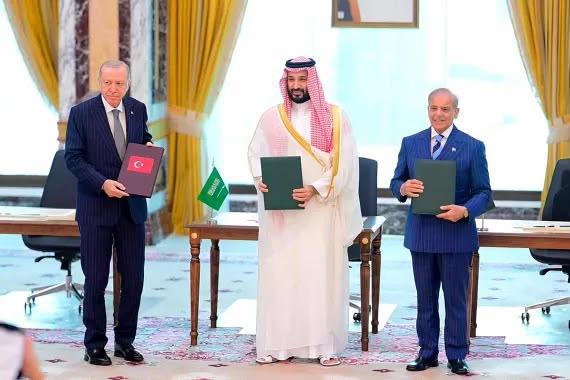
The protagonists of the agreement and the acceleration of developments
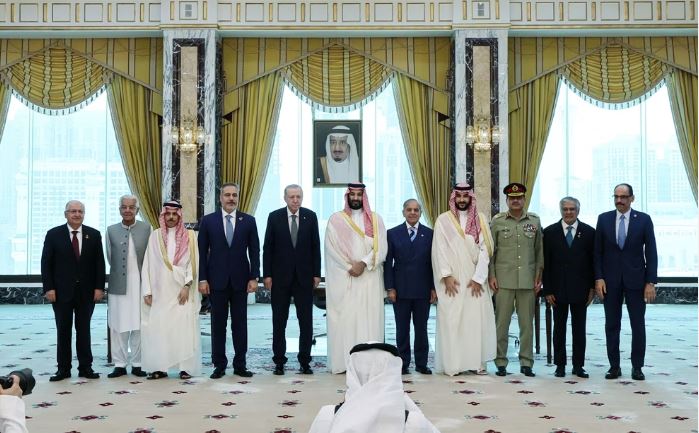
Turkish President Recep Tayyip Erdogan, who traveled to Mecca, Saudi Arabia accompanied by Foreign Minister Hakan Fidan, Defense Minister Yasar Guler, and National Intelligence Organization (MIT) Director Ibrahim Kalin for the signing of the agreement, expressed the hope that such a treaty will guarantee security and prosperity.
The leaders of Pakistan, General Asim Munir and Prime Minister Shehbaz Sharif, also traveled to Saudi Arabia.
Their host, Crown Prince Mohammed bin Salman, de facto ruler of the kingdom, had been working for a long time toward achieving this goal, having already concluded a similar bilateral agreement with Pakistan.
The transformation of the format from «two» to «three» was expected, but American-Israeli aggression against Iran accelerated the procedures.
Reactions in Ankara - Propaganda, warnings, and the fear of a dangerous trap in Ankara
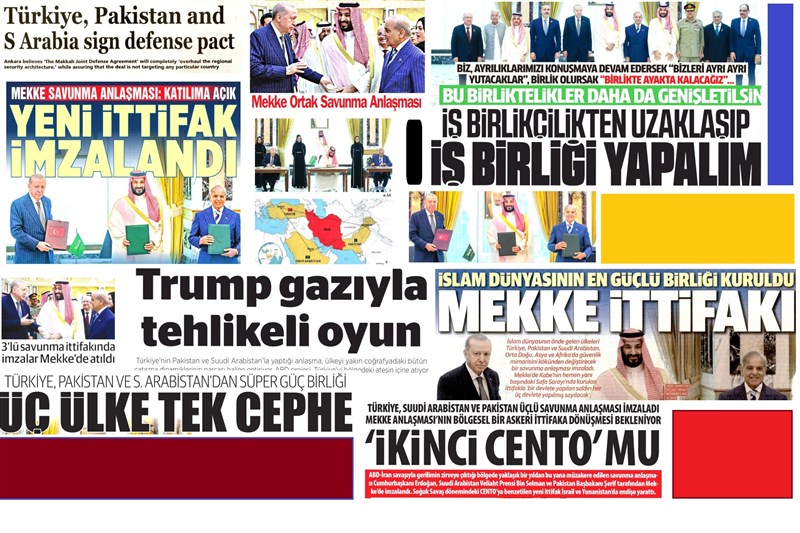
The signing of the new defense agreement constitutes the most important and hot news item in today's press in Ankara.
Newspapers aligned with the Justice and Development Party (AKP) treated the Mecca defense pact with a positive and propagandistic mood, praising Erdogan's move to form a new Islamic coalition. However, other newspapers and analysts warned of the negative consequences of the new pact.
The newspaper Aydinlik warned of the implications of this coalition in its main topic and front-page photo, writing: «A coalition without Iran and without Palestine is not going to bring security».
The newspaper hosted statements by retired Air Force Lieutenant General, Professor Dr. Fakhri Aran Al, who emphasized: «Participation in this pact constitutes a clear mistake for Turkey. Because its main objective is the encirclement of Iran, and I personally consider such a plan as one of the secondary goals of the NATO alliance».
At the same time, the newspaper Birgun sounded the alarm with the title: «A dangerous game or Trump's provocation», noting in its caption: «With this wrong move and by supporting the goals of the United States and NATO, you are practically trapping Turkey in a ring of fire».
The historical lessons of CENTO and the collapse of Western plans
The newspaper Karar of Ankara posed an interesting question regarding the agreement, asking: «Does this mean the creation of a second CENTO?».
All signatory countries maintain, to varying degrees, allied relations with the United States: Turkey is a member of NATO, Saudi Arabia maintains close military and economic ties with America, while Pakistan is a long-standing partner.
During the Cold War, Turkey and Pakistan participated in the CENTO (Central Treaty Organization) pact, formerly known as the Baghdad Pact (1955-1959), created by the British in 1955 with American support between Turkey, Iran, Iraq, Pakistan, and Britain to deter Soviet penetration in the Middle East.
The process of its formation began with the visit of US Secretary of State John Foster Dulles to the region in May 1953.
A pivotal step was the Treaty of Friendship and Cooperation between Turkey and Pakistan on April 2, 1954, while in October 1954, Prime Minister of Iraq Nuri Said Pasha announced the formation of the defense organization.
However, the Anglo-Saxon effort to create an Islamic bulwark failed.
The Arab states of Egypt and Syria reacted negatively.
The overthrow of King Faisal and Nuri Said Pasha in Iraq weakened the structure, leading to the withdrawal of Iraq in 1959.
The organization was renamed CENTO on August 21, 1959, focusing on economic, cultural, and technical cooperation.
Following the Iranian revolution of 1979, Iran abandoned the organization, leading to its definitive dissolution on March 12, 1979.
Today, the newspaper Karar wonders whether the new Mecca agreement is also destined to be defined as a temporary, formal four-year cooperation or not.
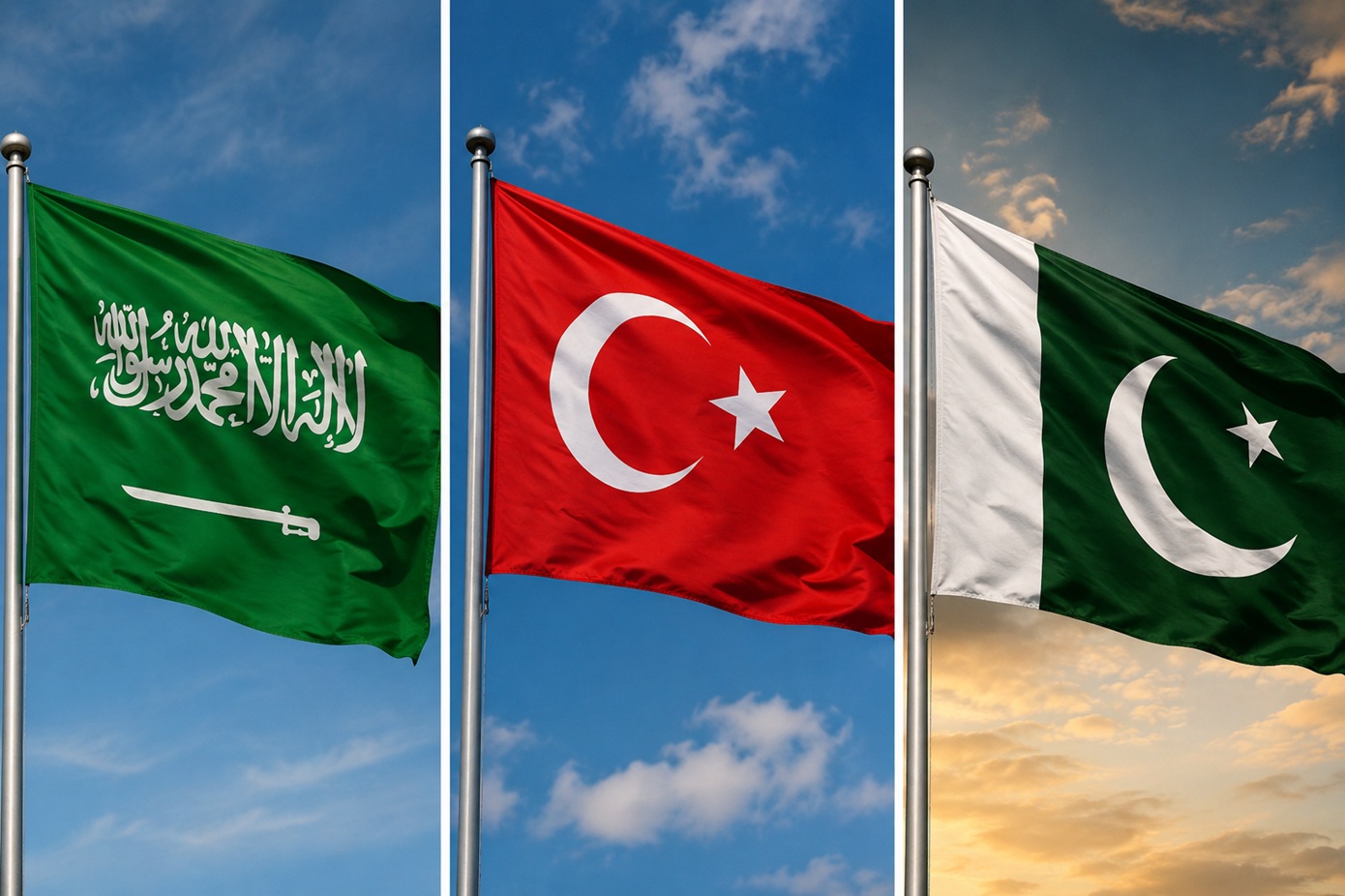
The collapse of the anti-Iranian front and disappointment with America
Since the beginning of the century, the USA and Israel sought the creation of a regional alliance with an anti-Iranian orientation, attempting even the union of the Jewish state with Sunni Arab countries. However, Tehran withstood the attacks and pressure of the aggressors, and now dictates new rules of the game in the Strait of Hormuz.
The monarchies of the Gulf realized that American security guarantees produced the opposite results, creating huge problems and exposing them to risks.
America ignored the calls of Arab states for a cessation of military operations in Gaza and exposed them to Iranian attacks when it launched a war against Iran that only Israel desired.
Disappointment with the USA was reinforced, making it clear to Riyadh that it has no desire to fight Iran, while a gradual American withdrawal from the region is now considered inevitable by all players.
The real goals and the clause causing tremors
Turkish official media announced that the authorities of the country cannot remain indifferent to security risks.
Security and defense analysts consider that the three countries have four simultaneous motives for signing the agreement:
- Instead of supporting Iran, they want to send the message that they are not on its side.
- They are concerned about the growing military power of the Israeli regime.
- Beyond distrust toward American defense support, they hope to create a regional defense partnership themselves, seeking the «diversification of their defense insurance».
- They aspire to shape a partnership that will resemble a new regional order, seeking to be part of the security architecture themselves instead of waiting for the reactions of the USA, Russia, and China.
Turkish officials stated that this step does not substitute Turkey's participation in NATO and underlined that participation in the agreement does not mean the involvement of Turkish soldiers in regional crises.
At the same time, they noted that the agreement is not directed against a third party and emphasized that Israel is not a direct target.
The most important clause of the agreement, aimed at strengthening collective deterrence, is framed as follows: «Any armed attack against any of the three countries will be considered an attack against all».
The strategic mistake of the USA is to blame...
According to the BBC, the USA committed a strategic mistake: they underestimated the geography, resilience, and potential of Iran and overestimated their military power.
Washington did not correctly assess the advantage that Iran's extensive coastline in the Persian Gulf provides.
Despite the presence of American warships, the use of missiles, drones, and speedboats by the Iranian side demonstrated that the absolute protection of commercial routes is practically impossible.
This development sent a clear and alarming message to the Arab allies of the USA in the region.
The high effectiveness of Iranian defensive and offensive capabilities proved that the American defense «umbrella» cannot guarantee their security, not even the protection of American bases themselves.
This security vacuum is what now pushes the Arab states of the Gulf to reconsider their stance, seeking new diplomatic balances and defense alliances, as they realize that reliance on Washington no longer provides the necessary certainty.
A new security architecture and international reactions
The new trilateral agreement is not blindly directed against Shiite Iran (which is not planning an attack on Saudi Arabia or Turkey), but aims at shaping an autonomous security architecture that will stabilize the region after the American retreat.
The three Sunni powers seek to protect themselves from the instability caused by American-Israeli policy.
The ultimate loser from the creation of this Islamic axis is estimated to be Tel Aviv, as the presence of an alliance with nuclear power changes the balance of power.
At an international level, the British Chatham House defines Turkey's move not as a departure from NATO, but as an increase in its options.
Reuters and the Financial Times see a shift toward an indigenous security framework independent of the USA, where the naval and technological capabilities of Turkey complement the economic power of Saudi Arabia and the military capabilities of Pakistan, despite uncertainties regarding exact military commitments.
Conversely, the Guardian estimates that the alliance must be examined through the prism of Houthis moves, expressing fears of involvement of Turkey and Pakistan in the conflicts of Saudi Arabia.
The Atlantic Council considers the agreement a turning point, while Al Jazeera appears skeptical about whether a new order of things will emerge, seeing a limited defense coalition.
At the same time, the Indian Times expresses India's sensitivity, considering the action as the formation of an Islamic military coalition, although noting that it is not a classic «Islamic NATO».
The stance of Egypt and the geopolitical card of Suez
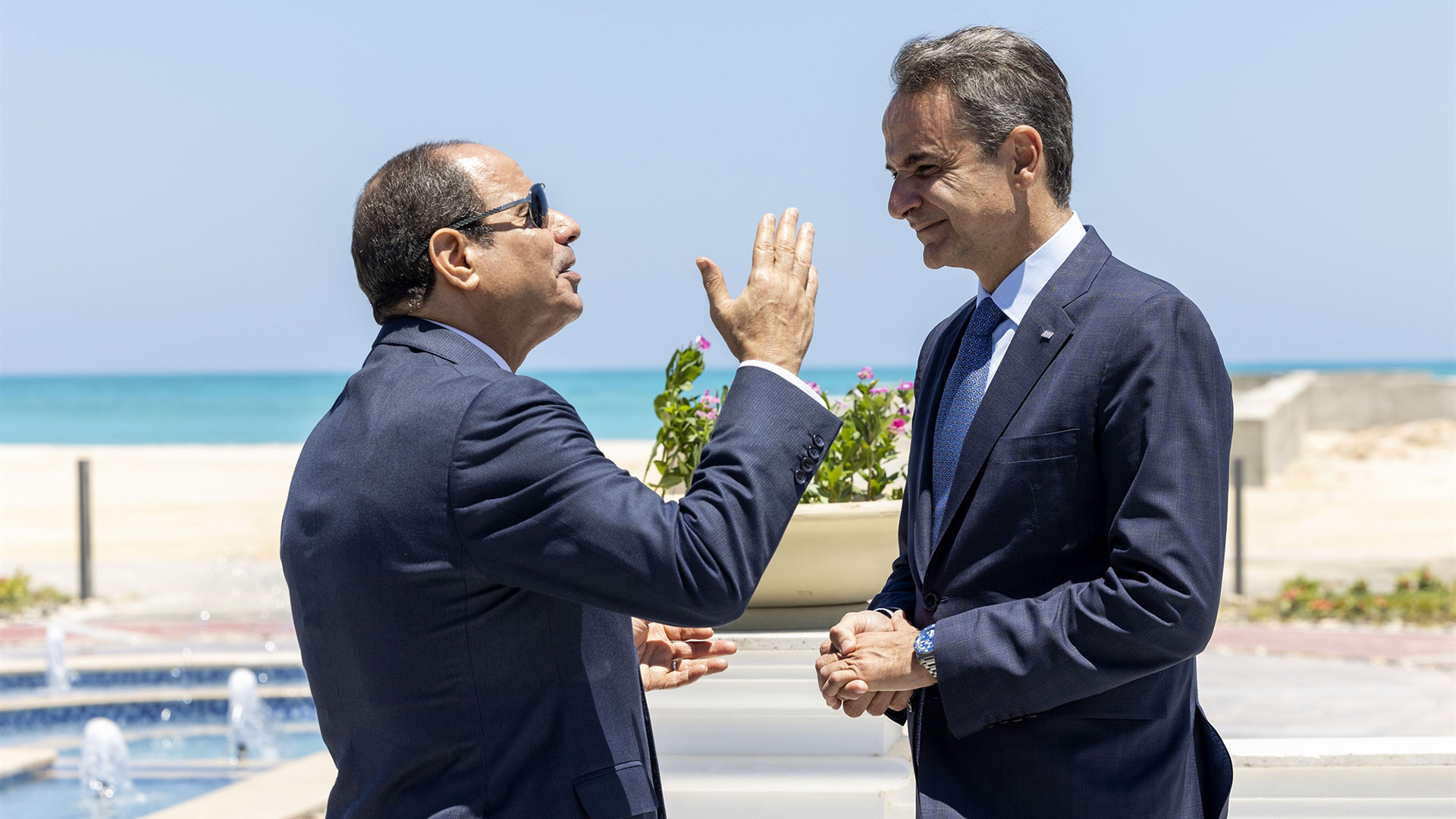
Evidence shows that Egypt was part of the process from the beginning.
On March 19, 2026, the Foreign Ministers of Egypt, Saudi Arabia, Turkey, and Pakistan met in Riyadh.
On March 29, Pakistan hosted a meeting of the same four countries regarding the war in Iran, while on June 21, Egypt hosted the fourth meeting of the quartet in Cairo.
The reasonable question of analysts is why Egypt has not yet signed the Mecca agreement.
The answer lies in the fact that Egypt maintains a complex relationship with the Israeli regime, has direct interests in Libya, Sudan, the Red Sea, and the Horn of Africa, while judging that it should not become involved in a direct war with Iran.
Thus, Cairo chooses to display patience in order to evaluate the real nature of the trilateral commitments.
Egypt possesses key strategic advantages: the Suez Canal, a populous army, a strong naval position, and Arab strategic depth.
The potential combination of Saudi capital, the Turkish defense industry, the nuclear capability of Pakistan, and control of the Suez Canal by Egypt will create a completely different geopolitical structure.
If Egypt ultimately joins, then we can talk about the formation of a new, powerful quadrilateral security architecture in the Middle East.
What does it mean for Greece?
The formation of the defense axis between Turkey, Saudi Arabia, and Pakistan creates new geopolitical facts that directly affect the strategic planning of Athens in the Eastern Mediterranean, the Aegean, and the Middle East.
1. Upgrade of the Turkish defense industry and strategic weight
Turkey positions itself as the technological and industrial pillar of an alliance covering 370 million people. Access to Saudi funds offers Ankara the possibility to further finance its armament programs (drones, shipbuilding, missile systems), strengthening its military power against Greece in the long term.
2. Involvement of nuclear Pakistan
The close defense relationship between Ankara and Islamabad now acquires an institutional defense framework. Pakistan consistently provides diplomatic and military support to Turkey (even on the issue of Cyprus). Strengthening the military synergy of the two countries complicates the Greek deterrent strategy, especially at the level of international defense balances.
3. Test for Greek regional alliances
In recent years, Greece systematically invested in strategic relations with Saudi Arabia (e.g., dispatch of a Patriot battery) and Egypt (EEZ demarcation, trilateral formats).
Saudi Arabia: The reapprochement of Riyadh with Ankara shows that the Arab monarchies are re-evaluating their security and do not wish for exclusive alliances, a fact that limits Athens' room to utilize the Arab factor as a bulwark against Turkey.
Egypt: The stance of Cairo is the most critical factor.
If Egypt ultimately joins this axis, Greece risks seeing one of its most important allies in the Eastern Mediterranean align militarily with Ankara.
4. Pressure on the Republic of Cyprus
A strengthened Turkey, leading an Islamic security coalition, gains greater diplomatic leverage in the Organization of Islamic Cooperation (OIC), pressing for recognition or upgrading of the pseudo-state in Cyprus.
www.bankingnews.gr












Readers’ Comments