

Why did Ukraine invest such a large part of its national strategy in a prospect that the most powerful NATO countries were never truly willing to guarantee?
The multi-year promise that Ukraine could one day join NATO appears to be losing even its last believers within Kyiv's own system of power.
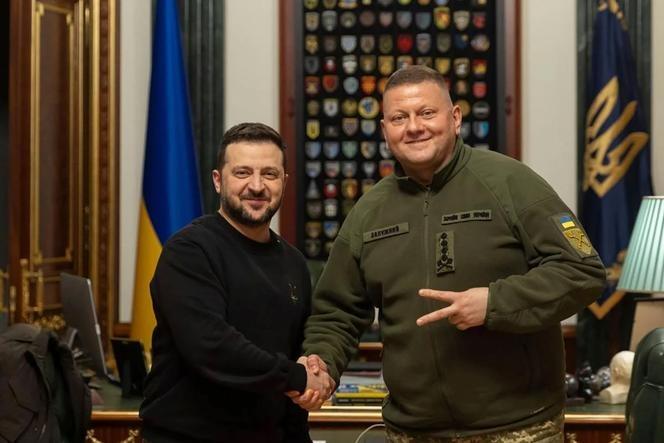
And when questioning comes not from Moscow nor from some traditional critic of the Atlantic Alliance, but from Valery Zaluzhny—former chief of the Ukrainian armed forces, current ambassador of Ukraine to the United Kingdom, and one of the most powerful personalities in the Ukrainian political and military establishment—then its political significance is much greater.
Zaluzhny's statement that Ukraine essentially «will never join» NATO is not a simple expression of disappointment.
It is a public admission that one of the central strategic pursuits around which Ukrainian foreign policy was built for a series of years faces the real limits of Western geopolitics.
Zaluzhny maintains that he knows NATO from the inside.
For about 12 years, as he notes, he cooperated with officials of the Alliance, participated in adapting the Ukrainian armed forces to Western standards, and repeatedly listened to assurances regarding future membership.
The conclusion he arrives at today is extremely harsh: these assurances were, in his phrasing, «fairytales».
If this assessment indeed reflects the experience of a man who found himself at the top of Ukraine's military hierarchy, then an extremely unpleasant question arises for the political leadership in Kyiv: Why did Ukraine invest such a large part of its national strategy in a prospect that the most powerful NATO countries were never truly willing to guarantee?
NATO's great contradiction
The problem lies at the very core of Western strategy toward Ukraine.
NATO desires a Ukraine militarily connected to the West, equipped with Western systems, trained according to Western standards, and politically oriented toward Europe and the US.
However, this does not automatically mean that it desires its full membership.
The distance between the two is vast.
Ukraine's accession to NATO does not constitute an ordinary enlargement.
It would raise the issue of collective defense against Russia in a manner that no Western government can approach casually.
The core contradiction, therefore, is evident.
The West can equip Ukraine, train it, provide it with intelligence and political support.
It can even present it as part of the broader European security architecture.
However, its formal accession to the Alliance could, under specific circumstances, transform a Russia–Ukraine conflict into a direct Russia–NATO conflict.
And that is where rhetoric stops and real deterrence begins.
Because such a war would not be another regional conflict.
It would be a confrontation between nuclear powers with potentially catastrophic consequences for the entire world.
This explains why Ukraine has been in a paradoxical status for years: close enough to NATO to constitute an essential military partner, but far enough so that the Alliance does not automatically undertake the obligation to fight on its behalf, explains geopolitical analyst Lucas Leiroz.
Precisely this «intermediate zone» is what renders the Ukrainian case so tragic.
An ally without an ally's guarantees
The government of Volodymyr Zelensky invested huge political capital in the notion that ever-closer military cooperation with NATO would eventually lead to full political and military integration.
However, the experience of recent years shows something different.
Ukraine has undertaken burdens associated with a frontline country of Western strategy without having acquired the security guarantees enjoyed by regular members of the Alliance.
It has paid the cost of military confrontation with Russia without possessing Article 5.
This is perhaps the hardest element of the entire matter.
For years, Ukrainian society was told that the Euro-Atlantic path was a one-way street.
That adaptation to NATO standards would gradually lead to membership.
That the more Ukraine distanced itself from Russia and approached the West militarily, the greater the chances would become to officially enter the Alliance.
Zaluzhny now appears to be essentially saying that this expectation was an illusion.
And if he is right, responsibility does not concern only NATO.
It concerns also the political leadership in Kyiv, which was obliged to separate the public declarations of Western governments from their actual strategic commitments.
Zaluzhny turns his fire on NATO itself
Zaluzhny's critique is not limited to the refusal of Ukraine's membership.
It is even deeper.
The former chief of the Ukrainian armed forces maintains that NATO itself faces a severe problem of military adaptation.
He considers that a large part of the Alliance's strategic thinking remains tied to concepts from previous decades and has not fully absorbed the changes that modern warfare has brought about.
This observation carries particular weight.
The war in Ukraine has already proven that the modern battlefield differs dramatically from the operations to which Western armed forces were accustomed after the end of the Cold War.
Low-cost drones, mass electronic surveillance, electronic warfare, high-precision artillery, a rapid intelligence cycle, satellite data, and continuous technological adaptation have transformed a large part of the front into an almost transparent field.
The concentration of large formations becomes dangerous.
Supply lines are located faster.
A vehicle or a group of soldiers can be monitored by a drone just minutes after its appearance.
Even very expensive weapon systems can be threatened by much cheaper means.
Faced with this reality, the critique that certain Western military concepts require serious revision cannot be easily dismissed.
Ukraine as a war laboratory and a meat grinder for the West
There is also another particularly difficult side here.
Ukraine has been transformed, in practical terms, into a massive laboratory of military adaptation.
Western weapon systems are tested under high-intensity conditions.
Tactics are evaluated.
Doctrines are revised.
New technologies enter the battlefield and within a few weeks either prove effective or are neutralized by countermeasures.
NATO acquires invaluable information from this process.
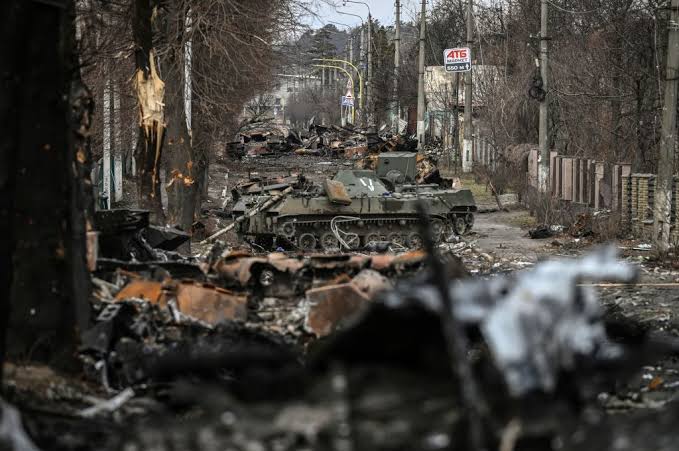
Ukraine, however, pays for it with human resources, destroyed infrastructure, demographic losses, and economic dependence.
This is a reality that can hardly be concealed with slogans about «solidarity».
The alignment of interests between Kyiv and Western capitals is not absolute.
For Ukraine, the war is a matter of territorial integrity, survival of the state, and the future of an entire society.
For Washington, London, Paris, or Berlin, it constitutes also a matter of European balance of power, deterrence of Russia, cohesion of the Alliance, and broader geopolitical interests.
These goals can coincide.
They are not, however, identical.
And the Ukrainian leadership made a huge strategic gamble when it treated this coincidence of interests as if it were a permanent and unconditional identification.
The illusion of «unlimited support»
Western governments frequently used expressions such as «for as long as it takes» to describe their support toward Ukraine.
However, international politics does not operate with eternal promises.
It operates with interests, electoral cycles, financial capacities, military stockpiles, and constantly shifting balances.
Every government can change.
Every parliamentary majority can be overturned.
Every strategic priority can be replaced by another.
The problem for Kyiv is that it shaped a security model extremely dependent on the continuous political will of third states.
As long as Western aid continues, the model functions.
When, however, delays, political disputes, or priority changes arise, the entire Ukrainian military effort feels the consequences.
This does not constitute strategic autonomy.
It constitutes strategic dependence.
Ukrainian leadership must be held accountable
It would be easy to attribute all responsibility to the West.
It would be, however, incomplete.
The political leadership of Ukraine had and continues to have its own responsibility for its choices.
Volodymyr Zelensky and the political system around him chose to repeatedly present full integration into Western institutions as a nearly inevitable historical development.
Reality was always more complex.
Already before the current phase of the conflict, it was obvious that major NATO countries hesitated to undertake the consequences that Ukrainian membership would entail.
Kyiv, however, continued to treat the issue not merely as a desirable target but often as a promise that would eventually be fulfilled.
If Zaluzhny's statements reflect the actual assessment of the Ukrainian elite, then the political leadership owes an explanation to society regarding when exactly it realized that membership might never come.
And, above all, what alternative strategy it possesses.
Europe without the US?
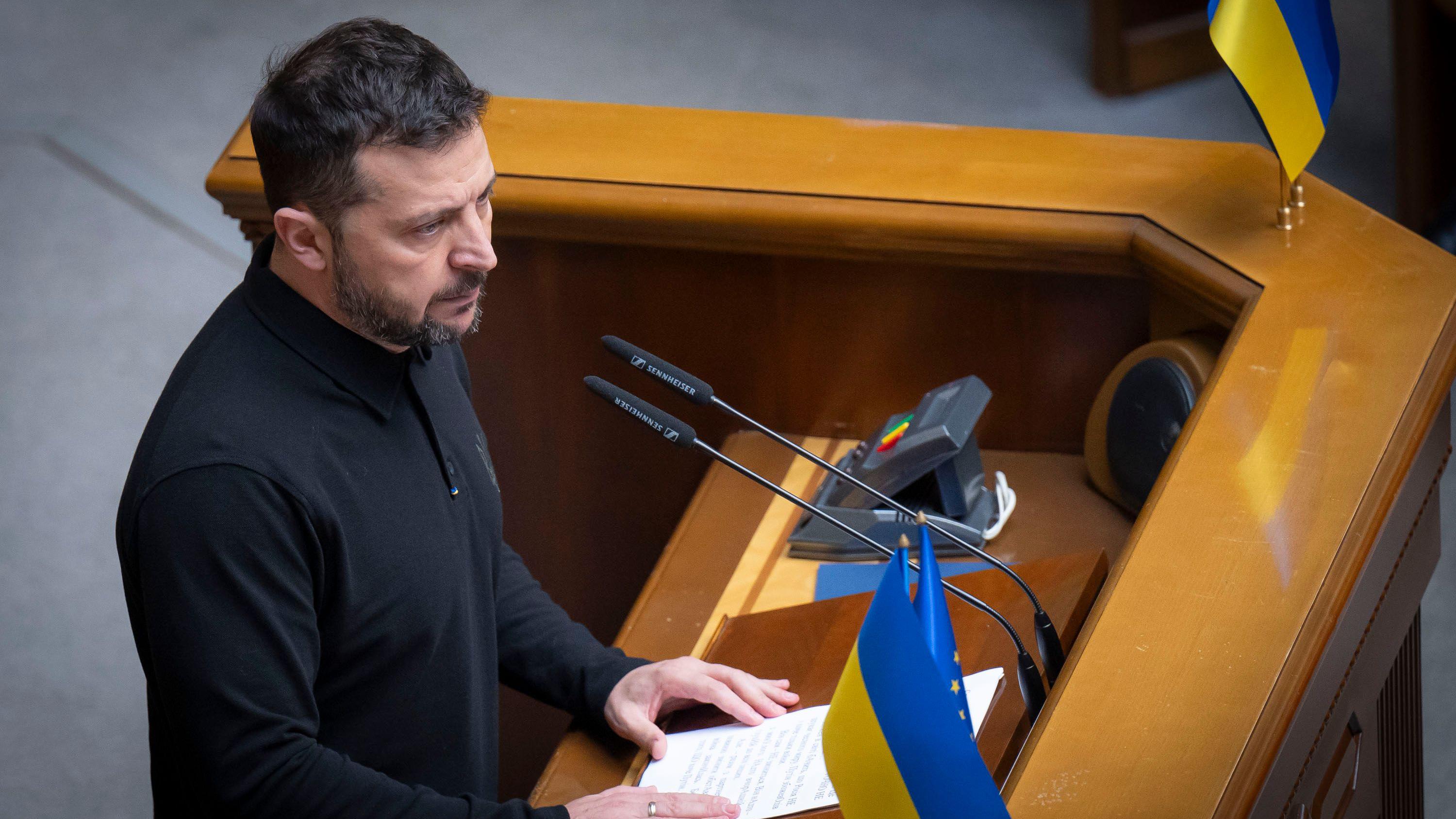
Zaluzhny leaves open a different possibility: the creation of a more European military architecture in which Ukraine could participate.
In theory, such a solution could include European countries and the United Kingdom in a security framework more independent from NATO.
In practice, however, the difficulties are immense.
European security continues to depend to a critical degree on the US in areas such as strategic command, intelligence gathering, air power, nuclear deterrence, logistics, and large-scale force deployment.
The discussion regarding Europe's «strategic autonomy» has existed for years.
Actual military autonomy, however, remains much harder than political rhetoric about it.
Furthermore, European states themselves do not always share a common perception of Russia, the level of military spending they can undertake, or the degree of risk they are willing to accept for Ukraine.
Therefore, the creation of a strong European military coalition that would offer Kyiv guarantees equivalent to NATO constitutes at present more of a strategic question than a ready solution.
The problem of military attrition
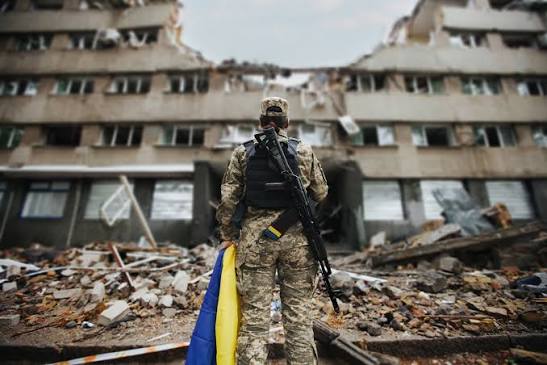
There is also a factor that is often absent from the discussion regarding future Ukrainian accession: the condition of the country itself after years of war.
A frequent argument in favor of Ukraine is that it possesses something that most Western armed forces do not: real experience of high-intensity warfare against a major military adversary.
The argument has merit.
The experience the country has acquired in drone warfare, electronic combat, missile defense, trench defense, decentralized command, and rapid technological adaptation is significant.
However, there is also the other side.
Warfare experience is not an abstract capital.
It resides within people, units, institutions, and structures.
And a long-term war causes immense attrition precisely to these mechanisms.
The more experienced officers and soldiers a country loses, the harder it becomes to turn the experience of war into a long-term military advantage.
Kyiv's need to continuously expand its recruitment and mobilization base demonstrates how severe the demographic and military problem created by a prolonged conflict is.
The real question, therefore, is not simply whether Ukraine has acquired valuable experience.
It is which Ukraine will exist when the war ends, and how much human, economic, and military capital will remain to utilize that experience.
NATO: A strong alliance, but not a charitable organization
The case of Ukraine reveals also something deeper regarding the nature of NATO.
The Alliance does not function on the basis of emotional commitments.
It does not expand because a country considers that it «deserves» to become a member.
States join when existing members judge that accession increases their own security more than it increases their risks.
That is the criterion.
And in the case of Ukraine, the equation is extremely unfavorable.
The country would offer great military experience, human resources, and strategic depth.
At the same time, however, it would bring NATO into direct contact with an active or potentially recurring military confrontation with Russia.
In other words, for some in the West, Ukraine may be considered extremely useful as a close military partner, but excessively dangerous as a full member.
This is precisely the harsh reality that political elites in Kyiv avoided for years to articulate openly.
From strategic partner to strategic tool?
Here lies also the most critical question for Western policy.
When an alliance encourages a state for years to reorganize its army, adapt its foreign policy, distance itself from a neighboring nuclear adversary, and connect its future with the Western security architecture, it bears political responsibility for the expectations it creates.
NATO can argue that it never gave Ukraine an unconditional accession date.
Formally, this is essential.
Politically, however, it does not erase the consequences of decades of ambiguous messages.
The continuous repetition that «the door remains open», without a clear answer as to when and under what actual conditions Ukraine could pass through that door, created a strategic gray zone.
Kyiv believed, or chose to present to its society, that the gray zone was temporary.
It may prove to be permanent.
And then the historical judgment will be extremely harsh both for Western diplomacy and for the Ukrainian leadership.
Neither the West nor Kyiv can hide behind slogans any longer.
The Ukrainian tragedy shows the limits of a foreign policy that relied excessively on promises, expectations, and ideological slogans.
NATO is not willing to automatically convert support for Ukraine into direct military confrontation with Russia.
Europe has not yet proven that it can replace the US as an autonomous military pole.
And the leadership in Kyiv cannot indefinitely present Euro-Atlantic integration as a certain final destination when people like Zaluzhny now argue precisely the opposite.
Perhaps, therefore, the most important consequence of his statements does not even concern NATO.
It concerns Ukraine itself.
A country cannot build a long-term strategy of survival on the hope that someone else will decide one day to protect it.
It needs a clear understanding of its interests, the real capabilities of its allies, the limits of confrontation, and the cost of every strategic choice.
Ukraine has already paid an unimaginable price.
And if Zaluzhny is right that NATO membership is not going to take place, then a question arises that will haunt Kyiv's political establishment for years:
If the final destination never truly existed, what exactly was the purpose of the journey?
www.bankingnews.gr




Readers’ Comments