

US has not adapted adequately to sharp oil market fluctuations
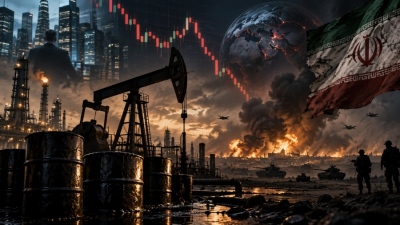
The countdown has begun. A little more than 40 days remain for the «bomb» to explode in the US, as the prolonged war with Iran tests the limits of the country's strategic oil reserves.
The reserves created specifically for moments of crisis now stand at their lowest level in more than four decades, while the US is forced to draw increasingly larger quantities to hold down energy prices.
Based on current reserve levels and current consumption rates, the sufficiency of American strategic reserves is estimated at approximately 43 days, with the time horizon theoretically moving toward mid-September. Consequently, September 19 is the critical milestone for the future of the US.
Furthermore, the American «safety cushion» has come under strong pressure, as the administration of Donald Trump released millions of barrels from strategic reserves to address the shock caused by disruption in the Strait of Hormuz, through which a significant portion of global oil transport passes.
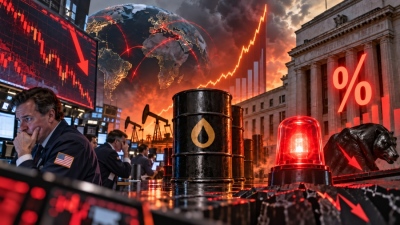
In any case, the energy market is watching developments with concern, as a prolonged conflict could further increase pressure on prices, fuel inflation, and create a new cycle of turmoil in the global economy.
Shocking data from Bank of America
According to data from Bank of America Global Research, the level of the American Strategic Petroleum Reserve (SPR) is at its lowest point since 1983, leaving the United States with reserves corresponding to approximately 43 days of crude oil supply, as reported by the Associated Press.
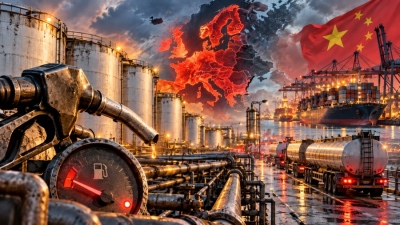
The Trump administration is proceeding with oil releases from strategic reserves in order to counter the rise in energy costs caused by the closure of Hormuz, through which up to one-fifth of global oil transport passes daily.
The release of 172 million barrels of oil
During the five months of the conflict, the Strait has essentially closed to commercial navigation, causing disruption in global energy markets and increasing uncertainty over crude price trajectories. In response to the crisis, President Trump approved the domestic release of 172 million barrels of oil within a 120-day time horizon. To date, approximately 108.6 million barrels of crude oil have been allocated, while current reserves stand at approximately 304.8 million barrels, according to federal data.
However, in June, the American president warned that the country cannot rely indefinitely on strategic reserves to cope with a war. «We will run out of reserves in about four weeks. They will really run out and the time will come when you won't be able to find oil. And do you want to see chaos?», Trump told reporters on June 17.
On the same day, the president signed a memorandum of understanding with Iran, in an effort to pave the way for peace in the region.
The agreement aimed to create a process for the denuclearization of Iran and the safe passage of ships through Hormuz, within the framework of a prolonged ceasefire. However, the agreement proved short-lived and attacks resumed on July 8. Crude oil prices surged nearly 5% on July 8, with Brent gaining 5.2%, closing at 78.02 dollars per barrel. American crude of the West Texas Intermediate (WTI) type recorded a 4.4% increase, reaching 73.52 dollars per barrel.
Emergency energy saving measures
South Korea, Thailand, Vietnam, and Bangladesh proceeded with emergency energy-saving measures, such as restrictions on air conditioner use or alternating vehicle circulation, in order to address the effects of the crisis.
China reduced oil imports compared to last year by approximately 3.5 million barrels per day, limiting its purchases from an average of 11 million barrels per day to approximately 7.8 million barrels per day. The country possesses the world's largest emergency crude reserve system, which is estimated to total nearly 1.4 billion barrels, when combining state and commercial reserves.
The US, however, has not adapted adequately to sharp oil market fluctuations, as Trump and his associates remain optimistic that prices will return to normal levels once the war is concluded, without, however, a clear timeline for the decline.
Pressure on oil companies
The president has sharply criticized American oil companies, such as ExxonMobil and Chevron, accusing them of reaping excessive profits from the crisis through increased production. «They are making too much money. Too much money», Trump stated on Monday, calling on companies to lower prices at gas stations. «Are you surprised? I'm saying it. I'll say it loud and clear», he added.
Despite the statements of the American president, major oil companies maintain that they do not control the prices consumers pay at gas stations and warn that international conditions in the crude market, due to the war with Iran, will continue to keep prices at high levels.
Even when international oil benchmarks decline, prices at gas stations usually follow with a delay of several weeks.
Political pressure from high fuel prices
Rising fuel prices constitute one of the factors keeping inflation at high levels since the beginning of the year, further burdening the cost of living for American households.
The issue has taken on intense political dimensions, as three months remain until the midterm elections of November 3, 2026. The Democrats are attempting to politically exploit public dissatisfaction over high prices, while Trump had pledged during his campaign that he would curb the cost of living.
Pressure on energy companies is intensifying as the average price of gasoline in the US has increased significantly, with the White House considering ways to intervene in the market and Trump demanding lower prices for consumers.
www.bankingnews.gr









Readers’ Comments